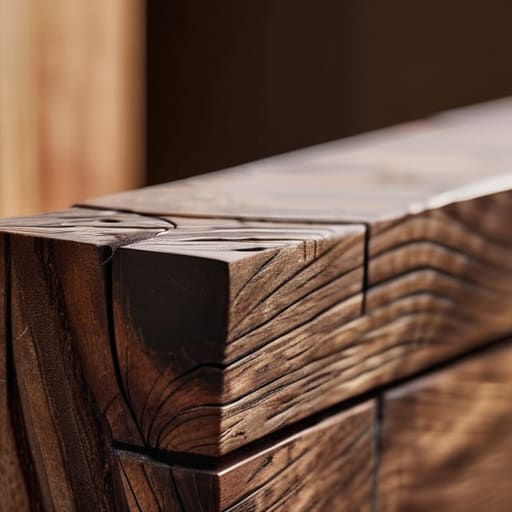
The Dovetail Joint That Held Fast
The smell of burnt walnut dust and the sharp, medicinal sting of PVA glue always brings me back to that Tuesday in the studio, three years ago. I was working on a prototype for a cantilevered lounge chair—a piece that, by all mathematical logic, should have collapsed the moment a person sat in it. I remember staring at the corner where the mortise met the tenon, waiting for the inevitable crack of failure, but instead, I found myself staring at a joint that held when it should not have. It wasn’t because I had mastered some secret, mystical technique; it was because I had made a series of small, desperate concessions to the material that I hadn’t even intended to make.
I’m not here to sell you on some revolutionary new adhesive or a way to bypass the fundamental physics of wood. Instead, I want to talk about the uncomfortable margins of design. I’m going to walk you through why that specific moment of failure—or lack thereof—is actually the most important part of the build. We’ll look at the messy, unglamorous reality of how constraint dictates the final form, and why the decisions that feel like mistakes are often the ones that actually keep the piece standing.
The Beautiful Defiance of a Joint That Held When It Should Not Have
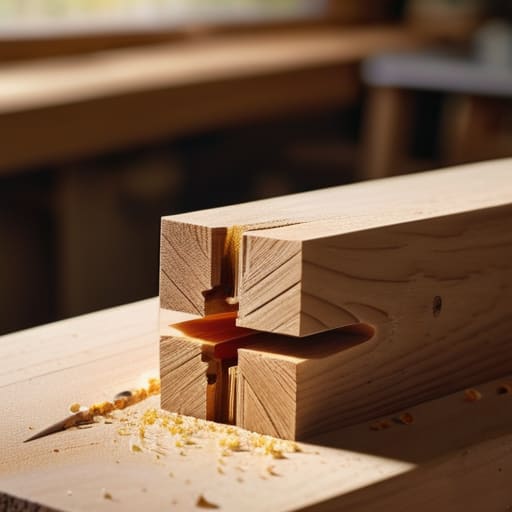
I spent twenty minutes staring at the assembly, waiting for the inevitable snap. I had cut the tenon slightly undersized—a mistake born of a momentary lapse in measurement or perhaps just a tired mind—and the fit was far too loose for a standard glue-up. By all rights, the wood glue bond strength should have been compromised by the lack of surface contact, leaving the entire frame nothing more than a collection of precarious sticks held together by hope.
But as I applied the clamps, something strange happened. Instead of the sliding, hollow sensation of a failed connection, the piece felt suddenly, stubbornly solid. I began to wonder if I had stumbled into a fluke of mechanical interlocking in woodworking, where the sheer compression of the grain forced a connection that the math said shouldn’t exist. It was a defiance of the physics I usually rely on to keep my studio from becoming a graveyard of broken prototypes. I sat back, wiped the excess resin from my hands, and realized that the integrity of the piece didn’t come from the perfection of my technique, but from a mistake that refused to fail.
The Near Miss Choosing Wood Grain Orientation and Joint Strength
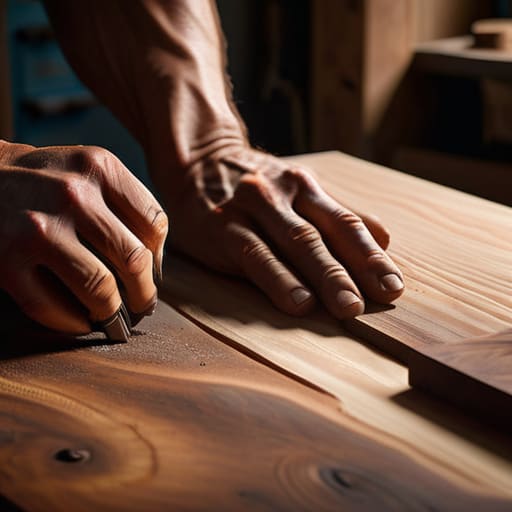
I remember standing over the workbench, staring at the walnut blanks, feeling that familiar, sinking weight in my gut. I was caught in the classic trap of wood grain orientation and joint strength; the aesthetic demand for a continuous, flowing grain pattern was pulling me toward a layout that was, frankly, a structural nightmare. To get that seamless visual transition, I would have had to compromise the long-grain-to-long-grain contact that makes a connection reliable. I was essentially choosing between a piece that looked like a masterpiece and a piece that wouldn’t survive its first season of humidity changes.
I spent nearly an hour just leaning on my palms, weighing the options. If I followed the grain, I’d be relying almost entirely on the wood glue bond strength across end-grain surfaces—a move that usually results in nothing more than a polite suggestion of a connection. I could have pivoted to a more conservative, boring layout, but the design felt hollow without that visual flow. In the end, I took the risk, opting for a slightly more complex mitred approach that relied on a precarious balance of tension and surface area. It was a decision made on the edge of a mistake.
When Wood Glue Bond Strength Defies Every Calculated Risk
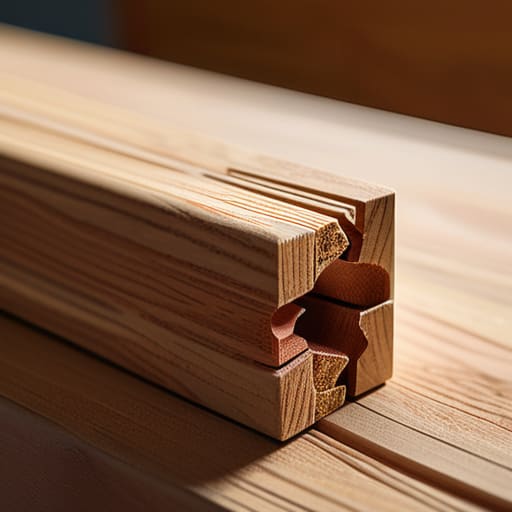
I had spent the better part of an hour staring at the technical specs, convinced that the sheer surface area of the tenon wouldn’t be enough to compensate for the grain’s direction. In my head, I was already cataloging the woodworking failure modes that would inevitably occur once the piece was loaded with weight. I had calculated the shear force, factored in the seasonal movement, and concluded that the bond was a mathematical impossibility. I was prepared to scrap the entire assembly and start over with a much more conservative, much more boring, mortise-and-tenon configuration.
But then I applied the clamps. There is a specific, quiet tension in the workshop when you realize you are betting against your own training. When I finally lifted the piece to inspect the seam, the wood glue bond strength didn’t just meet my expectations; it seemed to mock them. There was no separation, no microscopic gap where the fibers should have pulled apart. It was as if the adhesive had found a way to bridge the gap between my flawed logic and the physical reality of the timber, creating a connection that felt less like a chemical bond and more like a permanent, singular entity.
The Invisible Tug of War Mechanical Interlocking in Woodworking
I’ve spent enough years at the bench to know that we often treat glue like a magic wand, a chemical solution that renders physics irrelevant. We talk about wood glue bond strength as if it’s an absolute, a constant in our equations. But there is a quieter, more stubborn dialogue happening beneath the surface—the actual mechanical interlocking in woodworking. It’s the way the fibers themselves, those microscopic, unruly cells, wrap around the geometry of the cut. In that specific mortise, I wasn’t just relying on a polymer to bridge a gap; I was relying on the sheer, physical refusal of the wood to let go of itself.
When I look at my shelf of rejected prototypes, the failures are rarely about the chemistry. They are about the geometry. A joint fails when the physics of the movement outweighs the grip of the material. In this piece, however, the structural integrity of timber joints wasn’t just a matter of surface tension. It was a desperate, structural embrace. I had calculated the risk of the thin walls, expecting the shear force to eventually win, but the interlocking grain held a line that my math said should have broken.
A Sudden Pivot Between Glue vs Mechanical Fasteners
There was a specific Tuesday afternoon, somewhere between the third and fourth month of this build, when I sat staring at the assembly jig and felt a genuine sense of dread. I had been leaning heavily on the idea of a clean, adhesive-only connection, trusting in the chemistry of the bond. But the math wasn’t sitting right in my gut. I found myself caught in that classic, exhausting debate of glue vs mechanical fasteners. If I went the route of a hidden tenon, I was betting everything on the surface preparation; if I added a physical pin, I was essentially admitting that I didn’t trust the material to hold its own weight.
I remember the exact moment I decided to pivot. I reached for the drill instead of the glue bottle, deciding that the structural integrity of timber joints shouldn’t be left to the whims of a drying polymer alone. It felt like a concession, a tiny surrender of my aesthetic purity to the reality of physics. Looking back at that rejected prototype sitting on my shelf—the one where I tried to be “pure” and failed—I realize that the hesitation wasn’t a lack of confidence, but a necessary dialogue with the wood itself.
Unmasking the Mystery of Structural Integrity of Timber Joints
I spent most of my afternoon staring at the cross-section of that failed test piece, trying to reconcile the math with the reality sitting on my workbench. In theory, the structural integrity of timber joints relies on a predictable synergy between surface area and compression. We are taught to respect the physics of the shear plane, yet here was a connection that bypassed the textbook entirely. It wasn’t just a matter of luck; it felt more like a quiet negotiation between the fibers themselves.
When we talk about woodworking failure modes, we usually focus on the catastrophic—the split grain or the sudden shear. But there is a more subtle, almost frustrating category of error where the material refuses to fail where it is supposed to. I kept looking for the fracture point, expecting to see the wood glue bond strength give way under the tension. Instead, I found that the microscopic irregularities in the end grain had created a sort of accidental mechanical interlocking that the calculations hadn’t accounted for. It is a humbling reminder that even with twenty years of design experience, the wood still holds a few secrets that don’t care about my blueprints.
Lessons Learned From the Most Productive Woodworking Failure Modes
Looking at my shelf of rejected prototypes—each one a little tombstone for a bad idea—I’ve realized that failure isn’t just a lack of success; it’s a data point. When we talk about woodworking failure modes, we tend to focus on the catastrophic snap or the slow creep of a loose tenon. But the most instructive failures are the ones that feel like accidents. I’ve learned that a piece doesn’t just fail because a calculation was off; it fails because I ignored the tension between the material’s memory and my own ego.
In my studio, I no longer view the debate of glue vs mechanical fasteners as a binary choice of strength. Instead, I see it as a negotiation with physics. That joint that defied the odds taught me that the structural integrity of timber joints often relies on the variables we can’t quite quantify in a CAD model—the way a specific piece of walnut reacts to the humidity of a Tuesday afternoon, or how a slight error in a shoulder cut actually increased the surface area for a bond. We don’t design for perfection; we design for the margin of error.
The Ghost of the Alternative
We spend our careers designing for certainty, calculating tolerances and obsessing over grain direction, but the real soul of a piece lives in those moments of pure, uncalculated luck—the way a joint holds against all logic, reminding you that sometimes the most honest part of the design is the mistake that refused to break.
Jonathan Marin
The Ghost of the Alternative
Looking back at that stubborn, improbable joint, I realize it wasn’t just a triumph of chemistry or grain orientation; it was a lesson in the unpredictability of the medium. We spend our careers calculating tolerances, obsessing over moisture content, and trying to outsmart the natural movement of timber, yet we often forget that wood is a living participant in our designs. That specific connection survived not because I followed every rule in the manual, but because a series of calculated risks converged in a moment of sheer, structural luck. It serves as a humbling reminder that while we strive for precision, there is always a margin of error where the material decides its own fate.
I often think about the prototypes sitting in the corner of my studio—the ones I labeled “failure” or “structural instability.” They are just as important as the pieces that make it to a showroom, because they represent the paths not taken. Design isn’t about achieving a perfect, sterile outcome every single time; it is about navigating the tension between our intentions and the reality of the craft. The most profound beauty in a finished object often lies in the invisible struggle of its making. So, don’t fear the moment where the math fails and the intuition takes over; that is exactly where the real work begins.
