The Quiet Wisdom of Repetitive Labor
There is a specific, dusty smell to a workshop at 6:00 PM—a mix of sawdust, linseed oil, and the quiet frustration of a joint that just won’t seat right. I was staring at a prototype of a walnut chair last Tuesday, one of the dozens of “failures” sitting in the corner of my studio, when I realized that most people misunderstand the concept of mastery. They think it’s about a sudden flash of genius or a grand epiphany, but they’re wrong. What a decade of the same task teaches you isn’t some profound spiritual awakening; it’s actually the exhausting accumulation of tiny, corrected errors. It’s the ability to feel a millimeter of misalignment before you even see it with your eyes.
I’m not here to sell you on the romanticized version of “finding your passion” or the myth of the effortless expert. Instead, I want to talk about the grit of the repetitive grind. I’m going to share what I’ve learned from twenty years of moving between my own bench and industrial production lines—specifically, how repetition breeds a certain kind of intuition that no textbook can provide. We’re going to look at the decisions that nearly went the other way, because that is where the real work actually lives.
The Ghost of the Other Path What a Decade of the Same Task Teaches
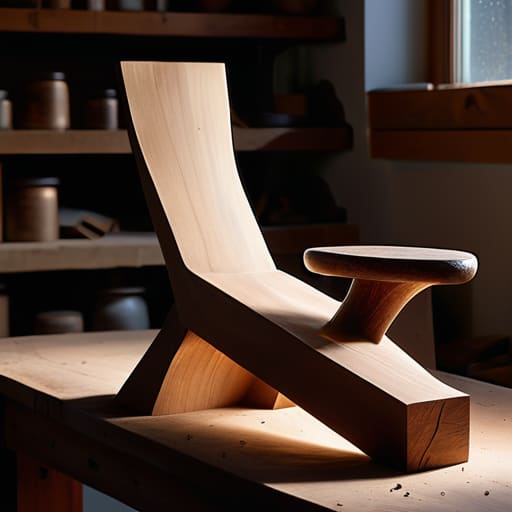
In my studio, I have a shelf of what I call “the ghosts.” They are the chair legs that were too aggressive, the joinery that felt dishonest, and the wood species that looked beautiful but failed under stress. Most people see a finished piece of furniture as a singular triumph, but after ten years of this, I see it as a graveyard of avoided mistakes. This is where the real mastery through deliberate practice happens—not in the moment of success, but in the quiet, internal debate where you reject the obvious solution in favor of something more difficult.
When you perform the same motions for a decade, you start to see the invisible architecture of your own choices. You begin to understand the psychology of long-term habit formation, recognizing how a shortcut taken in year three becomes a structural flaw in year ten. It isn’t about the repetition itself; it’s about the constant, subtle recalibration of your standards. You realize that professional growth isn’t a sudden leap, but rather the slow, heavy accumulation of every time you refused to settle for the path of least resistance.
The Quiet Alchemy of the Compounding Effects of Daily Practice
There is a specific kind of stillness that settles into your hands after a decade of working the same materials. In the early years, every chair leg or joinery detail felt like a battle against the wood, a frantic struggle to prove I belonged in the studio. But after ten years, the friction changes. It isn’t about fighting the medium anymore; it’s about the quiet alchemy of the compounding effects of daily practice. You start to realize that mastery isn’t a lightning bolt of inspiration, but rather the result of a thousand unremarkable Tuesdays where you simply showed up and did the work.
This isn’t about the mindless repetition of a factory line, though. It is more about the cognitive benefits of routine—the way the brain begins to automate the trivial so that the mind is free to inhabit the complex. When the basic mechanics of a dovetail joint or the tension of a letterpress lever become muscle memory, you finally have the mental bandwidth to ask the harder questions. You stop wondering how to build and start wondering why a specific curve feels more honest than another.
Refusing the Exit Overcoming Monotony in Professional Life
There is a specific kind of fatigue that sets in around year seven. It isn’t the exhaustion of a sprint; it’s the heavy, grey weight of knowing exactly how the next six months will unfold. In my studio, it looks like staring at a pile of walnut offcuts and feeling nothing. The temptation to pivot—to abandon the chair and start designing lighting, or to walk away from design entirely for something “fresher”—is constant. We often mistake this boredom for a lack of growth, but I’ve come to see it as a test of mastery through deliberate practice. The urge to flee is usually just a desire to escape the discomfort of the plateau.
Overcoming monotony in professional life isn’t about injecting constant novelty; it’s about shifting your gaze. Instead of looking for a new task, I look for a new nuance within the same one. I might spend three days obsessing over the radius of a single fillet or the way a specific joinery tension responds to humidity. It is a subtle, almost invisible form of deep work and skill acquisition. You realize that the exit isn’t the only way to find excitement; sometimes, the most profound discoveries are found by refusing to look away from the work that has become too familiar.
The Invisible Architecture of Deep Work and Skill Acquisition
There is a specific kind of mental scaffolding that only begins to settle in after the thousandth repetition. In my studio, it’s the way my hands find the grain of a piece of walnut before my eyes even register the texture. This isn’t just muscle memory; it is the invisible architecture of deep work and skill acquisition manifesting in real-time. When you strip away the novelty of a new project, you are left with the raw mechanics of the craft. You stop thinking about how to hold the tool and start thinking about the subtle tension between the blade and the wood.
This phase is where the cognitive benefits of routine become most apparent. It’s a paradox: the more predictable the movement becomes, the more mental bandwidth opens up for higher-order problem solving. Because the foundational steps are now automated, I can devote my entire consciousness to the structural integrity or the way a joint might fail ten years down the line. You aren’t just repeating a motion; you are building a subconscious library of solutions that allows you to navigate complexity without the frantic hesitation of a novice.
Where the Routine Breaks the Cognitive Benefits of Routine
There is a specific kind of mental clarity that only arrives when the mechanics of a task become invisible. In my studio, it’s the moment when I stop thinking about the tension of the saw or the grain of the walnut and start thinking about the relationship between the object and the room it inhabits. This is the true cognitive benefit of routine: by automating the low-level decisions, I free up the mental bandwidth required for the high-stakes ones. It isn’t about mindless repetition; it is about creating a stable platform for mastery through deliberate practice.
When the routine is solid, it acts as a scaffold rather than a cage. I’ve found that the most profound breakthroughs don’t happen when I’m struggling to learn a new technique, but when the technique is so deeply ingrained that my mind is free to wander into the problem-solving weeds. This is where the psychology of long-term habit formation meets actual creativity. The routine doesn’t stifle the spark; it provides the steady, controlled flame necessary to actually do the work without burning out on the trivialities.
Mastery Through Deliberate Practice the Near Misses of Excellence
In my studio, there is a shelf in the corner—a graveyard of sorts—filled with joints that didn’t quite seat and chair legs that were an eighth of an inch too shallow. Most people see these as failures, but to me, they are the most honest records of my career. Mastery through deliberate practice isn’t found in the perfect dovetail that slides home on the first try; it’s found in the tension of the piece that almost worked, the one that forced me to rethink the entire grain direction. You don’t reach excellence by repeating what you already know; you reach it by standing on the razor’s edge of your own incompetence, constantly correcting for the errors that nearly became your standard.
This is where the psychology of long-term habit formation meets the grit of the workshop. It’s easy to fall into a rhythmic, mindless repetition where you are simply going through the motions. But true skill acquisition requires a certain kind of friction. I’ve learned that if I’m not occasionally frustrated by a stubborn piece of walnut or a miscalculated radius, I’m likely not growing. The goal isn’t to avoid the mistake, but to make the mistake intentional enough that you can learn exactly why it happened.
Decoding the Psychology of Long Term Habit Formation
When I look at the shelf in my studio, filled with those rejected joinery samples, I don’t see failures; I see the physical evidence of the psychology of long-term habit formation in action. Habit isn’t just a repetitive loop; it is the slow, often painful process of pruning away the impulsive choices that lead to mediocrity. In the early years, every movement felt conscious and heavy. Now, the muscle memory has taken over, not because I’ve stopped thinking, but because the fundamental mechanics have moved from my conscious mind into my bones.
This transition is where the real magic happens. We often talk about mastery through deliberate practice, but we rarely discuss the mental shift required to stop fighting the tool and start listening to it. It is a quiet surrender. You stop trying to force the wood to obey your will and instead begin to understand the inherent logic of the grain. This isn’t about mindless repetition; it is about the cognitive benefits of routine allowing your brain to free up the bandwidth necessary for the truly difficult, creative decisions that actually define a piece of furniture.
The Weight of the Unchosen
After ten years, you realize that mastery isn’t found in the perfect final product, but in the graveyard of the things you almost did—the thousand tiny, corrected errors that live in the margins of every piece I finish.
Jonathan Marin
The Weight of the Finished Object
Looking back at the last ten years, I realize that the value wasn’t in the polished pieces that eventually left my studio, but in the friction of the process itself. We’ve talked about the alchemy of habit, the cognitive scaffolding of routine, and that strange, quiet strength found in refusing the easy exit. It isn’t just about the skill acquisition; it is about the cumulative weight of a thousand small choices. Every day spent at the workbench or the drafting table was a battle between the momentum of habit and the sudden, sharp urge to deviate. The mastery we claim is really just the residue of all those moments where we stayed the course, even when the monotony felt heavy enough to break us.
In the end, I find myself looking at my shelf of rejected prototypes—the ones with the handwritten notes taped to their sides—and realizing they are more honest than my successes. They represent the paths not taken and the errors that taught me more than any triumph ever could. If you find yourself stuck in the loop of a decade-long task, don’t mistake the repetition for stagnation. Instead, see it as the refining fire. The most profound part of any life’s work isn’t the final, seamless result, but the tension of the decision that nearly went the other way. That is where the soul of the craft actually lives.
