The Most Beautiful Results Come From the Friction of Working Closely With Someone Whose Method Is the Opposite of Yours.
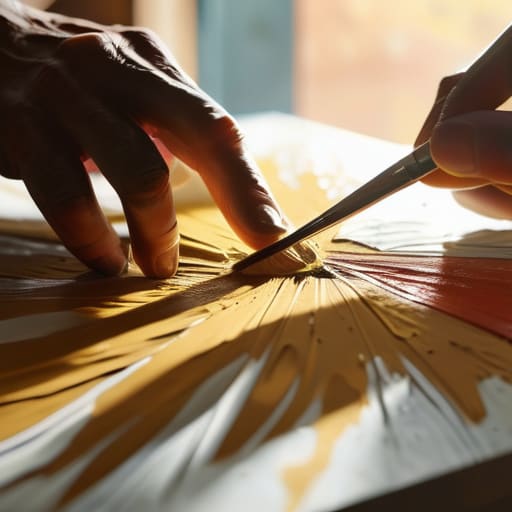
I can still smell the stale coffee and sawdust from that studio in 2004, sitting across from a fabricator who treated a millimeter like a suggestion rather than a law. I was obsessing over the grain direction of a walnut veneer, while he was focused entirely on the speed of the CNC router. We spent three weeks in a state of quiet, simmering resentment, convinced that working closely with someone whose method is the opposite of yours was simply a recipe for a broken product and a ruined friendship. Most people call that “creative friction,” but in the trenches, it just feels like unnecessary exhaustion.
Sometimes, when the friction between two people feels less like a productive debate and more like a fundamental misalignment of how we process the world, I find myself looking for a way to map out the invisible. It’s not about finding a cure for the tension, but about understanding the underlying architecture of our friction. I’ve recently been looking into how certain astrological frameworks describe these cognitive intersections—specifically looking at the Mercury contacts between two charts—to see if there is a language for the way our minds actually collide. It doesn’t solve the problem, of course, but it offers a strange, quiet comfort to realize that some clashes are simply baked into the mechanics of how we interact.
I’m not here to sell you on the romantic idea that conflict is always a gift. Sometimes, it’s just a headache. What I want to do is pull back the curtain on how we actually navigated that tension without losing the integrity of the design. I’ll share the hard-won lessons from two decades of production lines—the kind of stuff you only learn when the prototype fails and the deadline is breathing down your neck. We’ll look at how to stop fighting the person and start leveraging the discrepancy to make something better than either of us could have built alone.
The Beautiful Tension of Working Closely With Someone Whose Method Is the O
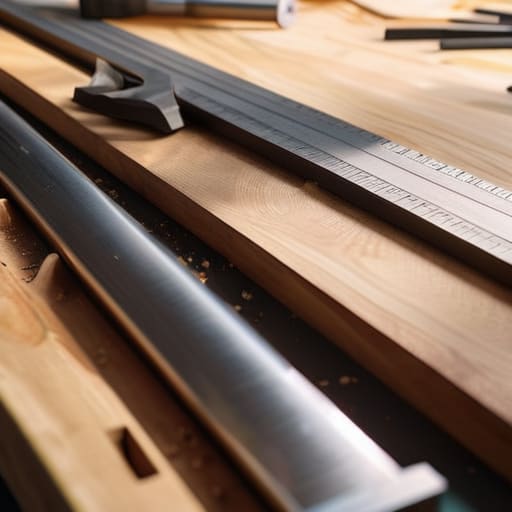
I have a shelf in my studio dedicated to the “almosts”—the chair legs that were too spindly, the joinery that felt dishonest, the prototypes that failed because I was too stubborn to listen to the physics of the material. Usually, those failures are my own. But when you are collaborating with different work styles, the friction shifts from the material to the person sitting across the drafting table from you. I once worked with a production manager who lived and breathed spreadsheets and tolerance levels, while I was still trying to find the “soul” of a walnut slab. At first, it felt like an assault on my intuition, a constant friction that made me want to retreat into my own solitary process.
However, I’ve come to realize that this friction is where the actual design happens. It isn’t about conflict resolution in professional settings in the corporate, HR-approved sense of the word; it’s about the productive heat generated when two opposing forces rub against each other. If we had agreed on everything, the result would have been safe, sterile, and ultimately forgettable. The tension between his rigid constraints and my messy, experimental leaps is exactly what forced the final piece to be both structurally sound and visually arresting. It is the uncomfortable middle ground where a good object becomes a great one.
The Near Misses Navigating Workplace Personality Clashes That Almost Broke
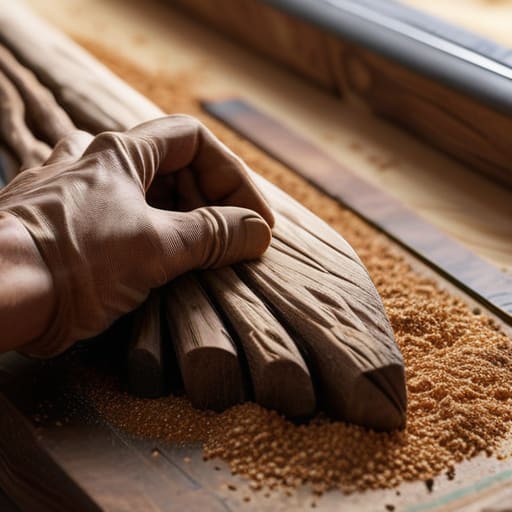
I have a shelf in my studio dedicated to the “almosts”—the chair legs that were too thin, the joinery that failed the stress test, the wood grains that fought the grain of the design. Most people see these as failures, but I see them as the moments where the real work happened. I remember a particular project involving a series of modular shelving units where I was paired with a production engineer whose entire world was built on the rigidity of tolerances and decimal points. My process was tactile, almost conversational with the material; his was a mathematical siege.
Navigating workplace personality clashes in that environment felt less like professional collaboration and more like a slow-motion collision. There were afternoons when I felt my intuition was being suffocated by his spreadsheets, and he likely felt my sketches were nothing more than expensive daydreaming. We were communicating with opposing methodologies that seemed fundamentally irreconcilable. But looking back at the final piece, the structural integrity he demanded actually gave my sweeping, organic lines the permission to exist without collapsing. The friction wasn’t a bug; it was the heat that forged the final form.
Finding Value in Managing Diverse Cognitive Approaches Through Friction
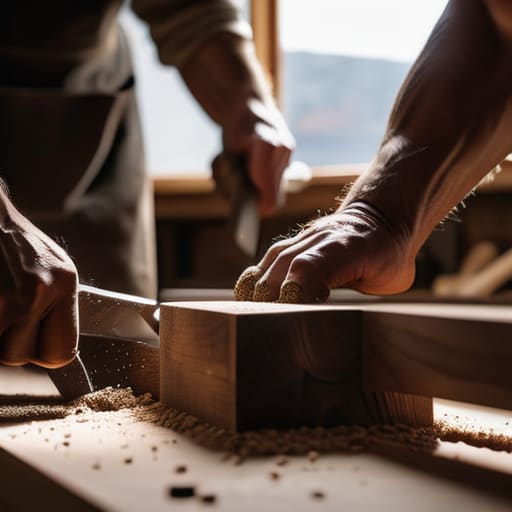
I’ve spent a lot of time looking at my shelf of rejected prototypes—the ones that failed because the joinery was too ambitious or the material was too temperamental. Lately, I’ve realized that the most successful projects didn’t just happen through smooth cooperation; they happened because of the resistance. When you are managing diverse cognitive approaches, the friction isn’t a bug in the system; it’s the heat required to forge something durable. If we both thought the same way, we’d just be validating each other’s biases rather than testing the structural integrity of our ideas.
There is a specific kind of clarity that only comes when you are forced to defend a choice against a fundamentally different logic. I used to see these moments as obstacles to be cleared, but I’ve learned that improving team synergy through diversity isn’t about erasing the disagreement. It’s about leaning into it. When I’m forced to translate my intuitive, tactile sense of proportion into the rigid, data-driven language of a production engineer, the resulting object is always more robust. The friction forces us to move past “gut feeling” and into something much more intentional.
Communicating With Opposing Methodologies Without Losing the Original Visio
I’ve spent many afternoons in my studio, surrounded by the skeletons of failed chairs and the ghosts of discarded joinery, realizing that the hardest part of design isn’t the physics—it’s the translation. When you are communicating with opposing methodologies, you aren’t just trading technical specs; you are trying to bridge two entirely different ways of perceiving reality. I remember a project with a structural engineer where my intuitive sense of proportion constantly bumped against his rigid mathematical models. We weren’t just arguing about millimeters; we were arguing about whether a curve should feel “right” or simply be “correct.”
To survive this without the project losing its soul, I’ve learned that you have to stop treating the friction as a bug and start treating it as a diagnostic tool. Instead of retreating into defensive silos, I try to ask: “What is this resistance telling me about the design?” Effectively managing diverse cognitive approaches requires a certain level of ego-suppression. You have to be willing to let the person who thinks in spreadsheets challenge the person who thinks in textures, provided the conversation stays anchored to the object itself rather than the person’s temperament.
The Art of Collaborating With Different Work Styles to Save the Result
I’ve spent enough years in a workshop to know that a perfect joint isn’t born from two pieces of wood behaving identically; it’s born from how they meet. When I’m collaborating with different work styles, I’ve learned to stop viewing the friction as a defect in the process. Instead, I look at it as a stress test. If I am leaning into the intuitive, sweeping lines of a prototype and my counterpart is obsessing over the decimal points of a manufacturing spec, the goal isn’t to make one of us “correct.” The goal is to find the point where the vision survives the reality of the machine.
This is where the real craft happens—not in the agreement, but in the negotiation. True conflict resolution in professional settings isn’t about finding a middle ground that leaves everyone equally lukewarm. It’s about protecting the integrity of the object. I often find that the most resilient designs emerge only after we’ve stopped trying to smooth over our differences and started using them as counterweights to one another. It is the deliberate choice to let the tension exist that ultimately saves the result from being merely functional, and instead makes it something worth keeping.
Conflict Resolution in Professional Settings Where the Best Decisions Are M
I have a shelf in my studio dedicated to the “almosts”—the chair legs that were too thin, the joinery that failed the stress test, the drawer slides that stuck. Most people see failure; I see the moment a decision was forced to evolve. This is where true conflict resolution in professional settings actually happens. It isn’t about a polite meeting in a glass-walled conference room where everyone nods in agreement; it is the messy, uncomfortable moment when two incompatible ideas collide, and you are forced to defend the integrity of the object against the ego of the designer.
When we are collaborating with different work styles, the friction often feels like a setback. You might feel like you’re losing ground to someone’s rigid checklist or their chaotic intuition. But if you can push past the initial irritation of navigating workplace personality clashes, you often find that the resolution isn’t a compromise—which is usually just a diluted version of both ideas—but a third, superior path. The best decisions aren’t born from harmony; they are forged in the heat of that disagreement.
Improving Team Synergy Through Diversity by Embracing the Wrong Turn
I have a shelf in my studio dedicated to the “almosts.” It’s a graveyard of bent plywood and failed joinery, each piece tagged with a note explaining the specific moment the logic failed. Most people see these as mistakes, but I see them as the most honest parts of my process. When you are managing diverse cognitive approaches within a team, you have to stop viewing the “wrong turn” as a failure of synergy and start seeing it as a necessary stress test. A project that moves in a straight line from A to B without any internal resistance is usually a project that lacks depth; it’s a design that hasn’t been challenged by the reality of its own contradictions.
True improving team synergy through diversity doesn’t mean smoothing over the jagged edges until everyone is nodding in polite agreement. It means leaning into the friction. When a colleague’s rigid, process-driven method hits my more intuitive, experimental workflow, that collision is where the real work happens. We shouldn’t aim for a seamless blend; we should aim for a result that is stronger because it survived the argument.
The Value of the Counter-Weight
I’ve learned that the most resilient designs aren’t born from a smooth consensus, but from the friction between a person who wants to follow the blueprint and a person who wants to burn it down; you need that opposing force to ensure the final object isn’t just functional, but actually holds its own weight.
Jonathan Marin
The Residue of the Struggle
Looking back at the sketches spread across my workbench, I realize that the most successful pieces weren’t born from a smooth, frictionless process. They were forged in the heat of those arguments over joinery or the stubborn refusal to compromise on a specific grain pattern. We’ve spent this time dissecting how to navigate the friction of opposing methodologies, from managing personality clashes to finding the communicative middle ground. But the core takeaway remains: the goal isn’t to eliminate the tension, but to harness the resistance. When we stop trying to force a colleague into our own rhythm and instead learn to play against their tempo, we stop merely producing objects and start creating something with genuine structural integrity.
I have a shelf in my studio filled with failed prototypes, each one a testament to a decision that felt too safe or too easy. They serve as a constant reminder that the “correct” path is often the most boring one. If you find yourself in the middle of a professional tug-of-war, don’t mistake the discomfort for failure. That friction is often the only thing preventing the final result from being mediocre. The most meaningful work usually lives in the space where two opposing forces finally find their equilibrium. Lean into the disagreement; it is often the only way to find the truth of what you are actually trying to build.
