
The Order of Operations I Learned Slowly
I can still smell the burnt sawdust and the sharp, metallic tang of a CNC bit that had just surrendered its life to a misplaced decimal point. I was twenty-four, working on a prototype for a cantilevered lounge chair, convinced that my intuition was superior to the technical manual sitting on my workbench. I had bypassed a critical sequence of structural reinforcements, thinking I could “design around” the physics. That afternoon, the chair didn’t just fail; it splintered with a sound like a gunshot, leaving me standing in a pile of expensive, ruined walnut. It was my first real encounter with the order of operations you learned the hard way, and it taught me that nature doesn’t care about your creative ego.
I’m not here to give you a sanitized, textbook lecture on how things should work in a perfect vacuum. Instead, I want to talk about the messy, iterative reality of getting things right through the process of getting them wrong. I’ll be sharing the specific, unvarnished sequences of decision-making that actually hold up when the pressure is on and the materials are unforgiving. This isn’t about theory; it’s about the hard-won logic found in the wreckage of my own mistakes.
The Beautiful Near Disaster of the Order of Operations You Learned the Hard
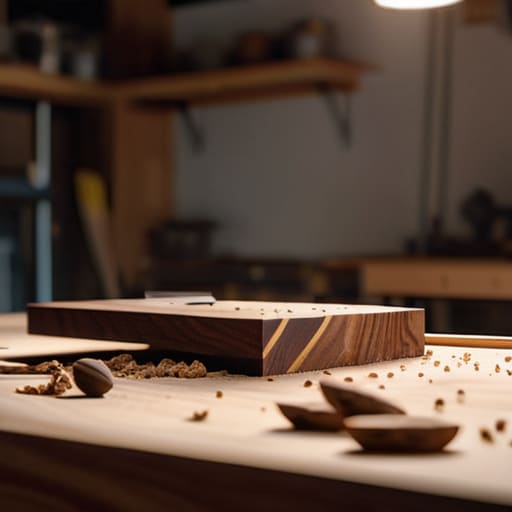
I remember a walnut dining table that nearly ended up as firewood because I ignored the sequence of the joinery. I had the CNC cutting the mortises before I had even finalized the thickness of the rails. It was a classic case of optimizing task sequencing in the wrong direction—trying to move fast by skipping the foundational measurements. I sat in my studio, surrounded by those rejected prototypes I keep, looking at a piece of expensive timber that was technically perfect but fundamentally useless.
That mistake taught me that a workflow isn’t just a checklist; it’s a hierarchy of dependencies. When I rushed the assembly, I wasn’t being efficient; I was just creating operational efficiency mistakes that would have cost me three weeks of rework. Now, when I approach a new build, I don’t look for the fastest way to start. I look for the most stable way to begin. I’ve learned that true craftsmanship is found in the discipline of the sequence—the quiet, often boring decision to wait for the glue to dry or the measurement to be verified twice, rather than chasing the momentum of a premature finish.
How One Wrong Sequence Nearly Erased Every Productive Workflow Lesson

I remember a particular Tuesday in the studio, three years into my own practice, when I decided to bypass the standard prototyping sequence to save a few hours. I was convinced that I could jump straight to the final material selection before the structural integrity of the joint had been fully vetted. It was a classic case of optimizing task sequencing in my own head, while in reality, I was just cutting corners. I thought I was being efficient; instead, I was setting a trap for myself.
By the time the first physical model arrived from the shop, the mistake was catastrophic. Because I had ignored the foundational steps, the entire assembly failed under its own weight. This wasn’t just a minor setback; it was a profound lesson in avoiding workflow bottlenecks by respecting the hierarchy of a build. I realized then that true productivity isn’t about speed, but about the discipline of the sequence. I spent the next week dismantling the wreckage, realizing that the most expensive way to learn a lesson is to treat a systematic process like a suggestion.
The Costly Friction of Common Operational Efficiency Mistakes
In my studio, I’ve learned that efficiency isn’t a straight line; it’s a series of carefully managed tensions. When I was first running my own line, I treated every task as an isolated event rather than a link in a chain. I thought that if I worked faster on the individual components, the whole would arrive sooner. That was my first major encounter with operational efficiency mistakes. I was so focused on the speed of the saw or the precision of the sander that I completely ignored the rhythm of the room. By the time the parts reached the assembly stage, they were a chaotic pile of beautiful, useless shapes that didn’t fit together because the sequence of their creation had been fundamentally flawed.
This kind of friction is what happens when you treat a workflow like a checklist instead of a living system. I spent months optimizing task sequencing for the individual craftsmen, only to realize I had actually created a series of micro-stalls. We were avoiding the big delays, but we were drowning in a thousand tiny, invisible pauses. It taught me that true productivity isn’t about how fast you can move; it’s about ensuring that the momentum of one step feeds directly into the next without a single moment of hesitation.
Avoiding Workflow Bottlenecks by Choosing the Difficult Path First
In my studio, I’ve learned that the temptation to tackle the “easy” tasks first is a seductive trap. It feels like momentum, but it’s usually just procrastination in disguise. When I’m working on a complex joinery sequence or setting up a heavy press, I’ve realized that optimizing task sequencing means tackling the most rigid, unforgiving steps while my focus is still sharp. If you push the difficult, high-stakes decisions to the end of the day, you aren’t just tired; you are prone to the kind of standard operating procedure errors that turn a minor adjustment into a week-long delay.
I keep a shelf of those rejected prototypes—the ones where I tried to take a shortcut through a complex assembly. They serve as a physical reminder of the cost of avoiding the friction. True systematic process improvement isn’t about finding a way to bypass the hard parts; it’s about deciding exactly when to confront them. By choosing the difficult path first, you aren’t just managing your time; you are protecting the integrity of the entire project from the inevitable fatigue that comes with a long day of making decisions.
Why Standard Operating Procedure Errors Often Feel Like Progress
There is a seductive quality to movement that mimics achievement. In the studio, I’ve often found myself rushing to sand a joint or polish a veneer, feeling the momentum of “work,” only to realize later that I had bypassed the critical structural measurements. We do this with logic, too. We treat standard operating procedure errors as mere hiccups rather than fundamental flaws because, in the moment, they feel like speed. We mistake the frantic pace of a disorganized sequence for the actual momentum of a project moving forward.
This is the trap of the “busy” designer. We convince ourselves that we are optimizing our time, when in reality, we are just polishing the wrong parts of the process. When we skip a step in the sequence to save twenty minutes, we feel a surge of productivity, but we are actually just accumulating debt. True systematic process improvement is rarely this exhilarating; it is often slow, tedious, and involves sitting still to ensure the foundation is set before the first cut is ever made. We mistake the friction of a mistake for the heat of progress.
Optimizing Task Sequencing Through the Lens of Near Misses
I have a shelf in the back of my studio dedicated to what I call “the ghosts.” These are the chair legs that were too thin, the joinery that failed under tension, and the drawer slides that seized because I rushed the sanding process. Looking at them now, I realize that optimizing task sequencing isn’t about finding the fastest route from A to B; it is about recognizing the structural integrity of the steps in between. When I try to skip the seasoning of wood to meet a deadline, I’m not being efficient; I’m just inviting a future crack.
True systematic process improvement comes from studying these near-misses rather than celebrating the successes. In my early years, I viewed a smooth production run as the ultimate goal, but I’ve learned that a smooth run often masks a lack of rigor. The real growth happens when you pause during a failure and realize that the error wasn’t a lack of skill, but a failure in the sequence itself. You have to learn to respect the friction, because that is where the real work of refinement begins.
The Elegance of Systematic Process Improvement Found in Chaos
There is a specific kind of quiet that settles over a studio after a complete breakdown. I remember a week last autumn when a series of small, cascading errors in my workshop led to a pile of wasted walnut and a broken jig. In the moment, it felt like pure incompetence. But looking back at the wreckage, I realized that chaos is often the only honest mirror we have for our methods. It forces a kind of ruthless clarity that a smooth afternoon never could.
When everything is going right, we tend to ignore the cracks in our foundation. We mistake momentum for mastery. It is only through the friction of a failed sequence that we actually engage in systematic process improvement. You don’t find the solution in the textbook; you find it when you are standing over a ruined prototype, realizing that your mental checklist was missing a crucial step. We learn to refine our craft not by following the lines, but by mapping the gaps where we almost fell through.
## The Ghost in the Blueprint
We tend to treat a correct sequence like a finished chair—something sturdy, final, and beyond reproach. But the real intelligence isn’t in the sequence that worked; it’s in the ghost of the sequence that failed, the one that taught you exactly why the math had to happen before the assembly, or why the order of operations is less about logic and more about survival.
Jonathan Marin
The Value of the Scar
Looking back at these near-misses, it becomes clear that efficiency isn’t about finding the fastest route from A to B; it is about understanding the structural integrity of the sequence itself. We’ve seen how a single misplaced step in a workflow can mimic the sensation of progress while actually eroding the foundation of the entire project. Whether I am adjusting the tension on a printing press or re-sequencing a production line, the lesson remains the same: the order of operations is not a suggestion, it is the invisible architecture that holds the work together. When we ignore the sequence to chase the result, we aren’t being efficient; we are simply gambling with the outcome.
I still keep those rejected prototypes in the corner of my studio, not as trophies of failure, but as reminders of the paths I almost took. They serve as a physical record of the friction that occurs when we try to bypass the necessary struggle of a correct process. If you find yourself staring at a broken workflow or a botched calculation, don’t just fix the error—interrogate the sequence that allowed it to happen. True mastery doesn’t come from never making a mistake, but from developing a deep, almost intuitive respect for the difficult, correct path that prevents the disaster before it even begins.
