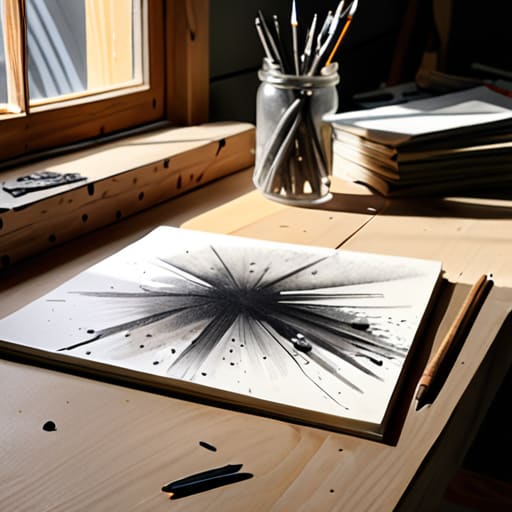
What I Stopped Doing
I spent most of my twenties believing that “process” was something you could buy—a proprietary software suite, a specific set of expensive drafting tools, or a high-concept studio ritual that supposedly unlocked genius. It’s a lie that the industry sells to keep us feeling inadequate. I used to think that if I just found the right sequence of steps, the design would simply happen. But looking back at the mountain of discarded joinery and the pile of rejected prototypes in my workshop, I realize that how my process changed over twenty years wasn’t about adding more layers of complexity, but about learning how to strip them away.
I’m not here to give you a roadmap to “creative flow” or a list of productivity hacks. Instead, I want to talk about the friction. I want to share what I’ve learned from the mistakes that actually taught me something, and the moments where the most important part of the work was the decision that nearly went the other way. This is a look at design as daily work, not as a sudden burst of inspiration, and how I learned to embrace the constraints that actually make a piece of furniture worth building.
The Elegance of the Near Miss How My Process Changed Over Twenty Years
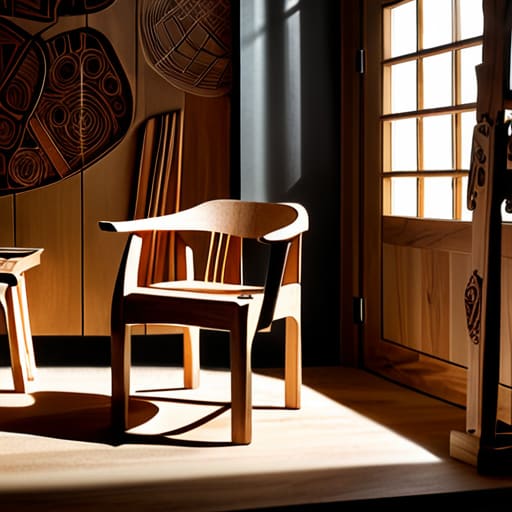
In my early years, I equated “design” with the sheer accumulation of detail. I thought a chair was better if it had more joinery to show off, more complex curves to justify the price tag. I spent months chasing a kind of maximalist perfection that felt profound at the time, but looking at those old sketches now, I see they were mostly just loud. My early career evolution insights tell me that I wasn’t actually designing; I was just decorating my own indecision.
The real shift happened when I stopped trying to prove how much I knew and started trying to see how much I could take away. This transition from complexity to simplicity wasn’t a sudden epiphany, but a slow, painful shedding of ego. I began to realize that a well-placed void is often more powerful than a crowded surface. Now, when I look at my shelf of rejected prototypes, I don’t see failures; I see the necessary detours that taught me how to find the quiet center of a piece. It turns out that professional growth is less about adding new tools to your kit and more about learning which ones to leave in the drawer.
Abandoning the Ornament a Transition From Complexity to Simplicity
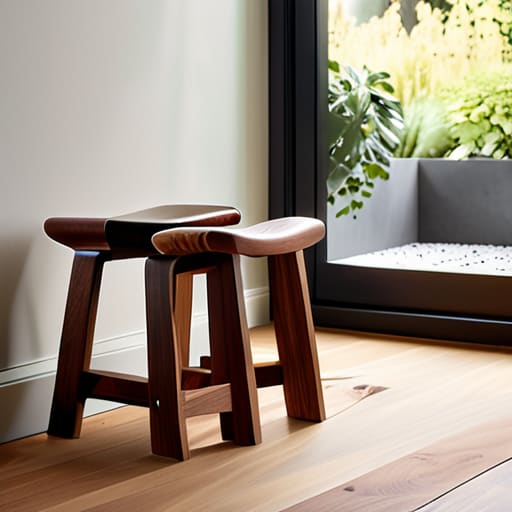
In my early years, I treated complexity like a shield. I thought that if a chair had enough intricate joinery or a complex, sweeping curve, it would somehow prove my worth as a designer. I was chasing a kind of decorative bravado, convinced that more detail equaled more value. But looking at those early sketches now, I see a desperate attempt to hide behind the work. It was a loud, cluttered way of designing that lacked any real structural honesty.
The true transition from complexity to simplicity didn’t happen through a sudden epiphany, but through the slow, repetitive grind of production. When you move from a single prototype to a production line, you learn that every unnecessary flourish is just another point of failure. I started seeing ornament not as an addition, but as a distraction from the essential logic of the object. My professional growth and methodology shifted from asking “What can I add?” to “What can I remove without the piece collapsing?” I realized that the most profound design decisions are often the ones where you choose to leave the surface quiet, allowing the grain and the geometry to do the heavy lifting.
The Weight of Lessons Learned From Long Term Experience
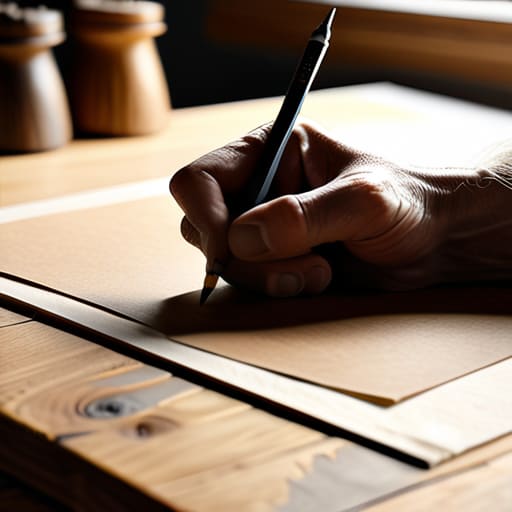
There is a specific kind of exhaustion that comes with a decade of production runs, a weight that eventually settles into your bones and changes how you hold a pencil. In my early years, I thought progress was measured by the sheer volume of ideas I could churn out. I treated my desk like a battlefield of sketches. But as I moved from the frantic energy of a solo studio into the more rigid structures of industrial production, I realized that true professional growth and methodology isn’t about adding more; it’s about the disciplined subtraction of the unnecessary.
I’ve spent a lot of time lately looking at the graveyard of rejected prototypes in the corner of my workshop. Each one is a physical marker of a lesson learned from long-term experience. Some failed because the joinery was too ambitious for the cost; others failed because they were simply too precious to be functional. I no longer see these as failures, but as the essential friction required for refining systems for efficiency. You eventually learn that the most elegant solution isn’t the one that shows off your skill, but the one that survives the constraints of the real world without losing its soul.
Refining Systems for Efficiency Without Losing the Soul
In my early years, my studio felt like a chaotic workshop of trial and error. I used to think that “process” meant wrestling with a piece of walnut until it surrendered, or staying up until 3:00 AM just to prove I could solve a joinery problem through sheer willpower. But there is a difference between being a craftsman and being a professional. As I moved between my own studio and larger production lines, I realized that true professional growth and methodology isn’t about adding more struggle; it’s about removing the friction that doesn’t serve the object.
I’ve spent a lot of time lately refining systems for efficiency, not to speed up the clock, but to clear the mental clutter. If I can automate the mundane aspects of a project—the standard CAD templates or the predictable sourcing of hardware—I save my cognitive energy for the actual design decisions. It’s a delicate balance. You want a workflow that is disciplined enough to prevent wasted material, yet loose enough to allow for that one moment of accidental genius. I want my systems to be the scaffolding, not the cage.
The Calculated Pivot Professional Growth and Methodology
In my early years, I treated every new project like a frantic sprint, trying to solve every structural and aesthetic problem simultaneously. I thought being a designer meant being a whirlwind of constant motion. But as I moved from the chaos of my own small studio into the rigid realities of large-scale production lines, I realized that true professional growth and methodology isn’t about adding more layers of thought; it’s about knowing which layers to strip away. I stopped trying to outrun the problem and started trying to outthink it.
This shift required a certain kind of disciplined patience. I began focusing on workflow optimization over time, not to shave seconds off a factory timer, but to protect the headspace required for actual decision-making. I learned that if my system is too cluttered, I lose the ability to hear that quiet, nagging intuition—the one that tells me a joint is slightly off or a silhouette feels dishonest. Now, my process is less about the grand gesture and more about the quiet, iterative refinement of the invisible mechanics that hold a piece together.
Workflow Optimization Over Time Choosing the Harder Path
In my early years, I mistook busyness for progress. I thought a “good” day was one where I had thirty different sketches spread across the floor and a dozen half-finished models cluttering the workbench. I was chasing the high of constant movement, but I was actually just spinning my wheels. True workflow optimization over time hasn’t been about adding more tools or faster software; it has been about the brutal, necessary process of subtraction.
Now, my process is defined by the quiet spaces between decisions. I’ve learned that a streamlined system isn’t one that allows you to do more, but one that allows you to think more clearly. I used to fight against the constraints of production timelines, seeing them as enemies to my creativity. Today, I view those constraints as the very scaffolding that holds a design together. It is a strange irony of professional growth and methodology: the more I restrict my options early in the cycle, the more freedom I actually have to find the right solution when it finally matters.
Finality and Fate Career Evolution Insights
There is a certain heavy stillness that comes with realizing you can no longer outrun a bad idea. In my early years, I thought professional growth meant adding more tools to the belt, more intricate joinery to the chair, or more layers to the concept. I mistook activity for progress. But looking back, the true essence of my career evolution insights isn’t found in the things I added, but in the things I finally had the courage to leave out. I used to fight the constraints of a production line; now, I see them as the very thing that gives a piece its dignity.
It’s a strange sort of peace, moving away from the frantic need to prove oneself through sheer complexity. I’ve spent a lifetime refining systems for efficiency, not just to save time, but to clear the mental clutter that prevents real seeing. When you stop trying to decorate the problem, you finally start solving it. My process hasn’t just changed; it has distilled. I’ve learned that the most profound part of any career isn’t the accumulation of wins, but the quiet acceptance of what is truly necessary.
The Ghost in the Joint
I used to think my job was to find the perfect solution, but after twenty years of staring at sawdust and failed joinery, I’ve realized the real work is just managing the ghosts of the decisions I didn’t make.
Jonathan Marin
The Ghost in the Machine
Looking back at the stacks of rejected prototypes in my studio—each one a graveyard of “almosts”—I realize that my process hasn’t actually been about finding the right answer. It’s been about the discipline of narrowing the field. I’ve moved from the frantic complexity of my early years, trying to prove I could do everything, to a much quieter, more deliberate way of working. I’ve learned to value the constraint over the flourish and the system over the spark. My evolution hasn’t been a straight line toward perfection, but rather a steady process of stripping away the noise until only the essential, difficult decisions remain.
If there is one thing twenty years of sawdust and ink has taught me, it’s that the most meaningful part of any object isn’t the polished surface that people see in a showroom. It’s the tension held within the joinery, the silent victory of a choice that survived a dozen better-looking alternatives. Don’t fear the detour or the failed prototype; those are the moments where the real design actually happens. In the end, we aren’t just making things; we are learning how to choose, and that is a craft that never truly reaches a finished state.
