The Morning After a Delivery
I spent most of my thirties surrounded by the smell of sawdust and the low hum of a CNC router, convinced that “inspiration” was something that arrived in a lightning bolt. We’re sold this lie that a master craftsman waits for a divine spark before picking up a pencil, but that’s just a convenient excuse for procrastination. In reality, the way how I start the next piece usually begins with a heavy sense of dread and a pile of sketches that look more like accidents than designs. I don’t wait for the muse; I wait for the constraints to become narrow enough that I actually have something to fight against.
I’m not here to sell you on a flow state or a magical morning routine involving expensive journals. What I want to talk about is the messy, unglamorous friction of the first few days—the stage where you realize your initial idea is garbage and you have to decide which part of it is worth saving. I’ll show you how I navigate that liminal space between a vague impulse and a tangible prototype, focusing on the decisions that actually shape the work.
The Beautiful Friction of Starting a New Project
There is a specific kind of tension that exists in the studio before the first cut is made or the first sketch is finalized. It isn’t the clean, cinematic “aha!” moment people expect; it’s more like a physical weight in the room. I call it the friction of the unknown. When I’m starting a new project, I find myself caught between the urge to rush toward a solution and the terrifying realization that I don’t actually have one yet. It’s a messy, uncoordinated stage where my brain tries to bypass the struggle by searching for instant creative block solutions, but those are usually just shortcuts to mediocre design.
I’ve learned that you can’t actually bypass this discomfort. My best work—the pieces that actually earn their place in a home—usually emerges from this exact friction. I tend to lean into the resistance rather than fighting it. Instead of forcing a polished concept, I let myself inhabit the uncertainty. It’s less about finding a perfect set of artistic workflow techniques and more about learning to sit still with the doubt until the material starts talking back.
The Idea I Almost Left Behind
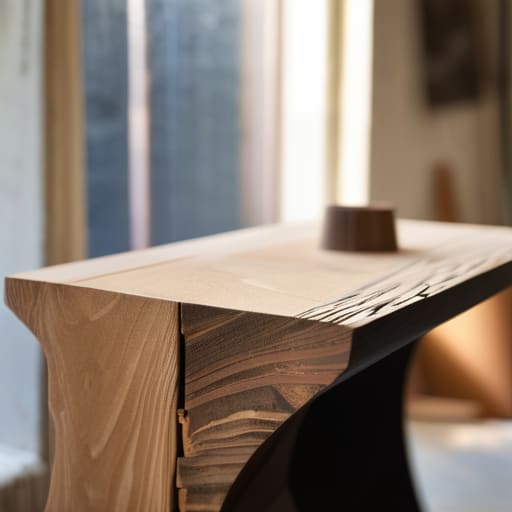
There is a specific corner of my studio, a shelf just below eye level, where the “ghosts” live. It is a graveyard of bent plywood, failed joinery, and sketches that lacked the courage to become real. Last week, I found myself staring at a prototype for a side table that I had discarded six months ago because the leg taper felt too aggressive. I had convinced myself it was a mistake, a lapse in judgment that didn’t fit my aesthetic.
But as I sat there, the light hitting the grain of the walnut, I realized the error wasn’t in the taper, but in my fear of the silhouette. I almost let the idea die because I was looking for a sense of safety rather than a sense of character. We often talk about creative block solutions as if they are external tools—new software or a change of scenery—but usually, the blockage is just a refusal to sit with a difficult decision. I realized that maintaining creative flow isn’t about constant movement; it’s about knowing which “failures” are actually just truths waiting for the right moment to be heard.
How I Start the Next Piece Through Chaos
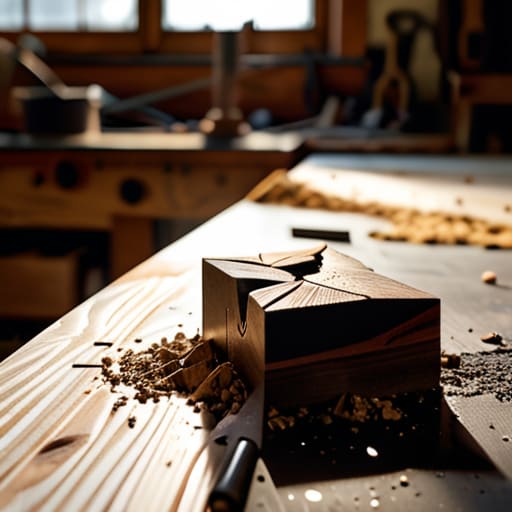
I don’t reach for a sketchbook or a CAD program first. Instead, I lean into the mess. My studio floor is a graveyard of failed joinery and half-formed concepts, and I find that I need that debris to find my footing. There is a specific kind of creative momentum strategies that people talk about in textbooks—linear, clean, and utterly lifeless—but my reality is much more tactile. I start by making things that are wrong. I’ll cut a piece of walnut just to see how the grain fights the blade, or I’ll mix a batch of pigment for my letterpress that is far too dark, just to feel the weight of the error.
This isn’t about finding a sudden spark; it’s about navigating the noise. I’ve learned that trying to force a sense of order too early is the quickest way to kill a concept. If I try to implement rigid artistic workflow techniques before the chaos has settled, the design feels manufactured rather than discovered. I need to let the mistakes happen, let the sawdust settle, and wait for the moment where a “wrong” turn suddenly feels like the only way forward.
Finding Artistic Workflow Techniques in the Near Misses
I spent the better part of this morning in the back of the studio, digging through the “Graveyard”—that shelf of rejected prototypes I refuse to throw away. There’s a chair leg there, carved from walnut, that failed because the taper was too aggressive, too hungry for attention. But as I held it, I realized that the failure wasn’t in the wood; it was in my hesitation. Often, when people ask about artistic workflow techniques, they expect a clean, linear map. They want a way to bypass the mess. But I’ve learned that my best creative momentum strategies aren’t found in the successes, but in the autopsy of these near misses.
The real work happens when you stop trying to force a “flow” and instead start studying why the previous idea died. I don’t look for perfect solutions; I look for the friction points. If a joint doesn’t seat right or a silhouette feels dishonest, that’s not a dead end—it’s a compass. By treating every discarded sketch as a piece of data rather than a personal defeat, I find that maintaining creative flow becomes less about willpower and more about curiosity.
Creative Momentum Strategies Born From Second Guesses
I’ve found that the best creative momentum strategies don’t come from a sudden burst of lightning, but from the debris of my own indecision. When I’m stuck, I don’t look for a grand epiphany; I look at the pile of rejected sketches in the corner of my studio. There is a specific kind of energy in a failed idea—a residue of what almost was. Instead of treating a dead end as a wall, I treat it as a pivot point. I’ve learned to stop hunting for “perfection” and start looking for the tension between what I planned and what the material actually demanded.
This shift in perspective is often my most effective way of overcoming writer’s block, or in my case, the designer’s equivalent: the paralyzing fear of a bad first cut. By leaning into the second-guessing, I find a way of maintaining creative flow that feels less like a forced march and more like a conversation. It’s about realizing that the mistake wasn’t a detour, but a necessary redirection toward something more honest.
Overcoming Writers Block by Embracing the Wrong Turn
When I hit a wall, I’ve learned that the worst thing I can do is try to force a “correct” direction. In my studio, if a joint won’t seat or a wood grain looks muddy, I don’t stare at it until it fixes itself; I pivot. I’ve found that the most effective way of overcoming writer’s block is to stop treating it like a failure of will and start treating it like a design flaw. If the current path feels stagnant, I intentionally take a wrong turn. I’ll pick up a tool I haven’t used in months or try a construction method that I know, deep down, is probably a mistake.
There is a specific kind of relief in purposefully failing. By leaning into a bad idea, you strip away the paralyzing pressure of perfectionism. It becomes a way of maintaining creative flow through sheer experimentation rather than rigid adherence to a plan. Often, the “wrong” turn reveals a structural truth about the piece that the “right” path was hiding. It’s not about finding a solution; it’s about finding a better question.
Maintaining Creative Flow via the Decisions We Abandon
I have a shelf in the back of my studio, tucked behind the walnut offcuts, where the “almosts” live. It’s a graveyard of joinery that didn’t quite sing and chair legs that were too aggressive for their own good. Most people see these as failures, but for me, they are the fuel for maintaining creative flow. When I feel that familiar stagnation creeping in, I don’t look for fresh inspiration in a magazine; I look at the decisions I abandoned. I revisit those discarded paths to remind myself that a design isn’t a straight line, but a series of successful rejections.
There is a specific kind of momentum found in the “no.” When I’m stuck, I realize that my current impasse is often just a ghost of a previous idea that I lacked the courage to follow. By treating these abandoned paths as active components of my process rather than mistakes, I find better creative momentum strategies than any productivity hack could offer. It turns the act of starting a new project from a terrifying leap into a calculated pivot away from what didn’t work.
The Weight of the Unchosen Path
I don’t start by looking for the right direction; I start by looking at the pile of wrong ones. Every new piece begins with a conversation between the idea I’m holding and the three better versions I had the courage to kill off last week.
Jonathan Marin
The Weight of the Unchosen Path
Looking back at the wreckage of my process, I realize that starting isn’t about finding the right direction, but about learning to live with the ones I didn’t take. We’ve talked about the chaos, the second guesses, and the way a near-miss can actually provide more structural integrity than a straight line ever could. I’ve spent my career realizing that the “correct” choice is often just the one that survived the most scrutiny. To start the next piece, you have to stop looking for a clean slate and start looking at the scars of your previous decisions. It is in that friction—between the idea you held onto and the one you let slip through your fingers—where the actual work begins.
I often look at my shelf of rejected prototypes, those wooden joints that failed or the sketches that felt too timid, and I don’t see failures. I see the roadmap. If you are waiting for a moment of pure, unadulterated clarity before you pick up the tool or the pen, you will be waiting forever. Instead, embrace the mess of the near-miss. The most honest way to begin is to acknowledge that every masterpiece is built on a foundation of discarded possibilities. Don’t fear the wrong turn; just make sure you’re paying attention when you take it.
