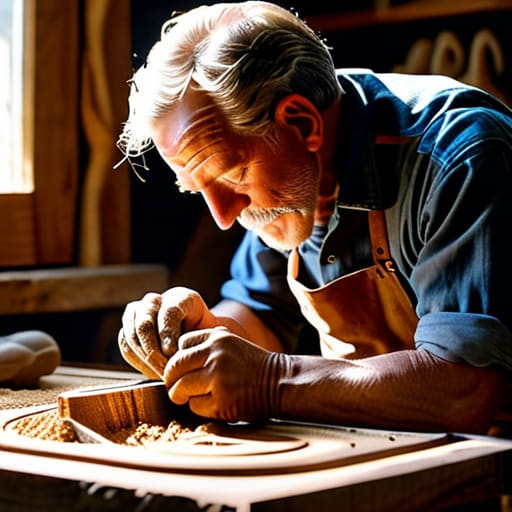
Still Interested After Three Decades
I was staring at a pile of rejected chair legs last Tuesday—walnut, scarred by a misplaced router bit, sitting in the corner of my studio—when the question hit me again. Everyone wants to talk about the “flow state” or the “spark of genius,” as if longevity is some magical byproduct of being inspired. It’s a lie. If you’re waiting for a lightning bolt to strike every morning, you won’t last five years, let alone figure out how to keep doing this for thirty years. Real endurance isn’t about finding more passion; it’s about managing the friction of the daily grind and learning to respect the mistakes that almost killed a project.
I’m not here to give you a motivational speech or a roadmap to “finding your purpose.” I’ve spent two decades navigating the space between my own sketches and the cold reality of production lines, and I know that the secret isn’t in the successes. I want to talk about the near-misses and the practical, unglamorous constraints that actually build a career. We’re going to look at the grit required to stay in the room when the work gets boring, because that is where the real craft happens.
The Art of the Near Miss How to Keep Doing This for Thirty Years

I have a shelf in my studio dedicated to the ghosts of projects past. It’s a graveyard of bent plywood, mismatched joinery, and failed finishes, each one tagged with a handwritten note explaining the exact moment the logic failed. For a long time, I viewed these as failures. Now, I see them as the only way to actually stay in the game. If you want to talk about maintaining passion over decades, you have to stop looking at the polished final product and start looking at the pivot points—the moments where you almost chose the easy path, but didn’t.
True longevity isn’t about a sudden burst of creative lightning; it’s about the quiet discipline of the daily grind. We often mistake burnout for a lack of ideas, but more often, it’s a lack of friction. When everything becomes predictable, the soul of the work begins to atrophy. I’ve found that finding purpose in repetitive tasks requires you to intentionally reintroduce small, controlled risks into your process. You don’t need a revolution; you just need to keep making those tiny, difficult decisions that keep the work from becoming a mere reflex.
The Psychology of Long Term Motivation and the Joy of Pivot Points
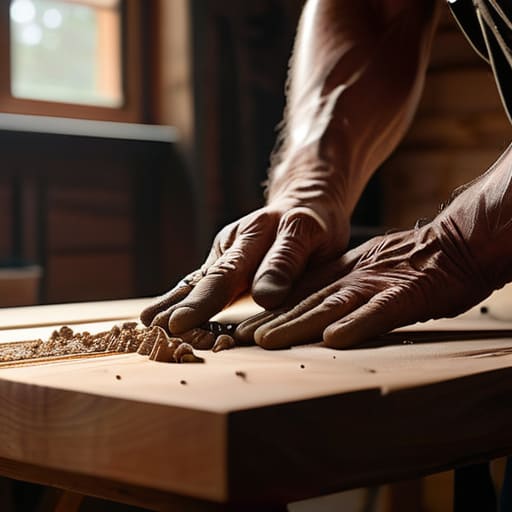
We tend to treat motivation like a fuel tank—something you fill up and hope lasts the trip. But after two decades of watching joints fail and wood grain fight back, I’ve realized that staying in the game isn’t about constant inspiration; it’s about the psychology of long-term motivation found in the pivot. When a prototype fails, it’s easy to see it as a dead end. In reality, those moments of friction are the only things that keep the work from becoming a hollow routine. If everything went according to the initial CAD drawing, I’d have quit a decade ago from sheer boredom.
The real secret to maintaining passion over decades lies in these micro-adjustments. It is the ability to find a strange, quiet joy in the moment you realize your original idea was wrong. We often talk about preventing burnout in long-term careers as if it’s a matter of taking more holidays, but I think it’s actually about embracing the error. When you stop fighting the deviation and start designing around it, the work stops being a grind and starts being a conversation.
Preventing Burnout in Long Term Careers Through Intentional Friction

We are often taught that the enemy of longevity is friction—the resistance, the struggle, the grind. We try to optimize every workflow, smooth out every edge, and automate every repetitive task in a desperate bid for efficiency. But in my experience, that kind of seamlessness is exactly what leads to the void. When everything is too easy, the mind drifts. I’ve found that preventing burnout in long-term careers actually requires a certain amount of intentional resistance. In my studio, this looks like choosing the manual letterpress over the digital layout, or hand-sanding a joint that a CNC machine could have finished in seconds. It’s about introducing a deliberate difficulty that forces you to stay present.
If you remove all the obstacles, you eventually remove the reason to care. Maintaining passion over decades isn’t about finding a way to make the work effortless; it’s about finding the right kind of hard. You need those small, controlled moments of struggle to remind you that you are still participating in the craft, rather than just managing a process. By choosing the harder path occasionally, you keep the tactile connection to your work alive.
Maintaining Passion Over Decades by Embracing the Wrong Paths
I have a shelf in the back of my studio, tucked behind the samples of Baltic birch and steel, that is essentially a graveyard of “incorrect” ideas. There is a chair leg that was too aggressive, a joinery method that failed the stress test, and a series of drawer pulls that felt entirely too precious. To a stranger, they are failures. To me, they are the only reason I haven’t walked away from the workbench. We are often taught that professional longevity is about refining a single, perfect trajectory, but I’ve found that maintaining passion over decades requires the occasional, deliberate detour into the wrong direction.
When you commit to a single path for thirty years, the danger isn’t just exhaustion; it’s the terrifying predictability of your own success. You start to solve problems before they even arrive. By occasionally chasing a design whim that has no commercial viability—by choosing the “wrong” material or an impractical silhouette—you reintroduce a necessary tension into your practice. This isn’t just about avoiding stagnation; it is a fundamental part of preventing burnout in long-term careers. You need those beautiful, unproductive mistakes to remind you that you are still exploring, not just executing.
Finding Purpose in Repetitive Tasks and the Beauty of the Mundane
In my studio, there is a specific kind of silence that settles in when I’m sanding a single chair leg for the twentieth time that afternoon. To an outsider, it looks like stagnation—the monotonous loop of a craftsman stuck in a rut. But I’ve learned that there is a profound, quiet dignity in the repetition. If you are looking for strategies for lifelong engagement, you won’t find them in the grand, sweeping gestures of a new project launch; you find them in the way the grain responds to the grit. It is in these small, rhythmic movements that I actually find my footing.
We often mistake the “spark” for the engine, but the spark is just the ignition. The actual engine is the ability to find meaning in the granular, unglamorous work that follows the initial excitement. Finding purpose in repetitive tasks isn’t about pretending the boredom doesn’t exist; it’s about recognizing that the repetition is where the skill actually settles into the bone. It is the difference between a fleeting interest and a vocation. When the novelty inevitably wears off, the ritual is what keeps the structure from collapsing.
Strategies for Lifelong Engagement Beyond the Initial Spark
I’ve learned that if you rely solely on that initial rush of adrenaline—the “new project” high—you’ll run dry long before the second decade hits. Real longevity isn’t about chasing lightning in a bottle; it’s about building sustainable habits for life that function even when the creative well feels parched. I look at my shelves of rejected prototypes, those failed joinery experiments and warped wood samples, and I realize they weren’t distractions. They were the necessary friction required for maintaining passion over decades. They kept my hands moving when my head was stuck.
The trick is to stop viewing the lull between big breakthroughs as wasted time. Instead, treat those quiet stretches as the structural support for your career. I find that the most effective strategies for lifelong engagement involve leaning into the technical minutiae—the way a specific screw interacts with a grain, or the exact pressure needed on a letterpress bed. It sounds tedious, but finding purpose in repetitive tasks is actually the most reliable way of preventing burnout in long-term careers. It turns the work from a series of emotional peaks and valleys into a steady, manageable rhythm.
Building Sustainable Habits for Life via Productive Second Guesses
I have a shelf in the back of my studio filled with what I call the “almosts.” They are the chair legs that were too aggressive, the joinery that failed the stress test, and the drawer pulls that looked fine on screen but felt wrong in the hand. For a long time, I saw these as failures. Now, I see them as the primary mechanism for building sustainable habits for life. When you treat your daily routine as a series of experiments rather than a rigid march toward perfection, you stop fearing the plateau. You start looking for the slight deviation in your process that might lead to something better.
The trick to maintaining passion over decades isn’t found in the grand, sweeping gestures of a new project, but in the quiet, productive second guess. It’s about looking at a task you’ve performed a thousand times—sanding a surface, setting type, or sketching a profile—and asking, “What if I did this slightly differently today?” This micro-pivot prevents the stagnation that usually precedes a career collapse. It turns the mechanical into the investigative, ensuring that even the most repetitive motions remain a form of active, living inquiry.
The Weight of the Unchosen Path
Longevity isn’t about finding a straight line and walking it until your boots wear out; it’s about having the courage to look at the pile of rejected prototypes in the corner of your studio and realizing that the version of you that almost failed is the only reason the current version is still standing.
Jonathan Marin
The Long View
Looking back at the shelves in my studio, I don’t see a linear progression of success. I see a graveyard of “almosts”—the chairs with the wrong joinery, the prints where the ink bled too far, the prototypes that failed because I was too afraid to pivot. But that’s exactly how you survive three decades without losing your mind. Longevity isn’t about the flawless execution of a single, perfect vision; it is about the intentional friction of second-guessing yourself and the courage to embrace the mundane rhythms that keep a craft alive. We stay in the game by finding value in the pivot points and recognizing that the mistakes we nearly made are often the only things that actually keep us moving forward.
Ultimately, the goal isn’t to reach a finish line where you finally “arrive” at mastery. That’s a myth sold by people who don’t actually work with their hands. Instead, the goal is to cultivate a relationship with your work that is sturdy enough to withstand the seasons of boredom and the inevitable droughts of inspiration. If you can learn to find beauty in the constraints and meaning in the rejected drafts, you won’t just survive thirty years—you’ll actually inhabit them. Don’t aim for a career of perfect monuments; aim for a life of meaningful, beautifully flawed decisions.
