
A Decade of Doing One Thing Wrong
I was looking at a stack of rejected chair prototypes in my studio this morning—the ones with the failed joinery and the impossible curves—and I realized they are actually more honest than my successes. For a long time, I thought professional maturity meant arriving at a place of polished, effortless certainty, but that was the biggest lie of my career. I spent a decade chasing a version of “mastery” that was really just a fear of making a mess, and looking back, I can see exactly what I got wrong for ten years. I was designing for the gallery wall instead of the human body, prioritizing the aesthetic of perfection over the reality of how things actually work.
I’m not here to give you a curated list of “life hacks” or some glossy roadmap to success. Instead, I want to talk about the friction. I want to pull back the curtain on the specific, unglamorous mistakes that shaped my hands and my head, focusing on the decisions that nearly went the other way. This is about the unvarnished truth of the craft—the kind of knowledge you only get when you stop trying to look right and finally start trying to be right.
Understanding What I Got Wrong for Ten Years
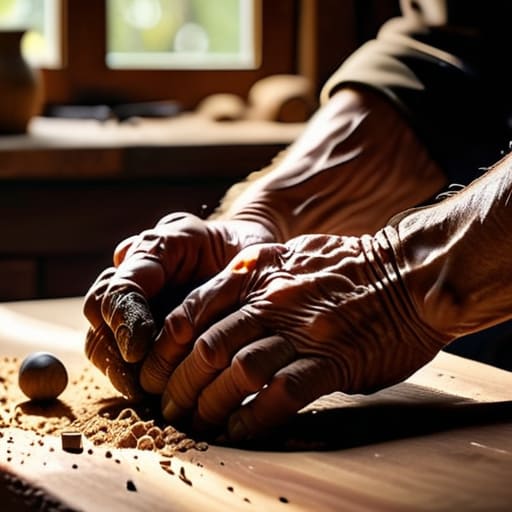
For a long time, I treated my career like a production line—a series of linear progressions where every mistake was a defect to be sanded down and hidden. I thought that if I could just refine my process enough, the friction of doubt would eventually disappear. I was chasing a version of “perfect” that only exists in technical drawings, not in the messy, tactile reality of a workshop. I spent a decade under the impression that mastery was the absence of error, when in reality, it was just the ability to hide my tracks more effectively.
Looking back, the real work wasn’t in the polished final pieces, but in the pile of rejected prototypes gathering dust in the corner of my studio. Each one represents a moment where I chose safety over curiosity. Practicing radical honesty with myself meant admitting that I wasn’t actually designing; I was just solving puzzles to avoid the discomfort of being wrong. It took a decade of following that rigid, narrow map to realize that true wisdom gained from past errors isn’t about avoiding the wrong turn, but about finally having the courage to take it.
Key Things to Know

If you look through the scrap pile in the corner of my studio—the ones with the handwritten notes taped to the undersides—you won’t see a list of accidents. You’ll see a list of intentions that simply lacked the courage to be honest. For a long time, I thought design was about arriving at a perfect, unassailable truth. I treated every sketch like a final verdict rather than a conversation. I’ve realized now that wisdom gained from past errors isn’t about finding the right answer; it’s about realizing that the “right” answer is often just the one that survived the most scrutiny.
The real work isn’t in the polished veneer, but in the friction of overcoming long-term misconceptions about what it means to be a professional. I used to think maturity meant having fewer questions. Now, I see that it requires a much more aggressive form of personal growth and self-reflection. You have to be willing to look at a decade of work and admit that you weren’t actually building something beautiful—you were just building something safe.
Practical Tips and Steps
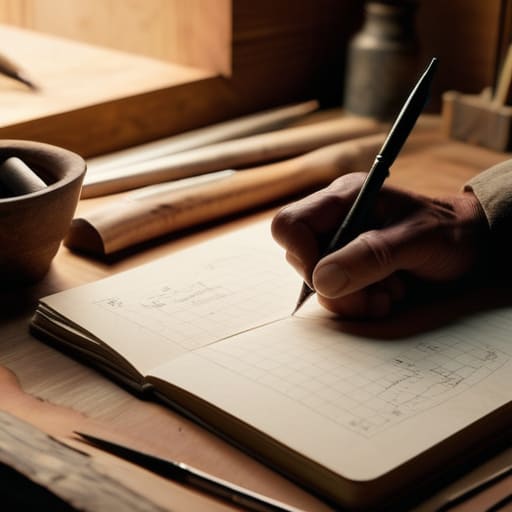
If you’re looking to untangle yourself from a decade of bad habits, don’t start with a grand overhaul. In my studio, when a joint fails or a silhouette feels off, I don’t throw the whole design away; I isolate the variable. Apply that same logic to your own trajectory. Start by practicing the importance of radical honesty with your current workflow. Sit down with a notebook—not a screen—and list the processes you cling to simply because they feel familiar. It’s about identifying the “ghost designs” in your life: the habits that look good on paper but lack structural integrity.
The second step is to embrace the friction. I used to think progress was a smooth line, but true wisdom gained from past errors usually comes from the moments where everything feels stuck. When you hit a wall, don’t pivot immediately to something shiny and new. Instead, look at your “rejected prototypes”—those failed projects or ideas you’ve tucked away. There is often a kernel of truth in a failure that can be salvaged if you have the patience to strip away the ego and look at the raw material.
Common Mistakes to Avoid
One mistake I see constantly—and one I lived through—is the tendency to mistake polish for progress. In the studio, I used to think that if a prototype looked seamless, I had succeeded. I was chasing a sterile kind of perfection that ignored the actual mechanics of the work. I was avoiding the friction, not realizing that the friction is where the design actually lives. This is a core part of overcoming long-term misconceptions about what a “successful” career looks like; we often mistake the absence of visible struggle for actual mastery.
The second trap is the refusal to audit your own intentions. I spent years designing for an imaginary critic, a phantom client who didn’t exist, rather than for the constraints of the material itself. It took a significant amount of personal growth and self-reflection to realize that I was building monuments to my own ego rather than functional objects. We have to practice the importance of radical honesty with ourselves, admitting when a direction isn’t just difficult, but fundamentally wrong, before we’ve spent another decade perfecting a mistake.
Final Thoughts
I often look at the scrap pile in the corner of my studio—those jagged, wooden ghosts of chairs that were too heavy or joints that were too proud. I used to see them as failures, but now I see them as the necessary friction required to find the right line. Looking back, the process of overcoming long-term misconceptions about what a “successful” career looked like was far more exhausting than the actual design work. It wasn’t a single epiphany, but a slow, grinding realization that my rigid adherence to certain rules was actually a way of avoiding the vulnerability of true creation.
Ultimately, this decade of wandering wasn’t a waste of time; it was the tuition I paid for a sense of clarity. There is a specific kind of wisdom gained from past errors that you simply cannot fast-track through a textbook or a seminar. It requires the grit to sit with your mistakes until they stop feeling like wounds and start feeling like blueprints. I’m still learning, still adjusting the tension, and still finding the beauty in the decisions that almost didn’t happen.
The Cost of the Clean Line
I spent a decade treating design like a math problem to be solved, thinking that if I just stripped away enough noise, I’d eventually find some objective truth. I thought clarity was the absence of error, but looking back at the graveyard of my early prototypes, I realize that the most honest things I ever made were the ones where I finally stopped trying to be right and started allowing myself to be human.
Jonathan Marin
The Cost of the Correct Path
Looking back at that decade, I see a version of myself that was obsessed with the polished final product while completely ignoring the friction that actually makes a thing work. I spent years trying to smooth out the edges of my process, thinking that efficiency was the same thing as excellence, only to realize that true design lives in the tension of the struggle. I tried to avoid the messy, iterative failures that I now know are the only way to actually find something worth making. If I hadn’t spent those ten years miscalculating the value of restraint versus ego, I wouldn’t have the clarity I have now. It turns out that the mistakes weren’t just detours; they were the actual work.
I still keep my old, failed prototypes in the corner of the studio, tucked away in cardboard boxes. They are my most honest teachers. When I look at a chair or a printed page today, I don’t just see the successful joinery or the clean typeface; I see the ghosts of the decisions I almost didn’t make. If you feel like you are currently wandering through a season of errors, don’t rush to fix them so you can get back to being “productive.” Instead, lean into the wrong turns. The most beautiful part of any life, much like any well-made object, is the quiet beauty of the alternative path that we were brave enough to reject.
