
Skill Is Mostly Judgement
I spent most of yesterday afternoon digging through a cardboard box in the corner of my studio, pulling out a series of failed chair joints that I’ve kept for nearly a decade. Most people look at a finished piece of furniture and see a seamless triumph of talent, but they’re looking at the wrong thing. They think skill is the ability to execute a perfect line, when in reality, what skill actually is has much more to do with the internal friction of the choices you didn’t make. We’ve been sold this lie that skill is a polished, effortless state of being, but if you’ve ever spent six hours trying to figure out why a dovetail won’t seat properly, you know that true competence is mostly just a series of well-managed failures.
I’m not here to give you a motivational speech about “unlocking your potential” or some curated list of habits from a productivity blog. I want to talk about the grit of the process—the part where you stop relying on inspiration and start relying on deliberate constraint. Over the next few sections, I’m going to strip away the romanticism and show you how skill is built through the decisions that nearly went the other way.
The Ghost of the Other Path What Skill Actually Is
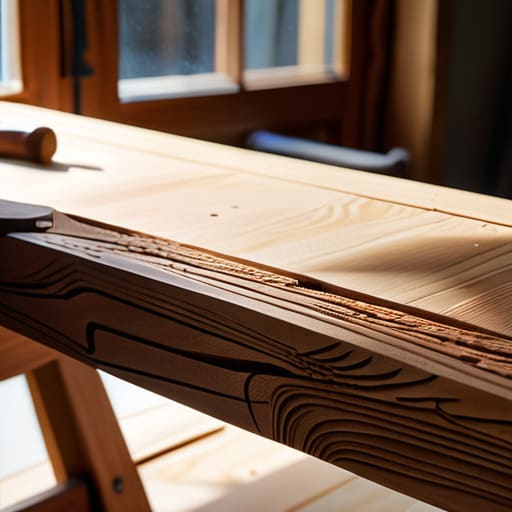
I have a shelf in the corner of my studio dedicated to the “almosts.” There is a chair leg carved with a slight, aggressive taper that I ultimately rejected, and a series of joinery samples that failed because I pushed the wood too far. To a casual observer, these are mistakes. To me, they are the map. People often conflate the difference between skill and talent, assuming that a natural affinity for form is what matters. But talent is just a head start; it’s a static thing. Skill, however, is the residue of every wrong turn you’ve learned to avoid.
It is less about the ability to execute a perfect line and more about the cognitive aspects of skill acquisition—the internal dialogue where you weigh the risk of a certain cut against the safety of a standard one. True proficiency isn’t found in the textbook; it is the bridge between applied knowledge vs theoretical knowledge. You can study the physics of a cantilever all day, but you don’t actually possess the skill until you’ve felt the exact moment the grain begins to protest. Skill is the muscle memory of making the right choice when the other option felt much more tempting.
The Raw Gift vs the Refined Edge Difference Between Skill and Talent

I have a shelf in the back of my studio, tucked behind the stacks of walnut offcuts, filled with those “failed” prototypes. Some are structurally sound but aesthetically hollow; others are beautiful but impossible to manufacture. They represent the gap between what I was born with and what I actually built. People often conflate the two, but the difference between skill and talent is as stark as the difference between a raw slab of timber and a hand-planed surface. Talent is that unearned, effortless spark—the way a certain light hits a curve or a natural sense of proportion. It’s a gift, certainly, but it’s a static one. It’s a starting line, not a destination.
Skill, however, is the grit. It is the applied knowledge that comes when your hands finally understand why a joint failed or why a line felt dishonest. While talent might give you the intuition to see a shape, it takes mastery through deliberate practice to actually bring that shape into the physical world without it collapsing under its own weight. Talent is the spark; skill is the slow, methodical process of keeping the fire burning through the long, unglamorous hours of trial and error.
The Hard Miles Mastery Through Deliberate Practice
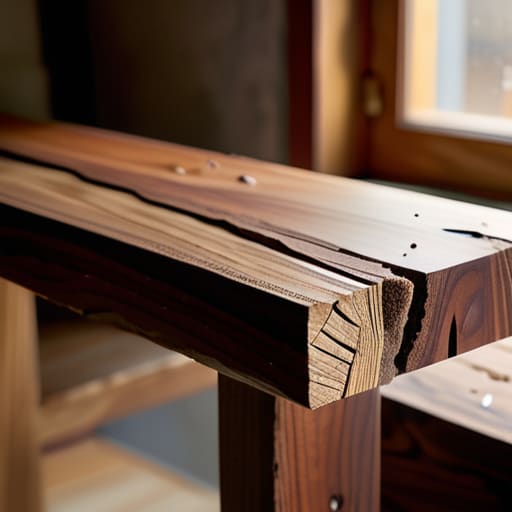
I have a shelf in the back of my studio dedicated to what I call the “graveyard of good intentions.” It’s filled with walnut joints that split too early and chair legs that look elegant on paper but feel spindly in the hand. These aren’t failures; they are the physical evidence of mastery through deliberate practice. You don’t reach a level of proficiency by repeating what you already know how to do. If you only practice the strokes you can execute perfectly, you aren’t building skill—you’re just performing a ritual.
True expertise lives in the friction between applied knowledge and theoretical knowledge. You can read every manual on wood movement or joinery tension, but that knowledge stays flat until it hits the resistance of the material. Real growth happens when you intentionally push into the zone of discomfort, forcing yourself to solve a problem that makes you sweat. It is the process of developing expertise and proficiency through a thousand tiny, corrected errors. Eventually, those corrections stop feeling like corrections and start feeling like intuition, though it’s really just a deeply ingrained memory of every mistake you’ve ever made.
Beyond the Textbook Applied Knowledge vs Theoretical Knowledge
I spent my early twenties thinking that if I read enough monographs on Bauhaus or understood the structural mechanics of a mortise and tenon joint, I would somehow be a designer. I treated my education like a syllabus to be completed, assuming that a deep well of information was the same thing as the ability to build. But there is a profound gap between applied knowledge vs theoretical knowledge that no textbook can bridge. You can memorize the load-bearing capacity of white oak, but that knowledge stays silent until you are standing in the shop, feeling the grain resist your chisel in a way the diagrams never predicted.
True proficiency isn’t about how much you know; it’s about how that knowledge behaves under pressure. In my studio, I see the role of intuition emerge not as a magical spark, but as the byproduct of thousands of tiny, corrected mistakes. It is the moment your hands react to a slight tremor in the wood before your brain has even processed the error. That isn’t just “knowing” the material—it is the physical manifestation of experience overriding theory.
The Invisible Architecture Cognitive Aspects of Skill Acquisition
When I’m sitting at my drafting table or hunched over a letterpress, the physical act—the steady hand, the muscle memory—is only half the story. The real work is happening in the quiet, unobservable shifts of the mind. We often mistake the outward grace of a craftsman for magic, but the true cognitive aspects of skill acquisition are much more structural. It’s about how the brain begins to categorize chaos. Early on, every movement is a loud, conscious effort; eventually, that noise settles into a silent, internal map.
This isn’t just about repetition; it’s about the brain’s ability to compress complexity. As you move toward developing expertise and proficiency, you aren’t just learning new tricks; you are building a mental library of patterns. You stop seeing a pile of timber and start seeing the structural tensions inherent in the grain. This internal scaffolding allows you to bypass the slow, analytical processing of a novice. You aren’t thinking about the steps anymore; you are thinking about the intent, and your mind simply retrieves the most efficient path to get there.
Forging the Instinct the Crucial Role of Intuition in Skill
I have a shelf in my studio dedicated to the “almosts”—the chair legs that were too spindly, the joinery that looked right on paper but felt wrong under a thumb. People often mistake this gut feeling for magic, but I’ve come to realize that the role of intuition in skill is less about a mystical spark and more about the condensation of experience. It is the moment when the cognitive aspects of skill acquisition move from the conscious, stuttering part of the brain into something fluid and silent.
When I’m at the letterpress, I don’t calculate the ink viscosity with a formula; I feel it in the resistance of the paper. This isn’t some innate gift that bypasses effort. Rather, it is the byproduct of years of mastery through deliberate practice, where the brain has finally cataloged enough failures to recognize a success before it even happens. True intuition is simply pattern recognition running at high speed. It’s the ability to sense the “wrong” decision before you’ve even fully articulated why it’s wrong, allowing you to pivot while the material is still in your hands.
The Final Polish Developing Expertise and Proficiency
There is a specific kind of quiet that settles in when you stop fighting your tools and start listening to them. In the studio, I see this most clearly when a junior designer moves past the stage of merely following a blueprint and enters the realm of true proficiency. It isn’t about the speed of the hand, but the economy of movement. You aren’t just executing a task; you are navigating the subtle friction between what the material wants to do and what your mind demands of it. This is where the distinction between raw ability and actual competence becomes visible.
Developing expertise and proficiency isn’t a linear climb; it’s more like sanding a piece of walnut. You spend hours removing the imperfections that no one else will ever see, but you know they are there. You realize that mastery through deliberate practice isn’t found in the grand gestures, but in the micro-adjustments made during the final ten percent of a project. It is the ability to look at a nearly perfect joint and realize it is still a fraction of a millimeter off, and having the discipline to fix it anyway.
The Weight of the Alternative
Skill isn’t the ability to hit the mark every time; it’s the quiet, muscle-memory awareness of the thousand wrong ways you could have gone, and the disciplined choice to stay on the one that works.
Jonathan Marin
The Weight of the Decision
Looking back at the sprawl of my studio—the stacks of failed joinery and the letterpress proofs that missed the mark—I realize that skill isn’t a destination you reach once you’ve mastered a manual. It is the cumulative weight of every informed choice made under pressure. We’ve traced the line from raw talent to the quiet, cognitive architecture of intuition, but the core remains the same: skill is the ability to navigate the tension between what is easy and what is right. It is the bridge between knowing the theory and possessing the refined edge necessary to execute it when the material pushes back.
Ultimately, don’t hunt for the moment of perfection; hunt for the moment of clarity. True mastery isn’t found in the absence of error, but in the ability to look at a finished piece and recognize the exact second you chose the difficult path over the convenient one. That is where the soul of the work lives. If you find yourself constantly wrestling with the “other way,” don’t be discouraged. That struggle isn’t a sign of inadequacy; it is the very process of becoming something capable. The goal isn’t to stop making mistakes, but to ensure that every mistake is a deliberate step toward a more meaningful craft.
