
Where a Personal Language Comes From
I spent most of my morning in the studio, staring at a pile of rejected walnut joints that I’ve kept for nearly a decade. Most design books will tell you that finding your voice is about curation, or perhaps about studying the masters until your eyes bleed, but they completely ignore the friction. They treat the process of learning how to develop a personal design language as if it were some spiritual awakening or a sudden bolt of lightning. In reality, it’s much messier than that; it’s usually found in the scrap heap, hidden within the specific reasons why a certain curve felt dishonest or why a joint refused to sit flush.
I’m not here to give you a roadmap to “inspiration” or a list of aesthetic trends to mimic. Instead, I want to talk about the geometry of failure. I want to share what twenty years of sawdust and production deadlines have actually taught me: that your style isn’t a collection of things you like, but a series of deliberate constraints you’ve learned to live with. We’re going to look at how to find your voice by examining the decisions you almost didn’t make.
The Ghost of the Alternative How to Develop a Personal Design Language
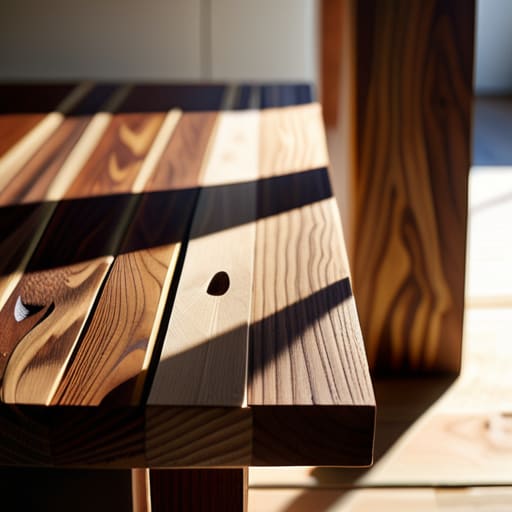
I have a shelf in the back of my studio, tucked behind the samples of walnut and ash, that serves as a graveyard for the versions of myself I didn’t become. There is a chair leg there, tapered too aggressively, and a joinery detail that felt far too precious for a production run. I keep them because they are the most honest part of my process. When people talk about creating a signature style, they often treat it like a destination—a polished, singular look you arrive at after enough years. But I’ve found that a true design language is actually built from the friction of these near-misses. It is the sum of the paths you refused to take.
To find your footing, you have to stop looking for a finished “look” and start looking at your hesitation. Developing a coherent set of design aesthetic principles isn’t about choosing a color palette or a specific silhouette; it’s about recognizing the recurring logic behind your pivots. When you look at your rejected sketches, don’t just see failures. See the unconscious preferences that forced you to abandon them. That tension—the space between what you almost did and what you actually built—is where your real voice lives.
Curating Visual Inspiration Through the Lens of Rejection
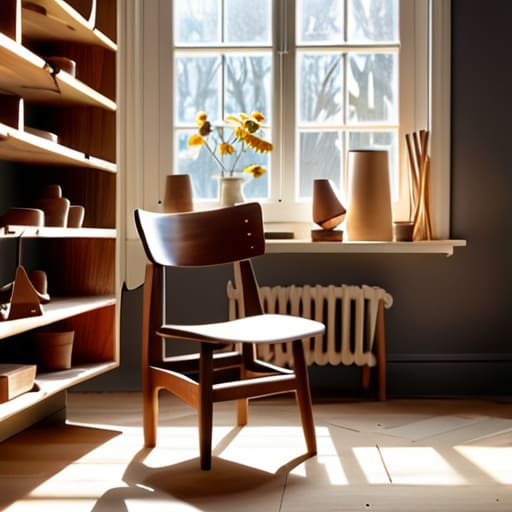
I have a shelf in the back of my studio, tucked behind a stack of birch plywood, that serves as a graveyard for ideas. It’s filled with failed joinery, wobbly chair legs, and sketches that simply didn’t “click.” Most people approach curating visual inspiration by building a digital mood board of things they love, a shimmering collection of perfection. But I’ve found that my actual sense of direction comes from looking at what I couldn’t make work. When I look at a piece of mid-century cabinetry that I once tried to replicate—only to realize its proportions felt dishonest to my own hands—I learn more about my design aesthetic principles than I ever do from a successful model.
The real work of creating a signature style isn’t about accumulating a library of “good” things; it’s about identifying the specific friction points that make you say “no.” When I’m browsing through old design journals or walking through a gallery, I’m not looking for a template to copy. I am looking for the boundaries of my own taste. I want to see the things that almost felt right, but ultimately failed, because those failures act as the negative space that defines my true path.
Finding Your Signature Style in the Near Misses
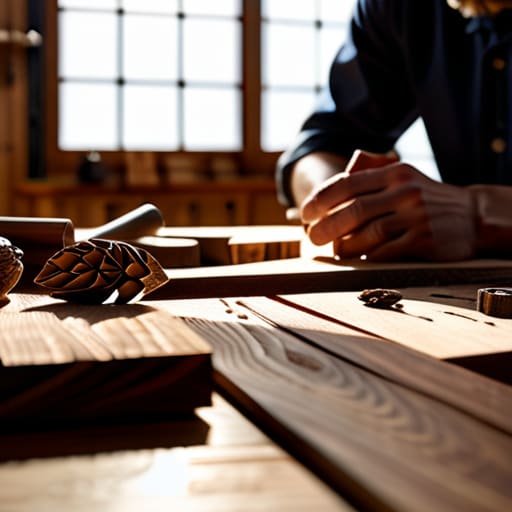
I spent yesterday afternoon digging through a cardboard box in the corner of my studio, pulling out a series of failed joinery samples for a walnut sideboard I designed back in 2012. Each one is tagged with a handwritten note: too aggressive, lacks structural honesty, or the taper is a gimmick. Looking at them now, I realize that my current approach to creating a signature style didn’t emerge from a sudden epiphany of beauty, but from the slow, painful realization of what I couldn’t stand to see in a finished piece.
When we talk about design aesthetic principles, we often focus on the “yes”—the choice of oak over maple, or the decision to use a dovetail. But the true fingerprint of a designer is found in the “no.” It is the tension held within the tension of a near-miss. My style isn’t a collection of preferred shapes; it is a refined boundary built from the wreckage of every idea that felt slightly dishonest. To find your own voice, you have to stop looking at what works and start studying the specific ways in which your previous attempts failed to be you.
Defining Brand Personality in Design via Decisive Friction
We often talk about brand personality in design as if it’s something you can sprinkle on at the end, like a fine dusting of sawdust over a finished joint. But in my experience, personality isn’t found in the smooth, easy choices that satisfy a brief. It’s found in the friction. It’s that moment when a design direction feels slightly uncomfortable—perhaps a leg is a fraction too tapered, or a joinery detail feels unnecessarily bold—and you decide to lean into that tension rather than smoothing it over.
True visual identity development happens when you stop trying to be “correct” and start being decisive. If every element of a piece is harmonious and predictable, you haven’t created a signature style; you’ve just created a pleasant object. I’ve learned that a coherent design system relies less on a rigid set of rules and more on the ability to defend the “wrong” choice. When you embrace that resistance, you move past mere decoration and begin to build a language that actually says something.
Design Aesthetic Principles Born From Narrow Escapes
I have a shelf in the back of my studio, tucked behind the samples of walnut and birch, that holds my failures. Most of them are beautiful, really—a chair leg with a taper that was just too aggressive, or a joint that felt too delicate for the weight of the wood. I don’t see them as mistakes; I see them as the boundaries of my design aesthetic principles. You don’t find your voice by looking at what works; you find it by looking at the version of the object that almost existed, the one that was just a fraction too loud or a degree too soft.
When you are working on visual identity development, there is a temptation to chase a polished, finished look. But true character comes from the friction of those narrow escapes. It is the tension between the direction you took and the one you abandoned. By studying these near-misses, you aren’t just collecting ideas; you are defining the limits of your own taste. That boundary—that precise line where a design stops being “you” and starts being “someone else”—is where your actual style lives.
Visual Identity Development the Art of the Pivot
In my studio, a pivot isn’t a failure of direction; it’s the moment the work actually starts to breathe. When I’m working on the leg geometry of a new chair, I often hit a wall where the initial concept feels too easy, too much like a response to a trend rather than a response to the material. This is where true visual identity development happens. It’s not about following a roadmap, but about the sudden, sharp realization that the path you were on is too polite. You have to be willing to steer into the friction, even if it feels like you’re losing your way.
I’ve learned that creating a signature style is less about what you add and more about the specific way you resolve a conflict. You might start with a heavy, brutalist silhouette, only to find that a single, tapered edge changes the entire conversation. That tension—the tug-of-war between the original intent and the accidental discovery—is where the soul of the piece lives. It’s a messy, non-linear process, but those pivots are the only way to move past imitation and into something that actually feels like yours.
Hardening Design System Fundamentals Through Intentional Conflict
We often mistake a design system for a set of rules that smooths everything over. In my studio, I’ve learned that a system built solely on harmony is actually quite fragile; it lacks the structural integrity to survive a real-world application. To truly harden your design system fundamentals, you have to introduce a bit of controlled chaos. I like to take a core principle—say, a specific joinery method or a typographic scale—and intentionally pit it against its logical opposite. If your aesthetic is rooted in minimalism, try forcing a heavy, tactile material into the mix. It isn’t about being decorative; it’s about seeing if your logic holds up when it’s under pressure.
This friction is where the real work of creating a signature style happens. It’s easy to be consistent when everything is easy, but a style only becomes a language when it can navigate a contradiction. When I’m working on a new piece, I don’t just look for what fits; I look for the element that almost breaks the composition. If the tension resolves without losing its edge, you’ve found something worth keeping.
The Anatomy of a Decision
A personal design language isn’t a collection of things you like; it’s the residue of the things you refused to do. It’s found in the tension between the version of the chair that looked perfect on paper and the version that actually survived the workshop floor.
Jonathan Marin
The Weight of the Final Choice
We often treat a design language as something we build by addition—layering on textures, choosing a palette, or refining a silhouette. But if my years in the studio have taught me anything, it’s that a true voice is forged through subtraction and the tension of what was left behind. Developing your style isn’t about finding a perfect set of rules to follow; it is about the intentional friction created when you weigh two competing truths against one another. Whether you are navigating the pivot of a visual identity or hardening the fundamentals of a design system, your language lives in the gap between the decision you made and the one that almost won. It is found in the ghosts of your rejected prototypes, the versions of yourself that you had to outgrow to reach the final form.
In the end, don’t be afraid of the messy, inconclusive middle where everything feels like a mistake. That uncertainty is actually the sound of a signature being formed. A design that is too easy to arrive at is rarely worth making, because it lacks the scars of a difficult decision. Your personal language will not be a polished, static manifesto; it will be a living record of your refusal to settle for the obvious. So, keep your rejected sketches. Keep the notes on why a certain curve failed. Because one day, you’ll look back and realize that your most defining characteristic wasn’t the thing you finally chose, but the courage it took to walk away from everything else.
