Influence Without Imitation
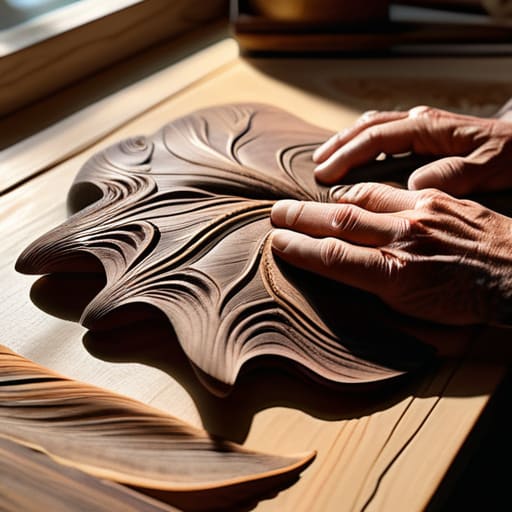
I was digging through a box of rejected walnut joinery samples last Tuesday—the ones I keep precisely because they failed—when I realized how much of modern design is just a polite way of saying “recycled.” Most people approach the problem of originality by searching for a magic well of inspiration or buying expensive courses on “creative thinking,” but that’s just noise. They treat it like a spiritual crisis rather than a technical one. In reality, learning how to avoid copying isn’t about finding a brand-new shape that has never existed; it’s about understanding the logic behind why a specific curve or joint works, so you don’t accidentally steal the result without the reasoning.
I’m not here to give you a lecture on intellectual property or some lofty manifesto about the “sanctity of the soul.” I want to talk about the friction of the process. I’m going to share what I’ve learned from twenty years of making physical things: that true originality is usually found in the difficult decisions we make when the easy, obvious path looks too much like someone else’s work. We’ll look at how to build a personal vocabulary of constraints that makes imitation impossible by design.
The Temptation of the Echo Why We Almost Follow

There is a specific kind of gravity that pulls at you when you see a piece of work that feels “right.” In my studio, it’s the way a specific joinery detail looks under a certain light, or how a mid-century chair manages to feel both heavy and weightless. When you encounter a finished product—or a piece of writing—that has already solved the problem you are currently wrestling with, the temptation to simply mirror that solution is immense. It feels like a shortcut, a way to bypass the friction of the creative process techniques that are supposed to define your labor.
But that shortcut is a trap. We almost follow the echo because it offers the illusion of certainty in a profession built on doubt. We tell ourselves we are just “drawing inspiration,” but there is a thin, dangerous line between being influenced by a master and merely performing a pantomime of their success. The danger isn’t just in the theft of the final form, but in the theft of the struggle. When you skip the struggle to find your own way, you aren’t just avoiding plagiarism; you are effectively opting out of the very act of creation.
The Divergent Path How to Avoid Copying the Obvious

In my studio, I have a shelf of “almosts”—chairs with legs that were too spindly, or joints that felt dishonest. They taught me that the way to avoid the easy echo isn’t through a sudden burst of genius, but through a rigorous interrogation of your own impulses. When you find yourself leaning toward a solution that feels too familiar, you have to lean into the friction. True transformative use of ideas happens in that uncomfortable gap between seeing something beautiful and deciding to build something that honors the logic behind it, rather than just the silhouette.
To find your footing, you must treat your work like a series of deliberate constraints. Instead of looking for a template to follow, look for the problem that remains unsolved by the existing solutions. I’ve found that finding your unique voice is less about inventing a new language and more about choosing which specific, difficult words you are willing to use. It’s about the willingness to embrace the messier, more taxing route because the polished path has already been walked a thousand times before.
Transformative Use of Ideas the Art of the Pivot

In my studio, I have a shelf of “failed” chair legs—mahogany pieces that were too heavy, or birch joints that snapped under pressure. They aren’t mistakes; they are the raw material for the version that actually worked. This is the essence of the transformative use of ideas. You don’t just take a concept and replicate it; you take the tension of that concept and pull it in a different direction. It’s about looking at a successful structure and asking, “What happens if I strip away the support and let the weight do the work instead?”
When you move from consuming to creating, you shouldn’t aim for a clean imitation. Instead, aim for a pivot. This is where you move past the surface-level aesthetics and start digging into the underlying logic. Finding your unique voice isn’t about inventing a new language from scratch; it’s about taking the vocabulary you’ve learned and rearranging the syntax until it sounds like you. It’s a messy, iterative struggle, but that’s where the soul of the work actually lives.
Finding Your Unique Voice Through Creative Process Techniques
I have a shelf in my studio crowded with what I call “the ghosts”—prototypes that failed because they were too safe, too derivative of a trend that had already peaked. When I’m struggling with a new chair leg or a complex layout, I find that the best way to move past the imitation phase is to lean into specific creative process techniques that force a confrontation with the material. For me, that means stepping away from the screen and getting my hands dirty, whether it’s sketching on heavy-tooth paper or feeling the resistance of a wood grain. It is in that physical friction that you stop echoing others and start listening to the constraints of your own medium.
Finding your own rhythm isn’t about a sudden burst of genius; it’s about building a system that makes imitation feel uncomfortable. If you find yourself circling a familiar idea, try a “forced pivot”—take the core concept and intentionally apply a constraint that feels wrong. If the design is too sleek, make it heavy. If the prose is too polished, make it jagged. This is how you move toward finding your unique voice; you don’t find it by looking in a mirror, but by navigating the tension between what you want to do and what the work actually demands of you.
The Integrity of the Source Ethical Content Creation
In my studio, I have a shelf of rejected joinery samples. Some failed because the wood split; others failed because I tried to mimic a mid-century silhouette without understanding the structural logic behind it. It was a hollow imitation, and it felt dishonest. This same friction exists in writing. Ethical content creation isn’t just about staying on the right side of a copyright law; it’s about the internal weight of knowing whether you’ve actually contributed something to the conversation or if you’re just rearranging someone else’s furniture.
When I look at a piece of work that feels derivative, it’s usually because the author skipped the heavy lifting of synthesis. They took a finished thought instead of a raw concept. To truly practice transformative use of ideas, you have to respect the lineage of the thought. This means employing proper citation methods not as a bureaucratic chore, but as a way of mapping the intellectual terrain. It’s about acknowledging the shoulders you are standing on so that when you finally lean forward to make your own mark, the movement is clearly, undeniably yours.
Avoiding Plagiarism in Writing by Embracing the Friction
In my studio, there is a shelf of failed joints—tenons that were too shallow, mortises that bit too deep. They are reminders that the most honest work happens when you hit resistance. Writing is no different. We often treat the act of drafting as a smooth glide toward a finished thought, but true originality requires a certain amount of productive struggle. When you find yourself sliding effortlessly into the cadence of a writer you admire, you aren’t creating; you are merely echoing. Avoiding plagiarism in writing isn’t just about the legalities of proper citation methods; it is about leaning into the discomfort of your own syntax.
If the words feel too easy, they are likely borrowed. I’ve learned that embracing the friction—that moment where your brain stumbles because it cannot find a pre-existing path—is where your actual perspective resides. Instead of smoothing over those mental bumps to mimic a polished source, let them stay. It is in those jagged, unrefined transitions that you begin finding your unique voice. You have to be willing to let the draft be ugly before it becomes yours.
Mastering Proper Citation Methods to Protect Your Vision
In my studio, if I borrow a joint detail from a mid-century piece, I don’t pretend I dreamt it up in a fever dream. I acknowledge the lineage. Writing is no different. Using proper citation methods isn’t just a bureaucratic chore or a way to satisfy an academic checklist; it is an act of respect toward the architecture of an idea. When you name your sources, you aren’t admitting weakness or a lack of originality. Instead, you are building a map. You are showing your reader exactly where your foundation ends and where your own construction begins.
There is a certain dignity in transparency. When I’m deep in the weeds of ethical content creation, I view citations as the structural bracing that allows my own arguments to stand tall. By clearly marking the boundaries of where someone else’s thought ends, you actually create more room for your own perspective to breathe. It prevents that muddy, indistinct feeling where your voice gets lost in a sea of uncredited echoes. Ultimately, citing your influences is how you prove that your work is a deliberate evolution, rather than a mere accident of imitation.
The Weight of the Alternative
We often mistake originality for a lightning bolt of pure invention, but true authorship is actually found in the friction of the near-miss—it’s the courage to look at the most obvious, polished solution and say, “No, let’s see what happens if we break this instead.”
Jonathan Marin
The Weight of the Decision
Looking back at the mechanics of it all, avoiding the easy echo isn’t about some lofty moral crusade; it is about the practical necessity of creative survival. We’ve discussed the pivot, the ethical rigor of citation, and the importance of leaning into the friction that comes when you stop mimicking and start synthesizing. It’s a messy, often frustrating process of filtering through the noise to find that single, idiosyncratic thread that belongs only to you. At the end of the day, originality isn’t found in a vacuum, but in the way you navigate the tension between what already exists and what you are trying to force into being.
I often look at the scrap pile in the corner of my studio—the chair legs that were too thin, the joinery that failed the stress test, the prototypes that almost made it. They are reminders that the most vital part of my work wasn’t the final product, but the moment I decided to reject the obvious solution. As you move forward with your own work, don’t fear the detour or the difficult path. The goal isn’t to be perfect, but to be unmistakable. True integrity lies in that split second where you feel the pull of the easy imitation, look it in the eye, and choose the harder way instead.
