
Two Weeks Off Without Losing Work
I remember sitting in my studio three years ago, the smell of sawdust and linseed oil thick in the air, staring at a half-finished walnut chair while my phone buzzed incessantly in my pocket. I was supposed to be heading to the coast, but I was paralyzed by the thought of a client email going unanswered or a delivery falling through. We’ve been sold this lie that being your own boss means you are permanently on call, as if true independence is somehow synonymous with being a slave to your own inbox. Most of the advice you’ll find online about how to take a holiday as a sole trader is filled with airy-fairy notions of “digital nomadism” that ignore the messy, structural reality of actually running a business.
I’m not here to give you a motivational speech or a list of meditation apps. I want to talk about the structural constraints—the actual, heavy lifting required to build a buffer so you can actually walk away. I’m going to share the hard-won lessons from my own failed attempts and the systems that finally allowed me to close the studio door without a pit of dread in my stomach. This is about the practical, unglamorous mechanics of reclaiming your time without letting your livelihood crumble in your absence.
The Near Miss Learning How to Take a Holiday as a Sole Trader
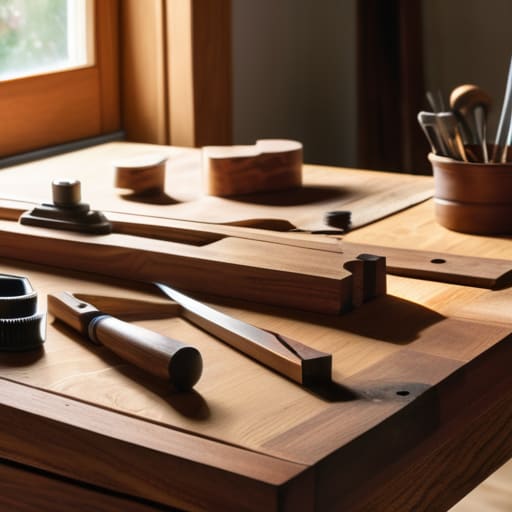
I have a drawer in my studio filled with failed joinery—slight miscalculations in bevel angles or wood species that simply wouldn’t hold. I look at them often because they represent the moment a design almost became something else. My approach to time off is similar; I spent years treating a holiday as a failure of productivity until I realized that business continuity for freelancers isn’t about working harder, but about designing a system that survives your absence.
The real friction isn’t the lack of work, but the frantic, disorganized scramble to justify the break. I used to spend the week before a trip in a state of low-grade panic, attempting to solve every client’s problem simultaneously. Now, I focus on managing workload before vacation by treating my schedule like a production run. It’s about the deliberate deceleration of incoming requests. If you don’t build a buffer into your timeline, you aren’t actually taking a holiday; you’re just moving your desk to a different climate while still tethered to the same anxieties.
The Friction of Freedom Managing Workload Before Vacation

The problem with being your own boss is that the boundary between “working” and “living” isn’t a line; it’s a smudge. I spent years treating my studio like a shrine, thinking that if I stopped moving, the momentum would die. But momentum is a lie if it’s fueled by burnout. Before I can even think about a flight, I have to confront the mess of managing workload before vacation. It’s not just about clearing the inbox; it’s about the heavy, psychological weight of every half-finished prototype and every pending invoice sitting on my desk like a silent accusation.
I’ve learned that true freedom requires a certain level of mechanical ruthlessness. You can’t just hope things will work; you have to engineer them to. For me, that means setting up automated business processes—from auto-responders that don’t sound like robots to scheduled updates—so the machine keeps humming while I’m away. It’s about building a scaffold of reliability so that when I finally step away, I’m not just physically absent, but mentally untethered. If you don’t build the system, the system will eventually build you into a corner.
The Art of the Disappearing Act Managing Client Expectations During Absence
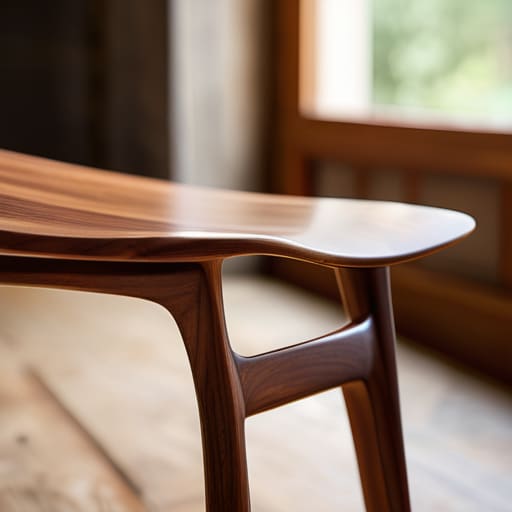
I used to think that being “on call” was a badge of honor, a way to prove my value to clients. In reality, it was just a slow way to burn out. I remember a specific chair prototype—a walnut piece with a tapered leg that I nearly scrapped because the proportions felt “off”—and how I spent three days of my supposed vacation obsessing over whether I should have gone with a square profile instead. That’s not work; that’s a lack of boundaries.
The trick to managing client expectations during absence isn’t about making excuses; it’s about the architecture of the communication itself. You have to build the expectation of your absence long before you actually leave. I’ve found that setting up automated business processes, like a simple, polite auto-responder that explicitly states when I will be back at my drafting table, does more for my professional reputation than a frantic, half-hearted email sent from a beach in Mallorca. It signals that my time is structured, and more importantly, that my work is deliberate.
Automated Resilience Setting Up Automated Business Processes That Stick
I have a shelf in the corner of my studio filled with failed joinery—table legs that were too spindly, drawer fronts that didn’t sit flush. They are reminders of the decisions that almost ruined a piece. I’ve realized that my business functions much the same way; if I don’t build the right scaffolding, the whole structure collapses the moment I step away. Setting up automated business processes isn’t about being a corporate robot; it’s about building a safety net so I don’t spend my time in Tuscany staring at my inbox.
For me, this started with the mundane. I moved my invoicing to a system that triggers automatically, which has been a godsend for sole trader cash flow management. When you’re the only person in the shop, a missed payment isn’t just an inconvenience—it’s a direct hit to your ability to buy timber for the next project. By automating the “boring” administrative loops, I ensure that the business maintains its momentum even when I am physically absent. It’s about creating a version of my work that can breathe without my constant, anxious intervention.
The Cost of Silence Sole Trader Cash Flow Management Strategies
There is a specific kind of dread that sets in when you realize your bank balance is tied entirely to your immediate output. For a designer, the math is often brutal: if the hands aren’t moving, the money isn’t flowing. I’ve spent many nights staring at a half-finished prototype, knowing that if I stepped away for ten days, I’d be staring at a dry well come Monday. This is why sole trader cash flow management can’t be an afterthought; it has to be a deliberate, almost mechanical part of your pre-holiday ritual.
I’ve learned that you cannot simply rely on “hope” as a financial strategy. You need to build a buffer that accounts for the silence. This means aggressively chasing invoices and securing deposits well before you pack a bag. I treat my holiday fund like a material cost in a project—it’s a non-negotiable expense that must be accounted for upfront. True financial planning for self-employed breaks isn’t about being wealthy; it’s about ensuring the silence of your studio doesn’t turn into a loud, ringing alarm in your head the moment you try to relax.
Calculated Risks Rigorous Financial Planning for Self Employed Breaks
I have a shelf in the back of my studio filled with failed joinery tests—pieces where the angle was just a fraction too aggressive, making the whole structure unstable. I look at them and realize that a good design isn’t just about the successful connection; it’s about understanding the point of failure. Financial planning for self-employed breaks requires that same level of scrutiny. You can’t just hope the bank balance holds up while you’re staring at a Mediterranean horizon; you have to stress-test your numbers against the reality of a dead stop in production.
The mistake I made early in my career was treating my holiday fund as a secondary thought, an afterthought to be dealt with if there was “extra” at the end of the month. That’s a recipe for a very anxious flight. Real sole trader cash flow management means treating your time off as a fixed overhead, just like rent or material costs. You have to build a buffer that accounts for the inevitable gap between completing a project and actually seeing the funds hit your account. It’s about creating a margin of safety that allows you to actually disconnect, rather than spending your trip mentally recalculating your invoices.
The Unbroken Thread Ensuring True Business Continuity for Freelancers
I have a shelf in the corner of my studio dedicated to the “almosts”—the chair legs that were too thin, the joinery that failed the stress test, the prototypes that simply refused to exist. In design, we learn that a project lives or dies by its structural integrity. Business is no different. You can automate your emails and balance your books, but if the core mechanics of your service rely entirely on your physical presence to function, you haven’t built a business; you’ve just built a very demanding job.
True business continuity for freelancers isn’t about finding a way to work from a beach in Mallorca; it’s about building a system that doesn’t require your heartbeat to keep moving. It requires a shift in mindset from being the engine to being the architect. This means documenting your idiosyncratic workflows so clearly that a temporary deputy—or even a highly organized set of protocols—could step in without the wheels coming off. We often fear that delegating or systematizing strips away the “craft” of our work, but I’ve found the opposite to be true. The more robust the structure, the more freedom you actually have to step away.
The Design of Absence
Taking a holiday isn’t about the destination; it’s about the structural integrity of the systems you leave behind. If your business collapses the moment you stop answering emails, you haven’t built a career—you’ve just built a very demanding, very expensive cage.
Jonathan Marin
The Final Iteration
Looking back at the scaffolding we’ve built—from the rigorous financial buffers to the automated client communications—it becomes clear that taking a holiday isn’t an act of indulgence, but a necessary piece of structural integrity. We’ve moved past the romanticized notion of the “starving artist” who is always available, replacing it with a framework of automated resilience and calculated cash flow. It is about moving from a state of constant, reactive firefighting to a system of deliberate absence. By preparing the groundwork, you aren’t just stepping away from your desk; you are proving that the business you’ve built is a functional entity, rather than just a highly stressed extension of your own nervous system.
In my studio, I keep a shelf of failed joinery and rejected chair legs, each one a testament to a choice that didn’t quite hold. I think our tendency to refuse rest is much the same—a design flaw we mistake for a virtue. We often believe that our constant presence is what keeps the gears turning, but the truth is that true craftsmanship requires the perspective that only distance can provide. Don’t fear the silence of an empty inbox. Embrace the space. After all, the most profound breakthroughs rarely happen when you are staring directly at the problem, but in the quiet moment when you finally allow yourself to look away.
