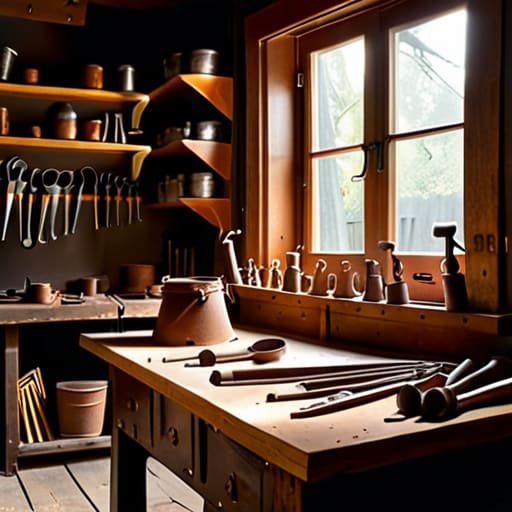
Twenty Years in One Room
I was clearing out a drawer of old router bits last Tuesday when I realized that my workspace doesn’t look anything like the pristine, minimalist studios you see on Instagram. There is a pervasive myth that a professional shop is defined by its high-end machinery or a certain level of sterile organization, but that’s nonsense. In reality, what a workshop becomes over time is less about the tools you buy and more about the residue of your own decisions. It’s a graveyard of failed joinery, a collection of jigs built for a single, specific mistake, and a map of exactly where you tend to lose your patience.
I’m not here to sell you on a more efficient workflow or a specific brand of Japanese pull saw. Instead, I want to talk about the slow, messy accumulation of experience that actually defines a space. I want to share how a workshop evolves from a mere collection of equipment into a physical manifestation of your intuition. We’ll look at the difference between a room full of gear and a room that actually works, focusing on the hard-won lessons that only come from years of making things that almost didn’t turn out right.
The Ghost of the Tool Not Chosen
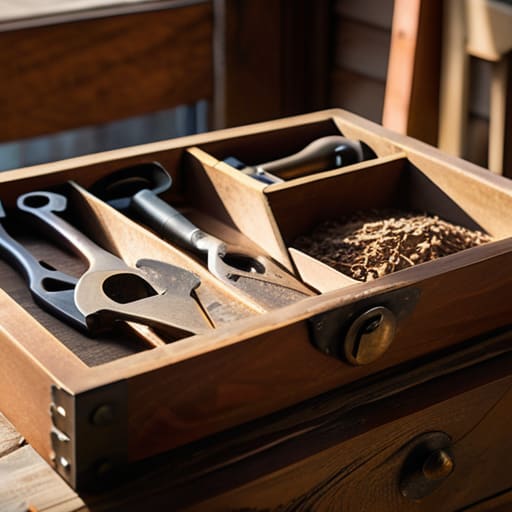
I have a drawer in my studio dedicated entirely to things that failed to be useful. It’s a collection of specialized jigs that were too specific to ever be used again, and hand planes that I bought thinking they would change my workflow, only to find they didn’t suit my grip. This is the core of craftsman workspace identity; we aren’t just defined by the tools we use, but by the ones we rejected. Every piece of equipment carries the memory of a specific intention—a version of a chair or a table that almost existed.
When you look at a seasoned workbench, you aren’t just seeing a surface for assembly. You are seeing the physical manifestation of the psychology of maker spaces, where every notch and oil stain marks a moment of decision. I often find myself staring at a chisel I haven’t touched in five years, not because I’ve outgrown it, but because it represents a path I decided not to take. A workshop is less a place of production and more a living archive of near-misses.
What a Workshop Becomes Over Time a Living Scar
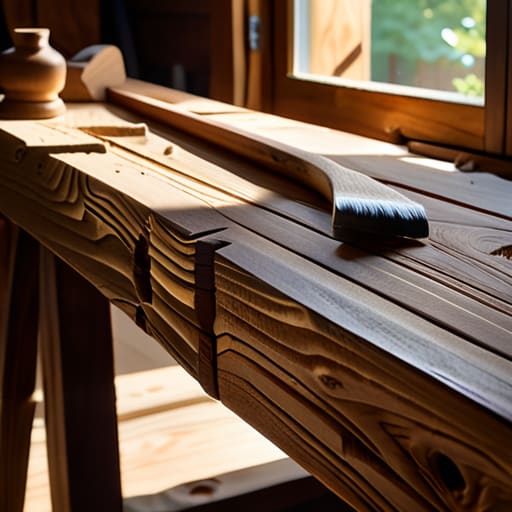
After a decade of moving between my own studio and the sterile efficiency of production lines, I’ve realized that a workspace isn’t something you simply “set up.” It is something you inhabit until it begins to inhabit you. There is a specific kind of craftsman workspace identity that emerges not from the expensive machinery you buy, but from the way the floor begins to hold the dust of your specific failures. You see it in the way the workbench surface is scarred by the exact angle of a misplaced chisel or the way the light hits the specific spot where you always stand to sand.
It is a slow process of transforming a garage into a studio, where the boundary between utility and memory starts to blur. You stop seeing workshop organization and clutter as a problem to be solved by a tidy shelf; instead, you see the clutter as a topographical map of your progress. Every pile of offcuts and every dent in the wall is a marker of a decision made—or a mistake avoided. The space becomes a living scar, a physical manifestation of the years spent refining the tension between what you intended to make and what the material actually allowed.
The Creative Space Evolution of Every Near Miss
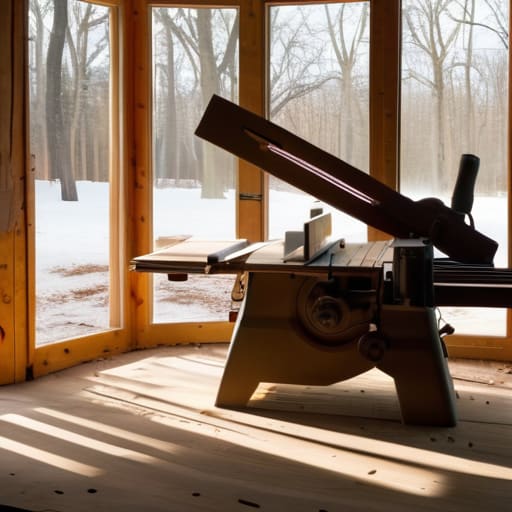
I look at the corner of my studio, where a stack of bent plywood scraps sits next to a defunct band saw, and I don’t see waste. I see a map of my own hesitation. This is the true essence of creative space evolution: it isn’t about the gradual acquisition of better machinery, but the slow, messy accumulation of lessons learned through failed geometries. Every time I decided a joint was too ambitious or a timber too heavy, the physical layout of my room shifted to accommodate that retreat.
There is a specific kind of psychology of maker spaces that most people miss. They think a professional studio is defined by its cleanliness or its high-end CNC routers, but a real space is defined by its tension. My workshop has become a physical manifestation of my own indecision. The way I move between the workbench and the letterpress isn’t dictated by efficiency, but by the ghosts of the projects that taught me exactly where my limits lie. We don’t just inhabit these rooms; we grow into the gaps left by the ideas that didn’t make the cut.
Finding Identity in the Chaos of Workshop Organization and Clutter
People talk about workshop organization and clutter as if they are opposing forces, a battle between order and chaos. They think a clean bench is the sign of a professional, but that’s a lie sold by people who don’t actually build things. To me, a workspace isn’t a museum; it’s an ecosystem. My workbench is currently buried under a drift of wood shavings, half-finished joinery, and a stack of sketches for a chair that will probably never exist. There is a specific psychology of maker spaces at play here—the clutter isn’t laziness, it’s a physical map of my current preoccupations.
When I look at the mess, I don’t see a lack of discipline; I see my craftsman workspace identity taking shape. Every pile of scrap and every misplaced chisel represents a decision made in the heat of a project. If I were to tidy everything into perfect, labeled bins, I’d lose the tactile shorthand of my process. The chaos is where the friction happens, and friction is where the design actually lives. It’s in the mess that I find the unexpected connection between a discarded piece of walnut and a new structural idea.
Transforming a Garage Into a Studio Through Mistakes
I remember the first month in my garage. It was a sterile, terrifying expanse of concrete and fluorescent light, a space that demanded I be a professional before I had even learned how to properly tune a hand plane. I thought transforming a garage into a studio meant buying the right modular cabinetry or the most expensive dust extraction system. I was wrong. The real transformation didn’t happen through procurement; it happened through the accumulation of failures.
It was the dent in the workbench from a dropped mallet, the oil stain that refuses to lift, and the awkward, improvised jig I built because I couldn’t afford the commercial version. These aren’t just messes; they are the markers of a growing craftsman workspace identity. You don’t build a studio by following a blueprint; you build it by reacting to the specific ways your own hands fail you. Eventually, the clutter stops feeling like a lack of discipline and starts feeling like a map of everything you’ve learned through trial and error.
The Psychology of Maker Spaces and Their Hidden Paths
There is a specific kind of mental friction that occurs when you walk into a space that has finally “settled.” It isn’t just about the layout; it’s about the invisible architecture of your own decision-making. When I look at my workbench, I don’t just see a surface for assembly; I see a map of my own hesitations. The psychology of maker spaces suggests that we don’t just inhabit these rooms, we project our anxieties and triumphs onto them. We arrange things not just for efficiency, but to soothe the part of our brain that remembers the last time a joinery cut went south.
This is where craftsman workspace identity becomes something much more profound than mere organization. We often mistake a tidy shop for a productive one, but a truly functional studio carries the weight of its own history. You start to realize that your relationship with the room is a feedback loop. The way you navigate the tension between workshop organization and clutter is actually a physical manifestation of how you handle uncertainty. You aren’t just managing objects; you are negotiating with your own creative impulses every time you reach for a tool.
Tools and Sentimental Value the Cost of Perfection
I have a drawer in my workbench that I can’t quite bring myself to organize. It’s filled with dull chisels, a cracked mallet, and a set of calipers that lost their zero-point during a particularly grueling commission back in 2008. From a purely functional standpoint, they are junk. They fail every metric of efficiency. But they represent a specific kind of craftsman workspace identity that a catalog of pristine, new tools can never replicate. We are taught that a professional setup requires precision and cleanliness, but there is a heavy, unspoken cost to that pursuit of perfection.
When you are transforming a garage into a studio, you eventually hit a wall where the tools stop being mere instruments and start becoming anchors. You realize that the value of a tool isn’t just in its edge, but in the memory of the project that nearly broke you. This is the strange intersection of tools and sentimental value: the realization that we don’t just own our equipment; we inherit the history of every mistake we made while holding it. To throw away the broken tool is to discard a chapter of the work itself.
The Inventory of Almosts
A workshop isn’t a collection of what you’ve succeeded at; it’s a physical archive of every wrong turn, every failed joint, and every tool you bought for a version of yourself that never actually arrived.
Jonathan Marin
The Inventory of Who We Are
Looking around my studio today, I don’t just see a collection of jigs, lathes, or half-finished chair frames. I see a physical map of every time I hesitated. The workshop has become a repository for the “almosts”—the tool I didn’t buy because I realized I didn’t need it, the layout I abandoned because it fought my workflow, and the scraps of wood that represent a joint that failed. It is a space built on the cumulative weight of corrected errors. We often think of progress as a straight line of successful builds, but a workshop’s true character is forged in the friction between what we intended and what actually happened.
If you are waiting for your space to feel “right” or perfectly organized before you start creating, you are waiting for a ghost. A workshop only finds its soul through the mess of trial and error; it matures only when you stop treating it like a showroom and start treating it like a living record of your own evolution. Don’t fear the clutter or the failed prototypes gathering dust in the corner. Those are the most honest parts of your practice. In the end, we don’t just build furniture in these rooms; we build the people capable of making it.
