
The Pile I Cannot Throw Away
I was staring at a pile of walnut scraps last Tuesday, the kind of jagged, uneven leftovers that most people would call “character” or “potential.” To me, they just felt like a series of failures. It’s a specific kind of itch, a restless feeling in the back of my skull that makes me wonder why offcuts bother me so much more than a simple lack of material. It isn’t about the cost of the timber or the inefficiency of the yield; it’s the heavy, silent weight of the decisions I didn’t make. Every splintered edge represents a layout I could have optimized, a grain direction I ignored, or a more elegant way to nest a component that I ultimately bypassed for the sake of speed.
I’m not here to give you a lecture on sustainable manufacturing or some lofty, romanticized view of “upcycling” your scraps into trinkets. Instead, I want to talk about the discipline of the cut. I’m going to share what twenty years of sawdust has taught me about the relationship between waste and intent, and how learning to respect your leftovers is actually the fastest way to sharpen your design intuition.
The Unfinished Narrative of Why Offcuts Bother Me
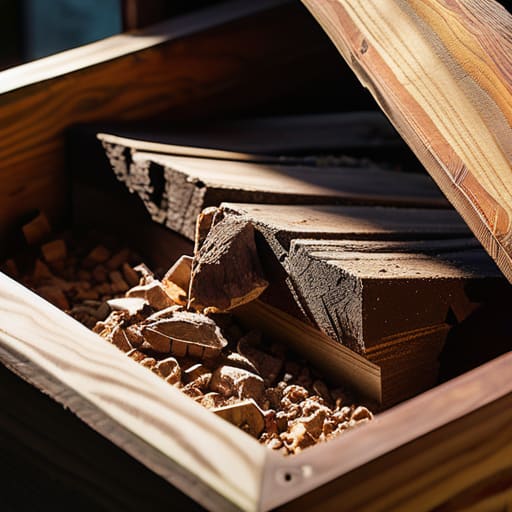
When I look at the scrap bin, I’m not just seeing sawdust and cedar slivers. I’m seeing a graveyard of missed opportunities. Every jagged piece of walnut or oak sitting in that pile represents a moment where my intuition faltered, or perhaps where I played it too safe. It’s a heavy kind of perfectionism in woodworking that doesn’t stem from a desire for beauty, but from a nagging sense of incompleteness. To me, an offcut is a physical manifestation of a decision that didn’t quite land, a fragment of a design that lost its way before it could reach the light.
This isn’t just about the cost of lumber or the logistics of optimizing material usage. It’s more about the psychological weight of the leftover. I find myself staring at a six-inch block of cherry, wondering if it could have been the leg of a stool or the handle of a tool, if only I had been more daring with the initial layout. These fragments are the ghosts of the versions that almost were, making the act of managing my shop feel less like organization and more like a constant negotiation with my own mistakes.
The Ghost of the Cut I Almost Made
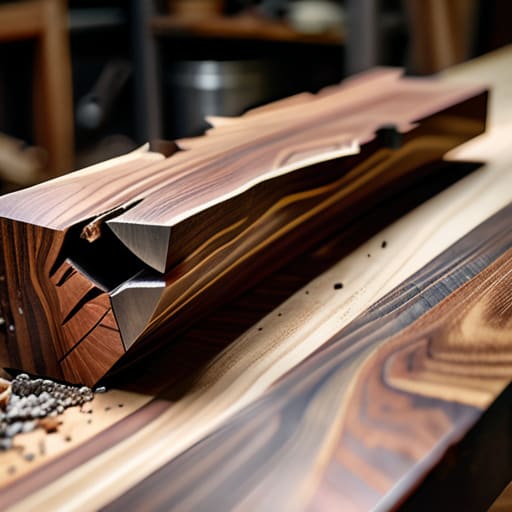
I have a shelf in the back of the studio, tucked behind the heavy-duty clamps, where the “almosts” live. These aren’t just scraps; they are the physical remains of a choice. I look at a jagged piece of walnut and I don’t just see a failure of optimizing material usage; I see the exact moment my hand hesitated over the saw. I remember the tension in my shoulder when I decided to pivot away from a narrower leg profile to something more substantial. That offcut is the ghost of the design I nearly committed to, a silent witness to the split-second intuition that steered the project toward its final form.
This isn’t about a clinical approach to reducing scrap production or some textbook lecture on efficiency. It’s more visceral than that. When I see a pile of discarded slivers, I’m reminded that every piece of wood carries a certain weight of intention. There is a specific kind of perfectionism in woodworking that isn’t about the smoothness of the finish, but about the integrity of the decision-making process. To me, a scrap pile is a graveyard of paths not taken.
Perfectionism in Woodworking and the Weight of Excess
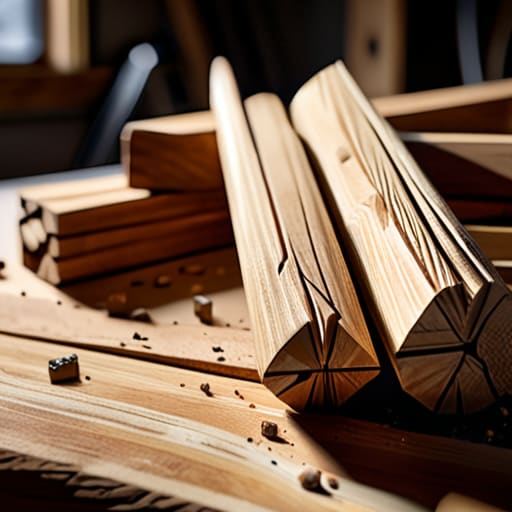
There is a specific kind of heaviness that comes with perfectionism in woodworking. It isn’t just the physical weight of the timber; it is the psychological debt of the pieces I couldn’t use. When I am drafting a chair, I am constantly calculating, trying to find that mathematical sweet spot of optimizing material usage so that the final product feels earned rather than extracted. But perfectionism is a fickle master. It often demands a level of precision that leaves behind a trail of jagged, unusable slivers—remnants of a standard that is, by definition, impossible to maintain.
I find myself staring at these scraps not as mere debris, but as evidence of a failed negotiation with the material. We talk a lot about sustainable crafting habits in design school, but they rarely mention the guilt of the scrap bin. Every time I aim for a flawless joint and end up with a ruined board, I am forced to confront the reality of my own excess. It isn’t just about the cost of the walnut or the oak; it is the realization that my pursuit of the “perfect” line often creates a disproportionate amount of nothingness.
The Psychology of Resource Management and Lost Potential
There is a specific kind of mental fatigue that sets in when you look at a bin full of walnut scraps. It isn’t just about the cost of the timber, though that’s a practical concern for any studio owner. It’s more about the resource management psychology of the thing—the way my brain treats every six-inch block as a failed opportunity rather than a remnant. When I’m designing a chair leg or a joinery detail, I’m constantly running a mental simulation of the grain flow, trying to map out a path that leaves the least amount of debris behind.
This drive toward optimizing material usage often feels less like a pursuit of efficiency and more like a battle against my own restless mind. I find myself staring at a piece of cherry, wondering if a small, intricate box could justify its existence, or if I’m just chasing a way to soothe the guilt of a heavy scrap bin. It becomes a cycle of sustainable crafting habits born out of a desire to honor the tree, yet it’s often driven by the sheer, nagging discomfort of seeing potential left sitting on a dusty workshop floor.
Optimizing Material Usage Through Decisive Intent
Optimizing material usage isn’t about a spreadsheet or a math problem; it is about the clarity of vision before the blade ever touches the grain. When I sit down at the workbench, I try to approach the layout not as a puzzle to be solved, but as a series of commitments. To me, minimizing material waste is less about environmental piety and more about the discipline of intent. If I haven’t decided exactly what a piece of walnut is meant to become, I haven’t actually started designing; I am merely reacting to the wood.
This is where the real work happens—in that quiet, heavy moment of deciding how to nest components to respect the board’s integrity. True sustainable crafting habits aren’t born from a desire to be “green,” but from a deep-seated respect for the material’s history and the effort required to bring it to the shop. When I plan my cuts with a sense of decisive intent, I am trying to close the loop between the idea and the object, ensuring that every sliver of wood serves a purpose rather than becoming a monument to my own indecision.
Reducing Scrap Production by Honoring the Grain
When I stand at the workbench, I’m not just looking at dimensions; I’m reading the history of the tree. It’s easy to treat a slab of walnut like a math problem—calculating surface area and subtracting the kerf—but that’s where the error begins. If you ignore the way the grain wanders or how a knot dictates the structural integrity, you end up fighting the material rather than collaborating with it. Real reducing scrap production starts with a deeper level of listening. It’s about seeing the path of least resistance within the wood itself so that you aren’t forced to hack away large, unnecessary sections just to find a “clean” piece.
I’ve learned that sustainable crafting habits aren’t just about the eco-friendly marketing; they are about the discipline of foresight. If I can visualize the final joinery while the board is still raw, I can layout my cuts to nestle the smaller components into the natural voids of the larger ones. It requires a certain kind of patience—a refusal to rush into the first cut—to ensure that every ounce of timber serves a purpose. To me, honoring the grain is the only way to truly master optimizing material usage without losing the soul of the piece.
Cultivating Sustainable Crafting Habits in Every Sliver
I’ve started to realize that sustainability isn’t some grand, sweeping gesture made at the end of a project; it’s a series of small, almost microscopic choices made at the workbench. It’s about developing sustainable crafting habits that begin long before the saw touches the wood. For me, this means sitting with a slab for ten minutes longer than is comfortable, tracing the grain with my eyes to see where a joint might fail or where a knot might force a pivot. It’s a slow, deliberate way of working that counters the modern urge to just produce.
True efficiency isn’t found in a spreadsheet, but in the mental shift toward optimizing material usage through foresight. When I look at a scrap pile now, I don’t see a failure of planning; I see a lack of intimacy with the medium. To truly honor the material, I have to treat every sliver as a potential component rather than a byproduct. It requires a certain discipline to see the small scale—to realize that a piece of walnut that’s too thin for a table leg might be the exact right dimension for a delicate inlay or a letterpress block.
The Weight of the Unchosen
Every scrap on my workshop floor is a tiny, jagged monument to a decision I made—and the shadow of the one I almost didn’t.
Jonathan Marin
The Weight of the Remnant
In the end, my obsession with offcuts isn’t really about efficiency or the tidy math of a cut list; it’s about the unresolved tension of a decision. Every scrap sitting in the bin represents a path not taken, a fragment of a design that failed to find its purpose or a moment where my intent faltered. When I look at those piles, I see the cumulative weight of every compromise made between the ideal form and the reality of the material. To ignore the waste is to ignore the narrative of the making, leaving the story of the object half-told and the potential of the wood unhonored.
Perhaps the goal isn’t to achieve a perfect, zero-waste existence—that’s a fantasy of the machine, not the maker. Instead, I strive to approach every piece of timber with a sense of deliberate reverence, ensuring that even the smallest sliver is accounted for in the mind before the saw ever touches the grain. We must learn to see the potential in the margins, finding a way to integrate the “almosts” into something meaningful. Because in this studio, I’ve learned that the most profound designs don’t just come from the wood we use, but from the discipline we exercise over what we leave behind.
