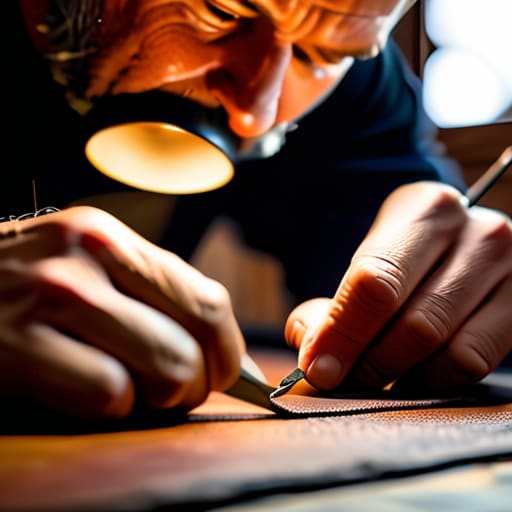
The Final Check List
There is this pervasive, expensive lie in our industry that quality control requires a high-tech laboratory or a digital sensor suite to catch what the eye misses. People treat it like a mathematical problem to be solved with more software, but after twenty years of seeing production lines fail despite their sensors, I’ve learned that’s mostly theater. To me, how I check a piece before it leaves isn’t about running a checklist on a tablet; it’s about that uncomfortable, quiet moment of confrontation with the object itself. It’s about looking for the specific tension where a joint meets a grain, or where a finish feels just a fraction too heavy, and realizing that the machine says it’s perfect while your gut says it’s wrong.
I’m not here to give you a sanitized manual of industry standards or a lecture on ISO certifications. Instead, I want to talk about the actual, messy friction of the final inspection—the decisions that nearly went the other way. I’ll share the specific, tactile ways I interrogate my work to ensure it actually lives up to the design, focusing on the human intuition that no sensor can replicate.
The Ghost of the Rejected Piece My Final Inspection Philosophy
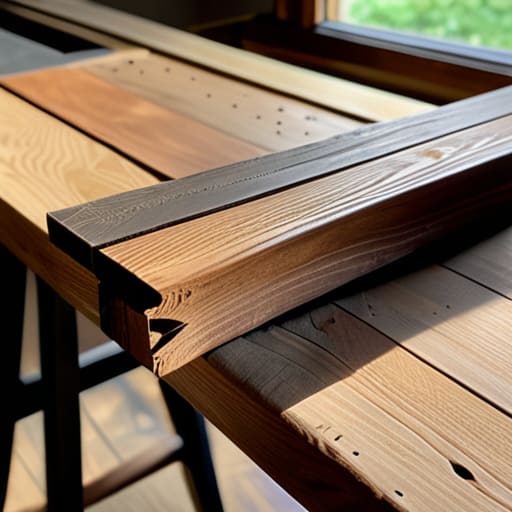
I have a shelf in the corner of the studio, tucked behind the letterpress, that serves as a graveyard for “almosts.” It’s filled with bent oak legs, misaligned joinery, and veneers that didn’t quite take. Most people see these as failures, but for me, they are the most honest part of my process. When I walk through my final product verification steps, I’m not just looking for perfection; I am looking for the ghost of the piece that didn’t make it. I find myself searching for the specific tension that almost led me to scrap the entire run.
It isn’t about following a rigid manufacturing quality standards manual to the letter, though I do have my notes. It’s more about a visceral reaction to a surface that feels slightly too cold or a seam that sits a fraction of a millimeter off. I don’t want to just tick boxes on a checklist; I want to ensure that the final object has survived the same internal argument that I had during the design phase. If a piece doesn’t feel like it won that fight, it doesn’t leave the shop.
Where Perfection Meets Doubt How I Check a Piece Before It Leaves
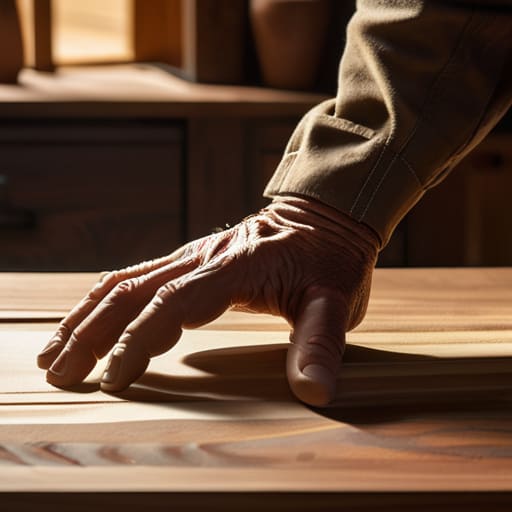
I don’t use a digital spreadsheet or a sterile quality assurance inspection checklist to guide my hands. Instead, I rely on a sort of tactile memory. When I move around a finished chair or a sideboard, I’m not just looking for scratches; I’m looking for the moment where the material stopped behaving and started resisting. I run my palms along the joinery, searching for that microscopic lip where the wood didn’t quite meet the expectation. It’s a slow, almost agonizingly deliberate process of checking the product finishing requirements against the original intent.
There is a specific tension in these final product verification steps. I find myself staring at a grain pattern or a slight variation in the oil finish, wondering if it’s a character-building detail or a genuine failure. Most people think manufacturing quality standards are about hitting a mathematical center, but for me, it’s about the integrity of the compromise. I’m looking for the exact point where the object ceases to be a collection of parts and becomes a singular, honest thing. If I can’t find a reason to doubt it, I usually haven’t looked hard enough.
Beyond the Surface Rigorous Defect Detection Methods That Matter
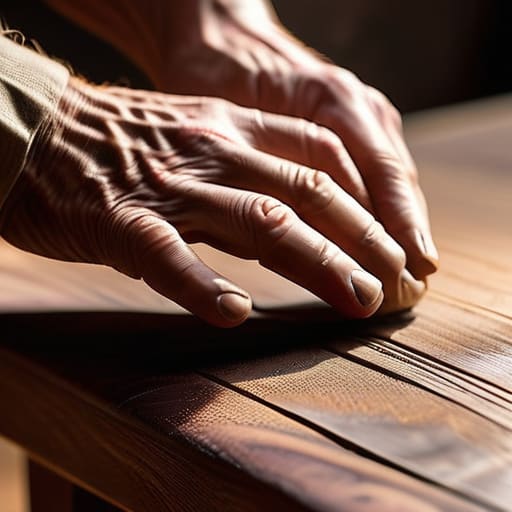
It isn’t enough to just look at a chair under the studio lights and nod. If I only relied on my eyes, I’d miss the structural fatigue that only reveals itself through touch. I’ve developed a set of final product verification steps that are almost tactile in nature. I run my hands along the underside of a tabletop or the inner joinery of a frame, feeling for the slight grit of a poorly sanded surface or the microscopic catch of a misaligned tenon. It’s a slow, almost meditative process, but it’s the only way to ensure the piece feels as solid as it looks.
I don’t follow a sterile, corporate quality assurance inspection checklist; instead, I look for the tension between the material and the machine. When I’m checking a piece, I’m looking for where the wood grain fights the CNC bit or where the oil finish has pooled too heavily in a corner. These nuanced defect detection methods are what separate a mass-produced item from something built to last decades. I’m not just looking for errors; I’m looking for the moment the design’s intent starts to fray.
The Near Miss Honoring Manufacturing Quality Standards Through Friction
There is a temptation in production to treat a quality assurance inspection checklist like a grocery list—something to be checked off as quickly as possible to clear the floor. But I’ve learned that real quality lives in the friction, in that uncomfortable moment where the piece meets the standard and doesn’t quite sing. If the process is too smooth, you aren’t actually inspecting; you’re just performing a ritual of compliance. I want the process to feel heavy. I want the friction of the final product verification steps to force a pause, a moment where the designer and the maker have to argue about whether a grain pattern is a feature or a flaw.
Adhering to manufacturing quality standards shouldn’t feel like a bureaucratic hurdle; it should feel like a confrontation with the material. When I look at a finished chair, I am looking for the tension between what the blueprint demanded and what the wood actually allowed. If the protocol feels easy, you’ve likely missed the nuance. The goal isn’t just to pass a test, but to ensure that the decision that nearly went the other way was ultimately defeated by the rigor of the work.
A Precise Pre Shipment Inspection Protocol for the Uncompromising
I don’t believe in a simple, mindless tick-box exercise. While most shops rely on a sterile quality assurance inspection checklist to satisfy a spreadsheet, my process is more of a conversation with the object. I start by stripping away the noise—the studio music, the hum of the shop—and I walk around the piece like I’m seeing it for the first time. I’m looking for the tension between the intended geometry and the actual reality of the wood grain or the joinery. It isn’t just about finding errors; it’s about verifying that the soul of the design survived the violence of the production line.
This is where my pre-shipment inspection protocol becomes tactile. I run my hands over the surfaces, not just to feel for smoothness, but to hunt for those microscopic inconsistencies that a camera would miss. I check the tolerances of every drawer slide and the seated depth of every joint against the original CAD files. If a piece doesn’t meet my specific product finishing requirements, it doesn’t just get “fixed”—it gets interrogated. I need to know exactly why it strayed from the path before I can ever let it go.
Refining the Details Navigating Complex Product Finishing Requirements
When I’m looking at a finish—whether it’s a hand-rubbed oil or a complex lacquer—I’m not just looking for color consistency. I’m looking for the tension between the material and the coating. I’ll spend twenty minutes under a specific angle of light, searching for those microscopic “orange peel” textures or subtle pooling that a standard quality assurance inspection checklist might overlook. It’s easy to check if a surface is smooth; it’s much harder to judge if the finish feels honest to the grain underneath.
This is where the most exhausting part of the product finishing requirements comes into play. I find myself obsessing over the transition points—where a veneer meets a solid edge, or where a metal inlay is seated into wood. If the transition feels forced, the whole piece loses its integrity. I’ve often found myself stalling at these junctions, caught between the pressure of a shipping deadline and the nagging feeling that the finish has slightly masked the character of the timber. It’s a fine line between a protective coating and a masking agent, and navigating it is where the real work happens.
The Final Verification My Ultimate Quality Assurance Inspection Checklist
I don’t use a sterile, digital spreadsheet to govern this stage. Instead, my quality assurance inspection checklist is a physical thing—a worn notebook where I cross-reference the actual object against the original intent. I start with the structural integrity, checking every joint and fastener, but I’m not just looking for stability. I’m looking for the tension that tells me the piece is unified. If a drawer slides with a certain hesitation, or a leg feels a fraction too light, the checklist demands a pause.
The next phase of my final product verification steps moves from the skeletal to the tactile. This is where I address the product finishing requirements that most people overlook. I run my hands along the grain, feeling for the minute inconsistencies that a camera lens might miss. I’m searching for that specific moment where the finish transitions from a protective layer to a part of the material itself. It isn’t about finding errors; it is about confirming the soul of the piece before it is boxed up and sent into the world.
The Weight of the Final Look
I don’t look for perfection when I’m inspecting a piece; I look for the moment I almost compromised. If I can’t find the exact point where I nearly let a flaw slide, then I haven’t been looking closely enough.
Jonathan Marin
The Weight of the Last Look
At the end of the day, this process isn’t really about a checklist or a set of rigorous manufacturing standards. It is about the friction between what is possible and what is acceptable. I’ve spent years looking at joints that almost failed and finishes that nearly looked amateur, and those moments of doubt are what actually inform my protocol. Whether I am scrutinizing a grain pattern or testing the tension of a spring, I am looking for the ghost of the alternative decision. By documenting every near-miss and every tiny flaw that almost made the cut, I ensure that the piece leaving my studio isn’t just a product, but a resolved intention.
There is a certain quiet gravity in that final walk-through. Most people see a finished chair or a polished table and think the work is done, but for me, the work is only finished when the hesitation disappears. We often mistake design for a pursuit of perfection, but I have learned that it is actually a pursuit of meaningful constraints. When I finally sign off on a piece, it isn’t because it is flawless—nothing truly is—but because I have looked every flaw in the eye and decided it belongs there. That is the true mark of craft: knowing exactly why you chose this version over all the others.
