The Damage That Accumulates Quietly
I was standing in the middle of my studio last Tuesday, surrounded by the fine, pale dust of sanded walnut, and I realized I had been breathing it in like it was nothing more than mountain air. It’s a deceptive kind of danger; the fine particulate doesn’t scream at you like a saw blade, it just settles. For years, I thought I knew how to protect your hearing and lungs long term, but I was operating under the delusion that as long as I didn’t cough immediately, I was fine. I’ve spent two decades designing objects meant to last a lifetime, yet I’ve been negligent with the very tools that allow me to do the work: my own body.
I’m not here to sell you on some high-tech, overpriced filtration system that promises to turn your workshop into a sterile operating room. Instead, I want to talk about the practical, sometimes uncomfortable realities of staying healthy while you build. I’m going to share the specific, no-nonsense habits I’ve had to adopt—the ones that felt like a chore at first but became non-negotiable—to ensure that my lungs and ears are still functioning well enough to enjoy the craft when I finally hang up my apron.
The Near Miss How to Protect Your Hearing and Lungs Long Term
I have a shelf in the back of my studio dedicated to “almosts.” There’s a chair leg with a hairline fracture from a botched sanding pass and a prototype table with a finish that bubbled because I rushed the drying time. Most people see those as failures, but to me, they are the most honest parts of the process. I think about that same honesty when it comes to the invisible costs of the shop—the things you don’t notice until they’ve already taken something from you.
A few years ago, I found myself working through a week of heavy sanding without a proper mask, thinking my shop’s ventilation was enough. I felt fine then, but looking back, that was a massive lapse in occupational hazard mitigation. You don’t feel the fine particulate settling in your chest until the cough becomes a permanent resident. It’s the same with the noise; you get used to the high-pitched whine of the router until you realize you’re straining to hear a conversation at dinner. Implementing consistent PPE for dust and noise isn’t about being cautious; it’s about respecting the fact that our bodies aren’t designed to be industrial tools.
The Silence That Almost Was Hearing Loss Prevention Strategies
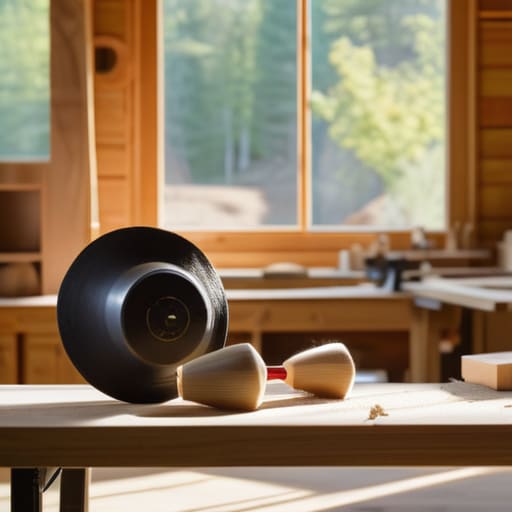
I remember a specific Tuesday in my early thirties, working on a batch of walnut chairs. I’d been running the spindle sander for three hours straight, feeling that familiar, dull pressure in my ears, but I convinced myself I was “tough enough” to skip the earmuffs. I thought I could just power through. That’s the trap of the craft; we mistake stubbornness for discipline. Now, I view hearing loss prevention strategies not as a chore, but as a fundamental part of the design process. If you can’t hear the subtle change in a motor’s pitch or the crisp snap of a joint fitting, you’ve lost your most vital diagnostic tools.
It’s a similar mental shift with the air we breathe. I used to think a quick sweep of the shop floor was enough, but fine particulate matter doesn’t care about your cleaning schedule. I’ve learned that investing in proper PPE for dust and noise is actually an investment in my ability to keep working twenty years from now. It isn’t about being cautious; it’s about ensuring the sensory clarity required to do this work remains intact.
Choosing the Mask Ppe for Dust and Noise Decisions
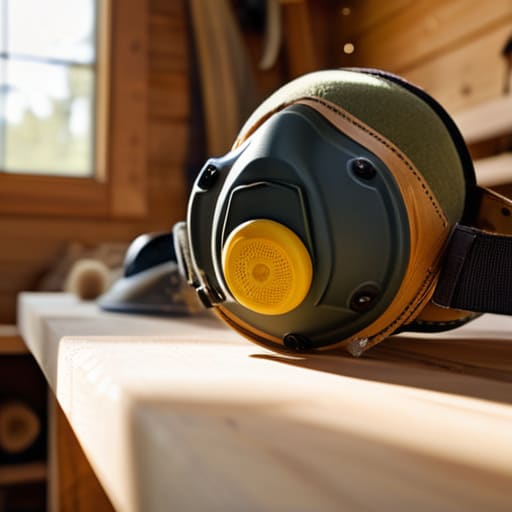
I spent most of yesterday morning staring at a stack of N95s and a pair of industrial earmuffs, feeling that familiar, nagging sense of friction. It’s easy to treat PPE for dust and noise as an afterthought—something you grab when the sawdust gets thick enough to taste—but that’s a dangerous way to approach the workshop. I remember a prototype chair from five years ago that I nearly finished using a cheap, flimsy paper mask because it didn’t interfere with my peripheral vision. I ended up tossing the whole piece into the “rejected” pile, not because of the joinery, but because the cough I developed that afternoon felt like a warning I couldn’t ignore.
Selecting the right gear shouldn’t feel like a chore, but it is a vital part of occupational hazard mitigation. If you’re leaning into heavy sanding or using a router, a standard surgical mask is a joke; you need something that actually seals. The same goes for your ears. I used to think “good enough” was fine, until I realized that long-term lung function maintenance and auditory clarity are the only things that allow me to keep doing this work well into my sixties.
The Breath You Nearly Lost Respiratory Health Protection
I have a shelf in the corner of my studio dedicated to “failures.” It’s mostly wood scraps and failed joinery, but it serves as a constant reminder that the most expensive mistakes aren’t always the ones you can see in a finished piece. For a long time, I treated dust like it was just part of the atmosphere—a necessary byproduct of making things. I’d spend ten hours sanding a walnut tabletop and only think about the grit in my eyes once the shop lights went down. I thought I was being efficient by skipping the respirator, but that’s just a polite way of saying I was ignoring occupational hazard mitigation in favor of convenience.
The reality is that fine particulate matter doesn’t care about your design deadline. It settles in the lungs with a quiet, cumulative persistence. I remember a specific afternoon, working with a particularly volatile finish, where I felt that familiar, tight itch in my chest. It was a wake-up call. Now, my approach to respiratory health protection is as much a part of my workflow as selecting the right grain direction. I don’t see the mask as an interruption anymore; I see it as the only way to ensure I’m still able to breathe deeply enough to enjoy the work twenty years from now.
Mitigating the Invisible Essential Occupational Hazard Mitigation
It’s easy to focus on the gear—the heavy respirators or the high-fidelity plugs—but that’s only half the battle. I’ve spent enough years in dusty studios to know that the most effective occupational hazard mitigation happens before you even pick up a tool. It’s about the layout of the room, the direction of the airflow, and the sheer discipline of cleaning up as you go. I used to think a quick sweep at the end of the day was enough, but seeing the fine layer of particulate sitting on my letterpress plates taught me otherwise; you can’t just vacuum away a lifetime of damage.
True respiratory health protection requires a shift in how we view our workspace. It isn’t just about wearing a mask; it’s about integrated systems like local exhaust ventilation that catch the grit before it ever reaches your face. I’ve learned that the most expensive piece of PPE is the one you realize you needed only after the ringing in your ears becomes a permanent companion. We have to design our environments with the same rigor we apply to a chair leg or a tabletop, treating our bodies as the most delicate components in the shop.
The Margin of Error Long Term Lung Function Maintenance
I have a shelf in the corner of my studio dedicated to “failures”—prototypes where the joinery was too ambitious or the wood grain fought the curve. I look at them and realize the mistake wasn’t the design, but the lack of foresight. I think about my lungs in much the same way. We often treat our bodies like a workshop that can be repaired after the damage is done, but long-term lung function maintenance isn’t about fixing a clog; it’s about preventing the buildup in the first place.
When I’m sanding down a batch of walnut, it’s easy to think that a quick session without a mask is harmless. That’s the margin of error creeping in. You don’t notice the microscopic particles settling into your tissue until years later when a simple flight of stairs leaves you winded. Real respiratory health protection isn’t a grand gesture you make once a year; it is the quiet, repetitive discipline of wearing the gear even when you’re “just doing a quick pass.” It’s about respecting the slow accumulation of the invisible.
Auditory Health Safety Tips for the Decisive Professional
I spent most of my twenties thinking that if I couldn’t hear the machine’s rhythm, I wasn’t truly “in” the work. It’s a romantic notion that leads to a very quiet, very lonely middle age. When I’m in the shop, I’ve learned that effective auditory health safety tips aren’t about being timid; they are about maintaining the sensory acuity required to actually do the job. If you lose the ability to hear the subtle change in a router’s pitch or the slight hitch in a lathe’s rotation, you’ve lost your most vital diagnostic tool.
I used to think earplugs were a concession to discomfort, a way to shut out the world. Now, I see them as a necessary part of my occupational hazard mitigation. It’s a bit like choosing the right grain for a tabletop—it’s a decision made in the present that dictates how the piece will age. You don’t want to reach the end of a career only to realize you traded your ability to hear a conversation for a few years of feeling “tough” in the studio. It’s a trade that never pays dividends.
The Cost of the Shortcut
I’ve spent decades surrounded by the beautiful, violent noise of a workshop, and if there’s one thing my rejected prototypes have taught me, it’s that you can’t redesign your biology once it’s broken; the most expensive mistake you’ll ever make is deciding that five minutes of discomfort isn’t worth a lifetime of silence or a labored breath.
Jonathan Marin
The Cost of the Unseen
At the end of the day, protecting your hearing and lungs isn’t about following a checklist provided by an HR manual; it’s about recognizing that the most vital tools in your studio aren’t the saws or the sanders, but your own senses. We’ve talked about the necessity of high-grade masks, the strategic use of ear protection, and the way we manage the invisible dust that settles in the corners of a shop. It is easy to treat these precautions as minor inconveniences that interrupt the flow of a good afternoon’s work. But if you look at the prototypes in my studio—the ones I kept because they were almost perfect, and the ones I tossed because they missed the mark—you realize that design is a series of pivots. Safety is that same pivot. It is the decision to stop and put on the gear when your gut tells you that you can probably skip it.
We often obsess over the finished object, the grain of the wood, or the perfect joinery, but we rarely account for the human vessel that carries the craft forward. If you lose your ability to hear the subtle change in a motor’s pitch or to breathe deeply in the quiet of a morning, the work loses its soul. Don’t wait for a permanent deficit to realize that your health was the most important constraint you ever had to design for. Treat your lungs and your ears with the same rigorous respect you give to your finest materials, and you’ll ensure you’re still here to see the next project through to completion.
