
Mastery Does Not Feel Like Mastery
I was looking at a pile of discarded walnut joinery in the corner of my studio yesterday—a graveyard of “almosts” that I refuse to throw away—and it hit me how much the world gets wrong about expertise. People talk about mastery as if it’s this luminous, frictionless state of being, a kind of Zen-like flow where the hands simply know what to do. They want to believe it’s about the polished finish or the seamless execution, but that’s a lie sold by people who have never actually sweated over a blueprint. If you want to understand what mastery looks like from inside, you have to stop looking at the trophy and start looking at the scars of the decision-making process. It isn’t a state of grace; it’s a state of constant, calculated friction.
I’m not here to give you a motivational speech or a roadmap to “unlocking your potential.” I want to talk about the grit of the actual work—the specific, often painful moments where you realize your first three ideas were garbage and you have to pivot toward a solution that is technically more difficult but fundamentally more honest. We’re going to skip the fluff and look at the reality of the craft: how to navigate the constraints that actually define a great object.
The Ghost of the Alternative What Mastery Looks Like From Inside
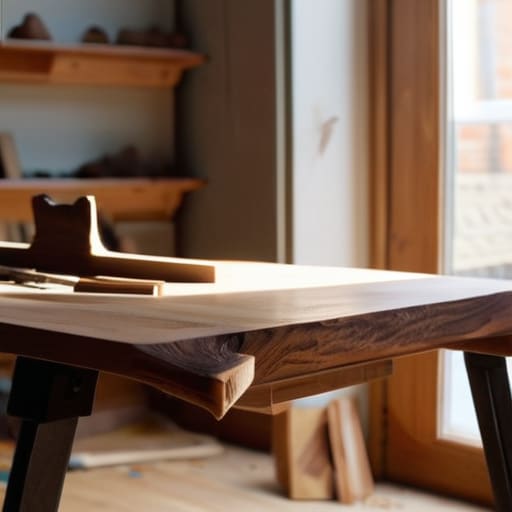
I have a shelf in my studio, tucked behind the drafting table, that most people would call a graveyard. It’s filled with bent plywood that failed its tension test and chair legs cut at the wrong angle. To me, these aren’t failures; they are the ghosts of the alternative. When I look at a finished piece, I don’t just see the joinery; I see the version of that chair that would have been too heavy, too fragile, or too loud. Mastery isn’t the absence of these mistakes, but the ability to recognize them before they become permanent.
This is where the internal vs external validation becomes a quiet, daily battle. The world sees a seamless walnut tabletop and calls it “expert.” But inside, I am still wrestling with the version of that table that had a slight, nagging wobble in the grain. You begin to realize that true skill isn’t about reaching a state of perfection, but about managing the cognitive load in expertise—the ability to hold a dozen different, failed possibilities in your mind at once so you can finally choose the one that works.
Navigating the Psychological Toll of the High Performance Drive

There is a particular kind of exhaustion that comes with this level of commitment, one that isn’t solved by a weekend away or a change of scenery. In my studio, I often find myself staring at a joint that is technically perfect but feels fundamentally dishonest. It’s a heavy, quiet weight—the friction between internal vs external validation. You realize that the client’s approval or the industry’s nod is a fickle metric compared to the internal standard you’ve spent twenty years building. When your standard is an moving target, the drive for excellence can feel less like a motor and more like a slow-burning fever.
This constant scrutiny creates a massive cognitive load in expertise. You aren’t just thinking about the wood or the joinery; you are managing a relentless internal monologue that critiques every micro-decision in real-time. It’s easy to mistake this mental fatigue for a lack of progress, but I’ve learned that these periods of stagnation are often just the plateau of latent potential. You aren’t failing; you are simply integrating the complexity of what you’ve learned before the next breakthrough can actually take shape.
The Quiet War Against Overcoming Imposter Syndrome
In my studio, the imposter syndrome doesn’t arrive as a sudden crisis; it’s more like a slow, rhythmic drip of doubt that settles in during the quiet hours of a long project. You sit there, surrounded by the physical evidence of your competence—the successful joints, the balanced silhouettes—and yet, there is this nagging suspicion that you are merely a well-practiced mimic. It becomes a constant struggle between internal vs external validation. You can win every design award in the industry, but if the internal dialogue remains convinced that you’ve just been “getting lucky” for twenty years, the accolades feel hollow.
The real trick isn’t about suddenly feeling confident; it’s about learning to work through the friction. I’ve found that overcoming imposter syndrome isn’t a destination where the doubt disappears, but rather a realization that the doubt is actually a byproduct of high standards. When you care deeply about the precision of a chamfer or the tension of a spring, the fear of being “found out” is often just your brain acknowledging the sheer weight of the craft. You learn to treat that anxiety not as a signal to stop, but as a tax you pay for staying honest with the material.
Finding Peace Within the Intense Flow State Experience
There is a specific kind of silence that settles in when the tools finally stop feeling like extensions of my hands and start feeling like part of my nervous system. It isn’t the loud, triumphant rush people describe in pop-psychology books; it’s more of a settling. When I’m deep into a complex joinery task or adjusting the tension on my letterpress, the cognitive load in expertise seems to drop, even as the technical difficulty spikes. The noise of the world—the deadlines, the client critiques, the nagging doubt—simply falls away. You aren’t thinking about being “good”; you are merely occupied by the physics of the moment.
However, I’ve learned that finding peace in this state requires a hard pivot from seeking internal vs external validation. If I am working to prove something to a gallery or a client, the flow is brittle; it breaks the moment a mistake occurs. True stillness comes when the work becomes its own justification. It is the realization that the flow state experience isn’t a reward for being a master, but rather the only place where the ego finally gets out of its own way.
The Dangerous Trap of Internal vs External Validation
I spent years thinking that a successful exhibition or a glowing client testimonial was the metric of my progress. In the early days of my studio, I lived for the applause, equating the external nod of approval with the actual quality of my work. But there is a particular kind of exhaustion that comes from chasing that ghost. When you tether your sense of worth to the fickle opinions of others, you aren’t designing; you are performing. This tension between internal vs external validation is where many talented makers lose their way, drifting toward what is popular rather than what is right.
True mastery requires a brutal kind of isolation. It is the ability to stand over a prototype—one of the many “failures” currently cluttering my workshop—and know it is flawed, even if a client would never notice. You have to develop a private standard that exists entirely independent of the market. If you rely on the crowd to tell you when you’ve succeeded, you will inevitably hit the plateau of latent potential, where your growth stalls because you’ve stopped pushing against your own boundaries and started pushing toward the easiest path to praise.
Managing the Heavy Cognitive Load in Expertise
There is a specific kind of exhaustion that comes from being good at what you do. It isn’t the physical fatigue of a carpenter’s hands, though I’ve felt that plenty; it’s the mental density of managing the sheer volume of variables that a novice doesn’t even see. When I’m drafting a new chair, I’m not just thinking about the silhouette. I’m juggling joinery tolerances, material grain directions, and the way light will hit a specific chamfer at four in the afternoon. This is the true cognitive load in expertise—the weight of a thousand micro-decisions pressing down on your consciousness all at once.
It feels less like a graceful dance and more like trying to keep a dozen spinning plates upright while walking a tightrope. You reach a point where the mental bandwidth required to maintain precision starts to cannibalize your ability to be creative. I’ve spent many late nights in the studio staring at a prototype, realizing that my brain simply didn’t have the processing power left to solve the next problem. You aren’t just fighting the material anymore; you are fighting the limits of your own mental architecture.
Waiting in the Shadows of the Plateau of Latent Potential
There is a specific kind of silence that settles in when you realize you aren’t getting better anymore. In the studio, I call it the “stagnation stall.” You’ve mastered the joinery, your sketches are fluid, and the tools feel like extensions of your hands, yet the work feels strangely flat. This is the plateau of latent potential, a deceptive stretch of time where the visible progress vanishes, even though the underlying skill is densifying. It feels less like growth and more like a slow, quiet decay of momentum.
It is easy to mistake this lull for a loss of talent, but that’s where the psychological trap lies. Most people assume that if they aren’t hitting a new peak, they are sliding backward. In reality, you are simply accumulating the structural integrity required for the next leap. You are building the invisible foundation that will eventually support a much higher level of complexity. Mastery isn’t a constant upward diagonal; it is a series of long, grueling horizontal stretches where you are simply learning how to exist within your own competence without needing a new trophy to prove it.
## The Weight of the Unchosen Path
People look at a finished chair and see a settled decision, but when I look at it, I see the ghost of the joinery I discarded at 3:00 AM because it was too easy. Mastery isn’t the ability to get it right; it’s the exhausting, quiet discipline of knowing exactly why the better version didn’t make the cut.
Jonathan Marin
The Weight and the Worth
Looking back at the sprawl of these internal battles—the cognitive heaviness, the quiet terror of the plateau, and the constant, nagging friction between what we feel and what the world sees—it becomes clear that mastery isn’t a destination of ease. It isn’t the moment you finally stop questioning yourself; it’s the moment you learn to work alongside the doubt rather than trying to kill it. We spend so much energy trying to smooth out the edges of our expertise, but the real substance lies in the tension. It is found in the exhaustion of the flow state and the heavy, silent years spent waiting for a breakthrough that may or may not come. Mastery is simply the discipline of staying in the room when the impulse to walk away is at its loudest.
I often look at the drawer in my studio filled with those failed, rejected prototypes. They are messy, scarred, and technically “incorrect,” yet they are the most honest things I own. They remind me that every successful piece of furniture is just a graveyard of better ideas that didn’t quite survive the constraints of reality. If you are feeling the weight of the craft right now, don’t mistake that pressure for failure. That pressure is the very thing that shapes the final form. Ultimately, the goal isn’t to reach a state of perfection, but to reach a state where you can embrace the near-misses as the most vital part of the work.
