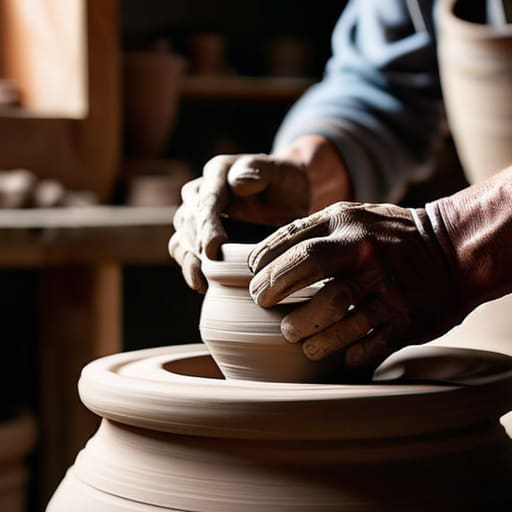
Making Things Is an Economic Argument
I spent most of yesterday morning staring at a rejected walnut chair leg—one of the many ghosts in my studio—because I couldn’t decide if the taper was too aggressive or just right. People love to wrap the concept of “why craft is political” in these layers of academic jargon and high-concept manifestos that feel more like a lecture than a practice. They treat it like some grand, sweeping ideological movement, but when you’re actually elbow-deep in sawdust or ink, the politics aren’t found in a textbook; they are found in the refusal to automate.
I’m not here to give you a lecture on sociopolitical theory or tell you how to perform your identity through a loom. Instead, I want to talk about the quiet, stubborn reality of choosing a method that costs more time and yields less profit. We’re going to look at the actual friction between making things by hand and a world that demands everything be instant and disposable. This isn’t about inspiration; it’s about the hard decisions we make at the workbench that quietly push back against the status quo.
The Tension in the Thread Why Craft Is Political
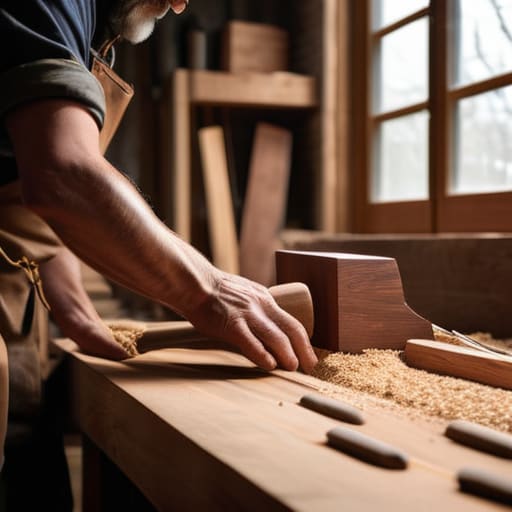
I remember a chair I built in 2008—a simple walnut lounge that I nearly ruined by choosing a heavy, industrial steel base instead of the hand-turned oak I had originally planned. I kept the steel base in my “graveyard” of prototypes, labeled Too much ego, not enough soul. That moment of hesitation is where the real work happens, and it’s where the politics creep in. When we talk about the tension in a piece, we aren’t just talking about structural integrity; we are talking about the invisible weight of handmade vs mass production ethics. Every time I choose a joinery method that takes four hours instead of a screw that takes four seconds, I am making a quiet, stubborn stand against a world that demands everything be instant and disposable.
It isn’t just about the objects, though. It’s about whose hands are doing the work and why we value certain skills over others. When I see a piece of intricate lace or a complex weave, I can’t help but think about the historical baggage of gendered labor in textile arts. For centuries, we’ve categorized “fine art” as something men do with chisels and hammers, while relegating the profound, mathematical complexity of fiber arts to the domestic sphere. To reclaim these methods is to reclaim a history that was intentionally sidelined.
Reclaiming the Loom Through Decolonizing Craft Traditions
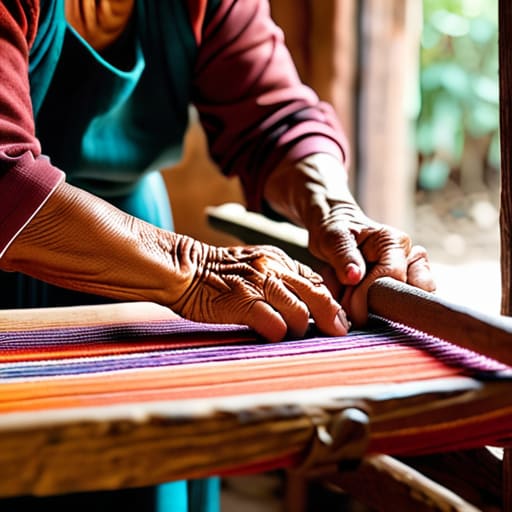
I remember sitting in a workshop in Oaxaca last spring, watching a weaver work a backstrap loom. There was no “efficiency” in her movements, not by the standards of a production line I’ve spent twenty years optimizing. In our Western design education, we are taught to strip away the “unnecessary” until only the function remains, a process that often serves as a polite euphemism for erasing culture. When we talk about decolonizing craft traditions, we aren’t just talking about using different patterns; we are talking about rejecting the idea that a tool is only “good” if it accelerates output.
To me, the tension lies in how we categorize these skills. For too long, the West has relegated certain techniques to the realm of “hobby” or “folk art,” a subtle way of sidelining the intellectual rigor behind them. This dismissal is deeply tied to the history of gendered labor in textile arts, where the domestic and the decorative were used to devalue the actual engineering of the cloth. Reclaiming these methods means acknowledging that a hand-spun thread carries a lineage of knowledge that a CNC machine can never replicate, no matter how precise its path.
The Radical Defiance of Gendered Labor in Textile Arts
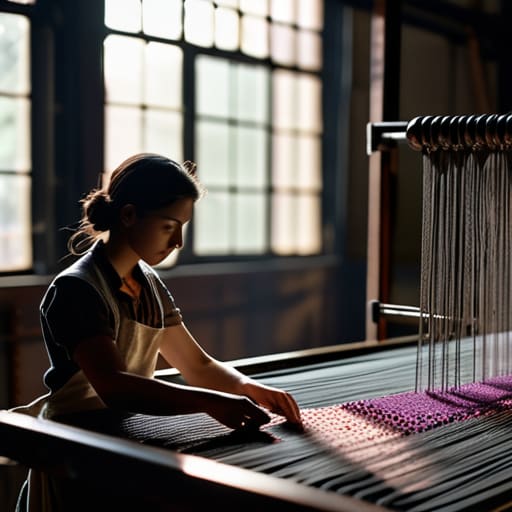
I remember sitting in a studio in the late nineties, watching a colleague struggle with a heavy industrial loom. There was this unspoken, heavy air in the room—a sense that the mechanical, “serious” work belonged to the men, while the delicate, decorative stitching was relegated to the periphery, something domestic and therefore unimportant. We rarely talked about it then, but we were navigating the deep-seated history of gendered labor in textile arts. To pick up a needle or a shuttle isn’t just a technical choice; it is an entry into a lineage of work that has been systematically undervalued because of who was doing it.
When I look at my own workbench, I see the remnants of that friction. Every time I choose to prioritize a tactile, hand-finished edge over a seamless machine cut, I feel like I’m pushing back against a hierarchy that prizes speed and “masculine” precision over the rhythmic, repetitive labor of the hands. It’s a quiet sort of rebellion. By elevating these “feminized” techniques into the realm of high design, we aren’t just making objects; we are refusing to accept the outdated scales of value that dictate what constitutes real work.
Choosing the Slow Movement and Sustainable Making
Last week, I found myself staring at a pile of scrap walnut in the corner of my studio, thinking about a chair leg I’d discarded because the grain felt too “efficient.” In a world built on the frictionless speed of the assembly line, choosing to work slowly is a quiet, stubborn act of sabotage. We are conditioned to value the immediate—the instant gratification of a click and a delivery. But when we lean into the slow movement and sustainable making, we aren’t just being nostalgic; we are rejecting the logic of planned obsolescence.
There is a profound weight to the handmade vs mass production ethics that we rarely discuss in design school. Mass production demands that we strip the soul out of the material to ensure predictability, but craft demands that we listen to the wood, the clay, or the fiber. Every hour I spend refining a joint is an hour stolen back from a system that views time only as a metric for profit. By choosing the long way around, we reclaim our agency from a cycle of consumption that was never designed to serve us, but merely to exhaust us.
Handmade vs Mass Production Ethics the Cost of Speed
I have a drawer in my studio filled with failed joints and warped wood—the ghosts of decisions that didn’t work. In the furniture world, we’re taught to chase the “clean” finish, the seamless production run that looks like it was birthed by a machine rather than a person. But there is a quiet, heavy violence in that kind of perfection. When we talk about handmade vs mass production ethics, we aren’t just debating the texture of a surface; we are debating the value of time itself. Mass production requires the erasure of the maker to maintain the illusion of infinite, cheap availability.
To choose the hand-built is to engage in a form of resistance against a system that views human labor as a mere line item to be optimized. It is about the economic impact of artisanal production—the way a single chair, built with intention, keeps a lineage of skill alive rather than feeding a cycle of planned obsolescence. Every time I choose a more difficult joinery method over a quick screw-and-glue fix, I am making a political choice to prioritize the longevity of the object and the dignity of the hands that built it.
Craftivism and Social Change the Needle as a Weapon
I have a drawer in my studio filled with failed joinery and warped wood—remnants of moments where I chose the harder path. It makes me think of the people who use embroidery not for decoration, but for disruption. There is a specific, quiet power in craftivism and social change that a digital protest simply cannot replicate. When you stitch a message into a piece of fabric, you aren’t just shouting into the void; you are embedding a grievance into something tactile, something that demands to be held and felt.
It is a subversion of expectations. We are conditioned to see needlework as something domestic, something soft and non-threatening. But when that softness is used to highlight systemic injustice, the contrast becomes a weapon. It turns the history of gendered labor in textile arts on its head, taking a medium once used to keep women “quiet and busy” and turning it into a loud, visual manifesto. You aren’t just making a thing; you are reclaiming the very tools used to marginalize you, using them to stitch a new reality into existence, one painstaking stitch at a time.
The Quiet Rebellion of the Economic Impact of Artisanal Production
I was looking at a pile of rejected chair legs last Tuesday—each one a casualty of a different structural or aesthetic compromise—and I realized that the most political thing about my studio isn’t the design itself, but the ledger. When we talk about the economic impact of artisanal production, we often get lost in lofty theories of global markets, but the reality is much more granular. It’s about the decision to pay a local woodworker a living wage instead of sourcing a pre-fabricated component from a factory halfway across the world. Every time I choose a local supplier, I am making a choice that favors human scale over industrial efficiency.
This isn’t just about being “local”; it’s a fundamental pushback against the logic of the assembly line. In my years navigating both boutique studios and massive production runs, I’ve seen how mass production erodes the agency of the maker. By choosing the path of the maker, we aren’t just making objects; we are sustaining a specialized ecosystem of skill. It is a quiet, persistent way to ensure that value remains tethered to the hands that created it, rather than being swallowed by the sheer momentum of global logistics.
The Politics of the Pivot
We like to pretend that a choice between walnut and oak is just an aesthetic preference, but in a world that demands everything be optimized, cheapened, and stripped of its history, the simple act of choosing a difficult material—and sticking with it when the joinery fails—is a quiet, stubborn refusal to let the market dictate the soul of an object.
Jonathan Marin
The Final Grain
Looking back through the layers of this discussion, it becomes clear that craft is never just about the object itself. Whether we are talking about decolonizing a traditional technique, challenging the gendered history of the loom, or resisting the crushing velocity of mass production, we are talking about agency. Every choice—from the way we source a piece of timber to the way we value a single, slow-made stitch—is a vote against a system that prefers us to be passive consumers. We have seen how the act of making can dismantle hierarchies and reclaim economic power, proving that the workshop is often a more potent site of resistance than the podium.
In my own studio, I often look at my shelf of failed prototypes to remind myself that progress isn’t a straight line; it is a series of difficult, often messy, pivots. We shouldn’t aim for a world of perfect, seamless objects, but rather one where we value the intentionality of the struggle. To make something by hand is to insist that time, labor, and history still matter in an era designed to make them invisible. So, keep making, keep questioning, and most importantly, never stop choosing the harder path. That is where the real revolution lives.
