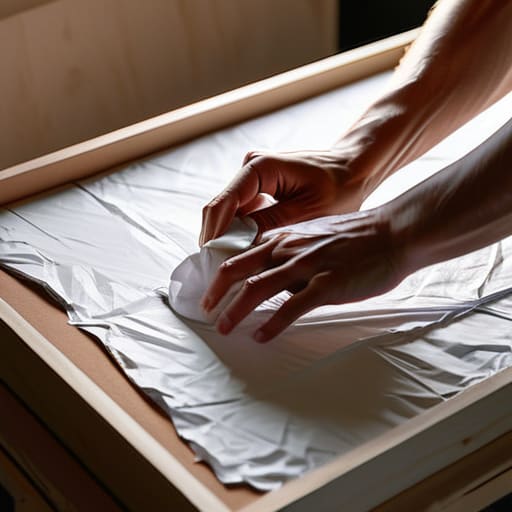
Getting a Finished Piece There Undamaged
I remember standing in my studio three years ago, staring at a hand-turned walnut stool that had cost me six weeks of my life, only to realize I was about to wrap it in nothing but cheap, industrial bubble wrap and a prayer. There is this pervasive, expensive myth in our industry that professional logistics require a fleet of specialized couriers and custom-built wooden crates for every minor commission. But the truth about how to pack and deliver finished work isn’t found in a high-end shipping catalog; it’s found in the anxiety of the threshold, that terrifying moment when a piece of your soul leaves your control and enters the chaotic machinery of the postal system.
I’m not here to sell you on a premium logistics software or a suite of overpriced shipping supplies. What I want to do is share the hard-won, often frustrating lessons I’ve gathered from two decades of seeing beautiful things arrive broken. I’ll walk you through the tactile, unglamorous reality of protecting your output, focusing on the small, deliberate choices that ensure the object arriving at the client’s door is exactly the one you intended to create.
The Final Ritual How to Pack and Deliver Finished Work
I have a shelf in the back of my studio dedicated to the “almosts”—the chairs with the wrong joinery or the tables with a grain pattern that felt too loud. When I finally reach the stage of shipping a piece that actually made the cut, I treat the packing process like a final, silent layer of design. It isn’t just about logistics; it is about the unboxing customer experience. If I’ve spent six months obsessing over the radius of a corner, it feels like a betrayal to let that effort vanish inside a generic, flimsy cardboard box.
I’ve learned through many a broken shipment that secure packaging for handmade goods requires more than just bubble wrap. I tend to layer my materials like I’m building a structural assembly: heavy-duty corrugated inserts first, then specific protective wrapping materials that won’t mar a hand-rubbed oil finish. I also make it a point to never skimp on shipping insurance for high-value items. It’s a small, pragmatic cost to protect the integrity of the decisions that survived the workshop. In the end, how the object arrives is the final statement of the work itself.
Protecting the Near Misses With Secure Packaging for Handmade Goods
I have a shelf in the corner of my studio dedicated to the “near misses”—the chairs with the wrong joinery, the lamps with the failed finishes. When I finally move a piece from the workshop to a client, I feel a heavy sense of responsibility toward those ghosts. Using proper secure packaging for handmade goods isn’t just about preventing a crack in a tabletop; it’s about protecting the integrity of every hard-won compromise. If a piece arrives damaged, the story of its creation is instantly erased by the frustration of the arrival.
I’ve learned that the weight of the box matters as much as the padding inside. I tend to over-engineer my kits, layering protective wrapping materials until the object feels less like a product and more like a specimen. It’s a bit obsessive, perhaps, but when you’ve spent weeks debating a single curve, you don’t trust a standard courier with anything less than total containment. Ultimately, the way a person opens that box—the unboxing customer experience—should feel like the final, quiet chapter of the design process, not a gamble against the postal service.
Choosing Protective Wrapping Materials That Honor the Makers Intent
I have a drawer in my studio filled with scraps of honeycomb cardboard and heavy-duty kraft paper, remnants of various failed experiments in cushioning. It’s a messy collection, but it’s taught me that selecting protective wrapping materials isn’t just about preventing a scratch; it’s about the tactile transition from my workbench to the client’s home. If I’ve spent three months debating the tension of a joinery detail, the last thing I want is for that nuance to be muffled by cheap, crinkling plastic that feels disposable.
There is a specific tension in choosing between utility and grace. I often find myself oscillating between thick, industrial foam and more organic, textured wraps. I eventually settled on a layered approach: a soft, acid-free tissue to respect the finish, followed by a more robust structure. This isn’t just about safe transit for delicate artwork; it is about the unboxing customer experience. When the client finally peels back the layers, the material should feel like a deliberate extension of the object itself, not an afterthought that needs to be wrestled with and discarded.
Mastering Fragile Item Shipping Techniques for the Most Difficult Decisions
There is a specific kind of anxiety that sets in when you are boxing up a piece that felt, at one point, like it might actually fail. I have a shelf in the studio dedicated to these near-misses—joints that didn’t quite seat or wood that split under the chisel—and it reminds me that every finished object is a survivor. When dealing with something truly precarious, standard fragile item shipping techniques often feel too clinical, too detached from the physical reality of the object. You aren’t just moving weight; you are moving a series of hard-won compromises.
I’ve learned that the secret to safe transit for delicate artwork or complex furniture isn’t just about adding more layers of foam. It’s about understanding the geometry of the risk. I often find myself obsessing over the internal bracing, wondering if the tension I’ve built into the piece will hold against the vibration of a delivery truck. It’s a heavy responsibility, which is why I never skip the step of securing shipping insurance for high-value items. It isn’t about being pessimistic; it’s about acknowledging that once it leaves my hands, the decision to let it go is finally complete.
Ensuring Safe Transit for Delicate Artwork Through Every Turn
I have a drawer in my studio filled with shards of ceramic and splintered wood—the casualties of a courier who thought “handle with care” was merely a suggestion. When you are managing safe transit for delicate artwork, you have to stop thinking like a shipper and start thinking like a defensive strategist. It isn’t enough to just layer bubble wrap; you have to account for the kinetic energy of a box being dropped from a loading dock. I’ve learned that the internal structure of the package is what actually matters. If the object can move even a fraction of an inch within its housing, the journey is already compromised.
This is where the math of the build meets the reality of the road. I always insist on a “double-box” method for anything truly irreplaceable, creating a buffer zone that absorbs the shock of the unexpected. It feels like overkill until you realize that investing in shipping insurance for high value items is a financial safety net, but a well-engineered box is a physical one. You aren’t just sending a product; you are sending the culmination of months of restraint and difficult choices. You owe it to the object to ensure it arrives exactly as you intended.
The Safety Net Shipping Insurance for High Value Items
There is a specific, hollow feeling in my chest when a piece leaves the studio. Even after years of perfecting my secure packaging for handmade goods, that knot of anxiety remains. You spend months negotiating the tension of a joint or the curve of a backrest, only to hand that entire history over to a stranger in a brown uniform. This is where the math of design meets the cold reality of logistics. I used to view shipping insurance for high value items as a mere line item on an invoice—a bureaucratic necessity to be minimized.
I was wrong. I realized that insurance isn’t just about the replacement cost of the timber or the labor; it is about protecting the integrity of the process. When a piece arrives broken, the client isn’t just losing an object; they are losing the culmination of every difficult choice I made during its creation. Investing in comprehensive coverage is, in a way, an act of respect for the work itself. It provides the psychological breathing room necessary to focus on the next design, rather than being paralyzed by the fear of a single rogue courier.
The Unboxing Customer Experience Validating Every Hard Won Choice
There is a specific, quiet tension that settles in my studio when a piece is finally boxed up. I often think about the three different joinery methods I discarded before settling on the one that actually worked; those rejected ideas are still sitting on my shelves, but the one in the box is the one that has to survive the journey. The unboxing customer experience is the moment those invisible struggles either become visible or are completely lost to a sense of cheapness. If a client opens a hand-turned bowl only to find it smothered in generic, industrial bubble wrap and a mountain of shredded newspaper, the weight of the craft evaporates.
You have to treat the arrival as the final stage of the design process. It isn’t just about the secure packaging for handmade goods that kept the item from breaking; it’s about the tactile transition from the shipping container to the object itself. I’ve learned that the way you layer your protective wrapping materials—perhaps a heavy linen cloth instead of plastic—serves as a silent validation of the labor involved. It tells the recipient that the decisions made in the workshop were intentional, right down to the very last layer.
The Weight of the Final Inch
We spend months wrestling with joinery and grain direction, fighting for every millimeter of a design, only to risk it all in the final five minutes of wrapping. If you treat the packaging as an afterthought, you’re essentially telling the client that the hardest decisions you made during the build didn’t actually matter.
Jonathan Marin
The Last Decision
In the end, the way we pack a piece is just another layer of the design process. We’ve moved from selecting the right structural support to choosing materials that respect the object’s soul, and finally, to securing the insurance that acknowledges its worth. It is a sequence of logistics, yes, but it is also a sequence of intentionality. If we treat the shipping crate with less rigor than the joinery itself, we are essentially telling the world that the work only matters while it sits under my studio lights. Proper delivery ensures that the integrity of the object survives the transition from my controlled environment to the chaotic reality of the recipient’s doorstep.
I often look at my shelf of rejected prototypes—those failed experiments that taught me more than the successes ever could—and I realize that every finished piece carries the ghost of its near-misses. When you wrap a client’s order, you aren’t just protecting wood, clay, or paper; you are protecting the thousands of tiny, difficult choices that nearly went the other way. Shipping is the final act of stewardship. It is the moment where we stop being makers and start being guardians of the craft, ensuring that the story we’ve told through our hands is delivered exactly as we intended, without a single scratch to the narrative.
