
A Claim Three Years Later
I was staring at a walnut sideboard last Tuesday—a piece I’d spent six months perfecting—and realized that even the best joinery can’t outrun a poorly drafted service agreement. Most people approach a broken component with a sense of apology, as if they’ve personally offended the manufacturer, but that’s exactly the mindset that gets you nowhere. They tell you that navigating the paperwork is a “seamless experience,” which is a lie designed to make you give up before you even start. If you want to know how to handle a warranty claim without losing your mind or your dignity, you have to stop treating it like a customer service request and start treating it like a negotiation of facts.
I’m not going to give you a polished, corporate flowchart that reads like a legal disclaimer. Instead, I want to share what I’ve learned from twenty years of seeing both sides of the production line—from the designer’s desk to the frustrated end-user. I’ll show you how to document your failures, how to speak the specific language that gets past the first-tier gatekeepers, and how to fight for the object you actually paid for. This isn’t about being difficult; it’s about ensuring the integrity of the things we bring into our homes.
The Deviation Why Most Claims Fail Before They Begin
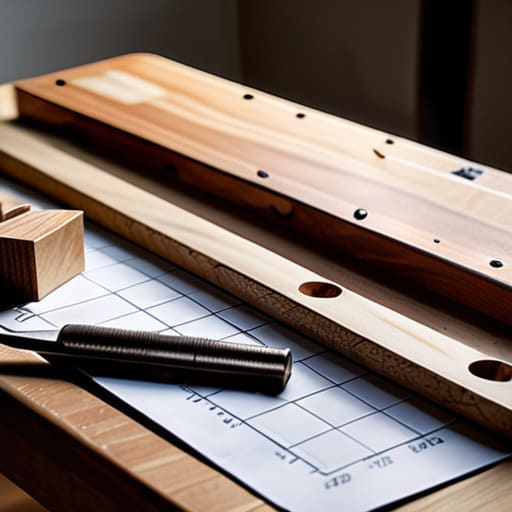
Most people approach a warranty claim like they’re asking for a favor, rather than exercising a right. I see this often in my own studio—someone brings in a piece with a failed joint, and they approach the conversation with a sort of apologetic hesitation. That’s the first mistake. When you treat a claim like a request for mercy, you’ve already lost the leverage. Most failures happen because the user fails to treat the process as a technical exchange of facts. They skip the product defect documentation or provide a narrative that is too emotional and not nearly structural enough.
The second pitfall is the sheer lack of organization regarding manufacturer warranty terms. We live in an era of digital clutter, where the original receipt is buried under three years of unread newsletters. If you can’t satisfy the basic proof of purchase requirements within the first two emails, the conversation is effectively dead. It isn’t personal; it’s just bureaucracy. You aren’t fighting a person; you are navigating a system that is designed to find reasons to say “no” before it ever considers saying “yes.”
Mastering the Art of How to Handle a Warranty Claim

I’ve spent enough time in production meetings to know that a warranty isn’t a gift; it’s a legal boundary. To navigate this, you have to stop thinking like a frustrated owner and start thinking like a forensic investigator. Before you even pick up the phone, you need to assemble your product defect documentation with the same precision I use when cataloging a failed joinery prototype. Don’t just send a blurry photo of a crack; send a sequence that proves the failure wasn’t caused by misuse, but by a fundamental lapse in the material’s integrity.
The real friction usually occurs when you hit the wall of manufacturer warranty terms. Companies rely on the fact that most people find the fine print too tedious to parse. They want you to give up. To win, you have to be ready to cite specific clauses and demonstrate that you understand your consumer protection rights better than their first-tier support agent does. It isn’t about being aggressive; it’s about being undeniably prepared. If you approach the process as a technical negotiation rather than an emotional plea, you move from being a nuisance to being a person who knows exactly what they are owed.
The Paper Trail Precise Product Defect Documentation

I have a shelf in the back of my studio dedicated to the “almosts”—the chairs with the wrong grain direction or the joints that failed under a specific tension. I keep them because they are the most honest things I’ve ever made. When you are dealing with a defect, you need to approach your documentation with that same clinical, almost obsessive, level of detail. Most people send a blurry photo of a crack and wonder why they get a canned rejection. You aren’t just sending a picture; you are building a case. This means meticulous product defect documentation: high-resolution shots from three different angles, a video showing the structural failure in real-time, and a written log of exactly when the issue manifested.
Don’t let the bureaucracy trip you up by ignoring the fine print. I’ve seen perfectly valid grievances tossed aside simply because the claimant missed the specific proof of purchase requirements buried on page twelve of a manual. Before you even pick up the phone, sit down with the manufacturer warranty terms. You need to know if they define a “defect” as a cosmetic flaw or a structural failure. If you treat this like a casual conversation, they will treat it like a nuisance. Treat it like a forensic investigation, and you move from being a frustrated customer to a person exercising their consumer protection rights.
Navigating the Trap of Manufacturer Warranty Terms
I spent a decade watching production lines churn out pieces that were “good enough,” only to see them fall apart the moment they left the factory floor. When you sit down to read the fine print of the manufacturer warranty terms, you aren’t just reading a legal document; you’re looking at a map of the minefield they’ve laid out to discourage you. They use language that feels like a shrug—vague clauses about “normal wear and tear” that are designed to swallow your legitimate grievances whole. It is a subtle, linguistic sleight of hand intended to make you feel like the failure is your fault, not a flaw in their joinery or a lapse in their material selection.
The real danger lies in the gaps between what you expect and what they’ve codified. I’ve seen people lose their leverage simply because they didn’t realize a specific component wasn’t covered under the primary agreement. You have to approach these terms with the same scrutiny I apply to a blueprint. If you aren’t vigilant about warranty expiration tracking, you might find yourself holding a broken masterpiece with no legal recourse left. Don’t let their complexity intimidate you; treat the document like a set of constraints to be navigated, not a wall to be accepted.
The Criticality of Proof of Purchase Requirements
I have a small graveyard in the corner of my studio—a collection of failed joinery, warped timber, and cast resin that didn’t set right. Every piece is tagged with the reason it failed, a reminder that even the best intentions require evidence. This same rigor applies when you’re dealing with a company that doesn’t want to admit a mistake. They will almost always pivot to the easiest exit strategy: asking for your receipt.
The reality is that proof of purchase requirements are often used as a gatekeeping mechanism. It isn’t just about showing you paid; it is about establishing the exact moment your consumer protection rights began to accrue. I’ve seen people lose entire claims because they relied on a digital confirmation that vanished into a spam folder three years prior. If you can’t anchor the object to a specific date and vendor, the manufacturer can effectively treat your claim as a ghost story—something that exists in theory, but lacks the substance to be real.
The Race Against Time Warranty Expiration Tracking
In my studio, I keep a shelf of failed joints and warped laminates. They are physical reminders that even the best intentions succumb to the clock. A warranty is much the same; it is a decaying asset. Most people treat a defect like a slow-growing rot, something they can address “eventually,” but in the world of manufacturing, eventually is a death sentence. By the time you realize a structural failure isn’t just settling, the window for warranty expiration tracking has often already slammed shut.
I’ve seen too many people lose their leverage because they treated the timeline as a suggestion rather than a hard boundary. You cannot rely on your memory or a crumpled receipt tucked into a junk drawer. You have to treat the expiration date with the same precision I use when setting type on my letterpress. If you miss that mark, your consumer protection rights become significantly harder to invoke, regardless of how obvious the flaw is. It’s not just about being organized; it’s about recognizing that the moment a product fails, the countdown to your loss has already begun.
Escalation Filing a Formal Complaint and Consumer Protection Rights
When the standard customer service loop starts feeling like a circular argument, you have to change the geometry of the conversation. I’ve spent enough time in production meetings to know that a company’s first instinct is often to protect the bottom line, not the user. If you’ve already provided meticulous product defect documentation and they are still stonewalling, you aren’t just dealing with a misunderstanding; you are dealing with a systemic refusal to honor a contract. This is where you stop being a polite requester and start being a claimant.
At this stage, filing a formal complaint through official channels—be it a Better Business Bureau filing or a state regulatory agency—is necessary. It feels aggressive, almost unrefined, but it’s often the only way to move the needle. You aren’t just asking for a repair anymore; you are asserting your consumer protection rights. It is about forcing them to look at the discrepancy between the promise of their marketing and the reality of the broken object sitting in your studio. Sometimes, the only way to fix a design failure is to exert the pressure that the design itself couldn’t withstand.
The Cost of a Silent Error
A warranty claim isn’t just a bureaucratic hurdle; it’s a confrontation with the gap between what a designer promised and what the manufacturing process actually delivered. If you approach it with mere frustration, you lose. If you approach it with the precision of a technical drawing, you win.
Jonathan Marin
The Final Iteration
At the end of the day, successfully navigating a warranty claim isn’t about being loud or aggressive; it is about the discipline of the paper trail. You have to treat the process with the same rigor I apply to a technical drawing—meticulous documentation, a clear understanding of the manufacturer’s constraints, and a refusal to let the clock run out on your rights. Whether you are fighting for a replacement part or a full refund, remember that the strength of your position lies in the precision of your evidence. If you approach the bureaucracy with a structured plan rather than mere frustration, you move from being a victim of a faulty product to a competent advocate for your own investment.
I often look at the pile of rejected prototypes in my studio—the ones with the wrong joinery or the failed finish—and I realize that the flaws are where the real story lives. A warranty claim is essentially a confrontation with a flaw that wasn’t supposed to happen. It is a friction point in the life of an object, a moment where the intended design meets the messy reality of manufacturing. Don’t view the struggle as a chore, but as a way to enforce the integrity of the things we bring into our homes. After all, we don’t just buy objects for their utility; we buy them because they represent a promise of quality that we have every right to hold them to.
