
Keeping One Reference Face for Six Weeks
I remember standing in my studio three years ago, surrounded by a graveyard of bent walnut and misaligned joinery, staring at a prototype that looked perfect on paper but felt like a lie in my hands. It wasn’t a lack of talent that killed the piece; it was the slow, creeping erosion of focus that happens between Tuesday and the following Friday. Most people will tell you that precision is about high-end calipers or expensive software, but they’re selling you a fantasy. The truth is much more unglamorous. Real discipline isn’t found in a gadget; it’s found in the boring, repetitive rituals of how I keep accuracy over weeks without letting the momentum of a deadline turn my work into a series of compromises.
I’m not here to give you a productivity hack or a lecture on time management. I want to talk about the grit of the process—the specific, often frustrating systems I use to ensure that the tenth iteration is as honest as the first. I’ll share the mental frameworks and the physical checkpoints that prevent a project from drifting into mediocrity. This is about designing through constraint, not waiting for a lightning bolt of inspiration to strike.
The Slippery Slope How I Keep Accuracy Over Weeks
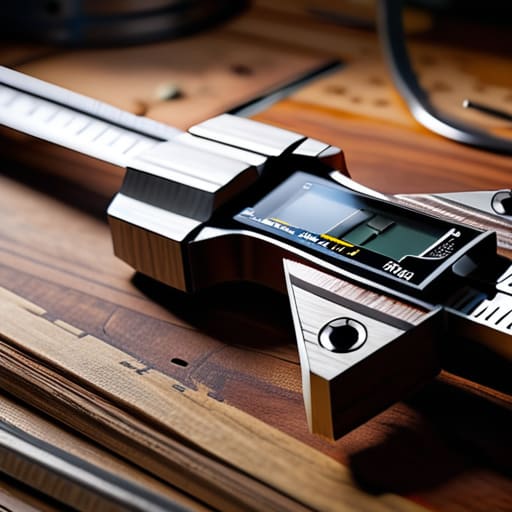
The problem with a long-term project isn’t the initial burst of energy; it’s the slow, quiet erosion of standards that happens in week three or four. In furniture design, it’s the way a measurement starts to drift by a fraction of a millimeter because you’ve stopped checking the calipers against the master gauge. I see the same thing in my digital workflows. You start with rigorous validation against reference standards, but as the fatigue sets in, you begin to trust your intuition more than the actual data. That’s a dangerous pivot.
To combat this, I’ve had to build my own makeshift quality control monitoring systems into my daily routine. It isn’t about grand gestures of discipline; it’s about the tedious, repetitive act of checking my work against a fixed point every single morning. I treat my spreadsheets and my technical drawings with the same skepticism I’d apply to a new batch of wood from an unfamiliar mill. If I don’t actively hunt for the deviation, the deviation will eventually find me, and by then, the error is usually baked into the foundation of the entire piece.
The Near Misses of Preventing Data Drift Over Time
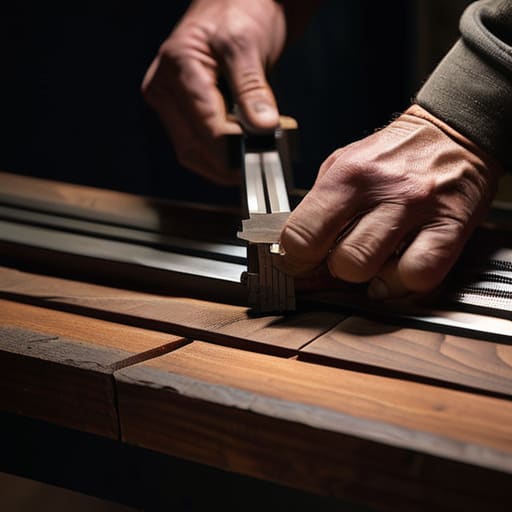
I have a shelf in the back of my studio filled with what I call “the ghosts.” They are the chair legs that were two millimeters too thin, or the joinery that looked perfect on paper but failed the stress test in real life. In my current work, I’ve realized that the most dangerous threat isn’t a sudden, catastrophic error; it’s the slow, invisible creep of deviation. I call it the “drift.” When you are deep into a project for weeks, you stop seeing the tiny shifts. You stop noticing that your baseline has migrated. Preventing data drift over time requires a certain kind of disciplined paranoia—the kind that forces you to look at a measurement not as a fact, but as a variable that might be lying to you.
To combat this, I’ve stopped relying on my gut and started leaning into more rigorous validation against reference standards. It’s not enough to just check the work; you have to check the tools you are using to check the work. I find myself setting up small, artificial “stress tests” mid-week, essentially forcing an error to see if my systems actually catch it. It’s a tedious process, but I’ve learned that the moment you stop questioning your own consistency is the exact moment the quality begins to erode.
When Quality Control Monitoring Systems Almost Failed Me
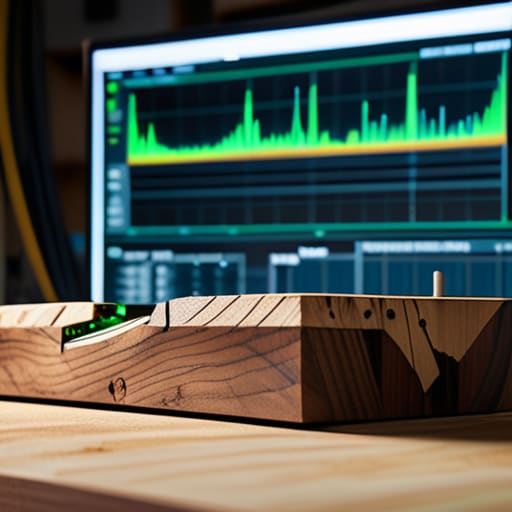
I remember a particular stretch last autumn when I was running a complex series of custom joinery specs through a digital prototyping workflow. I had set up these automated quality control monitoring systems, thinking I’d finally outsourced the burden of vigilance to the software. It felt efficient, almost elegant. But there is a specific kind of vertigo that sets in when you realize the machine is confidently reporting perfection while the actual output is drifting toward catastrophe.
The system wasn’t broken; it was just too narrow. It was validating against a set of parameters that I had inadvertently narrowed during a late-night session. I wasn’t just seeing a minor deviation; I was witnessing a complete breakdown in maintaining precision in long-term tasks. It taught me that no matter how many layers of automation you stack, they are only as honest as the initial constraints you impose. I ended up spending a weekend manually re-verifying every single tolerance, realizing that true reliability isn’t found in the software, but in the friction between the tool and the human eye.
The Hard Choice of Maintaining Precision in Long Term Tasks
There is a specific kind of exhaustion that sets in around week three of a protracted project. It isn’t physical, though my back certainly feels the weight of the studio chair; it’s a mental erosion. In furniture design, you can measure a tolerance to a fraction of a millimeter, but in the conceptual phase of a long-term build, the drift is more insidious. I often find myself caught between the urge to rush toward a finished prototype and the grueling necessity of maintaining precision in long-term tasks. It is tempting to let the small deviations slide—a slight misalignment in a digital model or a minor oversight in a spec sheet—thinking they won’t matter once the wood is cut. But they always do.
I’ve learned that true craftsmanship isn’t just about the initial spark; it’s about the discipline of validation against reference standards when you are too tired to care. I have a drawer full of failed joints that look perfect at first glance, only to fail because I prioritized speed over the slow, boring work of constant recalibration. The hardest choice isn’t deciding which material to use, but deciding to stop, step back, and re-verify everything when the momentum is pulling you toward a mistake.
Refining Error Detection and Correction Methods After the Fact
I have a shelf in the back of my studio filled with what I call “the ghosts”—prototypes that failed because a measurement was off by a fraction of a millimeter, or a joint was too loose to hold. In furniture design, as in any long-term project, you don’t just fix a mistake; you perform an autopsy on it. I’ve learned that true error detection and correction methods aren’t about the moment you catch the slip, but about the ritual of looking backward to see why the slip was even possible. It’s about asking if my tools were drifting or if my own fatigue was simply masking the deviation.
When I sit down to review a week’s worth of work, I’m not just looking for errors; I’m looking for patterns of decay. It’s easy to stay sharp on Monday, but by Friday, the subtle shifts in focus can lead to a slow erosion of standards. I find that the only way to ensure consistency and reliability strategies actually work is to treat every error as a diagnostic tool. If I find a discrepancy, I don’t just sand it down and move on; I go back to the source to see if I’ve lost my grip on the original intent.
The Fragile Balance of Consistency and Reliability Strategies
There is a specific kind of exhaustion that sets in around week three of a long-form project. It’s not the physical kind, but a mental fraying where the initial rigor starts to feel like an imposition. I’ve found that my best consistency and reliability strategies aren’t actually about adding more rules, but about knowing when to step back. In my studio, if I’m sanding a chair leg for the tenth time, I don’t just keep going; I stop to ask if I’m actually refining the shape or just chasing a phantom imperfection.
Maintaining that equilibrium requires constant validation against reference standards, whether those are physical jigs in the workshop or digital benchmarks in a spreadsheet. It’s a delicate dance. If you lean too hard into rigid protocols, you lose the nuance that makes the work meaningful; if you lean too far into intuition, you succumb to the slow creep of error. I’ve learned that true precision isn’t a static state you achieve once, but a constant, quiet negotiation between the standard you set on day one and the fatigue you feel on day twenty.
Validation Against Reference Standards the Final Narrow Escape
There is a specific kind of vertigo that sets in when you realize your internal compass has been spinning for days without you noticing. I call it the “drift.” In my studio, it usually looks like a slight, almost imperceptible deviation in a joinery angle, but in the context of long-term data management, it’s far more insidious. I’ve learned that you cannot trust your own eyes—or your own algorithms—once they’ve been staring at the same pattern for too long. This is why I rely on validation against reference standards as my ultimate safety net. It isn’t about being right; it’s about having a fixed point in the universe to prove how wrong you might have become.
Last month, I nearly missed a cascading error because my primary checks had become too comfortable with the noise. I had to step back and run the entire set against a clean, untouched baseline—a cold, hard benchmark that didn’t care about my progress. It was a humbling moment of recalibration, but it saved the project from a slow, quiet descent into inaccuracy. Without that external anchor, the subtle shifts would have simply become the new normal.
The Weight of the Margin
Accuracy isn’t a destination you reach and then inhabit; it’s a constant, quiet negotiation against the fatigue of repetition. I’ve learned that the most dangerous errors don’t come from a lack of skill, but from that subtle, creeping confidence that everything is fine simply because nothing has broken yet.
Jonathan Marin
The Weight of the Finished Piece
Looking back at these weeks of constant vigilance, I realize that accuracy isn’t a destination you reach and then inhabit; it’s a continuous, often exhausting negotiation with entropy. Between the near-misses of data drift and those moments where my monitoring systems felt more like suggestions than safeguards, the lesson remains the same: precision is a byproduct of intentional friction. You can’t just set a process in motion and hope for the best. You have to actively fight the urge to let the edges soften, to constantly validate against the standards we set when our energy was highest, and to embrace the uncomfortable tension of checking your work when you’re certain it’s already done.
In my studio, I keep a shelf of failed prototypes—the ones where I took a shortcut or ignored a subtle misalignment. They serve as a reminder that the integrity of a project isn’t found in its perfection, but in the rigor of the decisions made when no one was watching. Maintaining accuracy over the long haul is less about grand gestures and more about the quiet discipline of the small correction. Ultimately, the most beautiful thing about a finished piece of work isn’t that it stayed true to the plan, but that it survived the countless moments where it almost drifted away.
