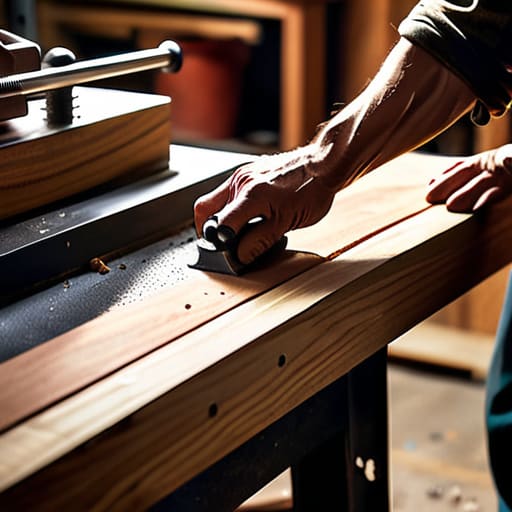
Checking the Planer Mid Build
There is this pervasive, polished lie in design circles that maintenance is something you schedule—a clean, clinical ritual performed once a month when the “real work” is done. It’s total nonsense. In my twenty years of moving between custom studios and high-speed production lines, I’ve learned that waiting for a scheduled service window is just a fancy way of inviting a breakdown. If you aren’t actively listening to the rhythmic chatter of a CNC bit or the subtle change in a motor’s pitch, you aren’t actually working; you’re just waiting to fail. To me, understanding how I maintain machines mid project isn’t about following a manual, it’s about recognizing the exact moment a tool starts to lose its soul.
I’m not here to sell you on expensive diagnostic software or some high-concept theory about “preventative care.” I want to talk about the grit, the grease, and the uncomfortable decisions that keep a build from collapsing under its own momentum. I’m going to share the messy, practical reality of how I keep my tools calibrated while the sawdust is still flying, focusing on the small, instinctive adjustments that prevent a total catastrophe. This isn’t about perfection; it’s about staying in the flow without letting the hardware sabotage the design.
The Pivot Point How I Maintain Machines Mid Project
I’ve learned that the most dangerous time for a piece of equipment isn’t when it’s brand new, but when it’s in the middle of a rhythm. There is a certain hubris that creeps in around week three of a build; you stop looking at the machine as a temperamental partner and start seeing it as a constant. That’s when the drift happens. I’ve found that the only way to combat this is through rigorous preventative maintenance during operation, rather than waiting for the inevitable screech of a seized bearing. I don’t wait for a breakdown to act; I listen for the slight change in the pitch of the motor, that tiny, almost imperceptible shift that signals the machine is fighting itself.
It’s less about a formal checklist and more about a tactile dialogue. I spend my mornings running through specific machine calibration techniques—not because the manual demands it, but because I can feel the vibration in my workbench when a spindle is even a fraction of a millimeter off. If I don’t catch that deviation early, I’m not just risking a bad cut; I’m risking the entire integrity of the design. Precision isn’t a static state; it’s a continuous negotiation.
The Cost of Neglect Choosing Preventative Maintenance During Operation
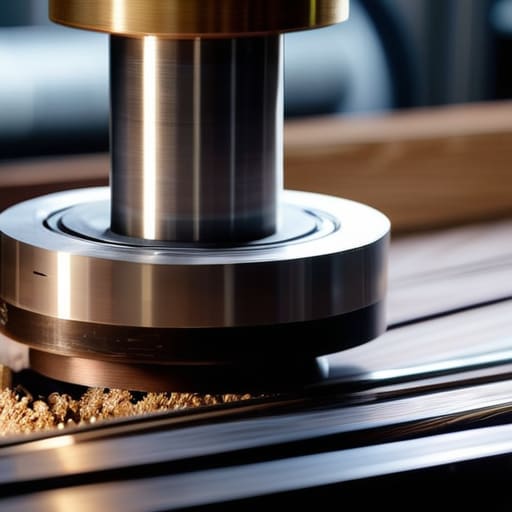
There is a specific, hollow sound a CNC router makes when a bearing starts to go—a high-pitched whine that most people would mistake for the machine simply working hard. To me, it sounds like a looming debt. I’ve learned the hard way that ignoring these small acoustic shifts is a form of arrogance. I used to think I could push through a production run and deal with the cleanup later, but that mindset is how you end up with a pile of expensive, ruined walnut scraps. Now, I treat preventative maintenance during operation as a non-negotiable part of the workflow, not an interruption to it.
It’s a constant negotiation between momentum and stability. I find myself pausing mid-build to run through basic equipment inspection protocols, checking for heat buildup or slight deviations in the axis. It feels counterintuitive to stop when you’re finally in the “flow,” but the alternative is a catastrophic failure that costs days, not hours. I’d much rather lose twenty minutes to a recalibration than lose a week to a broken spindle. In design, as in machining, the most important work often happens in the pauses.
Avoiding the Drift Precision Through Machine Calibration Techniques
There is a specific kind of creeping dread that sets in when you realize your tolerances are slipping. It rarely happens all at once; instead, it’s a slow, insidious drift where a joint that once fit with a satisfying click now requires a light tap from a rubber mallet. I’ve learned that waiting for a total breakdown is a fool’s errand. Instead, I rely on a set of informal machine calibration techniques that I perform every few hours of active cutting or milling. It’s about checking the square, verifying the spindle runout, and listening to the pitch of the motor. If the sound changes, the machine is telling you something the manual won’t.
I keep a small, worn notebook next to the workbench—not for design sketches, but for operational troubleshooting steps. I jot down when a specific jig starts feeling “soft” or when a belt seems to be losing its tension. This isn’t about following a rigid corporate manual; it’s about maintaining precision and accuracy through a tactile, almost intuitive connection to the tools. When you catch a deviation in the first ten minutes, you save yourself ten hours of sanding out mistakes later.
The Near Miss Strict Equipment Inspection Protocols That Saved Us
I remember a Tuesday last November when a CNC router started making a sound like a handful of gravel in a blender. It wasn’t a catastrophic failure—not yet—but it was a subtle, rhythmic hiccup that most people would have ignored in the rush to meet a deadline. I stopped the spindle immediately. My equipment inspection protocols aren’t about looking for broken parts; they are about listening for the deviation from the norm. I spent the next hour tracing a hairline fracture in a drive belt that had been fraying unnoticed under the tension of a heavy walnut run.
If I had pushed through that session, I wouldn’t have just lost a belt; I would have lost the entire workpiece and potentially the motor itself. That’s the reality of minimizing downtime during production. It feels counterintuitive to stop when the momentum is high, but the most expensive mistake in a studio is the one born from the ego of “just five more minutes.” I keep a small, scarred piece of that belt in my bin of rejects—a reminder that the most important part of the process is often the moment you decide to stop.
Choosing Stability Minimizing Downtime During Production Cycles
There is a specific kind of anxiety that sets in when you are halfway through a run of twenty custom chairs and the CNC router starts making a sound that is just slightly off. It isn’t a breakdown, not yet, but it’s a deviation. In those moments, the instinct is to push through—to finish the batch and deal with the mess later. But I’ve learned that the most expensive mistake you can make is treating a machine like an infinite resource.
I’ve started viewing minimizing downtime during production not as a way to save time, but as a way to protect the integrity of the work. I’ll pull the machine offline for twenty minutes to clear a build-up of sawdust or tighten a drive belt, even when the deadline is breathing down my neck. It feels counterintuitive, almost like a failure of momentum, but it’s actually the only way to ensure I’m not just producing expensive scrap. True stability comes from the realization that interruption is a design choice; by choosing to stop for a moment, I am choosing to avoid the catastrophic halt that comes from total mechanical fatigue.
The Hard Choice Maintaining Precision and Accuracy Under Pressure
There is a specific kind of panic that sets in when you are forty-eight hours out from a deadline and the CNC router starts singing a note that sounds slightly off-key. It’s a subtle pitch shift, a vibration that tells you the spindle is drifting. Your instinct, the one honed by years of production pressure, is to push through—to tell yourself that a fraction of a millimeter won’t matter on a batch of twenty chairs. But I’ve learned that ignoring that dissonance is how you end up with a pile of expensive scrap wood.
The real difficulty isn’t the mechanical work; it’s the psychological battle of maintaining precision and accuracy when the clock is screaming at you to move faster. I often find myself staring at the machine, caught between the urge to finish the run and the necessity of stopping for a full recalibration. It feels like a betrayal of the schedule. However, I’ve realized that true professional discipline isn’t about speed; it’s about having the guts to implement operational troubleshooting steps even when it feels like you’re losing ground. You don’t save time by rushing; you save it by refusing to be wrong.
The Recovery Essential Operational Troubleshooting Steps After Failure
When a machine finally gives up—not with a dramatic bang, but with that sickening, subtle shudder that tells you the tolerances have vanished—you can’t just jump back into the workflow. I’ve learned that the impulse to rush is usually what turns a minor hiccup into a permanent loss. My first step is always a forced, quiet retreat. I go through a series of operational troubleshooting steps that feel almost ritualistic: clearing the debris, checking the heat signatures, and verifying that nothing has fundamentally shifted in the geometry of the tool. It’s about stripping the machine back to its baseline before you even think about the next cut.
Recovery isn’t just about fixing what broke; it’s about auditing why the failure was allowed to happen. I find myself revisiting my equipment inspection protocols with a much more cynical eye than I had an hour prior. You have to ask if the drift was a slow creep or a sudden snap. If you don’t diagnose the root cause, you aren’t actually repairing the machine—you’re just delaying the next inevitable breakdown.
The Ghost in the Machine
We tend to treat maintenance like a chore we postpone until the machine screams, but I’ve learned that the real work happens in the quiet moments—the decision to stop, wipe the dust from a sensor, and re-align a guide rail while the momentum is still high, simply because I know that a millimeter of drift today is a ruined prototype tomorrow.
Jonathan Marin
The Residue of the Process
Looking back at the wreckage of a failed run or the quiet success of a calibrated machine, the lesson remains the same: maintenance isn’t a pause in the work; it is the work. We talk about the finished chair or the perfectly inked print, but we rarely talk about the hour spent cleaning the lead screw or the decision to stop the line because a bearing sounded slightly off-key. It is easy to view these moments as interruptions to productivity, but in reality, they are the only way to prevent the slow, creeping drift that turns a precision tool into a liability. True craftsmanship is found in the discipline of the middle, where the initial excitement of a new project meets the grinding reality of its execution.
Ultimately, I’ve learned that my machines are just extensions of my own intent, and they require the same stewardship I give to a sketch or a material sample. We often chase the grand moment of completion, but the integrity of the object is decided in those small, unglamorous intervals of upkeep. If you ignore the machine, you eventually lose the design. I’ve kept a drawer full of failed prototypes to remind me of that, but I keep my tools clean to ensure that the next decision—the one that nearly went the other way—is one I can actually live with.
