
Hearing That a Design Is Wrong
I can still smell the linseed oil and sawdust from the studio back in ’98, sitting across from a client who looked at my hand-carved walnut prototype like it was a pile of kindling. My heart was hammering against my ribs, and for a second, I wanted to defend every single joint and bevel as if my life depended on it. We’re often told that professional growth requires a thick skin, but nobody tells you how much it actually stings when someone dissects your labor. Most people approach the question of how to take criticism of a design as if it’s a psychological exercise in ego management, but that’s a lie. It isn’t about being bulletproof; it’s about learning to see the ghosts of the better versions that you missed.
I’m not here to give you a lecture on “growth mindsets” or some sanitized corporate guide to receiving feedback. Instead, I want to talk about the friction between what you intended and what the world actually sees. I’ll share what I’ve learned from twenty years of sawdust and failed prototypes about how to separate your identity from your output. We’re going to look at the productive sting of a critique and how to use it to find that one crucial decision that nearly went the other way.
The Near Miss Why the Best Work Survives the Critique

I have a shelf in the back of my studio, tucked behind the samples of walnut and birch, that holds my failures. These aren’t mistakes in the traditional sense; they are the ghosts of the paths I almost took. When a client or a senior engineer tears a concept apart, it feels personal in the moment, but I’ve learned that the most vital part of the process is separating ego from design. If I hold too tightly to my initial sketches, I stop being a problem-solver and start being a martyr for a chair that doesn’t actually work.
The real value in a harsh critique isn’t just in the correction, but in the tension it creates. When someone pushes back on a joint detail or a leg taper, they are forcing you to justify the internal logic of the object. This is where the work actually hardens. By improving design through feedback loops, you aren’t just fixing errors; you are stress-testing your intentions. The best pieces of furniture I’ve ever produced weren’t the ones that went smoothly from sketch to sawdust, but the ones that survived a brutal interrogation of their own necessity.
The Art of Separating Ego From Design Decisions
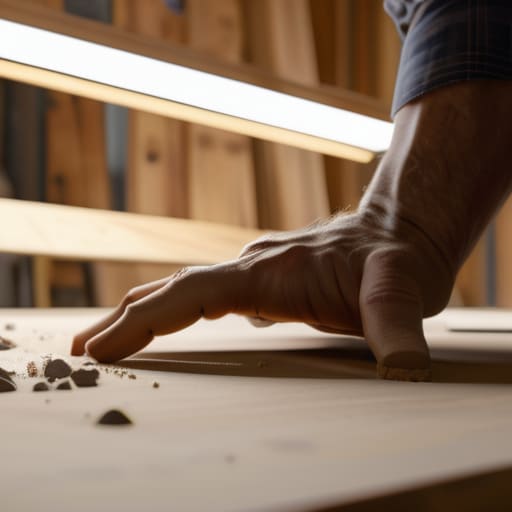
I have a shelf in my studio dedicated to the “almosts”—the chair legs that were too aggressive, the joinery that looked clumsy under studio lights. To a novice, these are failures; to me, they are lessons in separating ego from design. When a client or a lead engineer tears a concept apart, the instinct is to recoil, to feel as though they are attacking your very competence. But the object is not you. The wood, the steel, and the geometry exist independently of your heartbeat. If you can’t view a sketch as a mere hypothesis to be tested, you will never survive the long haul of a production cycle.
Mastering the art of handling negative design feedback requires a certain kind of emotional callousness that I had to build over twenty years. You have to learn to listen to the critique of the work without hearing the critique of the person. It’s about shifting the focus from “Am I good enough?” to “Is this solution functional?” Once you stop treating every redline on a technical drawing as a personal insult, you finally gain the clarity needed to actually improve.
How to Take Criticism of a Design Without Breaking

I have a shelf in the back of my studio, tucked behind a stack of oversized paper samples, filled with what I call my “ghosts.” These are the joints that failed, the wood species that looked cheap under studio lights, and the silhouettes that simply didn’t hold their weight. When you are in the thick of a project, a harsh comment on a sketch can feel like a personal indictment, but I’ve learned that improving design through feedback loops is the only way to keep those ghosts from haunting your actual career. You have to treat a critique like a stress test on a prototype; it isn’t meant to break the object, but to find where the structural integrity fails.
The trick is to stop viewing a comment as a verdict on your soul and start seeing it as data. When I’m dealing with subjective design opinions—the “I just don’t like that shade of walnut” crowd—I try to translate their emotion into something functional. If a client says a chair feels “aggressive,” they aren’t attacking my character; they are telling me the angles are too sharp for the intended space. Once you strip away the sting, you’re left with a set of constraints that actually help you build something better.
Navigating the Storm of Dealing With Subjective Design Opinions
There is a specific kind of vertigo that sets in when a client tells you they simply “don’t like” a chair you spent three months perfecting. It isn’t a critique of the joinery or the tension of the leather; it is a blunt, emotional wall. Dealing with subjective design opinions feels less like a professional exchange and more like a personal rejection of your very eyesight. In those moments, the conversation stops being about ergonomics or material science and starts being about the unbridgeable gap between two people’s internal aesthetics.
I’ve learned that the only way through this storm is to stop defending the object and start investigating the feeling behind the comment. Instead of retreating into a defensive posture, I try to treat their “dislike” as a raw, unrefined data point. By improving design through feedback loops that prioritize curiosity over justification, you can often translate “this feels wrong” into something actionable, like a need for more visual weight or a different tactile rhythm. It is about finding the logic hidden within the irrational.
Mastering the Grace of Handling Negative Design Feedback
There is a specific kind of silence that follows a particularly harsh critique—the kind where you can almost hear your own pulse in your ears. In those moments, the instinct is to defend, to explain the “why” behind every radius and joinery choice. But I’ve learned that true professional designer communication skills aren’t found in the defense; they are found in the pause. When the feedback feels like a personal indictment, I try to treat the comment like one of my rejected prototypes sitting in the corner of my studio. I look at it, I label it, and I examine it without letting it occupy the center of my identity.
Mastering this grace means recognizing that improving design through feedback loops is a mechanical process, not an emotional one. If a client or a lead designer tells me a silhouette feels “clunky,” they aren’t saying I am a clunky person. They are identifying a tension in the geometry. By focusing on the technical friction rather than the perceived failure, you turn a bruising encounter into a diagnostic tool. It’s about moving from a defensive crouch into a state of active, clinical curiosity.
Refining the Vision Through Constructive Design Critique Techniques
When I’m at my press, or hunched over a CAD model for a new chair, I’ve learned that critique shouldn’t be a blunt instrument. It’s more of a fine-grit sandpaper. To truly benefit, you have to move past the defensive crouch and start utilizing specific constructive design critique techniques that focus on the intent rather than the aesthetic. Instead of asking “Do you like this?”, I’ve learned to ask, “Does this joint communicate the stability I’m aiming for?” This shifts the conversation from a battle of tastes to a shared investigation of mechanics and purpose.
This shift is where you actually start improving design through feedback loops rather than just surviving them. It’s about building a system where the critique is a tool for refinement, not a verdict on your worth. I keep a drawer in my studio full of failed joinery and awkward silhouettes—my “graveyard of near-misses”—because each one taught me a specific lesson about tension and scale. If you treat every piece of feedback as a data point in a larger technical inquiry, you stop seeing the critique as an attack and start seeing it as the essential friction required to polish a concept into something functional.
Building Better Work via Professional Designer Communication Skills
At some point, the conversation has to move beyond whether a client “likes” a chair and toward why the joinery or the silhouette functions the way it does. This is where professional designer communication skills become more than just politeness; they become a tool for translation. I’ve learned that when a stakeholder offers a vague, frustrating critique, my job isn’t to defend my initial sketch, but to ask the questions that turn their gut feeling into a technical problem we can actually solve. It’s about moving the dialogue from the realm of taste into the realm of intention.
I often find that the most productive moments happen when we establish a rigorous process for improving design through feedback loops. Instead of treating every comment as a sudden disruption to my workflow, I try to view them as data points in a larger experiment. By framing the discussion around the project’s constraints—material costs, manufacturing limits, or ergonomic requirements—you stop fighting over opinions and start collaborating on solutions. It turns a potentially adversarial exchange into a shared effort to refine the work.
The Ghost in the Prototype
I keep a drawer full of failed joints and rejected silhouettes, not as a graveyard, but as a reminder that a critique isn’t an attack on my hands; it’s just the friction required to sand down a good idea until it actually becomes a great one.
Jonathan Marin
The Final Grain
At the end of the day, navigating a critique isn’t about developing a thicker skin; it’s about developing a sharper eye. We’ve talked about separating our identity from the joinery, managing the subjective noise of a client’s whim, and using those difficult conversations to actually refine the vision rather than just defending it. It’s a messy, often bruising process of filtering the useful from the useless. But if you can learn to treat every piece of feedback as a data point rather than a personal indictment, you stop fighting the storm and start using the wind to steer. The goal isn’t to emerge unscathed, but to emerge with a better version of the truth.
I often look at the graveyard of rejected prototypes in the corner of my studio—the chairs with the wrong taper, the tables with the failed bevels. They aren’t failures; they are the physical evidence of the decisions that almost went the other way. Every piece of criticism you endure is just another way of narrowing the field, carving away the excess until only the essential remains. Don’t fear the friction of a critique. In the long run, the tension is what makes the work hold together. Keep designing, keep listening, and most importantly, keep choosing the path that survives the scrutiny.
