
Leaving a Design for a Week
I have a shelf in the back of my studio dedicated to what I call the “ghosts”—a collection of warped plywood, botched joints, and expensive mistakes. Most design textbooks will tell you that success is a matter of following a rigorous, mathematical checklist, but they’re selling you a sanitized version of reality. In my twenty years of making furniture, I’ve learned that the real work isn’t in the software; it’s in the tension you feel right before the blade hits the grain. If you’re looking for a way to master how to evaluate a design before cutting, stop looking for a perfect formula and start looking for the fault lines in your own logic.
I’m not here to give you a lecture on theoretical aesthetics or high-end CAD workflows. Instead, I want to share the practical, often painful lessons I’ve gathered from two decades of production lines and personal prototypes. We are going to talk about how to spot the structural and visual contradictions that only reveal themselves when you’re staring at a pile of expensive scrap. My goal is to help you recognize those near misses—the decisions that almost went the wrong way—so you can make the right ones before you commit to the material.
The Ghost of the Wrong Decision How to Evaluate a Design Before Cutting
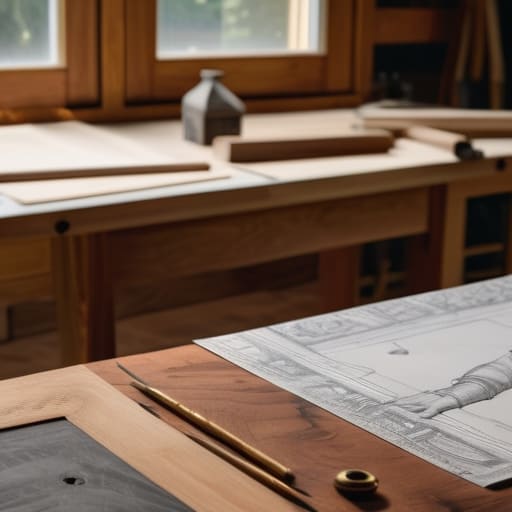
I have a shelf in the back of my studio, tucked behind the heavy oak workbenches, crowded with what I call my “ghosts.” These are the mahogany chair legs that were three degrees too steep, or the brass joinery that looked elegant on paper but felt clumsy in the hand. I keep them because a finished piece only tells half the story; the real truth lies in the tension between what I planned and what I almost did. When I approach a new project, I don’t just look at the blueprint; I look for the flaws that haven’t happened yet. This kind of pre-production design audit isn’t about perfectionism—it’s about hunting for the pivot points.
Before the saw touches the wood or the shears touch the cloth, you have to engage in a sort of mental stress test. I find that visualizing garment construction or furniture joinery in a state of failure is more instructive than imagining it perfect. You have to ask: if this seam shifts by a millimeter, does the whole silhouette collapse? If you aren’t actively searching for the weak link in your prototyping design accuracy, you aren’t really designing; you’re just hoping for the best. And hope is a terrible way to manage a production line.
Visualizing Garment Construction Seeing the Error Before It Exists
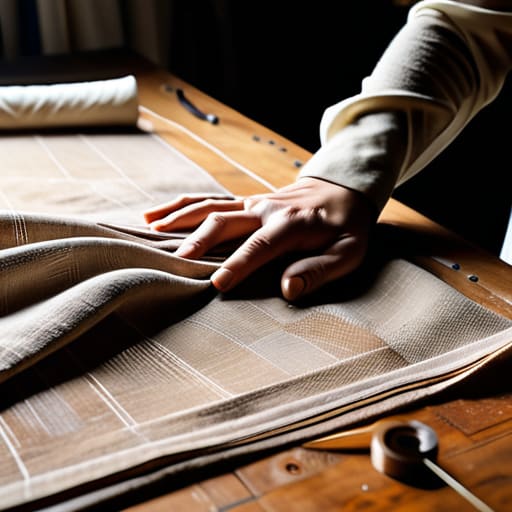
I’ve spent enough hours hunched over a drafting table to know that a flat piece of paper is a liar. It presents a clean, two-dimensional logic that rarely survives the transition to a three-dimensional body. To truly practice visualizing garment construction, you have to stop looking at the lines and start imagining the tension. I often find myself mentally “sewing” the pieces together in my head, checking if a seam will pull too hard across a shoulder or if a hem will sag under its own weight. It’s a mental exercise in stress testing, a way of feeling the weight of the cloth before the shears ever touch it.
This is where the real pre-production design audit happens. It isn’t about checking for neatness; it’s about hunting for the structural failure that hasn’t happened yet. I look for the moment where the geometry of the pattern clashes with the physics of the drape. If I can’t see the way the grainline will behave when the wearer sits down, I’m not ready to cut. You aren’t just looking for a good shape; you are looking for the inevitable error that is currently hiding in the math.
The Pre Production Design Audit Hunting for Fatal Flaws
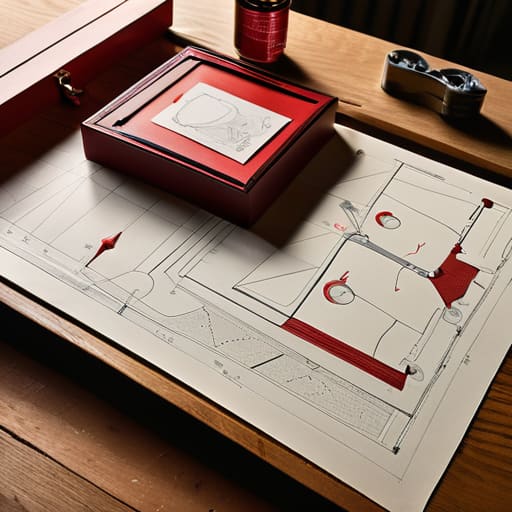
I’ve learned the hard way that a design isn’t truly “vetted” until you try to break it on paper. In my studio, I don’t just look at the silhouette; I perform what I call a pre-production design audit, treating the technical drawings like a crime scene investigation. I’m looking for the friction points—the places where a seam allowance might choke a curve or where a grainline runs counter to the natural drape. It’s about hunting for those fatal flaws that don’t show up in a sketch but will absolutely ruin a roll of expensive wool once the shears are moving.
This stage is less about aesthetic intuition and more about a rigorous technical design review checklist. I find myself obsessing over the math of the junctions. If the pattern pieces don’t marry with a certain logical inevitability, the garment will fight the wearer. By forcing myself to scrutinize these connections early, I’m not just minimizing fabric waste; I’m protecting the integrity of the original idea from the chaos of the cutting table. You have to be willing to kill a beautiful concept if the construction math simply doesn’t hold up.
Pattern Making Quality Control Respecting the Lines You Draw
I have a shelf in the back of my studio, tucked behind the letterpress, filled with wood scraps and failed joinery. Most people see them as trash, but I see them as the physical evidence of a narrow escape. In pattern making, that same philosophy applies. When you are staring down a sheet of expensive wool or a bolt of silk, the line you draw on paper is a promise you haven’t yet kept. Real pattern making quality control isn’t about checking if the measurements are correct—it’s about questioning if the logic holds when the material is under tension.
I’ve learned that a pattern is just a set of instructions for a future struggle. If you aren’t visualizing garment construction in three dimensions while the pencil is still moving, you’re just playing a guessing game with your inventory. I often find myself pausing, looking at a seam allowance or a dart placement, and asking: What happens if this shifts by two millimeters? It is in that moment of hesitation, that tiny pause before the shears touch the cloth, where you actually transition from a hobbyist to a maker.
Prototyping Design Accuracy When the Concept Meets Reality
There is a specific kind of silence that settles in a studio when a prototype finally hits the table. It’s the moment where the theoretical elegance of a sketch meets the stubborn, unyielding physics of material. In my furniture work, it’s the joint that refuses to seat; in garment construction, it’s the way a seam pulls in a way the CAD file never predicted. This is where prototyping design accuracy stops being a checkbox and starts being a confrontation. You aren’t just looking for whether it “works,” but rather where the tension lies between your intention and the actual drape of the cloth.
I keep a shelf of these failures—the ones that looked perfect on paper but failed the tactile test. Most people see a failed prototype as a waste of time, but I see it as a vital pre-production design audit. If you can catch a structural misalignment during the muslin stage, you aren’t just fixing a garment; you are minimizing fabric waste and protecting the integrity of the final piece. The goal isn’t to avoid mistakes, but to ensure that the mistakes you make are the ones that teach you something worth keeping.
A Technical Design Review Checklist for the Perfectionist
I’ve spent a good portion of my life staring at scraps of wood and failed joins, and if there is one thing I’ve learned, it’s that a checklist shouldn’t feel like a chore; it should feel like a defense mechanism. When I sit down to compile a technical design review checklist, I’m not looking for perfection—I’m looking for the friction points. I want to know where the grain might split or where a seam might pull too tight under tension. It’s about identifying those moments where the math holds up on paper but fails the reality of the material.
My process usually starts with the geometry of the pieces. I look at the nesting of the patterns, not just to ensure we are minimizing fabric waste, but to see if the grain direction actually supports the intended drape. If the layout looks efficient but ignores the way the fibers behave, the efficiency is a lie. I check the tolerances, the seam allowances, and the way the components interact. You have to treat the pre-production design audit as a conversation between your original intent and the physical constraints of the medium. If the dialogue feels forced, don’t cut.
Minimizing Fabric Waste the Cost of a Near Miss
In my studio, I have a shelf dedicated to what I call “expensive lessons.” They are the offcuts and ruined slabs of walnut or heavy linen that represent a moment where I thought I knew better than the math. We often talk about design in terms of aesthetics, but in the actual work of production, design is a game of resource management. When you skip a rigorous pre-production design audit, you aren’t just risking a bad silhouette; you are essentially deciding to throw money and material into the scrap bin before you’ve even begun.
Minimizing fabric waste isn’t about being frugal; it’s about the respect you hold for the medium. Every time a pattern piece is misaligned or a seam allowance is miscalculated, that material becomes dead weight. I’ve learned that true prototyping design accuracy is the only real hedge against this kind of entropy. If you can’t see the layout working in your mind—if you haven’t truly mastered the art of visualizing garment construction—you are essentially gambling with your inventory. The goal is to arrive at the cutting table not with hope, but with certainty.
The Weight of the Line
You don’t truly know if a design works when you see it on a screen or a sketch; you know it when you find the exact moment your hand hesitated before drawing the line, and you realize that if you hadn’t paused, the whole thing would have collapsed.
Jonathan Marin
The Weight of the Cut
At the end of the day, evaluating a design isn’t about finding perfection; it is about managing the tension between what you intended and what the material allows. We have walked through the audits, the pattern checks, and the prototyping gauntlets, all to reach that singular, terrifying moment when the blade meets the cloth. By looking for the ghost of the wrong decision—the seam that might pull, the grain that might fight back, or the waste that might accrue—you aren’t just being cautious. You are practicing the discipline of foresight. You are ensuring that when the cut finally happens, it is an act of conviction rather than a gamble.
I often look at the stack of rejected prototypes in the corner of my studio, those splintered wood scraps and misaligned joints, and I realize they aren’t failures. They are the maps of where I almost lost my way. Every time you pause to question a line or re-verify a measurement, you are honoring the craft. Don’t fear the scrutiny that happens before the work begins; embrace it. Because the most beautiful things I have ever built weren’t the ones that went perfectly from the first sketch, but the ones where I had the courage to stop and fix the error before it became permanent.
