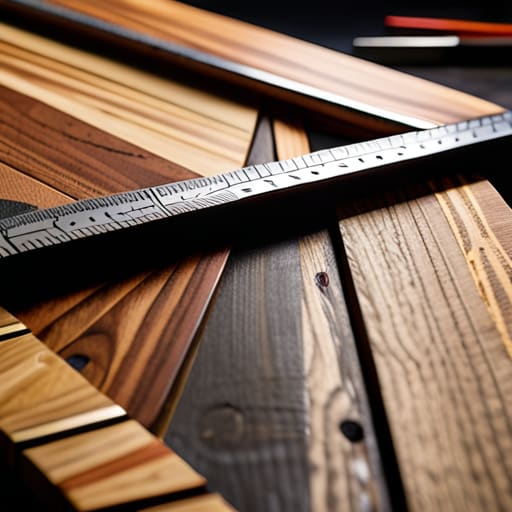
Getting a Piece Out of Four Boards
I have a shelf in the back of my studio filled with what I call my “ghosts”—half-finished joinery samples and slabs of walnut that were ruined because I trusted a spreadsheet more than my own eyes. There is this pervasive, almost academic myth that you need complex CAD software or a high-priced optimization algorithm to be professional, but that’s just expensive noise. When I sit down to figure out how I lay out a cutting list, I’m not looking for a mathematical miracle; I’m looking for the margin of error that allows a piece of wood to actually become a chair. If you treat your list like a rigid scripture rather than a living map of your intentions, you’ve already lost the battle to the material.
I’m not here to teach you how to use a specific piece of software or follow a textbook formula that ignores the reality of grain direction and kerf loss. Instead, I want to show you the messy, iterative way I bridge the gap between a concept and a pile of usable parts. I’ll share the practical, unvarnished logic I use to account for the mistakes I know I’m going to make, ensuring that the final object reflects the design rather than the struggle of the math.
The Ghost of the Wrong Cut How I Lay Out a Cutting List
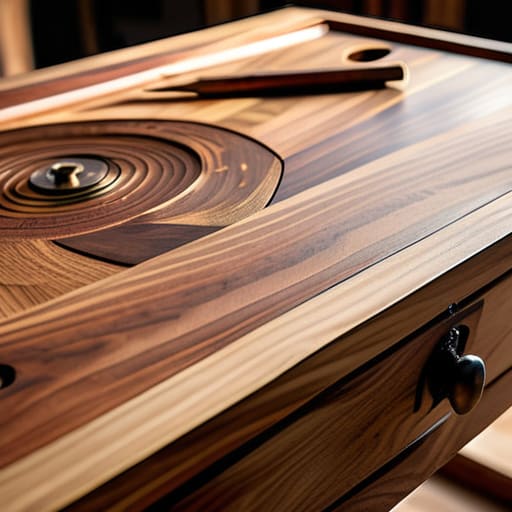
I have a drawer in my studio filled with scraps of walnut and maple that should have been part of a chair leg or a tabletop, but instead, they are just expensive reminders of a math error. When I sit down to map out a project, I’m not just looking for the shortest path from A to B; I am performing a sort of mental autopsy on the material before the saw even touches it. I find myself obsessing over grain direction planning, ensuring that the visual flow of the wood doesn’t just meet the structural requirements, but actually tells the story I intended. It’s a delicate balance between the aesthetic intent and the brutal reality of the board’s dimensions.
Most people think efficiency is about speed, but for me, it’s about the tension between the ideal and the available. I rarely touch nesting software for woodworking; there is something too clinical about it, something that strips away the intuition I’ve built over two decades. Instead, I manually work through my saw kerf allowance calculation, accounting for every millimeter that the blade will turn into dust. I treat the layout like a puzzle where the stakes are the cost of the timber and the integrity of the final piece.
The Geometry of Regret Mastering Woodworking Material Optimization

I used to think optimization was a mathematical problem, something to be solved with a spreadsheet or a piece of expensive nesting software for woodworking. But after two decades of watching expensive walnut boards turn into expensive firewood, I’ve realized it’s actually an exercise in empathy—specifically, empathy for the material. You have to respect the grain direction planning before you even touch a pencil to the surface. If I ignore how the light will hit a tabletop at four in the afternoon, I’ve failed the design, no matter how efficient the layout looks on paper.
There is a specific tension in the act of minimizing lumber scrap. It’s a tightrope walk between the ideal geometry and the reality of the saw kerf allowance calculation. I find myself obsessing over those few millimeters lost to the blade, calculating whether a slight shift in the layout can save a crucial leg or if I’m simply chasing ghosts. It isn’t just about maximizing sheet goods yield; it’s about the quiet, heavy realization that every line I draw is a permanent commitment to a specific version of the truth.
Chasing the Yield Maximizing Sheet Goods Yield Without Compromise
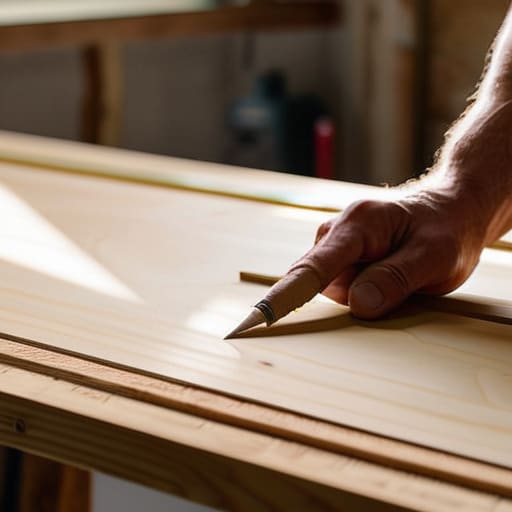
There is a specific kind of tension that settles in when you’re staring down a fresh sheet of Baltic Birch. It’s a calculation of both math and ego. You want to squeeze every possible part out of that expensive expanse, but you can’t let the pursuit of efficiency turn your workshop into a graveyard of splintered edges. I’ve learned that maximizing sheet goods yield isn’t just about fitting rectangles into a larger rectangle; it’s about respecting the material’s limitations. If I push the layout too far, I lose the ability to account for the saw kerf allowance calculation, and suddenly, my final component is a fraction of an inch too short.
I used to rely on the sterile logic of nesting software for woodworking, letting an algorithm decide the most profitable path. But software doesn’t care about the soul of the piece. It doesn’t understand that a certain drawer front needs to align with the subtle sweep of the grain, or that a specific cut might leave me with a piece of scrap too small to be useful but too precious to toss. I find myself caught between the cold efficiency of the machine and the intuitive, often messy, reality of grain direction planning. True optimization is finding that narrow middle ground where the math works, but the design still breathes.
The Invisible Thief Precision in Saw Kerf Allowance Calculation
There is a specific kind of quiet panic that sets in when you realize your math was too optimistic. I’ve been there, standing over a slab of walnut, only to find that my final component is exactly 3/32” short because I treated the blade like a ghost rather than a physical entity. We often talk about woodworking material optimization in terms of large-scale geometry, but the real battle is won or lost in the millimeters. Every time the blade passes through the wood, it breathes—it turns a fraction of an inch of your hard-earned material into nothing but dust.
If you treat your saw kerf allowance calculation as an afterthought, you aren’t just being messy; you are essentially donating your profit to the workshop floor. I’ve learned to stop thinking of the blade as a line and start seeing it as a volume. When I’m sketching out my layout, I mentally subtract that width from every single piece before I even touch the saw. It’s a tedious, almost meditative part of the process, but it’s the only way to ensure that the physical reality of the tool doesn’t betray the precision of the design.
Digital Intuition When Nesting Software for Woodworking Fails the Soul
I remember the first time I tried to let a computer do the heavy lifting for my material layout. I sat there, watching the little cursor dance across the screen, as the nesting software for woodworking rearranged my components with a mathematical coldness that felt almost offensive. It was efficient, certainly. It promised the absolute peak of maximizing sheet goods yield by tucking every tiny bracket and cleat into the smallest possible voids. But as I watched the screen, I realized the software had no concept of the story the wood wants to tell.
The algorithm doesn’t care about the character of a knot or the way a specific figure flows across a tabletop; it only sees rectangles and void space. When I rely solely on the machine, I find myself fighting against my own grain direction planning just to satisfy a percentage of saved scrap. There is a profound loneliness in a layout that is mathematically perfect but visually dead. True woodworking material optimization isn’t just about minimizing lumber scrap; it’s about the tension between the math and the instinct that tells you a certain piece belongs exactly where it is, even if it costs you an extra inch of plywood.
Respecting the Flow the Tension of Grain Direction Planning
There is a specific kind of tension that settles in my chest when I’m staring at a fresh slab of walnut, knowing that a single miscalculation in my grain direction planning will turn a premium piece of timber into a very expensive mistake. It’s easy to get seduced by the math of maximizing sheet goods yield, treating the wood like a two-dimensional puzzle to be solved by sheer efficiency. But wood isn’t a math problem; it’s a biological history. If I orient a tabletop perpendicular to the natural flow of the grain just to save a few inches of offcut, I haven’t “optimized” anything. I’ve simply committed a slow-motion act of vandalism against the material.
I often find myself caught between the urge to minimize lumber scrap and the necessity of honoring the wood’s character. A cutting list isn’t just a set of dimensions; it’s a map of how light will eventually hit those fibers. I’ve learned that the most efficient layout is often the least honest one. I’d much rather end up with a slightly larger pile of waste than a finished chair that feels fundamentally “off” because I prioritized the spreadsheet over the soul of the grain.
The Art of the Remnant Minimizing Lumber Scrap and Chaos
There is a specific kind of quiet desperation that sets in when you are staring at a pile of offcuts that are just slightly too small for anything meaningful, yet too large to throw away. In my studio, these scraps aren’t just waste; they are a physical manifestation of a calculation gone wrong. I’ve learned that minimizing lumber scrap isn’t about being stingy with the material, but about respecting the life of the tree. It’s a mental game of Tetris played against the reality of the workshop floor.
I keep a bin of these “almosts”—pieces where the grain direction planning was slightly off, or where I miscalculated the thickness of the stock. Instead of seeing them as failures, I look at them as opportunities for the next small project, like a set of tapered tool handles or a series of small letterpress blocks. True woodworking material optimization happens in that space between the formal cutting list and the chaotic reality of the scrap pile. It’s about finding the utility in the leftovers, ensuring that nothing truly beautiful is ever discarded simply because it didn’t fit the primary blueprint.
The Weight of the Pencil
A cutting list isn’t just a math problem to be solved; it’s a series of concessions. Every time I mark a line on a piece of walnut, I am essentially deciding which version of the furniture gets to exist and which version—the one that was slightly more ambitious, slightly more wasteful—has to die.
Jonathan Marin
The Weight of the Pencil
At the end of the day, laying out a cutting list isn’t just a math problem or a software exercise; it is a series of negotiations with the material itself. We have navigated the technicalities of kerf allowances, the stubborn logic of grain direction, and the frustrating limitations of nesting algorithms that lack a sense of aesthetic intuition. To do this well, you have to account for the ghost of the mistake—the cut that almost happened because you were too rushed to respect the yield or too greedy to leave room for error. It is a process of calculated restraint, where every line drawn on a shop drawing represents a decision to honor the wood rather than merely consuming it.
I often look at the scrap pile in the corner of my studio and see more than just waste; I see the physical evidence of every compromise I made during the planning stage. There is a quiet, heavy satisfaction in knowing that your list wasn’t just about efficiency, but about intentionality. We don’t plan to avoid mistakes entirely—that’s impossible—but we plan so that when we inevitably deviate, we do so with our eyes wide open. Ultimately, a well-laid list is the bridge between a pile of raw lumber and a piece of furniture that feels like it was always meant to exist.
