Cutting Oversize and Waiting
I can still smell the damp, metallic tang of the sawdust from that first studio in the nineties, a scent that always signaled the start of a long, grueling afternoon. I remember staring at a stack of uneven, moisture-heavy oak, feeling that familiar knot of anxiety in my stomach—the fear that I was about to ruin something expensive before I’d even truly begun. Most people treat the initial stage of a build like a chore to be rushed through, but for me, the way how I break down rough stock is where the real design begins. It isn’t just about making things flat; it’s about the quiet negotiation between the machine and the grain.
I’m not here to give you a sanitized, step-by-step manual pulled from a glossy textbook. Instead, I want to talk about the actual, messy reality of the process—the mistakes I made, the moments I almost pivoted to a different species entirely, and the specific ways I manage the unpredictable character of raw timber. I’ll show you my personal workflow for getting from a chaotic slab to a usable component, focusing on the decisions that actually matter when you’re standing in front of the jointer.
The Crucial Pivot How I Break Down Rough Stock
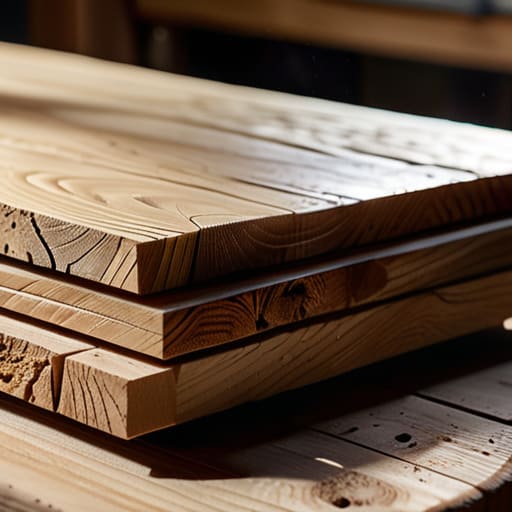
I usually start by letting the wood breathe. It sounds romantic, but it’s actually just a way to avoid the heartbreak of a warped tabletop three months down the line. My stock settling procedures aren’t about being precious; they are about respecting the physics of the grain. I’ll stack a shipment of white oak in the corner of the shop and simply ignore it for a week. During that time, I’m not working, but I am observing—watching how the humidity of the shop interacts with the moisture content of the timber.
Once the wood has stopped fighting me, the real tension begins. I move into the actual material breakdown sequence, which is where most people think the “craft” happens, but for me, it’s where the most vital decisions are made. I find myself standing at the jointer, staring at a piece that looks perfectly straight, yet I have this nagging suspicion that the internal tension is lying to me. I often end up taking an extra sixteenth of an inch off a face just to be sure, a small, expensive insurance policy against a failed design. It’s a slow, methodical process of stripping away the excess until only the intention remains.
The Near Miss Refining My Rough Stock Processing Workflow
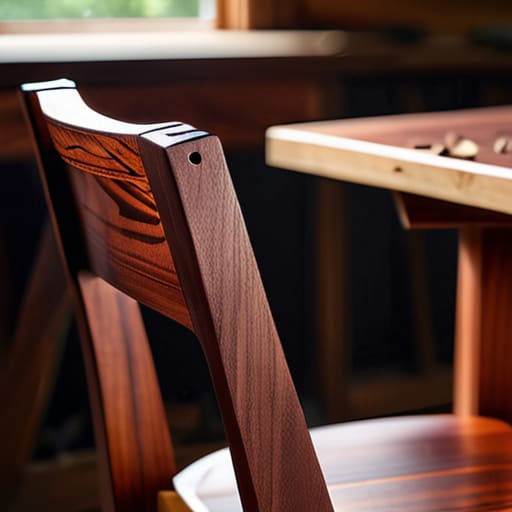
A few years back, I thought I could bypass the tediousness of a formal material breakdown sequence by jumping straight to the joinery. I was convinced that my intuition could compensate for a lack of preparation. The result was a series of beautiful, expensive mistakes—joints that refused to seat because the timber was still fighting its own internal tension. I still have that mahogany chair in the corner of my studio, a ghost of a failed idea, labeled “arrogance over preparation.”
That failure forced me to rethink my entire rough stock processing workflow. I realized that efficiency isn’t about speed; it’s about the discipline of the middle steps. Now, I treat stock settling procedures with the same reverence I’d give a final finish. It’s about letting the wood exist in my space before I try to force it into a shape. I’ve learned that true optimization happens in the quiet, unglamorous moments of flattening and squaring, long before the first saw blade touches the intended line. It’s a slow, deliberate dance that prevents the frantic corrections later on.
Calculated Risks in the Material Breakdown Sequence
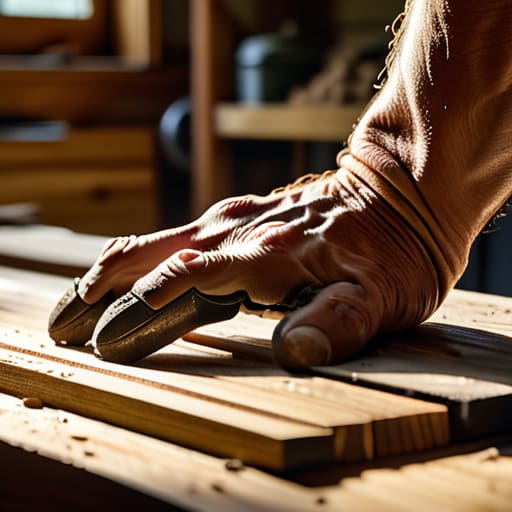
There is a specific kind of tension that exists between the planer and the jointer, a moment where you realize that following the manual to the letter might actually kill the soul of the piece. When I’m mapping out a material breakdown sequence, I often find myself fighting the urge to force uniformity. Last Tuesday, I had a piece of reclaimed white oak that was bowing just enough to make the standard stock settling procedures feel like a losing battle. The “correct” way was to plane it flat and lose two inches of beautiful, irregular thickness. The riskier move—the one that kept me awake—was to adjust the jig and work with the tension rather than against it.
I ended up choosing the latter, a decision that felt like a gamble against my own professional instinct for precision. It’s a fine line between being an efficient craftsman and being a technician who lacks courage. If you spend your entire career optimizing stock preparation for the sake of a perfect, sterile square, you eventually stop making furniture and start making components. I’d rather deal with a slight wobble in the geometry than the regret of a wasted, irreplaceable slab.
Optimizing Stock Preparation the Choice That Changed Everything
There was a period, about three years back, when I thought I could outrun the physics of wood by simply working faster. I had streamlined my rough stock processing workflow to a point where I felt invincible, moving from the mill to the jointer with a mechanical, almost thoughtless, efficiency. I thought I was optimizing, but I was actually just accelerating my mistakes. I remember a specific batch of cherry where I pushed the thickness through too quickly, ignoring the subtle tension in the grain because I was too focused on the clock. The result was a series of boards that bowed like miniature bridges within forty-eight hours.
That failure forced me to rethink my entire approach to optimizing stock preparation. I realized that true efficiency isn’t about the speed of the blade; it’s about the patience of the pause. I started implementing much more rigorous stock settling procedures, allowing the wood to breathe and find its equilibrium before I ever committed to a final dimension. It felt like a regression at first, a slowing down of the momentum I’d worked so hard to build, but it was the only way to stop fighting the material and start working with it.
Mastering Rough Stock Management Techniques Through Trial and Error
My studio is currently a graveyard of bad intentions. If you look in the corner, behind the letterpress, there’s a stack of oak planks that I sliced far too aggressively three years ago. They are a physical reminder that mastering rough stock management techniques isn’t about finding a perfect formula, but about surviving your own impatience. I used to think that speed was the primary metric of success, but I’ve learned that an rushed material breakdown sequence usually ends with a piece of expensive timber sitting in the scrap bin because I ignored a hidden tension line in the grain.
Lately, I’ve been obsessing over my stock settling procedures, trying to find that sweet spot between efficiency and respect for the wood’s movement. It’s a delicate dance of waiting—sometimes too long—to ensure the moisture content isn’t going to undo months of joinery work. There was a specific chair leg I attempted last month where I bypassed the usual acclimatization period, convinced I could outsmart the physics of the material. It failed, predictably. Now, I treat the preparation phase not as a chore to be cleared, but as the most honest conversation I have with the design.
Efficient Material Handling and the Art of the Correction
There is a specific kind of exhaustion that sets in around 3:00 PM, the kind that makes you want to skip the precision work and just “get it done.” This is exactly when my efficient material handling starts to fray at the edges. I remember a Tuesday last month when I was moving a heavy stack of white oak through the initial material breakdown sequence; I was moving too fast, treating the wood like a commodity rather than a collaborator. I caught a slight misalignment in the fence just in time, but the impulse to ignore it was deafening.
In my studio, a correction isn’t just a fix; it’s a recalibration of intent. I’ve learned that the most effective way of optimizing stock preparation isn’t through faster machinery, but through the discipline of the pause. If I feel the rhythm of my rough stock management techniques slipping into a mindless mechanical trance, I stop. I step back to the letterpress in the corner just to see something static, then I return to the bench. The goal isn’t speed—it’s ensuring the wood survives the process with its integrity intact.
Stock Settling Procedures Where the Final Decision Rests
There is a specific kind of silence that settles over the studio when the heavy lifting is done and you’re left with a pile of dimensioned, but restless, timber. This is where my stock settling procedures move from mechanical labor into something more psychological. I’ve learned the hard way that you can’t rush the wood’s internal tension. I used to think I could force a piece into submission by clamping it immediately, but my scrap pile—specifically the ones labeled “Too much internal stress”—tells a different story. Now, I let the wood breathe. I let it sit in the shop, acclimating to the humidity of the room, waiting for that invisible movement to cease before I commit to the final joinery.
It’s a period of forced patience that feels antithetical to a production mindset. You start to question if you’ve left it too long or not long enough, hovering in that grey area between efficiency and overthinking. But I’ve realized that the integrity of the final piece depends entirely on this quiet intermission. If I skip this step to save a day, I’m just setting myself up to fight a warping board three months down the line.
The Ghost of the Alternative
I keep a shelf of discarded offcuts in the back of the studio, not because I’m sentimental, but because they remind me of the moment I almost chose the easy cut over the right one. Breaking down stock isn’t just about making a board flat; it’s about the quiet, terrifying tension of deciding which version of the wood gets to live and which version stays a mistake.
Jonathan Marin
The Weight of the Final Cut
Looking back at the pile of offcuts and the dust-covered floor, I realize that breaking down rough stock isn’t really about the machinery or the math. It’s a series of small, exhausting negotiations between what the wood wants to be and what the design demands. I’ve learned that the sequence—from the first heavy rip to the final squaring—is less of a linear path and more of a constant course correction. If I hadn’t obsessed over the settling time or the specific way I approached those initial, risky cuts, the final piece would have lacked that essential tension. It’s in those uncomfortable moments of hesitation that the real work happens, long before a single joint is ever cut.
I often think about the prototypes sitting in the corner of my studio, the ones that failed because I played it too safe or too reckless. They serve as a reminder that the goal isn’t to achieve a perfect, sterile workflow, but to develop the intuition required to handle the unexpected. Design is a discipline of constraints, and the material is the most stubborn one of all. Don’t aim for a process that feels effortless; aim for one that makes you think deeply about every single grain. After all, the most beautiful things I’ve ever made were born from the decisions that almost went the other way.
