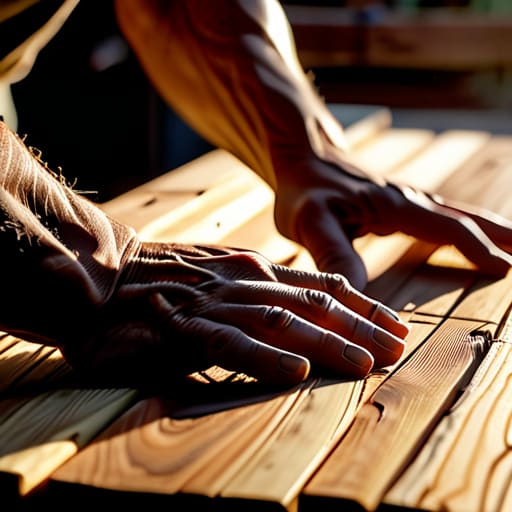
Choosing Boards in the Yard
I’ve spent enough time in lumber yards to know that the industry loves to sell you on the idea of “perfection.” They’ll point to a slab of flawless, clear-grain maple and tell you it’s the gold standard, but to me, that’s just a missed opportunity. Most people think the secret to a great build is finding the most pristine material, but when I think about how I select boards for a piece, I’m actually looking for the tension. I want the knot that almost ruins the structural integrity, or the grain shift that forced me to rethink the entire joinery. If a board doesn’t make me hesitate, it’s probably not worth the sawdust.
I’m not here to give you a checklist of moisture contents or a guide to reading grain patterns like a textbook. Instead, I want to talk about the negotiation between the maker and the material. I’ll show you my actual process—the messy, intuitive way I weigh the risks of a beautiful defect against the safety of a boring board. This isn’t about following a rulebook; it’s about learning to recognize the decisions that nearly went the other way.
The Near Misses How I Select Boards for a Piece
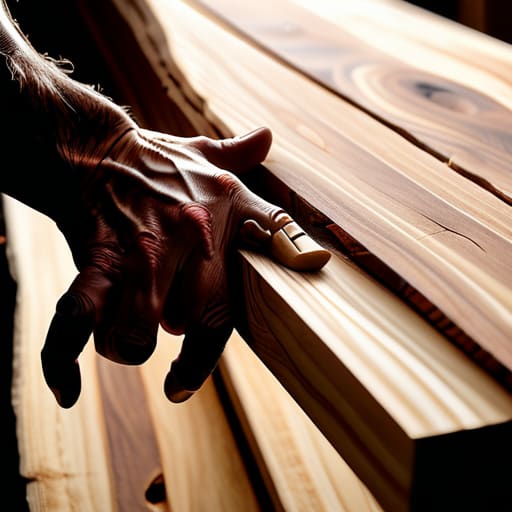
I rarely walk into a lumber yard with a definitive list. Instead, I walk in with a set of questions. I find myself hovering over a stack of cherry or walnut, less interested in the obvious beauty and more preoccupied with the tension between the boards. Most people look for perfection, but I’m looking for the pivot point. I’ll spend twenty minutes comparing two slabs, weighing the merits of a tight, predictable grain against a piece that has a sudden, violent swirl. It’s a constant negotiation of matching wood grain patterns across a single tabletop, trying to ensure the flow feels intentional rather than accidental.
There is a specific kind of anxiety that comes with the “almost.” I’ll find a board with a characterful knot that, if placed just two inches to the left, would ruin the entire composition. I call these the near misses. I have a shelf in my studio dedicated to these rejects—pieces where the aesthetic wood selection felt right in the moment, but the logic failed upon closer inspection. I don’t throw them away; I keep them as reminders of the decisions that nearly went the other way.
The Tension of Wood Species Characteristics and Soul
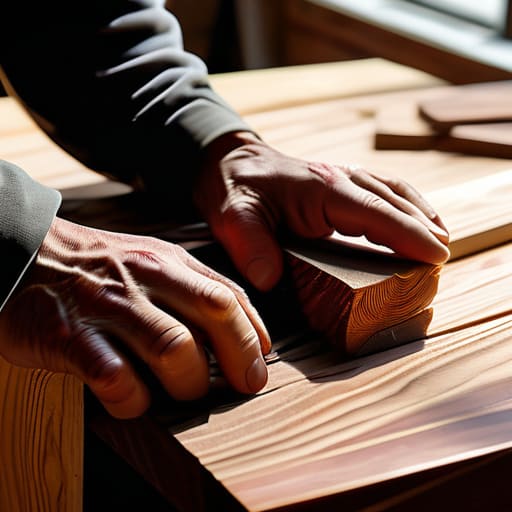
There is a specific kind of friction that occurs when you stop looking at lumber through the lens of grading standards and start looking at it as a series of temperament tests. On paper, a piece of cherry is just a commodity, but in the shop, it’s a negotiation. I often find myself caught between the desire for a clean, predictable surface and the pull of a more volatile character. I’ll hold a board with heavy, erratic figuring against one that is perfectly straight and uniform, feeling that familiar tug-of-war. It’s the tension between what is “correct” and what is actually interesting.
The real work lies in the nuance of aesthetic wood selection, where you aren’t just looking for stability, but for a narrative. I spend a lot of time matching wood grain patterns across a single tabletop, trying to ensure the flow feels intentional rather than accidental. It isn’t about finding perfection; it’s about finding the right kind of imperfection. If I choose a board that is too quiet, the finished piece feels like it was manufactured rather than made. I want the wood to tell me where it struggled to grow.
Rejecting the Flaw Identifying Wood Knots With Intention

There is a specific kind of tension that arises when I’m staring at a knot. According to standard lumber grading standards, that knot is a defect—a structural compromise that lowers the value of the board. But in my studio, the distinction between a flaw and a feature is often just a matter of where I decide to place the cut. I find myself hovering over a piece of cherry, debating whether a dark, tight knot will anchor the composition or simply disrupt the flow of the grain.
Identifying wood knots isn’t just about spotting holes; it’s about understanding how they will interact with the light once the oil hits the surface. I once spent three days designing a small side table around a single, stubborn knot in a piece of white oak. I almost discarded the entire slab because the knot felt too aggressive, too loud. In the end, I realized that the piece needed that specific bit of friction to keep it from feeling overly precious. It was the decision to embrace the imperfection that finally gave the object its weight.
Beyond Lumber Grading Standards to True Character
Lumber grading standards are useful for ensuring a board won’t warp or split the moment it hits the shop floor, but they are a blunt instrument for someone trying to build something with a soul. A “Select” grade might tell me the wood is structurally sound and free of major defects, but it doesn’t tell me how the light will catch a specific swirl in the grain. I often find myself ignoring the high-grade labels in favor of something a bit more temperamental. To me, aesthetic wood selection isn’t about finding perfection; it’s about finding a specific kind of controlled chaos that fits the geometry of the design.
I spend a lot of time looking past the surface-level cleanliness of a plank to consider how the grain will behave once it’s joined. It isn’t just about the visual; I’m constantly thinking about how the moisture content in lumber might shift the way those patterns settle over the next decade. I want to know that the character I’m seeing today won’t turn into a structural liability tomorrow. It’s a delicate dance between respecting the material’s inherent nature and forcing it to adhere to my specific, often stubborn, vision.
The Risky Dance of Matching Wood Grain Patterns
There is a specific kind of anxiety that sets in when you move from selecting individual boards to thinking about how they will actually sit next to one another. It’s one thing to admire a single plank of cherry for its figure; it’s an entirely different challenge to ensure that when those planks are joined, they don’t look like a collection of strangers forced into a marriage. I find myself laying the boards out on the shop floor, stepping back, and squinting, trying to visualize how the matching wood grain patterns will flow across a tabletop or a cabinet door.
I often find myself caught in the friction between logic and intuition. My brain wants to follow the predictable rhythm of the grain, but my hands are looking for that slight, rhythmic disruption that keeps a piece from looking too manufactured. It’s a delicate balance—if the grain is too perfect, the piece feels sterile, like something spat out of a CNC machine. If it’s too chaotic, the design loses its structural integrity. I’m looking for that intentional continuity, the moment where the wood stops being a series of parts and starts behaving like a single, living surface.
Stability vs Beauty the Battle of Moisture Content
There is a specific kind of anxiety that sets in when I’m standing over a pile of particularly beautiful, figured maple. It looks spectacular—the kind of grain that makes you want to stop everything and just stare—but my mind immediately drifts to the physics of it all. I find myself obsessing over the moisture content in lumber, wondering if that vibrant swirl is going to fight me once it’s locked into a joinery frame. It’s a constant internal tug-of-war: do I chase the visual high of a rare pattern, or do I play it safe with something more predictable?
I’ve learned the hard way that beauty is often a Trojan horse for instability. I have a shelf in my studio dedicated to those “beautiful” mistakes—slabs that looked like masterpieces on the workbench but buckled into pretzels three months later because I let my eyes override my hygrometer. Now, my process is less about finding the prettiest board and more about negotiating with the wood’s temperament. I look for that narrow, sweet spot where the aesthetic wood selection meets structural reliability, knowing that a piece’s soul is worthless if it won’t stay flat.
The Final Compromise in Aesthetic Wood Selection
Eventually, you reach a point where you can no longer pretend that perfection is an option. This is the part of the process that doesn’t make it into the glossy design magazines: the moment where I have to stop looking for the ideal and start negotiating with reality. I find myself standing over the workbench, weighing a particularly striking piece of cherry against its tendency to warp, or deciding if a specific swirl in the grain is a masterpiece or a structural liability. It is a quiet, exhausting mental tally where I attempt to balance aesthetic wood selection against the hard physics of the material.
I’ve learned that a piece of furniture shouldn’t just be a collection of flawless components; it needs to feel like a singular, intentional thought. This means making the hard call to pass on a board that looks beautiful in isolation but fails the test of matching wood grain patterns across the entire tabletop. You aren’t just picking wood; you are deciding which flaws are worth keeping. In the end, the most successful pieces are often those where I leaned into a slight imperfection rather than fighting it into submission.
The Ghost of the Other Option
When I’m standing in the yard or leaning over a workbench, I’m not just looking for the perfect grain; I’m looking for the board I almost walked away from, because the piece only finds its truth in the tension between what I wanted and what the wood demanded.
Jonathan Marin
The Weight of the Final Choice
Looking back at the stack of boards on my workbench, I see more than just raw material; I see a series of hard-won negotiations. Selecting the right wood isn’t about finding a perfect specimen that meets every grading standard, but about navigating the friction between stability and soul. I have to weigh the structural integrity of the grain against the visual pull of a knot, and the moisture content against the sheer, irrational beauty of a specific figure. It is a process of constant elimination, a way of filtering out the noise until only the decisions that matter remain. Every piece of furniture I build is, in a sense, a graveyard of the boards I almost chose, yet ultimately walked away from.
In the end, I’ve learned that a piece of furniture is never truly finished when the last joint is glued; it is finished when the material finally stops fighting the design. We often talk about “inspiration” as if it strikes like lightning, but in the shop, it is much more grounded than that. It is found in the quiet, repetitive discipline of looking closer, choosing better, and accepting the inherent imperfections of the medium. Don’t aim for the sterile perfection of a factory line. Instead, aim for that specific, singular tension where the wood and the maker finally meet in a meaningful compromise.
