The Material Moves Whatever You Think
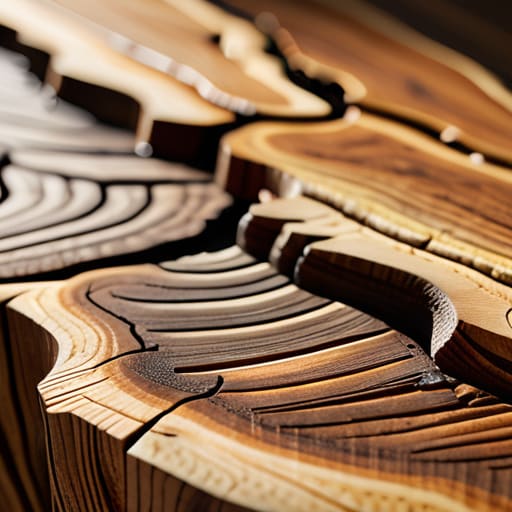
I still have the prototype from 2004 sitting in the corner of my studio, a walnut tabletop that buckled so violently it looked like a frozen wave. I’d spent weeks obsessing over the joinery, convinced that if I just used enough high-end adhesive and enough clamps, I could force the material into submission. I was treating wood like a static building material, like steel or plastic, which is the most expensive mistake a designer can make. Most textbooks try to teach you how to fight it with complex mechanical fasteners, but they miss the point entirely: why wood movement is a lesson in humility rather than a problem to be solved with more hardware.
I’m not here to give you a lecture on hygroscopic expansion or a list of expensive stabilizers that promise to turn timber into stone. Instead, I want to talk about the graceful surrender—the moment you stop trying to outsmart the grain and start designing for its inevitable breathing. I’ll share what those failed prototypes taught me about building things that actually last, focusing on the small, practical concessions that turn a structural failure into a deliberate design choice.
The Beautiful Near Miss Why Wood Movement Is a Lesson
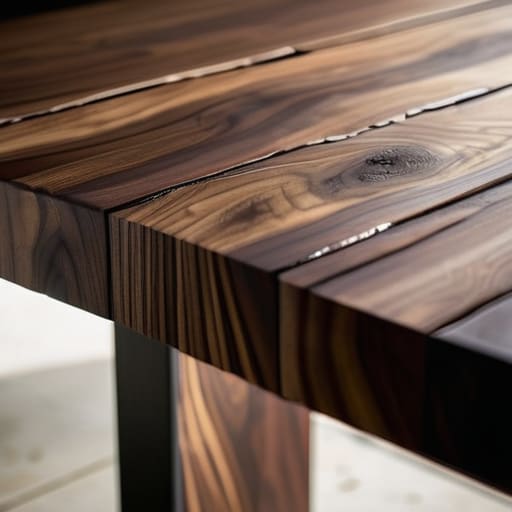
I remember a walnut dining table I built back in my third year of studio. I had spent weeks obsessing over the joinery, convinced that if I just tightened the tolerances enough, I could force the wood to behave. I treated the material like a static medium, something to be conquered rather than negotiated with. When the seasons shifted and the humidity dropped, the tabletop didn’t just move; it fought back, buckling the frame I thought was so secure. That failure sits in my scrap pile today, a jagged reminder that my ego was the only thing that wasn’t flexible.
It taught me that true craft isn’t about total control, but rather adapting to environmental changes with a sense of grace. You have to respect the natural wood expansion and contraction that happens every time a window is opened or a heater kicks on. Now, I don’t see a shifting grain as a defect to be corrected, but as a dialogue. I’ve learned that embracing imperfection in design is actually a form of honesty—it’s an admission that the object is alive, and I am merely its temporary steward.
The Tension of Natural Wood Expansion and Contraction
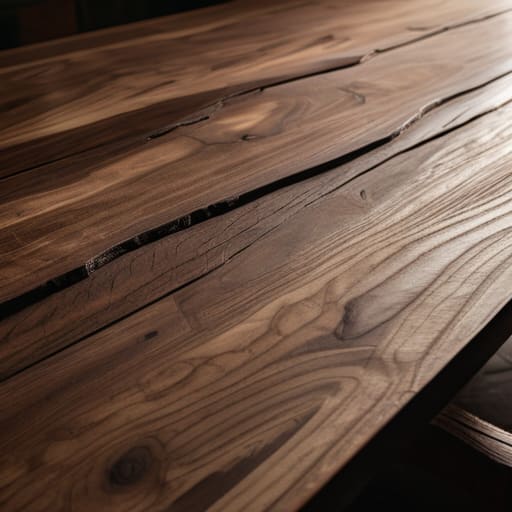
I remember a walnut dining table I built back in 2004—one of those pieces I keep in the corner of my studio, a ghost of a mistake. I had been so focused on the clean, geometric lines of the apron that I completely ignored the way the seasonal humidity would force that top to heave. I treated the wood like a static material, something I could command into submission, rather than a living thing. By the time the winter heaters kicked in, the tension between the rigid frame and the shifting slab was so violent it actually cracked the joinery.
That failure taught me that true design isn’t about forcing a shape, but about adapting to environmental changes before they happen. You have to respect the internal physics of the grain. When I work now, I spend more time thinking about the moisture content and the inevitable rhythm of natural wood expansion and contraction than I do about the final finish. It’s a shift from ego to observation; you stop trying to win the argument against the material and start listening to what the grain is telling you about the room it’s going into.
Adapting to Environmental Changes the Makers True Test
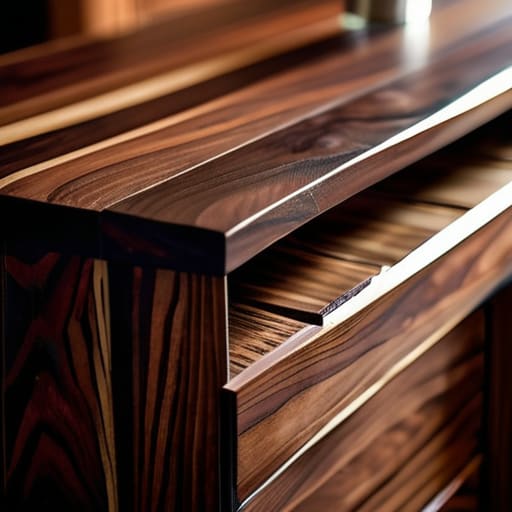
I remember a walnut sideboard I built back in my early studio days—a piece that was technically perfect on paper but a disaster in practice. I had calculated the joinery with such clinical precision that I forgot the piece would eventually live in a house with a temperamental HVAC system. When the humidity dropped in mid-winter, the wood didn’t just move; it fought back. That failure taught me that adapting to environmental changes isn’t a technical hurdle to clear, but a fundamental part of the design process. You aren’t just building a static object; you are negotiating with a living material that has its own schedule.
Now, when I approach a new project, I spend more time thinking about the room it will inhabit than the tools I’ll use to build it. It’s a shift in woodworking philosophy and mindfulness—moving away from the desire to dominate the medium and toward a way of working that respects its volatility. I’ve learned to build in the “breathing room” necessary for natural wood expansion and contraction, treating those tolerances not as errors to be minimized, but as the very space where the object finds its equilibrium.
The Calculation of Woodworking Moisture Content and Consequence
I spent three years in a high-output production facility where we treated moisture content like a mathematical error to be eradicated. We chased a standardized equilibrium, trying to force organic material into a predictable, sterile box. But sitting in my own studio now, surrounded by the ghosts of failed joinery, I realize that chasing a perfect zero is a fool’s errand. You don’t solve for moisture; you negotiate with it.
I remember a walnut sideboard I built last autumn. I had calculated the woodworking moisture content to a decimal point, convinced that my precision would insulate the piece from the seasons. I was wrong. A sudden drop in humidity during the finishing stage caused a slight, almost imperceptible tension in the drawer fronts. Instead of seeing it as a failure of math, I saw it as the material asserting its agency. It forced me to rethink the tolerances of the entire carcass. This is where the art of working with nature actually begins—not in the spreadsheets, but in the moment you realize your calculations are merely a polite suggestion to the wood.
Embracing Imperfection in Design Through Living Materials
I have a shelf in the back of my studio, tucked behind a stack of letterpress type, dedicated entirely to the “failures.” Most people see a cracked tabletop or a joint that pulled itself apart as a mistake, but when I look at them, I see the moment the material asserted its own agency. To me, embracing imperfection in design isn’t about being sloppy; it’s about a quiet surrender to the fact that I am not the sole author of the piece. The wood has its own agenda, dictated by the seasons and the air in the room.
When I design a new chair or a sideboard, I’m constantly negotiating with the grain. It’s a form of woodworking philosophy and mindfulness that requires you to stop fighting the medium and start listening to it. You realize that a perfectly static, dead object is actually a failure of character. The real magic happens when you stop trying to freeze time and instead build something that can breathe, shift, and age alongside the person who owns it.
The Art of Working With Natures Unruly Will
There is a specific kind of arrogance that settles into a designer’s hands when they first pick up a chisel. We want to impose our will, to force a piece of walnut into a rigid, geometric perfection that defies its very biology. But you can’t bully a living thing into submission. I spent years trying to outsmart the grain, treating every seasonal shift as a personal affront to my blueprints. It took a decade of cracked joints and warped tabletops to realize that the art of working with nature isn’t about control; it’s about negotiation.
I keep a drawer in my studio filled with those failures—slabs that split because I refused to account for natural wood expansion and contraction. They are my most honest teachers. Now, when I approach a new build, I don’t see the movement as a defect to be suppressed, but as a rhythmic pulse. You learn to build with the breathing of the material, creating joinery that allows for that inevitable drift. It’s a shift from being a dictator of form to a collaborator with the medium, a realization that ultimately defines my entire woodworking philosophy and mindfulness.
Woodworking Philosophy and Mindfulness in Every Grain
I have a shelf in the back of my studio, tucked behind the heavy-duty sanders, where the “failures” live. It’s a graveyard of joints that split and tabletops that bucked because I tried to force them into submission. Looking at them now, I realize those pieces weren’t mistakes; they were lessons in humility. To design furniture is to enter into a silent negotiation with a living thing. You can’t just command a piece of walnut to stay still; you have to learn the rhythm of its breath.
This realization has fundamentally shifted my woodworking philosophy and mindfulness. I no longer approach a new commission as a conquest of geometry, but as a study in patience. When I’m measuring the woodworking moisture content or planning a floating panel, I’m not just performing a technical check; I’m practicing a form of presence. It requires a quiet, steady attention to detail that most people mistake for mere precision. In reality, it is about the art of working with nature on its own terms, accepting that the most honest designs are often those that leave room for the material to move.
The Cost of Certainty
We spend our careers trying to force materials into static perfection, but a piece of wood isn’t a solved equation; it’s a negotiation. I’ve learned that the real craft isn’t in resisting that movement, but in designing the space for it to happen without breaking the soul of the piece.
Jonathan Marin
The Final Grain
Looking back at the workshop floor, I realize that wood movement isn’t a problem to be solved, but a set of parameters to be respected. We’ve traced the way moisture dictates the rhythm of a tabletop, the way math meets the unpredictable reality of a drying plank, and how the maker must find a middle ground between rigid geometry and organic life. If I had tried to force the material into submission—if I had ignored the tension inherent in every fiber—the piece wouldn’t just fail mechanically; it would fail spiritually. Design is rarely about achieving total control; it is about the graceful negotiation between what we intend and what the material demands.
I often think about my shelf of rejected prototypes, those wooden ghosts that failed because I tried to outsmart the grain. They serve as a quiet reminder that the most enduring objects are those that allow for a little breathing room. We spend our lives trying to build things that are permanent and static, yet the most honest work acknowledges that everything is in a state of flux. When you stop fighting the expansion and start designing for it, you aren’t just making furniture anymore; you are participating in a conversation that has been happening since the first tree fell. That is where the real craft begins.
