Designing So the Wood Can Move
I can still hear the sound of that walnut tabletop splitting—a sharp, dry crack that echoed through my studio like a gunshot. It was three in the morning, and I had just finished a commission I thought was flawless. I had ignored the seasonal shifts, thinking my joinery was strong enough to fight the physics of the grain. It wasn’t. Most textbooks will give you a clinical, mathematical lecture on how to design around wood movement, treating it like a predictable equation you can solve with enough precision. But wood isn’t a math problem; it’s a living, breathing variable that doesn’t care about your CAD drawings or your expensive clamps.
I’m not here to give you a lecture on theoretical tolerances or sell you on some high-tech stabilizer that doesn’t actually work. Instead, I want to talk about the practical concessions we have to make to keep our work from destroying itself. I’ll share the specific, hard-won methods I’ve used to navigate these tensions, focusing on the tiny, often overlooked decisions that separate a piece that lasts decades from one that fails in a single summer. This isn’t about perfection; it’s about designing with the struggle in mind.
The Beautiful Tension of the Decision That Nearly Went Wrong
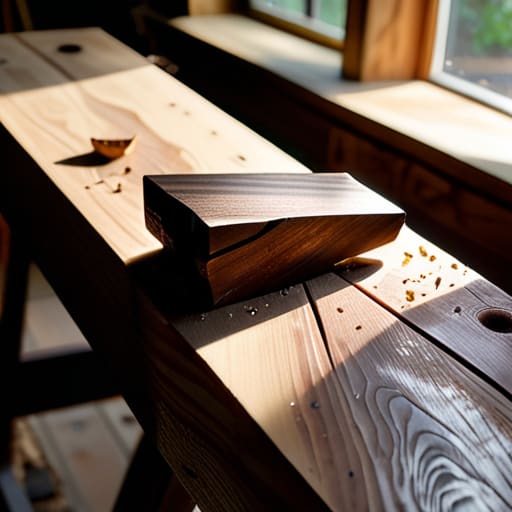
I have a small, dusty shelf in the back of my studio dedicated entirely to what I call “the ghosts.” These are the prototypes that failed, the joints that buckled, and the slabs that split because I ignored the physics of the material. Last month, I was staring down a commission for a heavy walnut sideboard, and I felt that familiar, dangerous urge to prioritize aesthetic minimalism over mechanical reality. I almost opted for a fixed-panel construction, a move that looked clean on the screen but would have been a death sentence for the piece once the seasons shifted.
The mistake would have been ignoring the hygroscopic nature of wood in favor of a sleek, uninterrupted silhouette. It’s a seductive trap—designing for the moment the piece is finished, rather than for the years it spends breathing in a client’s living room. I eventually pivoted to a set of concealed, floating fasteners, a decision that felt like a compromise at the time. But looking back, that pivot is the only reason the piece survives the woodworking seasonal changes that inevitably follow. The tension between what looks right and what works right is where the real design actually happens.
Respecting the Hygroscopic Nature of Wood and Its Will
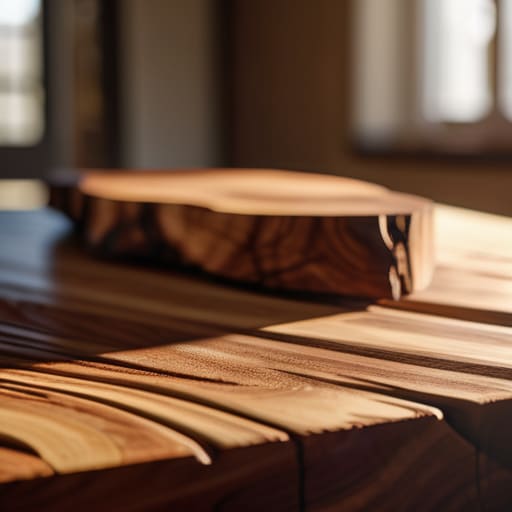
I spent most of my twenties trying to outsmart the material, treating a slab of walnut like it was a static CAD file. It took a particularly disastrous sideboard—one that literally tore itself apart in a humid July—to realize that I wasn’t working with a solid object, but a living, breathing entity. You have to respect the hygroscopic nature of wood; it is constantly negotiating with the air around it. It isn’t enough to just pick a “good” piece of timber; you have to accept that its internal moisture content is a moving target.
When I sit at my bench now, I don’t see wood movement as a problem to be solved, but as a set of parameters to be accommodated. I think about the relative humidity wood stability in the room before I even touch a chisel. If I’m designing a wide tabletop, I’m not just thinking about the grain pattern; I’m calculating the inevitable wood expansion and contraction that will occur when the seasons shift. To ignore that is to design for failure. You don’t fight the wood; you build a space for it to move.
Mastering How to Design Around Wood Movement and Its Chaos
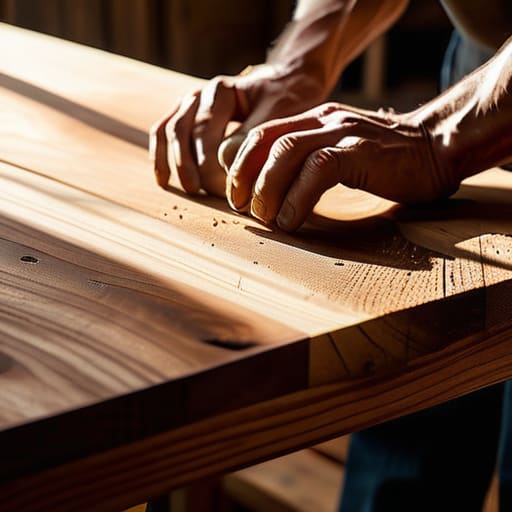
I used to think that if I just picked the “right” species—something stable like white oak or walnut—I could outsmart the physics. I was wrong. You don’t outsmart the wood; you negotiate with it. When I’m drafting a new tabletop, I’m not just thinking about the silhouette; I’m calculating the inevitable wood expansion and contraction that will happen the moment the seasons shift. I’ve spent too many nights in the studio staring at a seam that shouldn’t be there, realizing I tried to force a rigid geometry onto a material that demands room to breathe.
The trick isn’t finding a way to stop the movement, but finding ways to hide it within the architecture of the piece. I’ve leaned heavily on stable joinery techniques, like using Z-clips or slotted fasteners, which allow the timber to slide slightly within the frame. It feels like a compromise at first—a concession to the chaos—but that’s where the real craft lives. You aren’t just building a static object; you are designing a living system that can survive the relentless cycle of humidity and drought without tearing itself apart.
The Invisible War Moisture Content Impact on Timber Stability
I have a shelf in the back of my studio filled with slabs of walnut that look perfectly fine in the dry heat of July, only to warp into something unrecognizable by February. It is a humbling reminder of the moisture content impact on timber; wood isn’t a static material, it’s a living, breathing sponge. We like to pretend we are masters of our medium, but we are really just negotiating with it. When the relative humidity shifts, the wood responds with a silent, relentless force that can snap a poorly placed dowel like a toothpick.
I remember a dining table I built five years ago where I leaned too heavily on the aesthetic of a seamless, tight-fitting breadboard end. I thought I could outsmart the physics. I was wrong. The wood expansion and contraction during a particularly damp autumn was so aggressive it actually began to pull the mortise-and-tenon joints apart. It wasn’t a failure of craftsmanship, but a failure of humility. You have to design with the assumption that the wood will always try to reclaim its original shape, regardless of how much glue you use to hold it in place.
Navigating Wood Expansion and Contraction Without Breaking Your Heart
There is a specific kind of heartbreak that only happens in a workshop. It’s that quiet, heavy moment when you realize a tabletop you spent forty hours sanding has buckled because you treated a living material like a static slab of plastic. I’ve seen it happen to the best of us. You think you’ve accounted for everything, but then the seasons shift, the relative humidity wood stability fluctuates, and your beautiful work begins to fight itself.
To avoid this, I’ve learned to stop viewing wood as an enemy to be conquered and started seeing it as a partner with its own agenda. It isn’t about forcing a joint to stay put; it’s about implementing stable joinery techniques that allow the piece to breathe. I used to think a tight, rigid connection was a sign of craftsmanship, but I was wrong. Now, I look for the “give.” If you don’t build in a way for the timber to expand and contract, the wood will eventually find its own way out—usually by splitting your hard work right down the middle.
Finding Grace Through Stable Joinery Techniques and Calculated Risks
I have a drawer in my studio filled with failed tenons—pieces where I tried to force a rigid connection against a material that simply refused to be still. In those early years, I viewed joinery as a way to lock things down, a way to impose my will. But you can’t bully a piece of walnut into staying a certain size. Real mastery comes from adopting stable joinery techniques that allow for movement rather than fighting it. I’ve learned to favor the breadboard end or the floating panel, methods that act like a mechanical compromise between my aesthetic intent and the wood’s inherent physics.
There is a certain quiet confidence in choosing a joint that looks slightly “loose” on paper but performs perfectly in practice. It’s about managing the wood expansion and contraction through calculated mechanical freedom. I often find myself staring at a joint, wondering if I’ve been too conservative or too reckless. Sometimes, the risk pays off in a seamless, tight fit; other times, it’s a lesson in humility. Ultimately, the goal isn’t to achieve total stillness, but to find a way to let the wood breathe without compromising the soul of the piece.
Weathering the Storm Relative Humidity and Woodworking Seasonal Changes
I remember a dining table I built back in my early studio days—a heavy, walnut beast that I thought was indestructible. I spent weeks perfecting the joinery, only to watch it develop a hairline fracture right through the center when the first winter heater kicked in. It was a humbling lesson in how much we underestimate the woodworking seasonal changes that occur in a lived-in home. You can build something to the most exacting tolerances in July, but by January, the air is so dry the timber is practically gasping for moisture.
The truth is, you aren’t just designing a piece of furniture; you are designing a participant in a shifting environment. Dealing with relative humidity and wood stability means accepting that your work will never be truly static. It breathes, it sighs, and it pushes back against your constraints. I’ve learned to stop fighting that rhythm and instead start planning for it, treating the inevitable wood expansion and contraction not as a failure of my craft, but as a fundamental property of the material itself.
The Ghost in the Grain
I have a shelf in the back of the studio filled with joints that looked perfect on paper but failed the moment the seasons shifted; they are reminders that you don’t actually design a piece of furniture, you negotiate a peace treaty with a living material that refuses to stay still.
Jonathan Marin
The Final Grain of Truth
At the end of the day, designing for wood movement isn’t about finding a way to defeat the material; it is about learning to negotiate with it. We have looked at the mechanics of moisture, the necessity of stable joinery, and the seasonal shifts that turn a perfectly static piece of timber into a living, breathing entity. It is easy to view these technical requirements—the expansion joints, the floating panels, the careful selection of kiln-dried stock—as mere hurdles to an aesthetic vision. But I have learned through twenty years of failed prototypes that these constraints are actually the scaffolding of longevity. If you ignore the way a slab wants to breathe, you aren’t designing furniture; you are merely designing a future pile of expensive firewood.
I often look at the rejects sitting in the corner of my studio, the ones where I pushed a joint too far or ignored a grain pattern that was destined to fight back. They serve as a quiet reminder that true craftsmanship lies in the concessions we make. We don’t design despite the movement; we design because of it. When you stop trying to force the wood into submission and instead start building around its inherent will, the work gains a different kind of soul. It becomes something that doesn’t just sit in a room, but actually lives within it, moving in a slow, silent rhythm with the world around it.
