Designing Storage From What Goes in It
I was staring at a stack of failed joinery samples in my studio last Tuesday—the ones I’ve kept in a corner for years—when I realized how much we lie to ourselves about organization. Most design magazines treat storage as this aspirational, zen-like void where nothing ever accumulates, but that’s a fantasy. We are taught that a beautiful home is a tidy one, yet the real challenge of how to design storage that fits a life isn’t about achieving a sterile museum aesthetic; it’s about managing the beautiful friction of actually existing in a space.
I’m not here to sell you on a specific modular system or a minimalist lifestyle that requires you to own exactly twelve items. Instead, I want to talk about the messy, practical geometry of your daily habits. I’ll be sharing the hard-won lessons from two decades of prototyping—the decisions that almost failed and the ones that actually worked—to help you build systems that don’t just look good in a photograph, but actually hold the weight of your real, uncurated world.
The Great Pivot How to Design Storage That Fits a Life
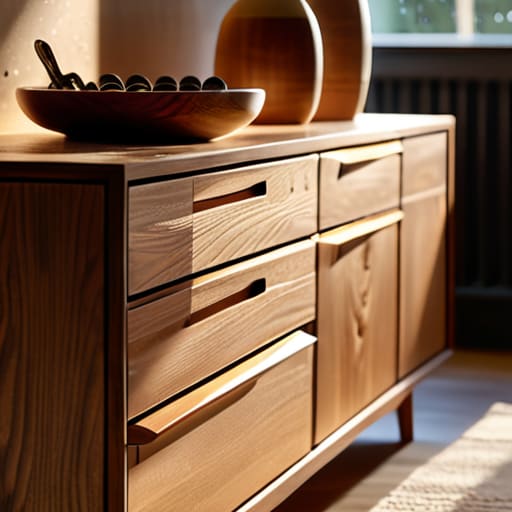
I remember a sideboard I prototyped back in ’08. It was a marvel of clean lines and hidden compartments, a masterpiece of functional furniture design that looked perfect in a catalog. But when I actually tried to live with it, I realized I had designed a museum case, not a piece of furniture. I couldn’t reach the back without a flashlight, and the drawers were so precise they practically required a technician to open. It sat in my “reject” pile for three years, a reminder that elegance is useless if it creates friction in your morning routine.
The pivot happens when you stop designing for the object and start designing for the movement. Most people approach organizing living spaces for lifestyle as a battle against chaos, trying to force their belongings into rigid, predetermined boxes. That is a losing game. True spatial planning for home organization isn’t about finding a place for everything; it’s about recognizing that your habits are fluid. You have to build in the “slack”—the extra inch of depth or the slightly wider drawer—that allows for the messy reality of a life actually being lived.
The Friction Point Organizing Living Spaces for Lifestyle Over Symmetry
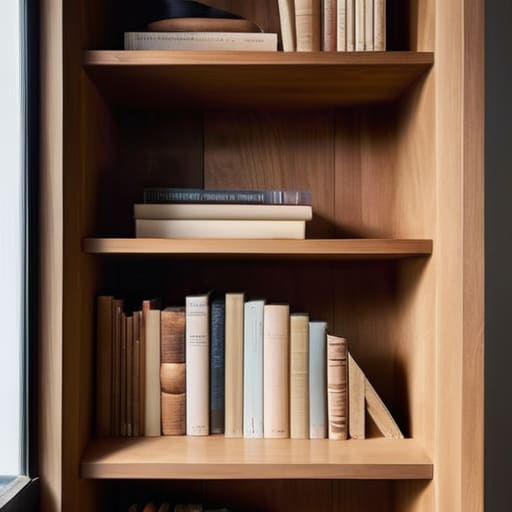
We have this collective obsession with symmetry. We look at a catalog and see perfectly aligned rows of identical bins, a visual silence that suggests a life without mess. But in my studio, I’ve learned that symmetry is often the enemy of utility. When I’m working on functional furniture design, I find that the most beautiful, balanced cabinet is frequently the most useless one if it doesn’t account for the awkward, asymmetrical reality of what we actually own. A stack of oversized art books doesn’t care about a perfectly divided shelf; it demands a different kind of space entirely.
The real tension lies in organizing living spaces for lifestyle rather than for a photograph. I remember a prototype for a sideboard where I fought to keep the internal dividers adjustable by several inches. My production lead thought it was a waste of material—why complicate the build? But I knew that a life isn’t static. If we design for a fixed inventory, we aren’t designing for a person; we are designing for a museum. True organization requires building in the graceful margin for error that allows a home to breathe as its inhabitants change.
The Near Miss Maximizing Small Space Storage Without Losing Soul

I have a drawer in my studio—part of that collection of failures I can’t seem to part with—that contains a prototype for a modular shelving unit. It was technically perfect. It maximized every cubic centimeter of a studio apartment, but it felt like living inside a filing cabinet. I almost went with it because the math was undeniable, but the soul was missing. That’s the trap of maximizing small space storage: we often mistake efficiency for livability. We treat a home like a logistics problem to be solved rather than a place to exist.
When I approach functional furniture design for tight quarters, I try to avoid that sterile, “everything in its place” trap. True spatial planning isn’t about squeezing more stuff into a room; it’s about deciding which things deserve to be seen. I spent weeks debating a built-in unit that would have offered seamless custom closet organization systems, only to realize that a slightly less efficient, open rack allowed the room to breathe. We don’t need more containers; we need better boundaries between what we use and what we simply own.
The Beautiful Error Spatial Planning for Home Organization and Flow
I have a stack of drawer unit prototypes in the corner of my studio that failed for the exact same reason: they were mathematically perfect but humanly useless. They looked stunning in a CAD rendering, but the moment you tried to actually retrieve a pair of scissors or a charging cable, the whole system collapsed. This is the trap of spatial planning for home organization; we often design for the way a room looks in a magazine rather than the way a body moves through it.
Real flow isn’t about straight lines or empty surfaces; it’s about the path of least resistance. When I look at custom closet organization systems, I don’t see a way to hide clothes—I see a way to manage the friction of getting dressed in the morning. If a shelf is too high or a bin is too deep, you won’t use it, no matter how much you tell yourself you will. The goal isn’t to achieve a sterile, museum-like void, but to create a rhythm where the objects you need are simply where they belong in the sequence of your day.
The Calculated Risk Custom Closet Organization Systems and Personal Chaos
I have a drawer in my studio filled with drawer pulls that were “too aggressive”—pieces that worked perfectly for the mechanics of a cabinet but failed the tactile test of a human hand. It’s that same tension I feel when looking at the industry’s obsession with custom closet organization systems. We are sold this dream of total, frictionless control, a modular paradise where every sock has a designated coordinate. But there is a profound danger in designing for a vacuum. If a system is so rigid that it leaves no room for the messy reality of a Tuesday morning, it isn’t a design success; it’s a beautiful failure.
The real work in functional furniture design isn’t about creating a museum for your clothes; it’s about building a framework that accommodates the inevitable drift of human habit. I’ve learned that the most effective layouts are those that allow for a bit of “controlled chaos.” You need enough structure to prevent a total collapse, but enough slack to allow for the way we actually move. A closet shouldn’t just be a grid; it should be a negotiation between order and the lived experience.
The Intentional Mess Decluttering and Inventory Management via Selection
I have a shelf in my studio dedicated entirely to “failed” joinery—pieces where the wood was too stubborn or the angle too ambitious. They are messy, but they are honest. We tend to treat decluttering as a moral crusade, a way to scrub the evidence of our existence until a room looks like a sterile showroom. But true decluttering and inventory management isn’t about reaching a state of emptiness; it’s about the discipline of selection. It is the realization that if you keep everything, you eventually design for nothing.
When I approach functional furniture design, I stop thinking about how much a cabinet can hold and start thinking about what it should hold. A drawer that is too deep is a graveyard for things you’ll never touch again. The goal isn’t to hide the clutter, but to curate the chaos. We need to design systems that respect our tendency to drift, creating spaces that allow for a bit of an intentional mess without letting the entire house succumb to entropy. If the storage doesn’t account for the way we actually move and grab things, it’s just expensive sculpture.
The Final Defiance Functional Furniture Design That Embraces Use
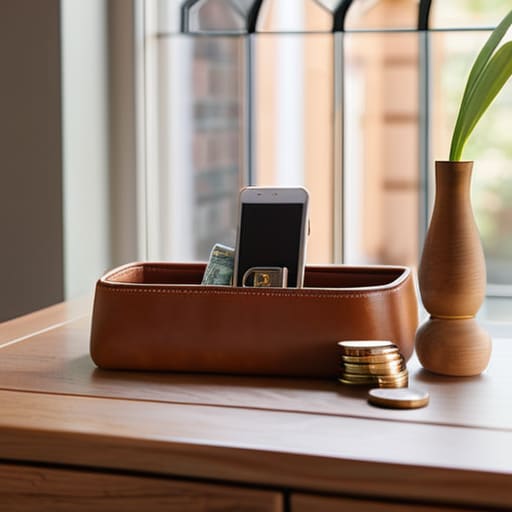
I have a drawer in my studio filled with failed joinery—pieces that were technically perfect but felt spiritually vacant. They were designed for a museum, not a person. This brings me to the core of functional furniture design: the realization that a piece of furniture shouldn’t just sit there looking composed; it needs to participate in the mess of existing. We often get so caught up in the aesthetics of a clean line that we forget a chair is meant to hold a coat, or a sideboard is meant to be a landing strip for keys and mail.
If we focus solely on the geometry, we end up designing for a life that doesn’t exist. True success in organizing living spaces for lifestyle means building in the “graceful failure.” I once spent weeks prototyping a minimalist console table, only to realize it offered no place for a person to actually set down a glass without a coaster. I scrapped it. The final version had a slight, intentional lip—a tiny deviation from the “perfect” silhouette—that turned a useless sculpture into a piece of furniture that actually works.
The Ghost of the Alternative
Most people design storage to hide the evidence of living, but I’ve learned that the most successful pieces are the ones that acknowledge the mess; if a cabinet is so precious that you’re afraid to actually use it, you haven’t designed a solution, you’ve just designed a museum for things that don’t belong there.
Jonathan Marin
The Last Decision
At the end of the day, designing for storage isn’t about achieving that sterile, showroom perfection we see in glossy magazines. It’s about acknowledging that a home is a living, breathing entity that resists being tidied into submission. We’ve looked at how to embrace the friction of real use, how to prioritize lifestyle over the easy pull of symmetry, and how to build systems that actually account for the inevitable chaos of a life being lived. If we try to design against our own habits, we aren’t creating organization; we are merely creating a chore. True utility lies in the space between the rigid plan and the messy reality of how we actually move through a room.
I often look back at my shelf of rejected prototypes—the ones that were too precious to actually use, or too complicated to maintain—and realize they were all failures of empathy. A good piece of furniture, or a well-planned closet, shouldn’t demand that you change who you are to fit its dimensions. Instead, it should bend slightly to meet you where you are. Don’t be afraid of the decision that feels a little less “correct” on paper if it feels more honest to your routine. After all, the most successful design isn’t the one that looks perfect in a photograph, but the one that disappears into the background of a life well-spent.
