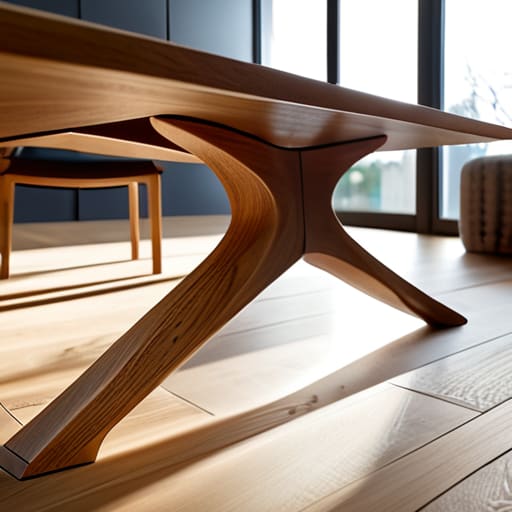
Legroom Decides a Table
I have a shelf in my studio dedicated entirely to the “failures”—the joints that were too fussy, the wood species that wouldn’t hold a grain, and the silhouettes that looked beautiful on a computer screen but felt wrong in a room. Most design textbooks will try to teach you how to design a table people use by focusing on ergonomics or material science, but they miss the point entirely. They treat design like a math problem to be solved, when in reality, it’s a series of compromises between what looks good and what actually survives a Tuesday night dinner party.
I’m not interested in giving you a lecture on aesthetic proportions or the latest trends in mid-century revival. Instead, I want to talk about the friction. I want to share what I’ve learned from twenty years of making things that actually get sat at, spilled on, and moved around. We are going to look at the near-misses—those specific, difficult decisions where a design almost failed, only to find its soul. This isn’t about inspiration; it’s about the practical constraints that turn a piece of furniture into a permanent part of a home.
The Ghost of the Rejected Draft How to Design a Table People Use

I have a shelf in the back of my studio dedicated to these failures. They aren’t just scrap wood; they are the physical manifestations of a wrong turn. Last month, I was looking at a prototype for a walnut dining piece that I’d nearly tossed because the proportions felt “too heavy.” I realized later that the weight wasn’t the problem—it was a misunderstanding of human factors in furniture design. I had been designing for a photograph rather than for a person sitting down with a glass of wine and a heavy book.
When you sit at a table, you don’t experience it as a geometric plane; you experience it through your elbows, your knees, and the reach of your forearm. I spent three days adjusting the height by mere millimeters, obsessing over standard dining table dimensions only to find that the “standard” often ignores the reality of how people actually slouch or lean. If the clearance under the edge is even slightly off, the table stops being a tool for connection and becomes a barrier. You don’t design for the eye; you design for the unconscious movement of the body.
The Error of Comfort Why Human Factors in Furniture Design Matter
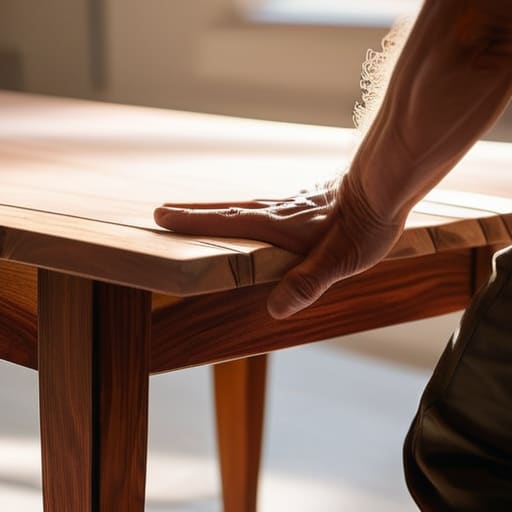
I have a box in the corner of my studio, filled with mahogany offcuts and failed joinery, that serves as a graveyard for “perfect” ideas. Most of them failed because I fell in love with a silhouette and forgot that a body has to inhabit it. I once spent three weeks obsessing over a tapered leg profile that looked sculptural and divine on a CAD screen, only to realize that the resulting height made the dining experience feel like sitting at a bar stool. I had ignored the basic human factors in furniture design in favor of a visual ego trip.
It is a common trap: treating a table as a static sculpture rather than a tool for living. We talk about standard dining table dimensions as if they are mere suggestions, but they are actually the quiet boundaries of human patience. If the clearance is off by even a fraction, or if the tabletop material comfort feels too cold against a forearm, the object ceases to be a piece of furniture and becomes an obstacle. Design isn’t about the beauty of the object in isolation; it is about the frictionless transition between a person and their environment.
The Dangerous Allure of Incorrect Standard Dining Table Dimensions
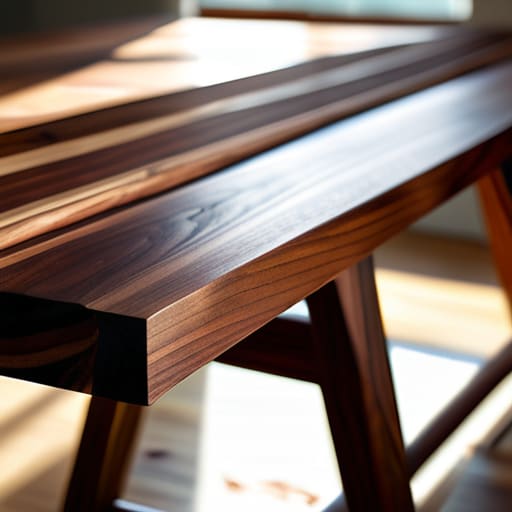
There is a seductive trap in the industry-standard manual. When you’re staring at a blank CAD file, the temptation to lean on standard dining table dimensions is immense; it feels safe, like a mathematical certainty. We tell ourselves that if the height is 76 centimeters, the physics of the meal will somehow resolve itself. But numbers are sterile, and dining is messy. I’ve spent many afternoons in my studio looking at a prototype of a walnut trestle table that looked perfect on paper, only to find that it felt strangely imposing once a human being actually sat behind it.
The danger lies in treating these numbers as a ceiling rather than a baseline. If you follow the rules too rigidly, you end up designing for a mannequin rather than a person who needs to tuck in a chair or reach for a salt cellar without a struggle. True user-centered design for furniture requires you to look past the spreadsheet and consider the friction of real life—the way a person shifts their weight or the specific elbow room required during a long dinner. A table that meets every technical spec but fails the intuition test is just an expensive piece of geometry.
Choosing the Wrong Surface the Tension of Tabletop Material Comfort
I have a shelf in my studio dedicated to slabs of stone, tempered glass, and various resin pours that never made it to a client. They are reminders of the moment I prioritized a visual statement over the actual sensation of a forearm resting on a surface. When we talk about tabletop material comfort, we often treat it as a secondary concern—something to be solved with a coaster or a placemat—but it is actually a fundamental pillar of user-centered design for furniture. If a material is too cold, too abrasive, or vibrates too sharply against a ceramic plate, the object ceases to be a tool for gathering and becomes a sensory obstacle.
I once spent three weeks obsessing over a blackened steel edge for a dining piece, convinced the industrial grit was essential to its soul. It looked magnificent in the sketches, but the moment a prototype was tested, the tactile reality was jarring. We often forget that design is a physical dialogue between the body and the object. You can get the standard dining table dimensions perfect and the optimal seating clearance exactly right, but if the surface feels hostile to the touch, the design has failed its primary purpose.
The Near Miss of Tight Spaces and Optimal Seating Clearance
I have a shelf in the back of my studio dedicated to what I call “the spatial failures.” It’s filled with scale models of dining sets that looked beautiful in a CAD program but were utterly useless in a real room. I remember a walnut trestle table I designed three years ago; it was a masterpiece of joinery, but I had ignored the optimal seating clearance required for the chairs to actually pull out without hitting a wall. I had focused so much on the silhouette that I forgot people need to move, not just sit.
In the pursuit of user-centered design for furniture, it is easy to fall into the trap of designing for a vacuum. We treat the table as an isolated object, a sculptural centerpiece, when in reality, it is a component of a much larger, messy human ecosystem. If you don’t account for the elbow room and the swing of a chair, you haven’t designed a piece of furniture; you’ve designed a beautiful obstacle. The most successful pieces are the ones where the spatial tension between the object and the surrounding room feels intentional, rather than accidental.
The Compromise That Saved Your Ergonomic Furniture Design Principles
I have a small wooden crate in the corner of my studio, filled with what I call “the ghosts.” These are the joinery samples and leg profiles that failed to meet my standards. Most recently, I’ve been staring at a prototype for a small breakfast nook that felt, quite frankly, too clinical. I had followed every textbook rule regarding ergonomic furniture design principles—the heights were mathematically perfect, the clearances were textbook—but the piece lacked soul. It was so “correct” that it felt uninhabitable, like a showroom floor rather than a home.
The breakthrough didn’t come from adding more precision, but from a deliberate, calculated deviation. I realized that by slightly adjusting the rake of the backrest and softening the edge profile, I could bridge the gap between technical accuracy and actual human presence. It was a compromise between the rigid geometry of user-centered design for furniture and the messy reality of how we actually lean into a meal. I had to stop designing for a perfect specimen and start designing for a person who might be tired, or leaning, or simply existing.
The Final Pivot Mastering User Centered Design for Furniture
At the end of the day, a piece of furniture isn’t a sculpture; it’s a silent participant in someone’s life. I’ve spent years staring at prototypes in my studio, trying to decide if a curve was a stylistic flourish or a functional necessity. True user-centered design for furniture isn’t about finding the most beautiful line on a CAD drawing; it’s about the quiet realization that a chair is useless if the person sitting in it feels like they’re performing a balancing act. It’s about that moment of friction where your aesthetic ego meets the stubborn reality of how a human body actually moves.
I often think back to a walnut dining set I finished last year. I had spent weeks obsessing over the grain, only to realize I had nearly ignored the essential ergonomics required for a long dinner. If you ignore the human factors in furniture design, you aren’t making furniture—you’re making art that people are afraid to touch. The pivot happens when you stop designing for the photograph and start designing for the person who has to lean their elbows on the surface after a glass of wine. That’s where the design actually lives.
The Weight of the Unseen
A table isn’t successful because it looks good in a showroom; it’s successful when the person sitting at it forgets they are interacting with a piece of engineered furniture and simply begins to live around it. The real design happens in the margins—in the clearance you added that no one will notice, and the edge profile you softened just enough so that a forearm feels at home.
Jonathan Marin
The Weight of the Final Decision
At the end of the day, designing a table that actually lives in a home isn’t about chasing a pristine aesthetic or a trend in wood finishes. It is a constant, exhausting negotiation between the math of ergonomics and the messy reality of human movement. We have to respect the standard dimensions, yes, but we also have to respect the way a person leans into a surface when they are tired, or how they shuffle a chair back to make room for a guest. If we ignore the tension between material tactile comfort and the strict constraints of a floor plan, we aren’t designing furniture; we are merely manufacturing sculptures that people will eventually avoid using.
I often look at the stack of rejected prototypes in the corner of my studio—the ones with the legs that were too spindly or the tops that were just an inch too wide. They aren’t failures; they are the roadmap to the piece that finally worked. True design isn’t found in the absence of mistakes, but in the intentionality of the pivots we make when we realize we were wrong. When you sit down at a table that feels “right,” remember that it likely wasn’t the first version. It was the version that survived the near-misses, the hard compromises, and the stubborn refusal to settle for a design that looked good but felt hollow.
