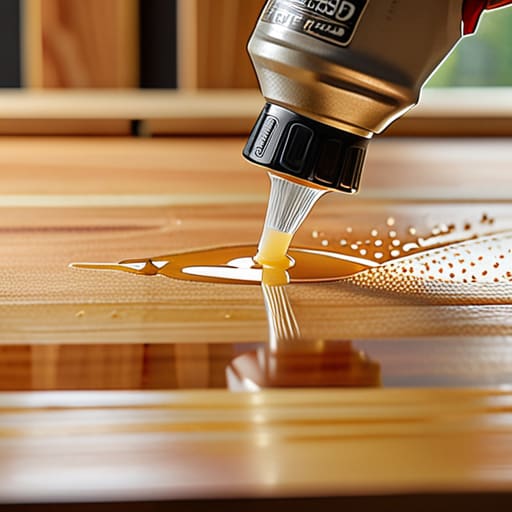
Three Glues and Their Working Times
I have a shelf in my studio dedicated entirely to what I call “the graveyard”—a collection of failed joints and splintered mahogany that serves as a constant reminder of my own arrogance. I remember a particular afternoon, years ago, when I thought I could bypass the fundamentals of wood science by simply using the strongest, most expensive epoxy on the market. I was so convinced that brute force could replace proper preparation that I ended up with a structural disaster that took three days of sanding to rectify. Most tutorials online make it sound like a simple matter of matching a label to a material, but they never mention that knowing how to choose a glue for a job is actually about understanding the tension between the materials you’re forcing together.
I’m not here to give you a glossy, manufacturer-approved list of products or a lecture on chemical polymers. Instead, I want to talk about the practical, often frustrating reality of what actually holds when the weight of a chair is applied to a mortise and tenon. I’m going to share the hard-won lessons from my two decades in production, focusing on the decisions that nearly went the other way. We will look at the specific constraints of your project so you can stop guessing and start building with a sense of actual permanence.
The Splintered Truth About How to Choose a Glue for a Job
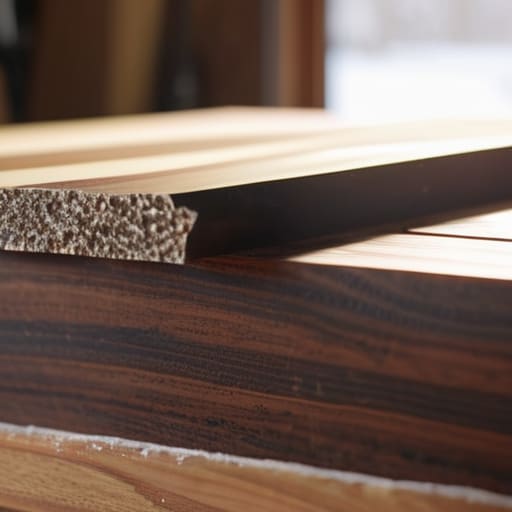
The mistake most people make is treating glue as a secondary thought, an afterthought to the joinery. In my studio, I’ve seen beautiful walnut commissions ruined because someone prioritized speed over the nuances of material compatibility for adhesives. I once watched a junior designer try to force a standard PVA into a high-density composite, thinking it would just “take.” It didn’t. The bond failed within a week because the chemistry simply wasn’t there. You can’t just force a connection; you have to respect the physics of what you’re joining.
It’s a constant tug-of-war between curing time vs open time. If you’re working on a complex, multi-point assembly, a glue that sets too quickly is your enemy. I’ve spent many late nights staring at a clamped chair, sweating over whether I have enough time to adjust the alignment before the bond becomes permanent. It’s not just about the strength of the final connection, but the window of opportunity you have to get it right. If you miss that window, you aren’t just fixing a mistake; you’re redesigning the whole piece.
The Near Disaster Material Compatibility for Adhesives That Failed Me
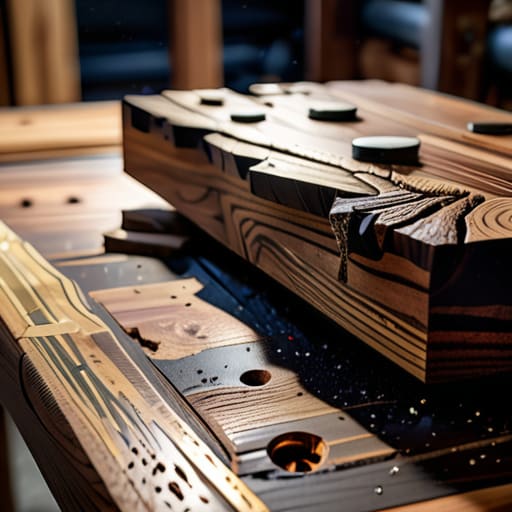
I still have the charred remains of that walnut sideboard in the corner of my studio—one of the many “why it didn’t work” specimens on my shelf. It was early in my career, and I was convinced that a high-performance epoxy would solve everything. I was so focused on the sheer speed of the set that I completely ignored the fundamental material compatibility for adhesives when dealing with an oily, exotic hardwood. I thought I could brute-force the connection with sheer chemistry, but the bond simply refused to take.
I learned the hard way that you can’t just slap a liquid between two surfaces and hope for the best. I had rushed the process, neglecting the necessary surface preparation for gluing, and the result was a structural failure that felt like a personal insult. It wasn’t just about the strength of the bond; it was about the relationship between the substrate and the medium. Now, when I look at a new piece of timber, I don’t just ask what will hold it; I ask what the material is actually willing to accept.
Chasing the Perfect Adhesive Bond Strength Without Losing Everything
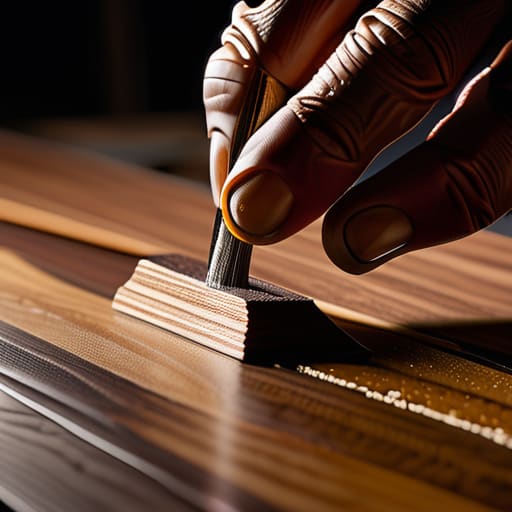
I remember a mid-nineties project—a series of cantilevered walnut stools—where I spent three days obsessing over the structural math, only to have the entire assembly fail because I misread the physics of the joint. I had focused so much on the aesthetics that I ignored the fundamental adhesive bond strength required for a load-bearing edge. I thought a standard PVA would suffice, but the sheer leverage of the design demanded something more robust. It’s a humbling lesson: a beautiful joint is worthless if the chemical bridge between the fibers can’t hold the weight of a person.
The real headache, though, isn’t just the strength itself, but the frantic math of curing time vs open time. In my studio, I often find myself caught in this tug-of-war. If I choose a fast-set epoxy to ensure stability, I lose the window I need to micro-adjust the alignment. If I go with a slow-set, I’m left praying that the clamps don’t creep before the bond is set. It’s a delicate, often frustrating dance between having enough time to be precise and having enough speed to be productive.
The Crucial Pivot Surface Preparation for Gluing or Total Failure
I have a shelf in the back of the studio, tucked behind a stack of rejected walnut chair legs, dedicated entirely to what I call “the ghosts of surfaces past.” Most of those failures weren’t actually the fault of the glue itself, but of my own impatience. I remember a mid-sized commission for a sideboard where I thought I could skip the sanding because the veneer looked “clean enough.” I was wrong. I had ignored the microscopic layer of residual oils and dust that acted like a lubricant rather than a bridge. It taught me that surface preparation for gluing isn’t just a preliminary step; it is the actual foundation of the entire assembly.
If you don’t manage the topography of the material, you’re essentially asking the chemistry to do something impossible. I’ve learned the hard way that even the most expensive resins can’t overcome a poorly prepared substrate. You have to respect the mechanical tooth of the wood. If the surface is too polished, the adhesive just sits there, a useless film waiting to peel. If it’s too porous, it drinks the liquid before the bond can even form. It’s a delicate, frustrating balance that requires more discipline than most people realize.
Wrestling With Curing Time vs Open Time Under Pressure
There is a specific kind of panic that sets in when you are halfway through a complex assembly and realize the clock is ticking faster than your hands can move. I remember working on a multi-component walnut credenza last spring; I had the clamps ready, but the glue was setting with a terrifying, aggressive speed. It’s the eternal tug-of-war between curing time vs open time, and if you misjudge it, you aren’t just looking at a messy cleanup—you’re looking at a structural failure.
In my studio, I’ve learned that “fast” is often a trap. A glue that sets in minutes feels efficient, but it leaves you zero margin for error during the alignment phase. I once tried to rush a joint using a high-speed polyurethane, only to find that the lack of workable window meant I couldn’t adjust the bevel by even a fraction of a millimeter. You have to balance the need for a rapid set against the reality of your own physical movements. If the open time is too short, you aren’t designing anymore; you’re just racing a chemical reaction.
Navigating the Viscosity of Industrial Glues to Save the Build
I remember a mid-sized walnut sideboard I was working on back in ’08. I had opted for a thin, watery contact cement, thinking it would seep into every crevice for a seamless look. Instead, it ran like water through a sieve, pooling in the joints and creating a mess that ruined the finish. That was the day I learned that the viscosity of industrial glues isn’t just a technical specification on a data sheet; it’s the difference between a structural success and a workshop nightmare.
When you’re dealing with tight-tolerance joinery, you need something with enough body to stay where you put it. If the glue is too thin, it lacks the structural integrity to bridge tiny gaps; if it’s too thick, it won’t penetrate the fibers, compromising the long-term adhesive bond strength. I’ve spent more hours than I care to admit staring at the consistency of a liquid, trying to decide if it’s going to behave or betray me. It’s a delicate, often frustrating, dance of physics and intuition.
Defying the Elements Through Environmental Resistance of Adhesives
I remember a series of outdoor benches I designed for a coastal client back in the late nineties. I had spent weeks obsessing over the joinery, only to realize I’d ignored the most brutal variable of all: the salt air. I had chosen a high-performance bond based purely on sheer strength, but I hadn’t accounted for the environmental resistance of adhesives in a high-humidity, saline environment. Within a single season, the moisture had wicked into the microscopic gaps, compromising the integrity of the entire piece. It was a humbling lesson in how a beautiful design is nothing if it can’t survive its own context.
When you’re working on something that isn’t destined for a climate-controlled studio, you have to stop thinking about the bond in a vacuum. You aren’t just fighting gravity or mechanical stress; you’re fighting thermal expansion and UV degradation. I used to think that if the material compatibility for adhesives was sound, the job was done. Now, I know better. You have to look at the specific stressors—the freeze-thaw cycles or the relentless sun—and realize that the “best” glue is often the one that yields just enough to move with the wood, rather than the one that tries to hold it in a permanent, brittle grip.
The Ghost in the Joint
We spend so much time obsessing over the strength of the bond that we forget the most important part of the process is the moment of hesitation—that split second where you realize the glue you reached for is actually the one that will ruin the piece, and the decision to put it back on the shelf is what actually makes the design work.
Jonathan Marin
The Final Joinery
At the end of the day, choosing a glue isn’t about memorizing a spec sheet or finding a magic bottle on a shelf; it’s about respect for the materials in front of you. We’ve looked at the messy reality of how compatibility, bond strength, and surface prep dictate whether a piece lasts a lifetime or becomes part of my “rejected” pile. You have to weigh the open time against the pressure of your deadline, and you have to understand that viscosity is often the difference between a clean joint and a sticky, structural nightmare. It is a constant negotiation between the chemistry in the bottle and the physics of the wood or metal you’re trying to marry together.
I often look at my shelf of failed prototypes—the ones where I chose the wrong adhesive or rushed the cure—and I realize they taught me more than any successful build ever could. Design is rarely about the grand gesture; it is found in these small, quiet decisions made at the workbench. Don’t be afraid of the trial and error, but don’t be reckless either. The goal isn’t just to make two things stick; it is to ensure that the integrity of the object remains intact long after you’ve walked away from the bench. Choose with intention, because the glue you pick today is the silent partner in everything you create tomorrow.
