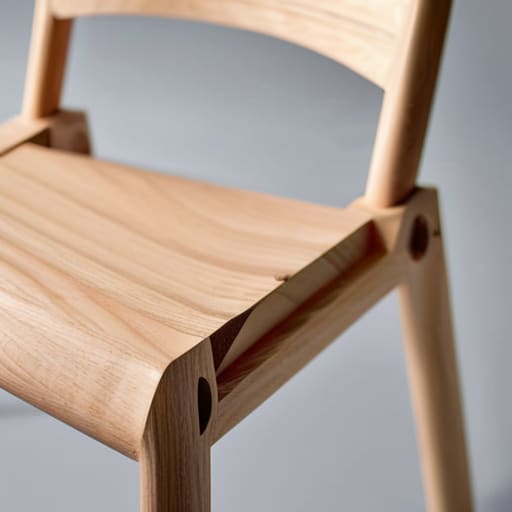
Furniture That Comes Apart Properly
I was staring at a pile of sawdust and three different types of failed cam-lock connectors last Tuesday, thinking about a prototype I scrapped back in ’08. Most design manuals treat the subject like a math problem, offering sterile diagrams that suggest how to design knock down furniture as if it were a simple matter of geometry and hardware. They sell you this myth of “seamless assembly,” but they never mention the frustration of a joint that fits perfectly in the CAD model and wobbles like a loose tooth in real life. To me, the beauty isn’t in the perfect instruction manual; it’s in the tension between the parts.
I’m not here to give you a sanitized, corporate lecture on logistics. Instead, I want to talk about the actual friction of the process—the mistakes, the hardware that fails, and the structural compromises that actually make a piece feel solid rather than disposable. We are going to look at how to design knock down furniture by focusing on the decisions that almost failed, because that is where the real engineering happens. No fluff, just the hard-won lessons from twenty years of making things that actually stay together.
The Beautiful Tension of How to Design Knock Down Furniture
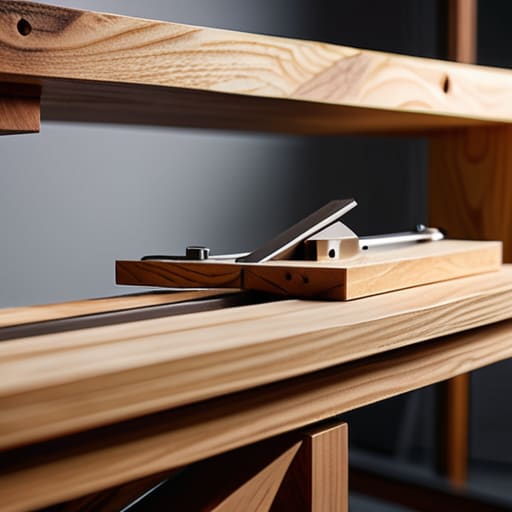
There is a specific kind of anxiety that sets in when you realize a piece of furniture has to survive a cardboard box and a delivery truck before it ever reaches a living room. In my studio, I have a shelf of “failures”—mostly joinery that looked beautiful on a CAD screen but collapsed under the slightest lateral pressure. When you move into the realm of flat pack furniture engineering, you aren’t just designing an object; you are designing a series of mathematical compromises. You are constantly negotiating between the elegance of a clean silhouette and the brutal necessity of minimizing shipping volume.
The tension lies in the fact that a knockdown piece is essentially a collection of parts waiting to be told how to behave. If you lean too heavily on standard cam and bolt hardware, the piece feels cheap, like a temporary solution rather than a permanent inhabitant of a home. But if you ignore the mechanics of assembly, you end up with a beautiful sculpture that no one can actually put together. Finding that sweet spot—where the structural integrity of RTA furniture feels deliberate rather than desperate—is where the real design work happens.
The Cam and Bolt Hardware That Almost Failed Us
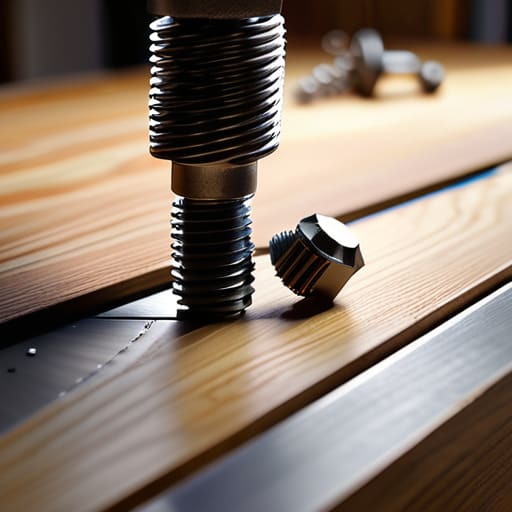
I have a drawer in my studio filled with bent steel rods and stripped screws—the ghosts of bad decisions. One of the most frustrating entries is a box of cam and bolt hardware from a side table project three years ago. We were obsessed with minimizing shipping volume in furniture, trying to shave every possible millimeter off the box dimensions to make the logistics sing. In our pursuit of that perfect, slim profile, we pushed the hardware limits too far. The cams were too shallow, the bolts too short, and the whole assembly felt like it was held together by nothing more than hope and friction.
I remember sitting on the workshop floor, staring at a prototype that wobbled the moment a hand touched it. We were chasing the efficiency of modular furniture assembly systems, but we had sacrificed the very thing that makes a piece of furniture feel permanent: its weight and its grip. It took two weeks of failed iterations and several very expensive ruined panels to realize that true structural integrity of RTA furniture isn’t found in how small you can make the components, but in how much confidence the connection provides. We eventually went larger, heavier, and much more boring—but the piece finally stood still.
Flat Pack Furniture Engineering the Art of the Narrow Margin
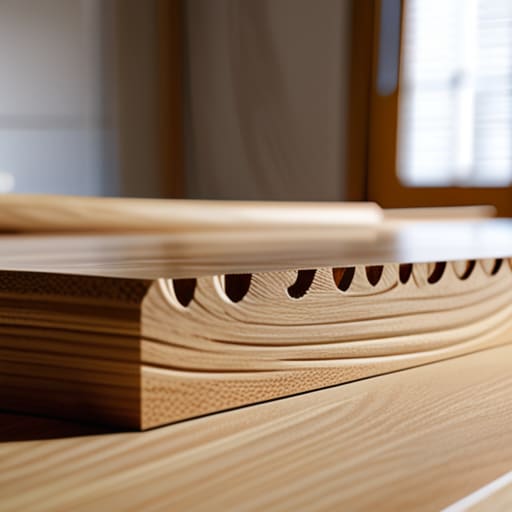
When you move from a studio setting to high-volume production, you stop thinking about aesthetics in isolation and start thinking about tolerances. Flat pack furniture engineering isn’t just about making things fit into a box; it is a constant negotiation with physics. I remember a specific sideboard I designed where the weight of the solid oak top threatened to crush the very joints meant to support it. I had to shave three millimeters off the internal support rail—a decision that felt like a betrayal of the material at the time, but it was the only way to ensure the piece didn’t buckle under its own gravity during transit.
The real challenge lies in the structural integrity of RTA furniture when it’s stripped down to its barest components. You aren’t just designing a cabinet; you are designing a series of mechanical interactions. If the friction in a dowel joint is too high, the user snaps it; if it’s too low, the whole thing wobbles like a house of cards. It’s a razor-thin margin between a piece that feels substantial and one that feels like disposable junk.
Modular Furniture Assembly Systems and the Chaos They Avoid
I’ve spent many late nights in the studio surrounded by a graveyard of modular components that refused to cooperate. There is a specific kind of frustration that comes with designing modular furniture assembly systems; you aren’t just building a piece of furniture, you are building a logic puzzle that a stranger has to solve in a dimly lit living room. If the connection points aren’t intuitive, the entire concept of flexibility collapses into a pile of expensive sawdust. I once spent a month refining a rail system that looked elegant on paper but felt like a chore in practice. It taught me that true modularity isn’t about how many ways a piece can be rearranged, but about how little friction exists during the transition.
When we talk about the structural integrity of RTA furniture, we often focus too much on the strength of the wood and not enough on the reliability of the interface. A system is only as good as its weakest junction. I’ve learned to favor systems that allow for a certain degree of error, where the parts guide the user toward the correct orientation rather than punishing them for a slight misalignment. It’s about designing for the inevitable mistake.
Sacrificing Stability to Master Space Saving Furniture Design Principles
There is a specific kind of vertigo that sets in when you realize that to make a piece truly portable, you have to strip away its bravado. In my early years in the studio, I thought stability was a given—a heavy, immovable truth. But when you pivot toward space-saving furniture design principles, you realize that rigidity is often the enemy of efficiency. I remember a sideboard I designed years ago; it was rock-solid, but it was a nightmare to move and even worse to ship. To make it work, I had to accept a certain degree of “give” in the joints.
It feels counterintuitive, almost reckless, to intentionally weaken a structure to achieve a goal. Yet, the real trick lies in managing the structural integrity of RTA furniture through clever geometry rather than sheer mass. You aren’t just building a box; you are managing a series of tensions. By embracing a slight, controlled flexibility, you can achieve a much higher level of performance in a smaller footprint. It’s a trade-off that keeps me up at night, but it’s the only way to make something that fits a modern life without feeling like a compromise.
Minimizing Shipping Volume in Furniture a High Stakes Compromise
I have a shelf in my studio dedicated entirely to “ghost” components—pieces of MDF or plywood that were cut, sanded, and polished, only to be tossed because they added three centimeters of unnecessary thickness to a shipping carton. In the world of commercial production, those three centimeters are the difference between a profitable run and a logistical nightmare. We often talk about the aesthetics of a piece, but when you are minimizing shipping volume in furniture, the real design battle happens in the cubic math of a cardboard box.
It is a brutal, reductive process. You find yourself staring at a beautiful, sweeping curve on a cabinet door and realizing it’s a liability; it forces the entire box to expand, driving up freight costs and carbon footprints. I’ve spent late nights redesigning silhouettes not because they looked better, but because a flatter profile allowed for tighter nesting. It’s a constant negotiation with the structural integrity of RTA furniture, trying to shave off every possible millimeter of air without turning the final product into something that feels flimsy or disposable. You learn quickly that the best designs aren’t just about what you add, but about the volume you manage to eliminate.
Preserving the Structural Integrity of Rta Furniture Through Doubt
I have a shelf in the back of my studio—a graveyard of bent plywood and misaligned dowels—that serves as my most honest teacher. It’s where I keep the pieces that felt “fine” on paper but buckled under the reality of a living room. When I’m working on the structural integrity of RTA furniture, I’ve learned that confidence is actually a liability. If I don’t feel a nagging sense of unease about whether a joint will hold after the fifth time it’s been assembled, I’m probably being too optimistic.
The real work happens in that friction between minimizing shipping volume in furniture and ensuring the piece doesn’t wobble like a card house once it’s out of the box. I often find myself questioning the load-bearing capacity of a panel that I’d previously deemed sufficient. It’s a tedious, almost neurotic process of doubting my own math, but that hesitation is what prevents a design from becoming a disposable failure. True stability isn’t found in the absence of doubt, but in the decision to over-engineer the parts that everyone assumes are safe.
The Ghost in the Joint
When you design for knock-down assembly, you aren’t just designing a chair or a table; you are designing the moment of frustration a person feels when a bolt doesn’t quite catch. The real engineering isn’t in the final, stable product, but in the quiet, desperate math we do to ensure that the ease of shipping doesn’t become the structural failure of the home.
Jonathan Marin
The Final Tolerance
Designing for disassembly isn’t just a technical exercise in geometry or hardware selection; it is a constant negotiation with failure. We have navigated the precarious balance of minimizing shipping volumes without turning a bookshelf into a pile of sawdust, and we have wrestled with the hardware that sits right on the edge of structural collapse. Every decision—from the choice of a cam lock to the thickness of a particle board edge—is a way of managing the inevitable chaos of a customer trying to build something in a living room with nothing but a hex key and a bit of patience. Ultimately, successful knock-down furniture is found in the narrow margin between efficiency and fragility.
I often look at the drawer of my workbench, filled with those rejected prototypes I can’t seem to throw away. They are reminders of the moments I almost chose the easier path, the path that would have looked good on a CAD screen but failed in a real home. If you find yourself doubting a joint or worrying that a flat-pack system is too complex, hold onto that feeling. That friction is where the real work happens. Design isn’t about reaching a state of perfect, effortless assembly; it is about honoring the constraints that force us to be better. The most enduring pieces are often those born from the decisions that nearly went the other way.
