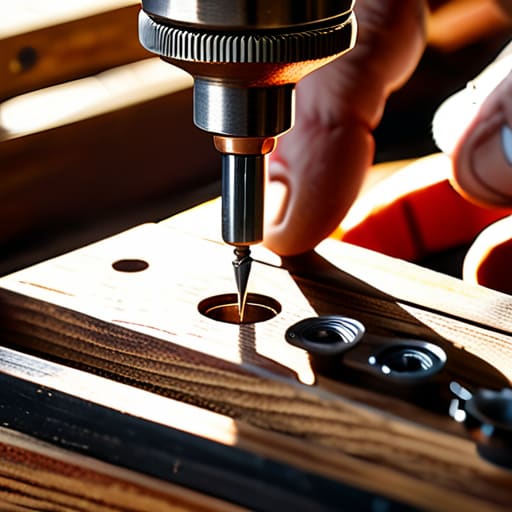
Designing for the Repair in Year Twenty
I have a shelf in the back of my studio filled with what I call “the ghosts”—half-finished joints, botched laminations, and chair legs that were too thin to hold a human’s weight. Most people look at a finished piece of furniture and see a triumph of aesthetics, but when I look at a chair, I see the thousand tiny concessions I made to keep it from falling apart. There is a pervasive, expensive myth in modern manufacturing that sustainability is about choosing the right recycled polymer or a “green” certification sticker. It isn’t. If you want to know how to design something to be repaired, you have to stop thinking about the material’s origin and start thinking about the mechanics of failure.
I’m not here to give you a lecture on circular economy buzzwords or high-level sustainability theory. I want to talk about the grit of it: the choice between a permanent adhesive and a brass screw, or why a modular joint is often a design trap if it isn’t executed with precision. My goal is to share the hard-won, unvarnished reality of designing for longevity. We are going to look at the decisions that actually matter—the ones that determine whether an object becomes a lifelong companion or merely more high-quality landfill.
The Elegance of the Rejected Path How to Design Something to Be Repaired

I have a shelf in the back of my studio dedicated to what I call the “ghosts.” These are the chair legs that were too thin, the joinery that failed under stress, and the drawer slides that jammed after three pulls. They aren’t failures; they are the maps of where I almost went wrong. When I approach a new project now, I don’t just think about the final silhouette; I think about the moment the user will inevitably need to take it apart. To achieve true longevity, one must embrace design for disassembly principles from the very first sketch. It means resisting the urge to hide a seam with a permanent adhesive just because it looks “cleaner” in a render.
Real repairability is often a quiet, unglamorous battle against convenience. I spent most of last Tuesday wrestling with a prototype, debating whether to use a proprietary custom bolt or stick to standardized fastener usage. The custom route felt sophisticated, but it was a trap—a way of ensuring that once a single screw stripped, the whole piece became landfill. Choosing the standard screw felt pedestrian, almost boring, but that is exactly where the integrity lies. The best design isn’t the one that looks most seamless, but the one that survives its own inevitable breakdown.
The Tension of Modular Product Architecture and Its Near Misses

I have a drawer in my studio filled with failed attempts at modularity—connectors that were too clever for their own good and joints that looked beautiful but crumbled under the slightest tension. We talk about modular product architecture as if it’s a clean, mathematical solution to longevity, but in practice, it’s a constant negotiation between elegance and utility. I remember a chair leg assembly I spent months perfecting; I wanted the components to snap together with a satisfying click, but I realized too late that a snap-fit is a death sentence for repairability. Once that plastic tab shears, the entire object is relegated to the landfill.
The real work lies in the friction between making something look seamless and making it accessible. I often find myself fighting the urge to hide everything behind a monolithic shell. True ease of maintenance design usually requires a certain visual honesty—a willingness to let the user see the standardized fastener usage that holds the piece together. If you hide the screws behind a proprietary, glued cap, you haven’t designed a masterpiece; you’ve designed a countdown to the scrap heap.
Choosing the Screw Over the Glue Standardized Fastener Usage

I have a drawer in my studio filled with half-finished joinery, mostly because I once thought a heavy-duty epoxy was a shortcut to structural integrity. It wasn’t; it was a death sentence for the object. When you glue two components together, you aren’t just joining them; you are committing them to a permanent, singular state. The moment a single part fails or a user wants to update a component, the entire piece becomes landfill. I’ve learned that true ease of maintenance design requires the humility to admit that parts will eventually break.
This is why I find myself obsessing over standardized fastener usage. There is a quiet, unsung dignity in a well-placed M6 hex bolt. It represents a pact between the designer and the future user. Using a common screw instead of a proprietary clip or a permanent adhesive is a deliberate application of design for disassembly principles. It’s a decision that feels much more “expensive” in terms of initial engineering time, but it’s the only way to ensure the object survives its own lifecycle. It turns a product from a disposable commodity into something that can actually be cared for.
The Graceful Exit Implementing Design for Disassembly Principles
I was looking at a prototype for a side table last week—one of the many “failures” currently occupying a corner of my studio. It was a beautiful piece, technically perfect, but I had used a series of interlocking wooden tabs that were so precise they were essentially permanent. To fix a single loose joint, you would have had to destroy the entire frame. It was a beautiful mistake, a testament to how easily we prioritize the aesthetic of seamlessness over the reality of a product’s lifespan.
This is the core challenge of implementing design for disassembly principles. It isn’t enough to just make things modular; you have to design for the moment when the object is no longer new. True ease of maintenance design means acknowledging that parts will fail, joints will loosen, and finishes will wear. I’ve learned that if you don’t plan for the “exit strategy”—the moment a component needs to be swapped or a material needs to be reclaimed—you aren’t really designing a product; you’re just designing a future piece of landfill. We have to embrace the friction of a screw or a clip, because that friction is what allows a thing to live twice.
Surviving the Friction of Ease of Maintenance Design
The real problem isn’t the theory; it’s the friction. When I’m sitting in a production meeting, trying to advocate for ease of maintenance design, I’m usually fighting a losing battle against the “efficiency” of the assembly line. It is much faster, much cheaper, and much easier to snap a plastic clip into place that can never be unclipped without shattering the whole housing. My colleagues see a streamlined process; I see a ticking clock. Every time we choose a permanent bond over a mechanical one, we are essentially deciding that the object’s life ends the moment it encounters a minor fault.
It’s a constant negotiation between the elegance of a clean silhouette and the messy reality of circular economy design strategies. I have a drawer full of prototypes where I had to sacrifice a seamless aesthetic just to ensure a user could actually reach the battery or replace a worn gasket. It feels like a compromise in the moment—a slight dent in the perfection of the form—but I’ve learned that true quality isn’t found in a flawless surface, but in the ability of an object to survive its own use.
The Weight of Choice in Circular Economy Design Strategies
I’ve spent a lot of mornings staring at a pile of failed joinery, wondering if the “correct” answer was actually the more profitable one. When we talk about circular economy design strategies, it’s easy to get lost in the high-level theory of closed loops and material recovery. But on my workbench, those strategies look less like a grand vision and more like a series of difficult compromises. It’s the heavy realization that every choice I make—whether to use a proprietary clip or a common bolt—is a vote for how much of this object will eventually end up in a landfill.
The real weight comes from the tension between longevity and the immediate demands of production. I often find myself caught between the desire for a seamless, monolithic aesthetic and the practical necessity of product lifecycle management. A beautiful, seamless chair is a triumph of form, but if that form makes it impossible to replace a single broken leg, I haven’t designed a piece of furniture; I’ve designed a future piece of trash. It is a constant, quiet struggle to ensure that the elegance of the object doesn’t become the very thing that prevents its survival.
Mastering the Long View of Product Lifecycle Management
There is a specific kind of exhaustion that comes with trying to account for a decade of wear and tear while you are still staring at a blank CAD file. Most people approach product lifecycle management as a spreadsheet exercise—a series of logistical checkboxes to be ticked off in a boardroom. But for me, it has always felt more like a conversation with a ghost. I find myself wondering about the person who will be holding a screwdriver ten years from now, trying to replace a worn-out bearing or a cracked housing. If I don’t make that moment intuitive, I haven’t really designed a product; I’ve just designed a temporary convenience.
It requires a certain discipline to resist the urge to optimize for the factory floor and instead optimize for the repair shop. It is easy to design something that looks beautiful under the sterile lights of a showroom, but the true test is how that object behaves when it is broken. We often talk about circular economy design strategies in broad, sweeping terms, yet the actual work happens in the granular details: the choice of a specific plastic resin that won’t become brittle, or the decision to avoid over-molding components that can never be separated. It is about respecting the object’s future.
The Cost of the Seamless
We often mistake a seamless finish for good design, but true craftsmanship lies in the honesty of the seam—in the deliberate decision to leave a way back in, rather than sealing a mistake behind a permanent bond that turns a minor repair into a total loss.
Jonathan Marin
The Ghost in the Machine
Looking back at the sprawl of decisions we’ve navigated—from the stubborn refusal of glue in favor of a standard screw, to the messy, difficult work of designing for disassembly—it becomes clear that repairability isn’t a feature you bolt onto a finished product. It is a series of hard-fought concessions made during the very first sketch. We have spent this time discussing how to resist the siren song of seamless, unopenable aesthetics in favor of something much more demanding: functional longevity. It is about acknowledging that every modular joint and every accessible fastener is a quiet rebellion against the planned obsolescence that has become the industry’s default setting.
I often look at the graveyard of prototypes in my studio, the ones I tossed aside because they were too difficult to manufacture or too expensive to iterate. But lately, I find myself looking at them differently. I realize that the most successful designs aren’t the ones that look perfect on a showroom floor, but the ones that invite the user to stay in a relationship with them. To design for repair is to design for a future you cannot see, trusting that the object will outlast the trend. We aren’t just making furniture or tools; we are making the things that people will actually be allowed to keep.
