Why a Two Hundred Year Old Joint Survives
I was standing in my workshop last Tuesday, staring at a joint that refused to seat properly, when I realized I was fighting a piece of walnut with a tool designed for a different century. People love to talk about “innovation” as if it’s a straight line toward some shiny, digital utopia, but they usually miss the point of why old methods persist. It isn’t because we’re stubborn or because we’re afraid of the new; it’s because those ancient, clunky ways often possess a functional soul that a CNC machine simply hasn’t learned to replicate yet. We don’t cling to the past out of nostalgia, but because we’ve learned—usually through a lot of expensive mistakes—that some problems require a human touch to solve.
I’m not here to sell you on a romanticized version of craftsmanship or to tell you that everything new is garbage. Instead, I want to look at the friction between the old and the new through the lens of someone who has spent twenty years seeing both fail and succeed. I’ll be sharing the hard-won truths about why old methods persist in our modern workflows, focusing on the constraints that actually matter. My goal is to help you recognize when a traditional approach is a vital anchor and when it’s just a ghost you should finally stop chasing.
The Beautiful Friction Why Old Methods Persist in a New World
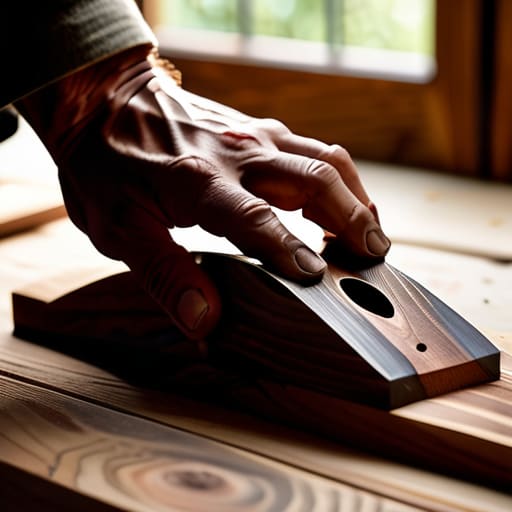
In my studio, there is a shelf of failed joinery—joints that were too ambitious, too fragile, or simply too expensive to scale. They serve as a physical reminder that we don’t just choose a method because it’s the most efficient; we choose it because we understand its failures. There is a specific kind of resistance to technological change that isn’t born of stubbornness, but of a desire for predictability. When I pick up a hand plane instead of a CNC router, I’m not looking for speed. I’m looking for the tactile feedback that tells me exactly where the material is fighting back.
We often mistake the smoothness of modern production for progress, but there is a profound cognitive bias in decision making that leads us to favor the frictionless over the meaningful. We chase the ease of a digital workflow, forgetting that the slight struggle of a manual process is often where the soul of the object resides. It’s that very friction—the resistance of the wood against the blade, or the heavy pull of a letterpress lever—that anchors us to the work. We cling to these slower ways because they force us to remain present in the error.
The Sunk Cost of Progress the Cost of Transitioning to New Systems
We talk about “innovation” as if it’s a clean, frictionless slide from one state to another, but in my studio, it feels more like dragging a heavy workbench across a floor you aren’t ready to scratch. There is a profound, often unacknowledged cost of transitioning to new systems that goes far beyond the invoice for new software or machinery. It’s the mental tax of unlearning. I look at my shelf of rejected prototypes—the ones where I thought I had found the “perfect” modern solution only to realize it lacked soul—and I see the wreckage of failed transitions.
It isn’t just about the money; it’s the cognitive bias in decision making that keeps us tethered to the familiar. We mistake the comfort of a known struggle for actual competence. When a new method promises efficiency, it also demands a period of profound incompetence while you learn the ropes. Most people, myself included, would rather endure a slow, predictable inefficiency than face the bruising vulnerability of being a beginner again. We cling to the old ways because they are a known quantity, and in design, certainty is a seductive lie.
The Comfort of the Known Psychology of Habit Formation

There is a certain, quiet safety in the muscle memory of a task. When I’m at my letterpress, my hands know the exact tension required to pull a print without muddying the ink; it’s a conversation held in tactile feedback rather than digital commands. This is the core of the psychology of habit formation—we aren’t just repeating actions, we are building a sanctuary of predictability. When a process becomes intuitive, it ceases to be “work” and becomes an extension of the self. To introduce a new, more “efficient” system is to strip away that fluency, leaving us feeling clumsy and exposed.
We often mistake this hesitation for a simple resistance to technological change, but it runs deeper than mere stubbornness. It is a defensive mechanism against the loss of mastery. In my studio, I see this play out when a designer chooses a tedious joinery method over a quick CNC routing: they aren’t just being difficult, they are protecting the certainty of the outcome. We cling to these rhythms because they offer a sense of agency that a streamlined, automated workflow often lacks.
The Ghost of Efficiency Traditional vs Modern Efficiency Debates
I spent three weeks last month arguing with a CNC programmer about the radius of a leg joint. He wanted the mathematical perfection of a machine-cut curve; I wanted the slight, intentional irregularity of a hand-planed edge. It’s the classic debate of traditional vs modern efficiency, though “efficiency” is often a loaded term used to mask a lack of soul. We’ve been taught to measure success by how many units we can push through a line per hour, but that metric ignores the quiet intelligence embedded in a slower process.
The friction usually stems from a specific kind of cognitive bias in decision making. We mistake speed for progress and assume that if a tool can do something faster, it is inherently better. But when we optimize for pure output, we often strip away the very nuances that make an object worth owning. There is a profound resistance to technological change not because we are Luddites, but because we recognize that efficiency is often just a polite word for the loss of character. We aren’t just fighting the new machines; we’re fighting the urge to let the process become invisible.
The Error We Almost Corrected Cognitive Bias in Decision Making
I have a shelf in my studio dedicated to the “almosts”—the chair legs that were too thin, the joints that split under pressure, the joinery that felt wrong even when the math said it was right. Looking at them, I realize that much of our stubbornness isn’t about the tools themselves, but about the mental scaffolding we build around them. We suffer from a specific kind of cognitive bias in decision making where we mistake familiarity for correctness. When we face a new process, our brains don’t see an improvement; they see a threat to the equilibrium we’ve spent decades perfecting.
It is a strange, quiet sort of inertia. We tell ourselves we are honoring craft, but often we are just shielding ourselves from the vulnerability of being a beginner again. This resistance to technological change isn’t always a rejection of the new; it’s a defensive crouch against the possibility of failing in a way we haven’t already mastered. We cling to the old ways because the errors we know are far less terrifying than the efficiencies we don’t.
Defending the Relic Cultural Preservation of Practices
There is a specific kind of grief that comes with watching a skill die. In my studio, I often find myself staring at a pile of rejected joinery samples—the ones that failed because they were too temperamental, too slow, or simply too “inefficient” for a modern production line. We call this cultural preservation of practices, but sometimes it feels more like an act of stubbornness. We aren’t just holding onto a way of cutting wood or setting type; we are holding onto the tactile memory of how a thing is actually made. When we automate a process, we gain speed, but we lose the dialogue between the hand and the material.
This isn’t just nostalgia; it’s a defense against the flattening of our world. There is a certain resistance to technological change that gets dismissed as Luddism, but I see it as a refusal to let the soul of a craft be optimized out of existence. If we only value what is scalable, we eventually find ourselves living in a world of perfectly smooth, perfectly boring objects. We keep these “relics” alive because they remind us that there is a profound difference between something being functional and something being meaningful.
The Friction of Change Resistance to Technological Change
I remember sitting in my studio three years ago, staring at a CNC router that promised to shave weeks off my production cycle, while my hands were still stained with the walnut dust of a hand-planed joint. There is a specific, visceral kind of resistance to technological change that isn’t about being a Luddite; it’s about the loss of tactile feedback. When you switch from a manual process to an automated one, you aren’t just upgrading a tool—you are outsourcing your intuition to an algorithm. You lose that split-second conversation between the grain of the wood and the edge of the blade, replaced by a sterile, digital certainty that feels strangely hollow.
This hesitation often gets dismissed as mere stubbornness, but it’s actually a deeply rooted part of the cost of transitioning to new systems. It isn’t just the capital investment or the software learning curve; it’s the emotional tax of abandoning a method that has become an extension of your own nervous system. We fear that in the pursuit of seamlessness, we might accidentally smooth away the soul of the work itself.
The Weight of the Alternative
We don’t hold onto these old, inefficient ways because we’re blind to the new ones; we hold onto them because every time we try to let go, we realize the ‘better’ way lacks the very friction that tells us we’re actually making something real.
Jonathan Marin
The Weight of the Decision
Looking back at the friction we’ve discussed—the psychological safety of the familiar, the heavy sunk costs of new systems, and that stubborn, beautiful resistance to pure efficiency—it becomes clear that old methods aren’t just relics. They are the anchors that keep us from drifting into a sea of frictionless, soul-less production. We cling to these ways because they represent more than just a workflow; they represent the human errors and hard-won lessons that shaped our current understanding. We realize now that the persistence of the old isn’t a failure of progress, but rather a necessary tension that prevents us from discarding the very soul of our craft in the name of a streamlined future.
In my own studio, I look at my shelf of rejected prototypes—the ones with the handwritten notes taped to their sides—and I realize that my best work didn’t come from the easiest path. It came from the moment I fought against the “obvious” solution and chose the harder, more manual way instead. We shouldn’t aim for a world without friction, because friction is where the heat is. Instead, let us strive to be intentional about which ghosts we keep and which tools we carry. After all, the most meaningful part of any creation is the decision that nearly went the other way.
