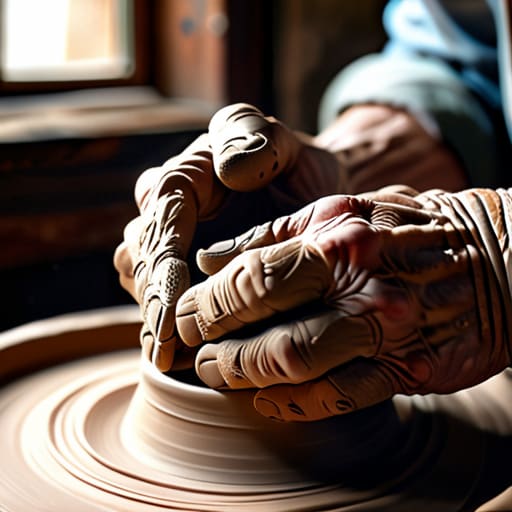
What Your Hands Learn Before You Do
I remember standing over a walnut slab three years ago, the scent of cedar shavings thick enough to taste, when my chisel suddenly skidded. I didn’t think; I didn’t consult a manual or a diagram. My hand just flinched a fraction of an inch before the blade could gouge the grain. It was a reflexive, almost violent correction that happened in the space between thought and action. People love to talk about “cognitive motor pathways” and neurological feedback loops to explain why hands know things, but that clinical language feels hollow when you’re actually in the thick of it. To me, it’s not about data; it’s about that unspoken conversation between the skin and the material that happens long before your brain even realizes there’s a problem.
I’m not here to give you a lecture on anatomy or a list of expensive ergonomic tools. Instead, I want to talk about the grit of it—the actual, messy process of building a library of mistakes in your own muscles. We’re going to look at how to bridge that gap between knowing a shape in your head and feeling it in your palms.
The Near Misses of Muscle Memory and Motor Learning
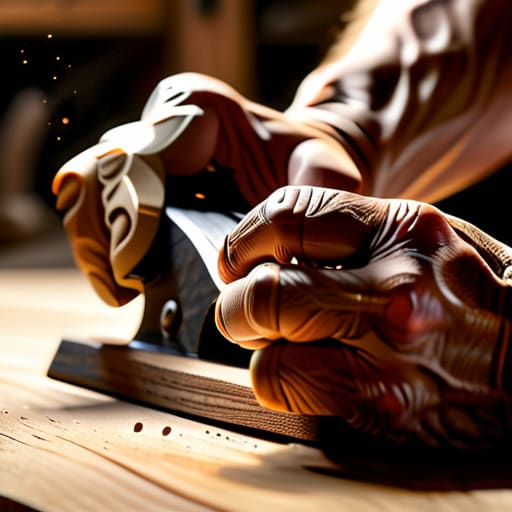
I have a shelf in the back of my studio, tucked behind the heavy oak samples, filled with what I call the “almosts.” There is a chair leg cut at a three-degree angle that is entirely too aggressive, and a brass joint that refuses to seat properly. Looking at them, I don’t see failures; I see the moments where my hands were actually learning. It’s that specific, twitchy tension in your forearm right before a tool slips—that is where the real education happens.
We talk about muscle memory and motor learning as if they are clean, mathematical processes, but in the shop, it feels more like a negotiation. You aren’t just following a blueprint; you are engaging in a constant, subconscious dialogue with the material. When I’m working the press, there is a specific resistance in the lever that tells me the ink is too thick before my eyes even catch the smudge. It is a form of sensory-motor integration that bypasses the brain entirely, a way of knowing that exists only in the friction between the skin and the wood.
Why Hands Know Things the Decisions That Almost Failed
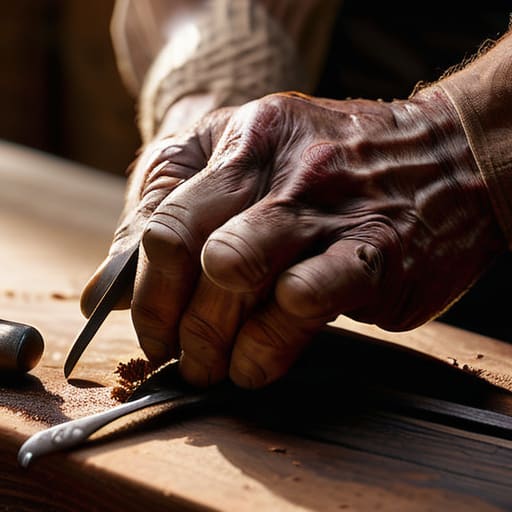
I have a shelf in the back of my studio, tucked behind the scrap wood and the half-empty ink cans, where the ghosts live. It’s a graveyard of failed joinery and warped laminates. Most people see a finished chair and think of the elegance of the final line, but when I look at a piece, I see the moment I almost chose the wrong radius for a handrail. I remember the tension in my grip when the wood grain fought back, a physical argument that my brain hadn’t yet translated into a solution.
That’s where sensory-motor integration actually happens. It isn’t some clean, clinical process occurring in a vacuum; it’s the frantic, silent negotiation between your skin and the material. You realize you’re learning not when you get it right, but when your hands instinctively recoil from a mistake before your eyes even register the error. This kind of procedural memory in manual tasks is built entirely on those near-misses—the split second where your fingers sense a slip in the chisel and you adjust your weight to compensate. The object is finished, but the real design happened in that correction.
Haptic Perception in Skill Acquisition the Errors We Avoided
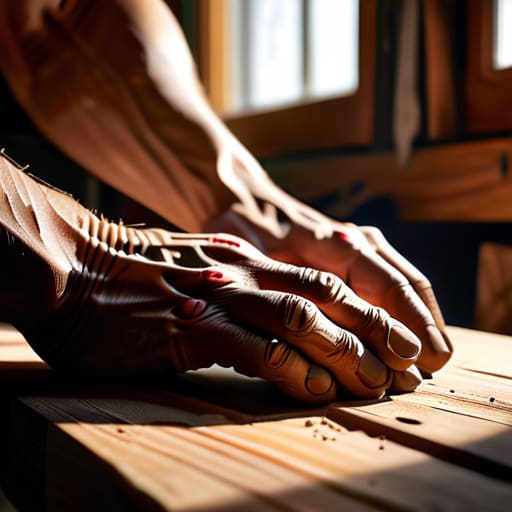
I have a shelf in the back of my studio, tucked behind the wood shavings and the scrap walnut, dedicated entirely to the things that didn’t work. There is a chair leg there, carved at a slight, nauseating angle, and a series of joinery samples that look more like accidents than intentional design. Looking at them, I realize that my understanding of haptic perception in skill acquisition didn’t come from reading textbooks on ergonomics; it came from the physical sting of a chisel slipping or the unsettling vibration of a router hitting a knot.
We often talk about mastery as if it’s a smooth, upward trajectory, but it’s actually a map of avoided disasters. When I’m sanding a curve, my hands aren’t just following a path; they are constantly correcting for a mistake I haven’t even made yet. This is the essence of sensory-motor integration—that split-second where the brain processes the resistance of the grain and adjusts the pressure before the eye even registers the deviation. You don’t learn the “right” way by doing it perfectly; you learn it by feeling exactly how much force it takes to nearly ruin it.
Embodied Cognition Theory and the Ghost of Lost Precision
I have a shelf in the back of my studio, tucked behind a stack of birch plywood, where the “ghosts” live. They are the joints that didn’t seat quite right, the dovetails that were a fraction of a millimeter too shallow, and the chair legs that felt structurally sound but possessed a certain unsettling lightness. To a layman, they are trash. To me, they are the physical manifestation of embodied cognition theory in action. We like to think of our intelligence as something housed strictly behind the eyes, a central processor making logical commands. But when I’m working a chisel, the “thinking” isn’t happening in my prefrontal cortex; it’s happening in the tension of my forearm and the specific, localized pressure against the wood grain.
The mind doesn’t just command the hand; it inhabits it. This is the essence of sensory-motor integration—the way my brain stops treating my tools as external objects and starts treating them as extensions of my own nervous system. When a cut goes wrong, it’s rarely because I forgot a mathematical formula; it’s because my body failed to register a subtle shift in resistance. We don’t just learn through sight; we learn through the reclamation of error.
Sensory Motor Integration When the Fingers Almost Lost Their Way
I remember a specific walnut sideboard I was working on three years ago. I was attempting a complex dovetail joint, and for a split second, the chisel felt disconnected from my intent. It wasn’t just a slip; it was a breakdown in sensory-motor integration, that invisible bridge where the brain’s command meets the hand’s execution. In that moment, the wood felt foreign, like I was holding a tool rather than extending my own nervous system.
When that happens, you realize that skill isn’t a static library of movements stored in your head. It is a constant, high-speed negotiation between what you see and what you feel. I’ve learned that true tactile feedback and dexterity aren’t about perfect execution on the first try; they are about the micro-adjustments made when the tool begins to wander. You don’t just learn the right way to move; you learn the exact sensation of the wrong way, and you spend the rest of your career learning how to steer away from that specific, sinking feeling in your palms.
Tactile Feedback and Dexterity the Beauty of Corrected Motion
I spent most of yesterday morning staring at a dovetail joint that refused to seat properly. It wasn’t a failure of measurement, but a failure of feel. You can have the most precise digital readout in the world, but it won’t tell you when the grain is fighting the chisel. That’s where tactile feedback and dexterity actually live—in that microscopic vibration that travels up the tool and tells your brain, stop, you’re about to split the wood.
It’s a constant, silent negotiation. When I’m working a piece of walnut, my hands are performing a kind of real-time error correction that I can’t quite translate into a blueprint. This isn’t just about repetitive movement; it’s the way procedural memory in manual tasks allows me to adjust my grip before I even realize my palm has tightened. We often talk about skill as a finished state, but for me, it’s really just the elegance of the correction. It’s that split second where the hand senses a slip and compensates, turning what would have been a ruined workpiece into a clean, intentional line.
Procedural Memory in Manual Tasks the Unseen Pivot Points
I have a drawer in my studio filled with bent plywood scraps and failed joinery, each one a physical record of a moment where my brain and hands disagreed. We often talk about procedural memory in manual tasks as if it’s a seamless, automated stream, but it’s actually a series of frantic, microscopic course corrections. When I’m at the letterpress, my hands don’t just “know” the tension of the paper; they are constantly negotiating with the resistance of the machine. It is a silent dialogue of friction and weight.
The real magic isn’t in the fluid motion itself, but in the split-second hesitation that occurs when the material pushes back unexpectedly. You don’t realize how much of your skill is built on these tiny, corrected errors until you’re halfway through a task and your fingers suddenly stiffen, sensing a misalignment before your eyes even register the flaw. This isn’t just rote repetition; it is the body’s way of archiving every mistake so that, eventually, the mistake becomes impossible to repeat.
The Weight of the Wrong Choice
We like to talk about mastery as if it’s a straight line of perfect execution, but my hands tell a different story. They remember the slip of the chisel, the grain that fought back, and that split-second shudder when a joint almost failed. Real skill isn’t just knowing how to do it right; it’s the muscle memory of every mistake you learned not to make.
Jonathan Marin
The Wisdom of the Scarred Hand
Looking back at the pile of rejected prototypes in the corner of my studio, I realize they aren’t just failures; they are the physical map of everything my hands learned not to do. We’ve spent this time tracing how the brain and the fingertips engage in a constant, silent dialogue—a dance of correcting the slip and anticipating the resistance of wood or metal. It isn’t just about the smooth execution of a task, but about the invisible architecture of the near-misses. We know things because our hands have felt the exact moment a joint was too tight or a cut was too shallow, and they have memorized the correction before the mind even registers the error.
Ultimately, the intelligence of the hand isn’t found in the perfection of the final product, but in the grit of the process. True mastery isn’t a state of effortless grace; it is the ability to inhabit the tension between a mistake and a solution. As you move through your own work, don’t fear the moment the tool wanders or the material resists. Those are the moments when the real learning happens. Embrace the friction of the attempt, because the most profound knowledge we possess is written in the subtle, muscular memory of decisions that almost went the other way.
