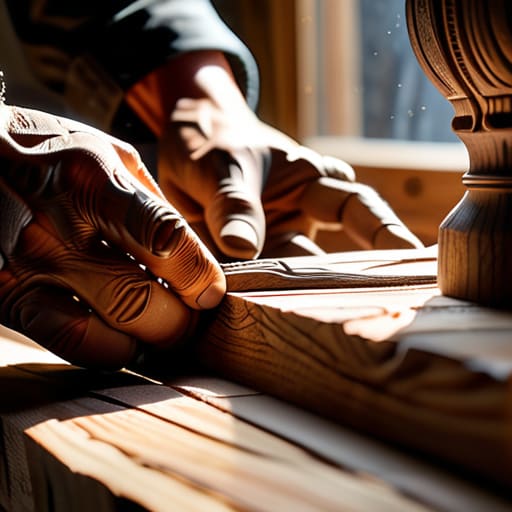
The Design Improved by a Limit
I have a shelf in the back of my studio, tucked behind the heavy slabs of walnut, that serves as a graveyard for “perfect” ideas. It’s filled with joints that were too ambitious to machine and silhouettes that looked great in a sketch but felt utterly wrong in a room. People love to talk about “unleashing creativity” as if it’s some mystical, boundless cloud, but after twenty years of moving wood and metal, I’ve realized that’s a lie. The truth is much more tactile: you don’t find your best work in a vacuum of infinite choice; you find it when you’re backed into a corner. Understanding why constraints help isn’t about limiting your vision, but about finally giving that vision a reason to exist.
I’m not here to give you a lecture on theoretical frameworks or some polished productivity hack. I want to talk about the grit of the process—the moment when a budget cut or a material limitation forces you to make a choice that actually matters. I’ll be sharing what I’ve learned from the successes and, more importantly, the near-misses that sit on my scrap shelf. This is about how the boundaries we fight against are often the only things that keep us from making something mediocre.
The Elegance of the Near Miss Why Constraints Help

I have a shelf in my studio, tucked behind a stack of walnut offcuts, dedicated entirely to the ghosts of chairs that never were. There is a mid-century inspired lounge with a leg profile that was far too ambitious, and a stool that looked beautiful on paper but was a structural nightmare. Most people see failure in those scraps, but I see the clarity that comes from hitting a wall. When you have infinite possibilities, you don’t actually have a design; you have a vacuum. It is only when a material limit or a budget ceiling forces your hand that you begin the real work of creative problem solving with limits.
That tension—the friction between what I want to make and what the wood actually allows—is where the soul of a piece resides. Without those boundaries, I find myself drifting into a kind of aimless perfectionism. By embracing a sense of structured freedom in design, I stop chasing every fleeting whim and start making decisions that actually matter. The goal isn’t to bypass the obstacle, but to let the obstacle dictate the silhouette. It’s in those moments of being backed into a corner that the most honest forms emerge.
Killing the Infinite Overcoming Choice Paralysis Through Limits

I have a shelf in the back of my studio—a graveyard of birch plywood and failed joinery. Most people see waste, but I see the moments where I stood frozen. There is a specific kind of terror in a blank sheet of material or a software file with no dimensions; it’s the paralysis of the infinite. When anything is possible, nothing is meaningful. I’ve spent more time staring at a screen, unable to commit to a single curve because I was too busy mourning the ten others I hadn’t picked yet, than I have actually building. This is the trap of overcoming choice paralysis through sheer willpower—it doesn’t work. You can’t think your way out of a void.
You need a wall to bounce off of. In my experience, structured freedom in design only happens when you stop asking “what if” and start asking “how can I make this work within these three rules?” By imposing a limit—say, a fixed width or a single type of fastener—you stop the bleeding of endless options. It forces a pivot from abstract dreaming to actual creative problem solving with limits. The boundary isn’t a cage; it’s the only thing that makes the decision feel real.
The Psychology of Scarcity and Innovations Hidden Spark
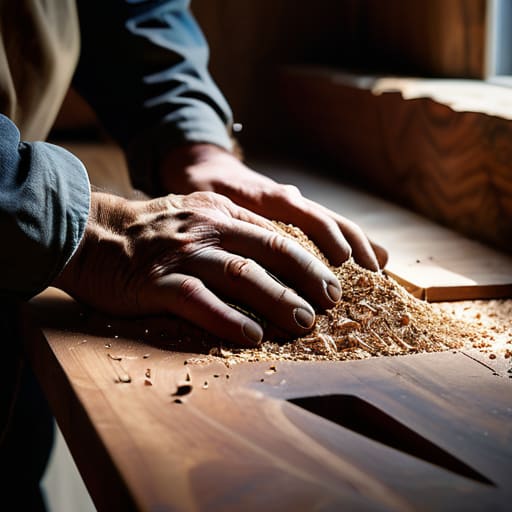
There is a strange, almost counterintuitive comfort in having your back against a wall. In my studio, when I’m staring at a pile of rejected walnut offcuts or a failed joinery attempt, I realize that true innovation rarely happens in a vacuum of total possibility. It happens when the material refuses to cooperate. This is the psychology of scarcity and innovation in its rawest form: we don’t find the best solution because we are brilliant, but because the easy, expensive, or “perfect” way has been stripped away.
When I’m working on a new chair frame, I often impose artificial shortages—perhaps a limit on the number of different screw types I can use, or a strict restriction on the thickness of the timber. It sounds masochistic, but it’s actually a way of optimizing decision making processes. By narrowing the field, I stop wandering through a forest of “what ifs” and start engaging in genuine creative problem solving with limits. The spark doesn’t come from the abundance of what I can do; it comes from the friction of what I am forced to overcome.
Creative Problem Solving With Limits Finding the Edge
I spent most of last Tuesday staring at a pile of rejected joinery samples in the corner of my studio. One particular brass fitting—a failed attempt at a desk leg connector—is currently sitting in my “Graveyard of Almosts.” It didn’t work because I had decided, quite arbitrarily, that the thickness of the metal could not exceed four millimeters. That arbitrary wall is exactly where the real work begins. When you engage in creative problem solving with limits, you aren’t just fighting a restriction; you are using it as a fulcrum to leverage a solution you never would have stumbled upon in a vacuum of infinite resources.
Without those walls, the mind tends to wander into pleasant, useless territories. But when you introduce a hard boundary—say, a fixed budget or a specific material constraint—you force a pivot. You stop asking “what could this be?” and start asking “how can this survive?” This shift represents a form of structured freedom in design. It’s the difference between a daydream and a blueprint. The edge isn’t where the creativity stops; it’s where the actual engineering of an idea begins.
The Cognitive Benefits of Boundaries in a Boundless World
I often think about my studio floor—a graveyard of bent plywood and failed joinery. Each piece represents a moment where my brain tried to wander into the “what if” territory, only to be pulled back by the reality of the material or the budget. There is a profound cognitive benefit to boundaries that we rarely discuss in design school. When the field is infinite, the mind tends to spin its wheels in a vacuum. We mistake movement for progress, but without a perimeter, we are just drifting.
By imposing a strict set of parameters early on, we aren’t just making life harder; we are actually optimizing decision-making processes. It’s about reducing the sheer volume of noise. When I sit down to work on a new chair, I don’t start with “anything is possible.” I start with “it must be made of solid walnut and use no more than three types of fasteners.” That scarcity isn’t a cage; it’s a lens. It forces the intellect to stop scanning the horizon and start looking deeper into the specific, difficult details right in front of us.
Optimizing Decision Making Processes by Choosing the Hard Path
There is a seductive lie in the design world that the easiest path—the one with the least resistance—leads to the most intuitive result. We often mistake efficiency for quality. But in my experience, when I’m staring at a joint that fits too easily or a silhouette that feels too safe, I’m usually looking at a failure of intent. Optimizing decision making processes isn’t about finding the shortest route between a concept and a prototype; it’s about intentionally choosing the friction. I’ve learned that the most robust solutions usually emerge when I force myself to work against a self-imposed difficulty, like limiting my toolset or restricting my material palette.
This isn’t just about being difficult for the sake of it. It’s about creative problem solving with limits. When you opt for the harder path, you strip away the ability to rely on superficial flourishes. You can’t hide a weak concept behind a complex detail if your constraints don’t allow for it. By choosing the harder route, you’re essentially performing a stress test on your own logic. It’s in that tension—that uncomfortable space where the easy answer is rejected—that the real work actually begins.
The Ghost in the Prototype
I keep a shelf in my studio full of failed joints and rejected silhouettes, not as trophies of error, but as reminders of the moment a boundary forced my hand. A design without a limit is just a polite suggestion; a design born from a constraint is a decision that actually has something to say.
Jonathan Marin
The Weight of the Decision
Looking back through the stacks of my studio—those rejected plywood joints and failed upholstery samples—I realize that none of them were mistakes. They were necessary casualties. We’ve spent this time exploring how limits prevent the paralysis of infinite choice, how scarcity forces a kind of cognitive grit, and how the most elegant solutions usually emerge when we stop trying to bypass the rules and start using them as a lever. Constraints aren’t the enemy of creativity; they are the scaffolding that keeps an idea from collapsing under its own weight. Without them, we aren’t designing; we are just drifting through a sea of endless, mediocre possibilities.
So, the next time you feel hemmed in by a budget, a material limitation, or a deadline that feels too tight, don’t view it as a barrier to your best work. View it as the very thing that will make your work worth doing. The most meaningful part of any finished piece isn’t the polished surface or the seamless joinery—it is the ghost of the version that didn’t make the cut. True mastery lies in the ability to dance within the margins, finding that sweet spot where the constraint becomes the catalyst. Embrace the boundary, because that is exactly where the interesting work begins.
