
Staying a One Person Workshop
I was staring at a pile of rejected chair legs in the corner of my studio last Tuesday—each one a physical record of a choice I didn’t make—when I realized how much we lie to ourselves about success. The business world loves to sell you this polished, inevitable trajectory of expansion, as if scaling up is the only way to prove you aren’t failing. But there is a specific kind of rot that sets in when you chase growth just because it’s the default setting. When people ask me how to decide to grow or stay small, they are usually looking for a spreadsheet or a growth hack, but those tools won’t tell you if you’re about to trade your soul for a larger headcount.
I’m not here to give you a roadmap to a corporate empire or a lecture on “lean” methodology. Instead, I want to talk about the constraints that actually define a life’s work. I’ll share what I’ve learned from twenty years of watching production lines swallow creativity, helping you weigh the heavy cost of a bigger footprint against the quiet power of a focused one. We aren’t looking for the “right” answer, but rather the decision that you can actually live with.
The Ghost of the Alternative How to Decide to Grow or Stay Small

In my studio, I have a shelf of “ghosts”—joints that were too ambitious, legs that were too spindly, wood choices that looked beautiful but failed the stress test. They remind me that every successful piece is built on the corpse of a discarded idea. Business follows a similar logic of subtraction. When people talk about the leap from a solo practice to a larger firm, they often focus on the shiny metrics of expansion, but they rarely account for the weight of the decisions left behind.
The tension between scaling vs lifestyle business isn’t just about your bank balance; it’s about what you are willing to lose. If you grow, you gain reach, but you inevitably trade away that granular, tactile control that likely drew you to the craft in the first place. You begin managing operational complexity rather than perfecting a curve or a grain pattern. I’ve seen too many makers chase a version of success that eventually turns into a heavy, hollowed-out version of their original vision, simply because they couldn’t bear to let the “small” version die.
Scaling vs Lifestyle Business the Cost of the Unchosen Path
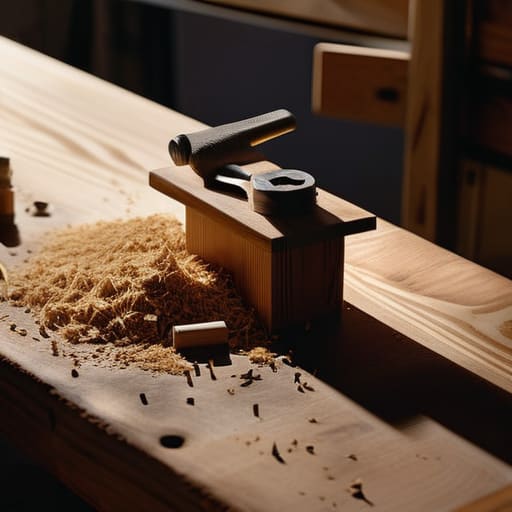
In my studio, I have a shelf of “failures”—joints that were too delicate for mass production or finishes that cost more than the wood itself. They remind me that every choice has a shadow. When you weigh scaling vs lifestyle business, you aren’t just choosing a bank balance; you are choosing which set of problems you want to wake up to every morning. Scaling offers the allure of reach and impact, but it demands a surrender of the very granular control that likely made you love the craft in the first place.
The shift from a solo operation to a larger entity is rarely a smooth transition of gears; it is more like a sudden change in the material properties of the work itself. Suddenly, you aren’t just designing a chair; you are managing operational complexity and navigating the delicate friction of team dynamics. You might find that the pursuit of rapid expansion inadvertently trades away your margins for a mess of logistics. I’ve learned that true success isn’t always about the vertical climb, but about finding a rhythm where the work still feels like yours.
The Profitability Paradox Choosing Business Growth vs Profitability

In my studio, I often look at a chair that failed—not because the joinery was weak, but because the production method required a machine I couldn’t afford and a staff I didn’t want to manage. It’s a physical manifestation of the tension between business growth vs profitability. When you scale, you aren’t just adding more units; you are adding layers of friction. You start trading the high margins of a bespoke, hand-finished piece for the razor-thin margins of volume. Suddenly, you aren’t a designer anymore; you’re a logistics manager, and that shift is where the soul of the work often gets lost in the math.
The trap is thinking that more revenue equals more success. I’ve seen plenty of colleagues chase the high of a massive order book only to realize they’ve traded their peace for managing operational complexity. They’ve built a machine that requires constant feeding, leaving them with no time to actually design. True sustainability isn’t found in the sheer scale of your output, but in finding that sweet spot where the work remains profitable enough to fund your life, without the weight of a massive organization crushing your ability to say “no” to the wrong projects.
The Weight of the Machine Managing Operational Complexity
In my studio, I have a shelf of failed joinery—joints that were too ambitious for the wood or too delicate for the machine. They remind me that every addition to a system introduces a new point of failure. When you transition from a solo practice to a larger operation, you aren’t just adding capacity; you are adding friction. Managing operational complexity is rarely about the elegance of the new process; it is about the messy reality of keeping the gears from grinding one another into dust. You start to spend less time designing and more time troubleshooting the very infrastructure meant to support you.
There is a specific kind of exhaustion that comes when the craft you love becomes a series of logistical hurdles. I’ve seen it happen to colleagues who thought more hands would mean more freedom, only to find themselves trapped in a cycle of entrepreneurial burnout and scale. Suddenly, you aren’t a maker anymore; you are a manager of people, schedules, and inevitable errors. You have to ask yourself if the extra revenue is worth the weight of the machine you’re building to house it.
The Culture Collision the Impact of Hiring on Company Culture
When I was running my own studio, the “culture” was just the sound of my own breathing and the occasional scrape of a chisel. It was quiet, singular, and entirely mine. But as you begin to navigate the tension between scaling vs lifestyle business, you realize that every new hire is a permanent alteration to the room’s frequency. You aren’t just adding hands to move more product; you are introducing new temperaments, new ways of seeing a problem, and—inevitably—new ways of disagreeing with you.
The impact of hiring on company culture is rarely a sudden explosion; it’s more like a slow chemical reaction. You think you’re just hiring a junior designer to help with CAD work, but you’re actually introducing a new set of values that might eventually challenge your own. If you aren’t careful, the very thing that made your work special—that obsessive, singular vision—gets diluted by the need for consensus. You have to decide if you want to be a solo craftsman or a conductor, because you cannot be both once the team grows beyond your own immediate reach.
Avoiding the Hollow Victory Entrepreneurial Burnout and Scale
I have a shelf in my studio filled with chair legs that were almost perfect, only to be discarded because the joinery felt forced. They are beautiful, but they don’t work. Scaling a business often feels like that—you chase a more ambitious silhouette, only to realize you’ve compromised the structural integrity of your own life. There is a specific kind of exhaustion that comes when you realize you haven’t built a company, but rather a very demanding master that requires your presence twenty-four hours a day.
The trap is thinking that more revenue equates to more freedom. In reality, the pursuit of rapid expansion often leads straight into entrepreneurial burnout and scale, where the sheer volume of decisions erodes your ability to actually enjoy the craft. You end up managing people instead of making things. If you aren’t careful, you’ll find yourself standing in the middle of a massive, successful operation, feeling a profound sense of loss for the quiet, focused studio life you almost kept. It is a hollow victory if the price of the prize is the person who wanted it in the first place.
The Architecture of Permanence Sustainable Business Growth Models
When I’m designing a chair, I don’t just think about the finished silhouette; I think about the joinery that has to hold that weight for twenty years. Business is no different. If you want to move beyond the constant friction of managing operational complexity, you have to stop treating growth like an inevitable tide and start treating it like a structural choice. Sustainable business growth models aren’t about chasing a larger number on a spreadsheet; they are about building a framework that can actually support the weight of your ambitions without buckling under the pressure of its own existence.
I’ve seen too many makers mistake expansion for progress, only to realize they’ve built a structure that is fundamentally unstable. They fall into the trap of prioritizing scale at the expense of their own margins, losing sight of the delicate balance between business growth vs profitability. True permanence comes from deciding which parts of your process are meant to be automated and which parts are the “soul” of the work that must remain untouched. It’s about designing a system where the growth serves the craft, rather than the craft being sacrificed to serve the machine.
The Anatomy of the Pivot
Scaling isn’t just adding more of what you already do; it’s a fundamental redesign of the object itself. You have to ask if you’re building a larger version of your current masterpiece, or if you’re actually designing an entirely different machine that just happens to use the same name.
Jonathan Marin
The Final Cut
Looking back at everything we’ve dissected—from the crushing weight of operational complexity to the subtle erosion of culture through rapid hiring—it becomes clear that scaling isn’t a natural evolution, but a deliberate, often painful, design choice. There is no “correct” scale, only the scale that fits the constraints you are willing to live with. Whether you choose the lean, high-margin life of a boutique studio or the complex, high-output machinery of a larger firm, you must accept that you are trading one set of problems for another. You cannot escape the friction; you can only decide which kind of friction you find most meaningful to solve.
In my workshop, I often look at my shelf of rejected prototypes—the chairs with the wrong joinery or the tables that were simply too ambitious for their materials. They aren’t failures; they are the physical evidence of the boundaries that defined the successful piece. Your business is no different. The decision to stay small or to push outward is the most significant “cut” you will ever make. Don’t aim for the version of success that looks impressive in a brochure; aim for the one that allows you to sleep with a clear conscience and a steady hand. After all, the most enduring structures are never the largest, but the ones most perfectly suited to their purpose.
