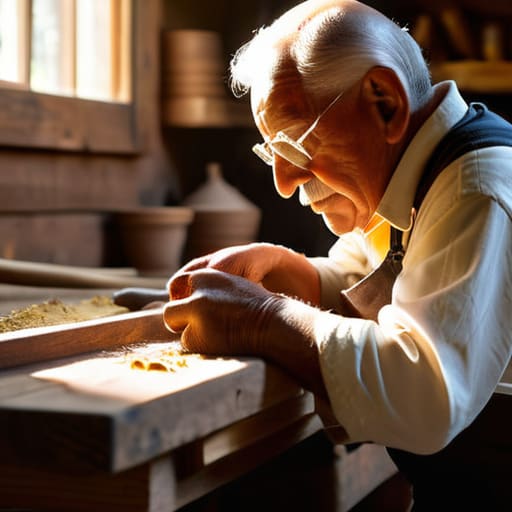
Standing Next to Someone Who Knows
I remember sitting in a dusty workshop in my early twenties, watching a master joiner spend forty minutes adjusting a single tenon that looked, to my untrained eye, perfectly fine. I thought he was wasting time; I thought the “skill” was just the ability to use the tools without cutting your fingers off. I was wrong. What I eventually realized is that what apprenticeship transmits isn’t a set of technical instructions or a checklist of competencies, but rather a specific kind of patience—the ability to sit with a mistake until it stops being a failure and starts being a lesson.
I’m not here to give you a sanitized, academic breakdown of vocational training or a list of industry-standard modules. Instead, I want to talk about the invisible stuff: the intuition, the failures, and the quiet decisions that happen when no one is looking. I’ll be sharing what I’ve learned from twenty years of making things, focusing on the hard-won wisdom that you can’t find in a textbook. We’re going to look at the reality of the craft, specifically the unspoken nuances that only come from watching someone else navigate the tension between a perfect plan and a piece of stubborn wood.
Understanding What Apprenticeship Transmits
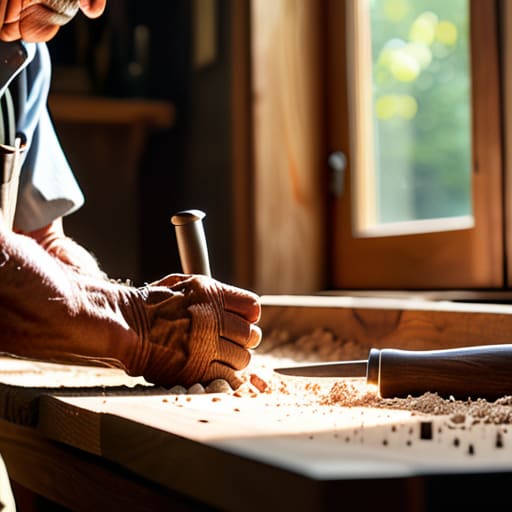
When I look at the stack of rejected chair legs in the corner of my studio—each one a testament to a failed curve or an over-extended grain—I realize that most of what is learned isn’t found in a manual. It’s found in the silence between a master’s instruction and their actual movement. This is the essence of the transfer of tacit knowledge. You can’t lecture someone into feeling the resistance of a chisel against walnut; they have to watch the way a seasoned hand compensates for a knot before they even acknowledge it exists. It is a language of micro-adjustments that no textbook can translate.
Beyond the physical mechanics, there is a subtle, almost invisible layer of workplace socialisation processes that defines the craft. An apprentice doesn’t just learn how to join wood; they learn the etiquette of the shop, the rhythm of the tools, and the unspoken respect for the material’s limits. It’s about absorbing a professional temperament. You aren’t just acquiring a skill set; you are inheriting a way of seeing the world through the lens of deliberate, disciplined decision-making.
Key Things to Know
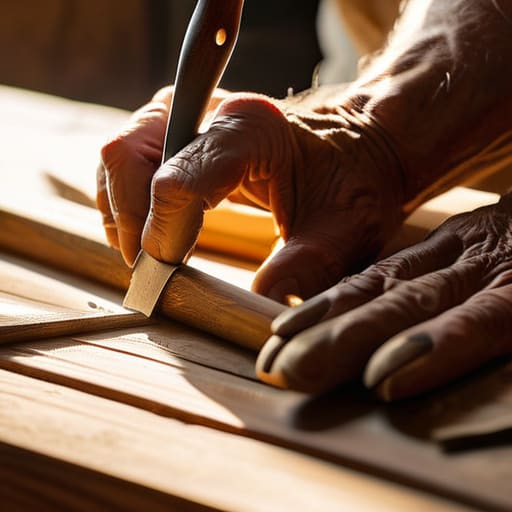
The thing about a workshop is that the most vital information isn’t in the manual; it’s in the silence between a master’s instruction and their action. When I sat in studios early in my career, I realized that vocational skill acquisition isn’t just about learning to cut a dovetail or sand a surface. It is about the transfer of tacit knowledge—those unwritten rules of tension, grain, and timing that you can’t find in a textbook. It’s the way a senior designer holds a chisel or the specific, subtle way they pause before making a cut that looks risky.
You also have to account for the subtle, often invisible, workplace socialisation processes that happen in these spaces. An apprenticeship isn’t just a technical boot camp; it is an immersion into a specific culture of accountability. You learn how to carry yourself when a mistake is made, how to respect the tools, and how to exist within a hierarchy without losing your own curiosity. It is less about the “how-to” and more about learning the rhythm of the trade itself.
Practical Tips and Steps
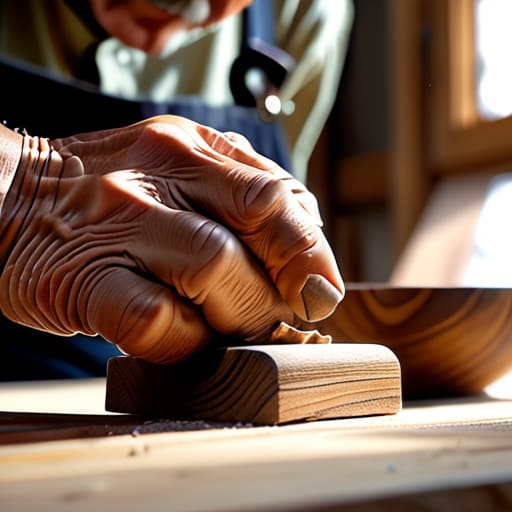
If you are looking to step into this kind of rhythm, don’t start by reading manuals; start by watching the hands. The real substance of vocational skill acquisition isn’t found in a syllabus, but in the way a mentor adjusts their grip when a blade begins to chatter or how they intuitively sense a change in the grain. My advice is to prioritize proximity. You need to be in the room where the mistakes happen. Don’t just ask “how” something is done; ask why they chose that specific angle or why they decided to stop sanding at a certain grit.
You also have to navigate the subtle currents of master-apprentice relationship dynamics. It can feel awkward, being the person who is constantly observing and occasionally failing, but you have to lean into that discomfort. I’ve found that the most effective way to learn is to volunteer for the “grunt work” that requires precision—the repetitive tasks that others find tedious. It is through this repetitive, physical engagement that you begin to absorb the transfer of tacit knowledge that no textbook could ever articulate. You aren’t just learning a craft; you are learning a way of seeing.
Common Mistakes to Avoid
The biggest pitfall I see—and I’ve felt it myself in my early years in the studio—is treating an apprenticeship like a technical manual. People often approach these years as a checklist of vocational skill acquisition, thinking that if they can replicate a dovetail or a specific joinery technique, they’ve “learned” the craft. But that’s just mimicry. The real danger is focusing so intently on the output that you miss the subtle transfer of tacit knowledge happening in the pauses. If you aren’t watching how a master handles a moment of failure, or how they adjust their grip when the grain resists, you’re just a very expensive photocopy machine.
Another mistake is misreading the master-apprentice relationship dynamics. There is a tendency to wait for permission to be curious, which can lead to a passive kind of learning that kills the spirit of the work. An apprenticeship isn’t a lecture; it’s an immersion. If you spend your time trying to be “correct” rather than trying to understand the why behind a specific, seemingly inefficient movement, you’ll leave the shop with a set of skills but no actual intuition. You end up knowing how to do the work, but you don’t know how to think through the work.
Final Thoughts
I often look at the stack of failed joinery and warped plywood in the corner of my studio—my graveyard of “almosts”—and realize that an apprenticeship isn’t actually about the blueprints. It is about the invisible stuff. We talk about vocational skill acquisition as if it’s a checklist of competencies, but it’s really about the transfer of tacit knowledge that happens in the quiet spaces between instructions. It’s the way a mentor pauses before making a cut, or the specific, heavy silence that follows a mistake. You can’t find that in a manual; you have to inhabit it.
Ultimately, the value lies in the nuance of the master-apprentice relationship dynamics. It is a slow, often frustrating process of absorbing a professional’s intuition until your own hands begin to recognize the same constraints. We aren’t just teaching someone how to build a chair; we are teaching them how to see the wood before the blade ever touches it. That is the real inheritance: the ability to make the right decision by knowing exactly which wrong ones to avoid.
The Invisible Curriculum
An apprenticeship isn’t about learning how to use a tool; it’s about inheriting the specific, quiet intuition of when to put that tool down. It’s the transmission of those thousand tiny, unrecorded corrections that happen between the blueprint and the finished piece—the wisdom of knowing exactly which mistakes are worth making and which ones will break the soul of the object.
Jonathan Marin
The Residual Weight of the Craft
Looking back at the mechanics of it all, an apprenticeship is never just about the technical checklist or the ability to operate a lathe without error. It is about the invisible inheritance—the way a mentor’s specific way of holding a chisel or their hesitation before a final cut becomes part of your own muscle memory. We’ve talked about the practical steps and the pitfalls of trying to rush the process, but the real takeaway is that you aren’t just learning a set of skills; you are absorbing a way of seeing. You are learning to recognize the moment a material is fighting you, and more importantly, you are learning the quiet discipline of restraint that prevents a novice mistake from becoming a permanent flaw.
In my own studio, I often look at my shelf of rejected prototypes—the ones that failed because I lacked the intuition to listen to the grain or the steel. An apprenticeship gives you the chance to learn from someone else’s failures before you have to pay the price with your own materials. It provides the foundation that allows you to eventually break the rules with intention rather than by accident. Ultimately, the most valuable thing passed down isn’t a technique you can find in a manual, but the internalized compass that tells you when a piece is truly finished. It is the wisdom of knowing that the most profound design decisions are often the ones we almost didn’t make.
