
Reviewing a Job a Week Later
I was sitting in my studio last Tuesday, staring at a walnut chair leg that had been rejected six months ago, and it hit me how much we lie to ourselves about the end of a project. Most people treat the final stage like a victory lap or a checklist of satisfied clients, but that’s just vanity. To me, the real work begins when the sawdust settles and the adrenaline fades. I don’t care about the polished portfolio shot; I care about the friction. When I sit down to figure out how I review a finished job, I’m not looking for what went right. I’m hunting for the moment where the design almost collapsed, or the specific decision that nearly sent the whole piece into the scrap heap.
I’m not here to give you a corporate post-mortem or a “five steps to success” template. Instead, I want to show you how to look at your work with a bit of necessary cruelty. I’ll share the process I use to dissect my own mistakes—not to beat myself up, but to find the pivot points that actually define a designer’s skill. We’re going to talk about the uncomfortable truths found in the scraps, because that is where the real learning lives.
The Ghost of the Alternative How I Review a Finished Job
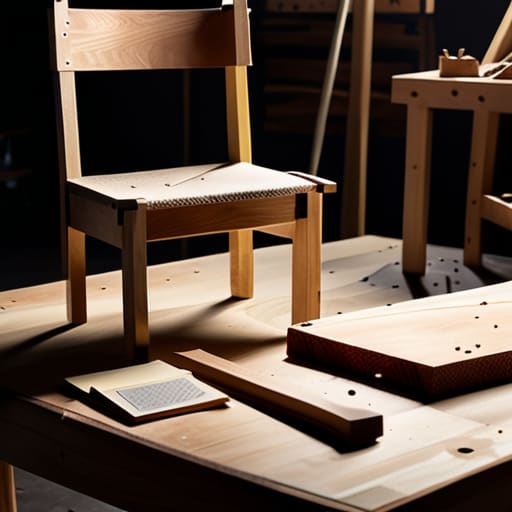
I don’t look at the final CAD drawing or the polished photograph for the portfolio. Instead, I go straight to my “graveyard”—that corner of the studio filled with the rejected prototypes, each one tagged with a handwritten note explaining its failure. To me, a proper post-mortem analysis technique isn’t about checking off a list of what went right; it’s about hunting for the moment of tension. I find myself circling back to the joint that almost failed or the timber species I nearly swapped for something cheaper. The real review happens when I confront the ghost of the alternative—the version of this chair that exists only because I made a specific, difficult choice.
This isn’t about ego; it’s about refining my internal compass. If I can’t pinpoint exactly where a decision nearly veered off course, I haven’t truly learned anything from the process. I look for the friction points, often identifying project bottlenecks that occurred not in the workshop, but in my own hesitation. By dissecting these near-misses, I ensure that the next time a similar constraint arises, I’m not just guessing—I’m deciding.
Hunting the Pivot Point Advanced Post Mortem Analysis Techniques
I don’t use a sterile, corporate project debrief checklist to tell me if a chair or a desk was a success. Those lists are for people who want to feel productive without actually feeling anything. Instead, I look for the friction. I go back to the sketches where the joinery felt too timid, or the wood species felt too loud. I’m looking for the moment where the design almost lost its soul to a production constraint. True post-mortem analysis techniques in a studio setting aren’t about spreadsheets; they are about locating the exact second a decision was made to prioritize ease over intent.
I also keep a close eye on the quiet drains—the small, repetitive errors that signal a need for better workflow optimization strategies. It isn’t about a grand failure, but rather the slow accumulation of minor inefficiencies that eat away at the creative energy. If I find myself fighting the same material quirk three times in a month, it’s a signal. I don’t just note the error; I mark it on my wall of rejected prototypes. I need to see the mistake to understand why the fix worked.
Where the Profit Leaked Measuring Project Profitability and Loss

It’s easy to get lost in the tactile satisfaction of a new chair or a perfectly set type block, but the ledger tells a much colder story. When I sit down to look at the numbers, I’m not looking for grand triumphs; I’m looking for the slow, quiet hemorrhage of time. I’ve learned that profitability isn’t usually lost in a single, catastrophic error, but in the incremental drift of a Tuesday afternoon spent tweaking a joint that was already functional. I keep a rough project debrief checklist, not to satisfy an accountant, but to figure out exactly where my hands moved faster than my brain, or where my brain stalled entirely.
I try to treat these figures as a form of identifying project bottlenecks rather than a moral judgment on my talent. If a production run of walnut side tables took twenty percent longer than the estimate, I don’t just shrug it off as “the nature of craft.” I look for the friction. Was it a specific tool that failed, or a decision-making loop that went nowhere? By measuring project profitability through this lens, I stop viewing money as a reward and start seeing it as a metric for how well I actually managed my own constraints.
The Friction Points Identifying Project Bottlenecks Before They Recur
I tend to look for the places where the momentum just… died. In furniture design, it’s rarely a catastrophic failure that ruins a timeline; it’s the slow, grinding friction of a drawing that won’t translate to a CNC machine, or a supplier who takes three days to answer a simple question about grain density. When I’m identifying project bottlenecks, I don’t look at the big milestones. I look at the gaps between them. I look at those quiet, frustrating hours spent staring at a CAD file because a joinery detail felt “off” but I couldn’t articulate why.
I’ve learned that these moments are where my workflow optimization strategies actually live or die. If I find myself repeatedly fighting the same technical hurdle—say, a specific type of hardware that always arrives slightly out of spec—it isn’t just a bad luck streak; it’s a systemic leak. I try to treat these friction points like my pile of rejected prototypes: they aren’t failures to be hidden, but data points to be labeled. If I can’t pinpoint exactly where the process snagged, I’m doomed to repeat the same mistake in the next production run.
The Rigor of Reflection My Essential Project Debrief Checklist
I don’t believe in grand, sweeping realizations that happen once a year during a retreat. Real growth is granular. It happens in the quiet, slightly uncomfortable moments when I sit down with a notebook and a cup of coffee to go through my personal project debrief checklist. I’ve learned that if you don’t codify your self-interrogation, you’ll just repeat the same aesthetic or mechanical errors under the guise of “intuition.”
My process isn’t about celebrating a win; it’s about interrogating the mechanics of how we got there. I look at the delta between my initial sketches and the final production run, specifically looking for where the design was compromised by a lack of foresight. This isn’t just about the chair’s joinery; it’s about workflow optimization strategies that actually stick. I ask: Did the material delay happen because of the supplier, or because I waited too long to pull the trigger? Did the assembly take twice as long because I was too precious about a detail that ultimately didn’t serve the silhouette? You have to be willing to be your own harshest critic before the market does it for you.
Refining the Machine Workflow Optimization Strategies for Better Outcomes
Optimization isn’t about finding a magic software or a faster way to draw a CAD model; it’s about the quiet, often painful work of adjusting the gears. When I look back at my notes, I’m not just looking for what broke, but for the patterns in how I broke it. If I see the same delay appearing across three different commissions, it’s no longer a fluke; it’s a systemic failure. True workflow optimization strategies shouldn’t feel like corporate restructuring. Instead, they should feel like tuning a piece of machinery—tightening a bolt here, oiling a joint there—until the friction between my intent and the final physical object begins to dissolve.
I’ve learned that you can’t fix what you haven’t quantified. I try to move past vague feelings of “that was a hard month” and toward something more concrete. By integrating specific performance metrics for freelancers into my routine, I can see exactly where my time is being eaten by indecision or poorly defined client briefs. It’s about turning those messy, human errors into data points that actually inform the next build.
Beyond the Surface Performance Metrics for Freelancers Who Care
Most people in this industry treat performance metrics like a tax audit—something to be endured and then promptly forgotten. They look at the bank balance, see a number, and call it a success. But if I only look at the final invoice, I’m missing the structural integrity of my own career. To me, true performance isn’t just about the surplus at the end of the month; it’s about the relationship between effort and outcome. I’ve learned to track the ratio of “deep design time” versus “administrative friction.” If a project was profitable but left me feeling like I spent more time chasing signatures than refining joinery, that’s a failure of the system, not a success of the sale.
This is where I move past simple bookkeeping and into more nuanced performance metrics for freelancers. I look for the delta between my estimated hours and the actual exhaustion levels recorded in my journal. It’s a qualitative measure of sustainability. By integrating these observations into my broader post-mortem analysis techniques, I can see if I’m actually getting better at my craft or if I’m just getting faster at making the same mistakes.
## The Anatomy of a Near Miss
I don’t look at the final piece to see if it works; I look at the scrap pile to see where I almost failed. A successful project isn’t just a clean delivery—it’s the documented history of every wrong turn I managed to steer clear of at the last possible second.
Jonathan Marin
The Residue of the Work
Looking back through these layers—the financial leaks, the friction in the workflow, and that nagging ghost of the decision I almost didn’t make—it becomes clear that a project isn’t actually “done” when the client signs the check or the last piece of timber is sanded. The real work happens in the quiet, uncomfortable space of the post-mortem. It is about more than just optimizing a spreadsheet or tightening a production timeline; it is about interrogating the gap between what I intended to build and what actually arrived in the world. By documenting these pivots and failures, I am not just archiving a job; I am building a library of lessons that ensures the next piece of furniture is more than just a product—it is an evolution.
I often find myself in my studio, surrounded by those labeled, rejected prototypes, and I realize they aren’t failures at all. They are the most honest parts of my process. If we only celebrate the seamless finish and the profitable margin, we miss the very thing that makes us craftsmen: the ability to learn from the near-misses. Don’t just move on to the next commission because the momentum feels good. Stop. Look at the wreckage of the choices you didn’t take. That is where the real design lives.
