
Looking at Other People’s Work
I was sitting in my studio last Tuesday, staring at a pile of rejected chair legs—each one marked with a handwritten note explaining why the joinery failed or the curve felt wrong—when I realized I was doing it again. I had spent forty minutes scrolling through a designer’s feed, comparing my messy, sawdust-covered reality to their curated, high-gloss finish. We’re constantly told that inspiration is the fuel for creativity, but that’s a lie designed to sell lifestyle magazines. In reality, most of the advice on how to handle comparison with other makers sounds like a hollow pep talk from someone who has never actually had to fight a piece of stubborn walnut into submission.
I’m not here to tell you to “just focus on your own journey” or some other digestible platitude. Instead, I want to talk about the utility of the near-miss. I’m going to share what twenty years of production lines and failed prototypes have taught me about distinguishing between genuine technical benchmarks and the poisonous, superficial envy that kills productivity. We are going to look at how to turn that friction into something useful, because the most important part of your work isn’t how it looks next to theirs; it’s the decisions you made when things almost went completely sideways.
The Glitch in the Gallery How to Handle Comparison With Other Makers

I spent a decade thinking that if I could just replicate the seamless joinery or the effortless patina I saw on Instagram, I’d finally “arrive.” But there is a specific kind of sickness in scrolling through a curated feed of finished triumphs; it’s a digital hall of mirrors that ignores the sawdust and the failed glue-ups. This is where the social media impact on creativity becomes visceral. You aren’t comparing your process to theirs—you are comparing your messy, middle-stage reality to their polished, final-stage lie. It creates a distorted lens where your own progress feels stagnant simply because it isn’t performative.
To survive this, I’ve had to learn the discipline of looking inward rather than outward. Instead of measuring my worth against a peer’s success, I try to focus on the delta between who I was last year and who I am today. It’s about focusing on personal growth within the constraints of my own studio, not chasing a phantom standard of perfection. When that familiar sting of inadequacy hits, I remind myself that their “perfect” piece likely had ten discarded versions sitting in a bin just like mine.
The Perfection Trap and the Social Media Impact on Creativity
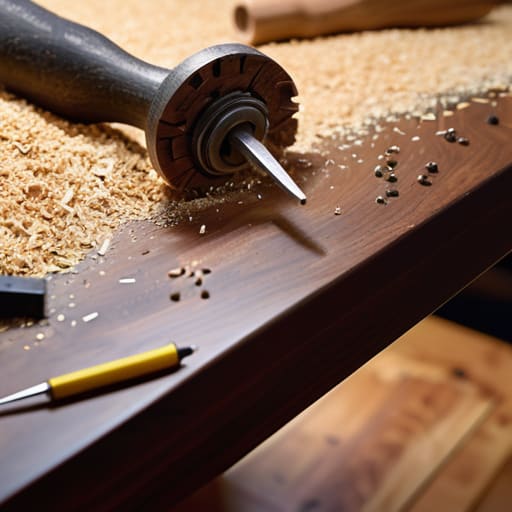
The problem with the digital feed is that it presents a curated lie. We see the finished, high-gloss walnut table or the perfectly set letterpress run, but we never see the three failed joinery attempts or the ink-stained floor that preceded it. This constant exposure to others’ highlights creates a skewed reality, fueling a specific kind of imposter syndrome in makers that feels impossible to shake. You start to believe your process is broken simply because it looks messy, forgetting that a clean feed is often just a mask for a thousand discarded failures.
When we mistake a polished Instagram grid for a standard of production, we fall straight into the perfection trap. This is where the real danger of creative burnout and comparison sets in; you stop designing for the joy of the constraint and start designing for the approval of the algorithm. I’ve spent many late nights in my studio staring at a prototype I hated, not because the design was flawed, but because it didn’t look “correct” compared to a thumbnail on a screen. We have to remember that true craftsmanship is found in the struggle, not in the seamless transition from idea to image.
Wrestling With the Ghost Defeating Imposter Syndrome in Makers
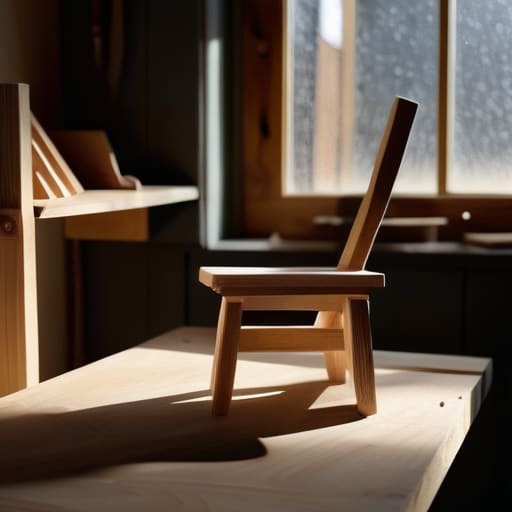
I have a shelf in my studio dedicated to the “almosts”—the chairs with legs that were too spindly, the joinery that felt dishonest, the prototypes that simply failed to hold their own weight. I keep them because they remind me that competence isn’t a straight line; it’s a series of corrections. When you’re staring at a peer’s flawless finish, it’s easy to let imposter syndrome in makers settle into your bones like a damp chill. You start to feel like a fraud, convinced that your process is just a collection of lucky accidents rather than intentional design.
But the truth is, that feeling usually stems from a misunderstanding of what we are actually seeing. We compare our internal, messy workshop to someone else’s curated showroom. To combat this, I’ve found that building creative confidence requires a shift in how we view our own failures. Instead of seeing a mistake as evidence of inadequacy, I try to see it as the necessary friction that refines a concept. If you spend all your energy trying to mimic a finished result, you’ll find yourself sliding straight into creative burnout and comparison, losing the very tactile curiosity that made you pick up the tools in the first place.
When the Fire Goes Cold Navigating Creative Burnout and Comparison
There is a specific kind of silence that settles in a studio when the momentum simply vanishes. It isn’t the peaceful quiet of a focused afternoon; it’s the heavy, hollow stillness that comes with creative burnout and comparison. You look at your workbench—at the half-finished joinery or the dried ink on a letterpress tray—and instead of seeing a challenge, you see a failure. You start measuring your exhaustion against the curated, high-velocity output of everyone else on your feed, and suddenly, your own pace feels like a defect.
The mistake we make is thinking that we can think our way out of this slump. We try to force the spark back by staring harder at the problem, but that only deepens the resentment. I’ve learned that navigating this void requires a radical shift in perspective. Instead of trying to reclaim the lost fire, I try to focus on the mechanics of the work itself—the tactile, mindless repetition of sanding or cleaning tools. It’s about building creative confidence through small, low-stakes victories rather than waiting for a grand epiphany that might not come today.
The Elegance of the Error Building Creative Confidence
I spent a decade thinking that confidence was something you earned once you finally stopped making mistakes. I used to look at a finished chair—something sleek, balanced, and structurally sound—and feel like a fraud because I couldn’t forget the three failed iterations that ended up in my “reject” bin. But lately, I’ve realized that building creative confidence isn’t about reaching a state of flawlessness; it’s about changing your relationship with the friction. It’s about looking at a botched joinery cut or a failed glaze and seeing it as a data point rather than a character flaw.
When you stop viewing every deviation from the plan as a failure, you stop fighting the process. This shift is essential for anyone trying to maintain a healthy mindset for creative entrepreneurs, where the pressure to perform can often feel suffocating. Real confidence comes from knowing that even when a project veers off course, you have the technical vocabulary to steer it back. It’s the quiet realization that your value doesn’t lie in the absence of errors, but in your ability to negotiate with them.
Choosing Your Own Path a Mindset for Creative Entrepreneurs
I’ve spent enough years in the studio to know that the most dangerous thing a maker can do is try to build a business that looks like someone else’s catalog. When you start treating your craft like a race against a digital scoreboard, you lose the very thing that made you pick up a chisel or a drafting pen in the first place. A sustainable mindset for creative entrepreneurs isn’t about scaling at all costs; it’s about deciding which constraints actually serve your vision and which ones are just borrowed from a competitor.
I keep a shelf in the back of my workshop filled with “failures”—joints that were too loose, wood that was too brittle, or silhouettes that just felt wrong. Looking at them doesn’t make me feel like a fraud; it reminds me that my process is a series of specific, intentional choices. Instead of measuring your output against a curated feed, try focusing on personal growth through the lens of your own technical evolution. If your joinery is tighter today than it was last year, you’ve won. Everything else is just noise.
The Mastery of Self the Art of Focusing on Personal Growth
I’ve spent a lot of time staring at my “graveyard”—that corner of the studio filled with the prototypes that didn’t make the cut. Each one has a handwritten note taped to it: too heavy, joint failed, aesthetic drift. In my early years, I looked at those failures as evidence of inadequacy. Now, I see them as the only honest metric of progress. The real work isn’t in matching the output of a peer whose studio is twice the size of mine; it’s in the quiet, incremental shift from last year’s mistakes to this year’s solutions.
True mastery isn’t a destination where you finally stop feeling like a fraud; it’s the disciplined practice of focusing on personal growth over external validation. When I find myself spiraling into the noise of what everyone else is achieving, I pull myself back to the workbench. I ask myself: Am I better at this joinery than I was six months ago? That is the only benchmark that matters. By treating my development as a series of deliberate, iterative choices, I find that building creative confidence becomes less about ego and more about the steady, reliable accumulation of solved problems.
## The Ghost in the Grain
Comparison is a thief that steals the context from your work; you are measuring your messy, mid-process reality against someone else’s polished, final curation, forgetting that their greatest triumphs were built on the same pile of rejected prototypes that you’re currently trying to hide.
Jonathan Marin
The Final Grain
We have spent a lot of time looking at the shadows cast by other people’s successes, but the truth is that comparison is a thief of the very focus required to actually finish a thing. Whether you are battling the curated illusions of social media, the sudden chill of burnout, or that nagging feeling that you are merely a fraud in a workshop, the remedy remains the same: turn your gaze inward. It is about recognizing that your growth isn’t a race against a peer’s polished finish, but a constant negotiation with your own constraints. We have to stop treating our creative process like a public exhibition and start treating it like the quiet, iterative labor it actually is.
As I look at the stacks of rejected prototypes in my studio—each one a testament to a choice I didn’t make—I am reminded that perfection is a static, lifeless goal. A finished piece of furniture only breathes because of the tension between what was intended and what the material allowed. So, let the others have their seamless, effortless narratives. I would much rather inhabit the messy, beautiful reality of my own near-misses and hard-won decisions. Keep your eyes on your own workbench, trust the friction of your specific process, and remember that the most compelling work usually comes from the decisions that nearly went the other way.
