
A Quote With a Contingency in It
I was staring at a stack of rejected walnut joinery prototypes last Tuesday—the ones where the tenon was just a hair too proud—when it hit me how much we lie to ourselves about the math of creativity. Most people think learning how to quote a commission is about mastering a spreadsheet or finding a magic formula that balances your dignity against your rent. They treat it like a clinical science, a sterile calculation of hours multiplied by a rate. But after twenty years of moving between custom studios and mass production lines, I’ve learned that a quote isn’t a math problem; it’s a negotiation with uncertainty.
I’m not here to give you a template or a lecture on “transparency” that sounds like it was written by a corporate lawyer. Instead, I want to talk about the friction—the messy, unquantifiable space between a client’s vague dream and the actual physical constraints of the material. I’m going to show you how to price the decisions that almost went the other way, because that is where the real work lives. We’ll look at how to build a quote that protects your craft without strangling the soul out of the project.
The Ghost of the Low Bid Why Accuracy Matters

There is a specific kind of dread that settles in your gut when you see a competitor’s price drop significantly below yours. I call it the ghost of the low bid. In my early years, I used to chase that ghost, thinking that if I just trimmed my margins or ignored the cost of a few failed prototypes, I could win the contract. But a low bid isn’t a strategy; it’s a slow-motion collision with reality. When you undervalue the work, you aren’t just losing money; you are eroding the integrity of the design itself.
If you rely on sloppy project estimation techniques, you aren’t being competitive—you’re being reckless. I’ve learned that accuracy in a quote is actually a form of respect for the client. By meticulously calculating labor costs and the inevitable “pivot points” in a build, you provide them with a stable foundation. When you lean into value-based pricing strategies instead of a race to the bottom, you stop selling hours and start selling the certainty that the object will actually exist.
The Pivot Point Mastering How to Quote a Commission
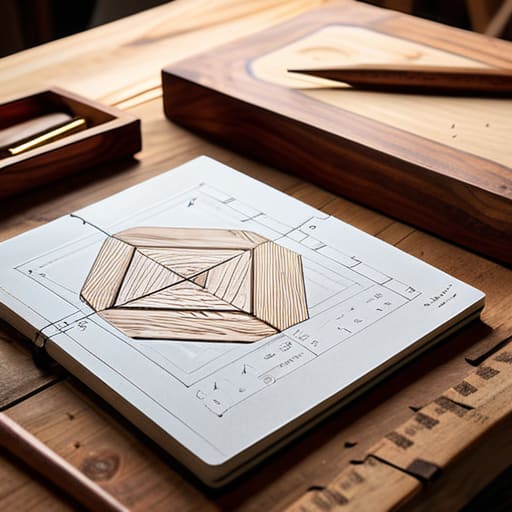
When I sit down at my drafting table, I’m not just thinking about the joinery or the grain of the walnut; I’m thinking about the math that keeps the lights on. Most people approach this by looking at a spreadsheet, but I’ve learned that true project estimation techniques require a bit more intuition. You have to account for the “unknown unknowns”—the moment a piece of timber splits or a client changes their mind about a finish halfway through. If you only account for the visible work, you aren’t pricing a project; you’re subsidizing a hobby.
I used to lean heavily on standard freelance pricing models, essentially a math equation of hours times a rate. It felt safe. But I realized that wasn’t capturing the weight of my experience. Now, I lean toward value-based pricing strategies. I’m not just selling you a chair; I’m selling you the twenty years of mistakes I’ve tucked away in my studio to ensure this specific piece succeeds. You aren’t paying for my time; you are paying for the decisions I didn’t have to make twice.
Calculating Labor Costs the Math You Almost Ignored
For a long time, I treated my time like an infinite resource, a common mistake when you’re more enamored with the grain of walnut than the reality of overhead. I used to glance at a sketch, estimate a few days of work, and call it a day. It was a naive approach to calculating labor costs, one that ignored the invisible hours spent sourcing hardware or the mental fatigue of a design pivot. I almost stayed on that path, thinking that a simple hourly rate was the only honest way to work, but I realized that doesn’t account for the intellectual friction that happens between the first sketch and the final prototype.
The math gets messy when you realize that “work” isn’t just the time your hands are moving; it’s the time your brain is solving problems you haven’t even encountered yet. Relying on crude project estimation techniques often leads to a situation where you aren’t just working for free—you’re actually paying for the privilege of being used. I’ve learned that a quote must reflect the weight of the expertise required to make the right decisions, not just the clock time spent executing them.
Choosing Freelance Pricing Models That Actually Stick
I have a shelf in my studio dedicated to the “almosts”—the chair legs that were too thin, the joinery that felt dishonest. In the same way, your choice of freelance pricing models often feels like a choice between two equally imperfect paths. I used to lean heavily on hourly billing, thinking it was the most “honest” way to account for my time. But I quickly learned that billing by the hour actually punishes efficiency. If I solve a complex structural problem in twenty minutes because I’ve spent twenty years learning how to see it, I shouldn’t be penalized for my expertise.
Instead, I’ve moved toward value-based pricing strategies, where the quote reflects the weight of the problem being solved rather than the minutes spent sitting at a drafting table. It’s a shift from selling time to selling certainty. When I sit down with a new client, I’m no longer just calculating labor costs; I’m negotiating the scope of the outcome. This requires much more rigorous project estimation techniques upfront, but it prevents that hollow feeling of working for free because a “quick” sketch turned into a three-day structural investigation.
Value Based Pricing Strategies the Decision That Changes Everything
There is a specific kind of vertigo that sets in when you stop looking at the clock and start looking at the impact. In my early years, I lived by the hour, measuring my worth by the steady drip of time spent sanding or sketching. It felt safe, but it was a trap. When you rely solely on calculating labor costs, you are essentially telling the client that your value is capped by your physical stamina. If you solve a problem in ten minutes that would have taken a novice ten hours, the hourly model punishes your expertise.
I eventually learned to pivot toward value-based pricing strategies, which felt like a betrayal of my training at first. It felt like cheating. But design isn’t just the assembly of parts; it’s the mitigation of risk. When I quote a project now, I’m not just pricing the wood or the CAD hours; I am pricing the certainty that the piece won’t fail, that it fits the space, and that it solves the client’s problem. You aren’t selling a commodity; you are selling the resolution of a tension. That shift in perspective is the most difficult, yet most rewarding, decision a designer can make.
Refining Project Estimation Techniques Before the Reveal
There is a specific kind of anxiety that settles in the hour before you hit ‘send’ on a formal proposal. I’ve spent many of those hours staring at my workbench, surrounded by the skeletal remains of chairs that failed because I misjudged a joinery detail or a material cost. It’s easy to treat project estimation techniques as a mere administrative chore, but in reality, they are the final defense against the erosion of your craft. If your numbers are soft, your design work will eventually follow suit.
I used to rely on gut feeling, which is just a polite way of saying I was guessing. Now, I treat the estimation phase like a prototype. I look for the friction points—the places where a client’s “small tweak” might derail the entire timeline. Before I ever touch a set of client contract templates, I run the numbers through a stress test. I ask myself: what happens if this timber arrives warped, or if the CAD revisions triple? You aren’t just presenting a price; you are presenting the boundaries of your professional sanity.
Securing the Win With Service Agreement Terms
I have a drawer in my studio filled with bent plywood that failed because the grain was too aggressive for the radius. It’s a physical record of a wrong turn. I think of service agreement terms in much the same way—they aren’t just legal boilerplate meant to frighten people; they are the guardrails that prevent a project from veering into the woods. When I’m drafting a contract, I’m not just looking for a signature; I’m looking to define the exact moment where a “slight adjustment” becomes a complete redesign.
Most people treat the contract as an afterthought, something to be rushed through once the pricing is settled. But if your project estimation techniques were sound, the contract should simply be the formalization of the boundaries you already built. I’ve learned that the most successful collaborations happen when the terms explicitly outline what happens when the client asks for “just one more thing.” By defining the scope of revisions and the weight of change orders upfront, you aren’t being difficult; you are protecting the integrity of the work—and your own sanity.
The Cost of the Unseen
A quote isn’t just a calculation of timber and hours; it’s an admission of the weight of the decisions you’ll have to carry once the work begins. If you only price the materials, you’re selling a commodity; if you price the tension between the solution you chose and the one you discarded, you’re finally selling your craft.
Jonathan Marin
The Final Measure
At the end of the day, quoting a commission isn’t just an exercise in arithmetic or a defensive maneuver against scope creep. It is the culmination of everything we’ve discussed: from the granular reality of labor costs and the structural safety of a solid service agreement, to the high-stakes shift toward value-based pricing. We’ve moved past the fear of the low bid and into the territory of intentionality. When you present a number, you aren’t just asking for a fee; you are documenting the weight of every technical constraint and every creative pivot that brought the project to life. A quote is, ultimately, the first physical manifestation of your professional boundaries.
I often look at the pile of rejected prototypes in my studio—the chairs with the wrong joinery or the tables that felt too heavy—and I realize that the price of my current work is built on the lessons learned from those failures. Don’t be afraid of the tension that a rigorous quote might create with a client. That tension is often where the respect begins. If you price your work with the same precision you use to select a timber or a typeface, you stop being a vendor and start being a partner. Trust the decisions you almost didn’t make, because they are exactly what make your expertise worth the investment.
