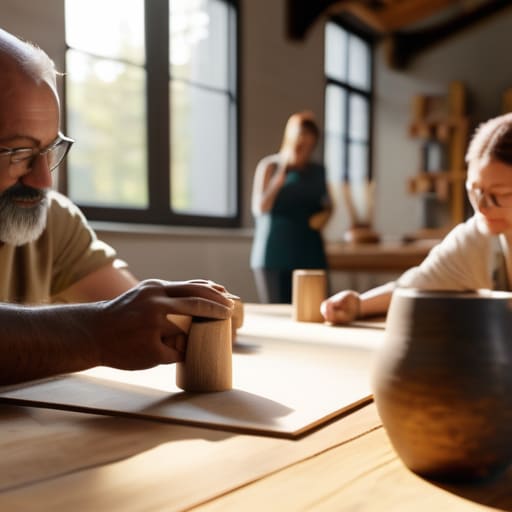
A Course That Sends People Home With Something
I spent the better part of a decade watching “facilitators” drown their sessions in expensive, color-coded sticky notes and over-engineered icebreakers that felt more like hostage negotiations than creative exercises. There is this pervasive, exhausting myth that if you just buy enough high-end stationery and follow a rigid, pre-packaged curriculum, you’ve mastered how to run a workshop course. It’s a lie. In my studio, when a joint doesn’t seat correctly or a prototype fails, you don’t hide it under a layer of expensive veneer; you look at the failure point. A workshop is no different. If you are leaning on a heavy syllabus to mask a lack of direction, you aren’t teaching—you’re just managing a schedule.
I’m not here to sell you on a “transformative journey” or a suite of productivity hacks. What I want to do is talk about the friction. I want to share the messy, unpolished reality of what actually happens when you step away from the slide decks and start designing for the people in the room. I’ll show you how to build a structure that survives the inevitable chaos, focusing on the specific, high-stakes decisions that determine whether a group actually creates something or just looks busy.
The Ghost of the Rejected Curriculum Refined Workshop Curriculum Design
I have a shelf in my studio dedicated to the “almosts”—the chair legs that were too thin, the joinery that failed the stress test, the wood grains that refused to cooperate. I approach workshop curriculum design with that same graveyard of failed ideas in mind. When I sit down to map out a course, I don’t just look at the final syllabus; I look at the modules I aggressively cut. I used to try and pack every theory and technique into a single afternoon, thinking more was better. But a curriculum shouldn’t be an accumulation of facts; it should be a carefully pruned path that leaves room for the participants to actually breathe and create.
The mistake most people make is building a curriculum that is too rigid to survive contact with a real human being. If your plan doesn’t have “dead space” built in, you aren’t designing a learning experience, you’re designing a lecture. I’ve learned that the most effective way of engaging workshop participants is to provide a framework that is sturdy enough to hold weight, but flexible enough to pivot when a group discovers a better way to solve a problem. A good curriculum isn’t a script; it’s a set of intentional constraints.
Choosing the Wrong Room the Weight of Workshop Venue Selection
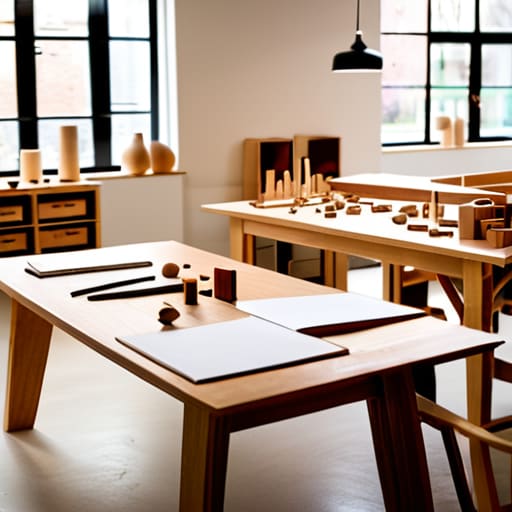
I have a small graveyard of failed prototypes in the corner of my studio—joints that were too loose, wood that was too brittle, decisions that simply didn’t hold weight. I’ve realized that a workshop venue can be much the same. You can have the most brilliant workshop curriculum design in the world, but if you tuck your participants into a windowless basement with fluorescent lighting that hums like a dying insect, you have already lost. I once ran a session in a space so cramped that people were literally bumping elbows during the breakout exercises; the physical friction became a psychological barrier, and I spent the rest of the day fighting the room rather than the material.
Selecting a space isn’t just about square footage or coffee service; it is about the invisible architecture of focus. When I approach workshop venue selection, I look for the “give” in a room—how the light shifts, how the acoustics swallow a voice, and whether the layout allows for a natural flow of movement. A room that feels restrictive will inevitably produce restrictive thinking. If the environment doesn’t breathe, your participants won’t either.
The Pivot That Saved the Session How to Run a Workshop Course

I remember a session three years ago where the energy didn’t just dip; it flatlined. I had spent weeks obsessing over the workshop curriculum design, convinced that a rigid, hour-by-hour schedule was the only way to maintain authority. But as I watched the participants staring blankly at their notebooks, I realized I wasn’t teaching; I was performing a monologue. I had to make a choice: stick to the script and finish on time, or scrap the final module entirely to address the tension in the room.
I chose the latter. We abandoned the slides and moved to the floor, turning the theoretical exercise into a tactile, hands-on problem. It was a messy, unscripted pivot, but it was the exact moment I actually began engaging workshop participants rather than just managing them. That’s the reality of the work. You can prepare every logistics checklist and map out every minute, but the true skill isn’t in the execution of the plan—it’s in the courage to abandon it when the room tells you it isn’t working.
Silencing the Room Mastering Facilitation Techniques for Educators
I have a shelf in my studio dedicated to failed joints—tenons that were too loose, dovetails that split under the slightest pressure. In a workshop setting, the “failed joint” is the silence that follows a question you thought was profound. It’s heavy, awkward, and usually a sign that your facilitation has drifted into a lecture. I’ve learned that the most effective facilitation techniques for educators aren’t about filling that silence with more talking; they are about having the discipline to let it sit. You have to resist the urge to rescue the room. When you jump in too early to bridge the gap, you inadvertently signal that the participants don’t need to do the heavy lifting.
True mastery lies in the tension between structure and spontaneity. It is easy to follow a rigid plan, but engaging workshop participants requires you to read the micro-expressions in the room—the squint of a brow or the leaned-in posture of someone about to speak. If you are too wedded to your script, you miss the organic moment where the real learning happens. I’ve found that the best sessions feel less like a guided tour and more like a carefully managed conversation.
The Chaos I Almost Embraced a Workshop Logistics Checklist
I have a shelf in my studio filled with failed joinery—tenons that were too loose, dovetails that split under the slightest pressure. They are reminders that precision isn’t just about the final product, but the discipline of the preparation. I used to think running a session was about the charisma of the speaker, but I’ve learned it’s actually about the invisible architecture of the room. I nearly walked into my last seminar without a proper workshop logistics checklist, thinking I could wing the technical setup through sheer force of personality. That was a mistake.
The reality is that when a projector fails or a specific handout is missing, the intellectual thread of your workshop curriculum design snaps instantly. You can have the most brilliant facilitation techniques for educators in the world, but they mean nothing if you are fumbling with a broken HDMI cable while twenty people stare at you in silence. To keep engaging workshop participants, you have to automate the mundane. You need to account for the coffee, the lighting, and the physical flow of the space long before the first person walks through the door. Only when the logistics are invisible can the actual work begin.
The Spark That Nearly Faltered Engaging Workshop Participants
I have a shelf in my studio dedicated to the “almosts”—the chair legs that were too spindly, the joinery that failed the stress test. In the context of teaching, I find that the most profound moments of engagement often stem from the exact moment I nearly lost the room. There is a specific, terrifying silence that occurs when a group realizes the material is challenging them, and my instinct is often to retreat into a lecture to regain control. But true connection happens when you lean into that tension rather than smoothing it over.
When I am engaging workshop participants, I’ve learned that the most effective way to spark interest isn’t through a polished presentation, but through shared vulnerability. I once nearly pivoted to a standard slide deck when I saw the glazed eyes of my students, but instead, I decided to break the tools and start a live, messy demonstration. It was a gamble that moved us from passive listening to active problem-solving. Ultimately, measuring workshop effectiveness isn’t about how many questions were answered, but about how many people stayed in the room after the formal session ended.
The Metric That Almost Missed the Mark Measuring Workshop Effectiveness
I used to think a successful session was measured by the silence of a focused room or the frantic scribbling of notes. In my early days of furniture design, a successful prototype was one that didn’t break under stress; I applied that same rigid logic to my teaching. I would look at my post-workshop evaluations and hunt for high scores, treating them like a structural load test. But I realized I was measuring the wrong thing. A participant can give you a glowing review simply because they enjoyed the coffee or the workshop venue selection, while completely failing to grasp the core concept.
The real data isn’t in the polite feedback forms; it’s in the friction. I started looking for the moments where the initial plan failed and the participants had to actually wrestle with the material. True measuring workshop effectiveness isn’t about confirming that everyone had a good time; it’s about identifying whether the tension we built into the curriculum actually forced a shift in perspective. If there wasn’t a moment where the easy answer was rejected, I suspect the lesson didn’t actually take hold.
The Friction of the Plan
A workshop isn’t a lecture delivered to a passive audience; it’s a piece of furniture you’re building in real-time with a room full of people. If you stick too rigidly to the blueprint, you’ll end up with something structurally sound but utterly lifeless. The real magic happens in those moments when you feel the tension between your prepared curriculum and the actual energy in the room, and you choose to follow the friction instead of the script.
Jonathan Marin
The Beauty of the Near-Miss
Looking back at the wreckage of my earlier sessions—the wrong rooms, the rigid curricula that choked the life out of the room, and the logistical nightmares that nearly derailed my composure—I realize that a successful workshop isn’t a choreographed performance. It is a series of calculated recoveries. We’ve talked about the logistics, the facilitation, and the metrics, but none of those things matter if you aren’t prepared to abandon your plan the moment the room shifts. The most effective workshops are built on the tension between rigorous preparation and the willingness to be interrupted by the very people you are trying to teach.
In my studio, I keep a drawer full of failed chair prototypes, each one a monument to a decision that didn’t quite land. I’ve come to view my workshops the same way. Don’t aim for a flawless execution that leaves no room for error; aim for a session where the pivots feel intentional. The real magic doesn’t happen in the slides or the handouts, but in that split second where you realize the plan is failing and you choose to lean into the chaos instead. That is where the actual learning lives.
