
A Commission for Someone You Never Meet
I still remember the smell of sawdust and stale coffee in my studio back in 2008, staring at a set of blueprints for a dining table that was destined for a client three states away. I had this frantic, sinking feeling in my gut that I was about to make a massive mistake by agreeing to it. There is this pervasive, polished myth in our industry that if you just buy the right project management software or use a specific high-end CAD plugin, you’ve mastered the art of remote work. It’s nonsense. The truth about how to handle commissions from a distance isn’t found in a subscription service; it’s found in the messy, unglamorous logistics of managing expectations when you can’t physically hand someone a sample of the wood grain.
I’m not here to sell you on a streamlined digital workflow that promises to automate your creativity. Instead, I want to talk about the friction points—the actual, tactile hurdles that occur when your hands are in one place and the client’s eyes are in another. I’ll be sharing the hard-won lessons from my twenty years of making things, focusing on the specific pivots that saved my projects from falling apart. This is about building a process that survives the distance, not just one that looks good on a portfolio.
The Pivot Point Learning How to Handle Commissions From a Distance
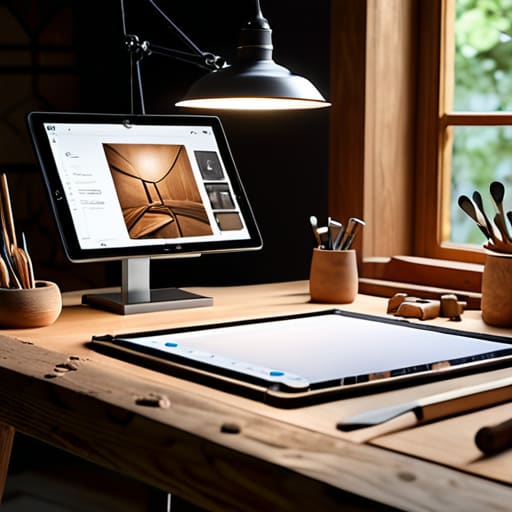
For a long time, I operated on the assumption that if I couldn’t touch the material or see the client’s face across a workbench, the project was inherently compromised. I used to view distance as a barrier to quality, a friction point that inevitably led to misunderstandings. But I eventually realized that the tension between my studio and a client three time zones away isn’t a flaw; it’s a design constraint. I had to stop treating remote work as a secondary, “lesser” version of my practice and instead build a dedicated online art commission workflow that accounted for that gap.
The shift happened when I stopped relying on vague email threads and started treating my digital proofing process with the same rigor I apply to a physical prototype. It’s about moving from “I think this looks right” to “here is exactly how the grain interacts with the light.” By formalizing how I share progress, I’m not just showing work; I’m managing client expectations remotely before they have a chance to drift. It turns out that clarity is the only thing that travels better than a shipping crate.
The Ghost in the Machine Refining Your Online Art Commission Workflow
There is a specific kind of anxiety that sets in when you realize the person paying for your work is a thousand miles away, staring at a glowing screen instead of sitting across a workbench from you. In my early years, I relied on gut feeling and physical presence, but that doesn’t scale. I had to build a digital proofing process that felt less like a technical hand-off and more like a shared conversation. It’s about creating a rhythm where the client feels the weight of the decisions being made, even if they can’t touch the material.
The real danger in a remote setup isn’t the distance; it’s the silence. If you aren’t intentional, the gap between “concept” and “completion” becomes a void where doubt grows. I’ve learned that managing client expectations remotely requires a level of granular transparency that feels almost excessive at first. You have to over-communicate the small things—the texture of a finish, the slight shift in a grain—before they become “surprises” upon delivery. It’s not about being a project manager; it’s about ensuring the vision doesn’t get lost in the digital static.
The Close Call Managing Client Expectations Remotely Before They Shift
I remember a particular chair commission from three years ago that nearly ended in a very expensive misunderstanding. The client was in Seattle, I was in my studio, and we were communicating almost entirely through grainy photos and vague adjectives. I had interpreted “warm oak” as a light, honeyed finish, while they were envisioning something much deeper, almost amber. We were drifting toward a finished product that neither of us actually wanted, simply because I hadn’t been aggressive enough with the digital proofing process.
It taught me that managing client expectations remotely isn’t about being polite; it’s about being relentlessly clear. You cannot rely on the “vibe” of an email thread to carry the weight of a physical object. Now, I treat every milestone like a checkpoint in a design review. I send high-resolution, side-by-side comparisons of finishes and scale models before a single piece of timber is cut. It’s a bit more work upfront, but it prevents that sinking feeling of realizing you’ve spent forty hours building a mistake that is currently halfway across the country.
The Frictionless Exchange Choosing Secure Payment Methods for Artists
I remember a time, early in my studio years, when I’d accept a deposit via a messy mix of wire transfers and personal apps. It felt informal, almost tactile, but it was a logistical nightmare that left me staring at my ledger with a headache. Now, I view the financial handoff as a structural component of the work itself. Selecting secure payment methods for artists isn’t just about avoiding fraud; it’s about establishing a professional boundary that respects both my time and the client’s investment. When the money moves cleanly, the creative energy stays focused on the design rather than the anxiety of a pending transaction.
I’ve learned that a clunky checkout process can actually derail the momentum of an entire online art commission workflow. If a client hits a snag while trying to pay, that initial excitement starts to curdle into doubt. I tend to favor platforms that offer clear, automated invoicing and protection for both parties. It’s a bit less romantic than a handshake, perhaps, but in the world of remote work, clarity is the best substitute for presence.
The Digital Mirage Perfecting the High Stakes Digital Proofing Process
There is a specific kind of anxiety that settles in when you send a high-resolution file across a screen, knowing the person on the other end is seeing a version of your work that is fundamentally filtered. I remember a particular chair design where the wood grain looked vibrant in my studio, but on a client’s smartphone, it looked almost muddy. That was my first real lesson in the digital proofing process: you aren’t just sending an image; you are managing a translation. If you don’t account for the discrepancy between a calibrated monitor and a cheap mobile display, you are essentially setting yourself up for a heartbreak during the final reveal.
To bridge this gap, I’ve learned to stop treating digital proofs as final approvals and start treating them as negotiated understandings. I now include a standard disclaimer in my remote client communication tips, explicitly noting how color profiles might shift between devices. It feels a bit pedantic, perhaps, but it’s the only way to keep the relationship from fraying when the physical object finally arrives. You have to build a buffer between the digital mirage and the tactile reality.
The Lost Connection Mastering Remote Client Communication Tips
There is a specific kind of silence that happens when you’re working on a piece for someone three time zones away. It isn’t the productive silence of a studio; it’s the heavy, uncertain gap where you wonder if they actually understood the scale of what they asked for. I used to think that sending a high-resolution photo was enough, but I learned the hard way that clarity is a form of respect. If you aren’t being hyper-explicit about the nuances of texture or the way light hits a surface, they will eventually see something in their head that simply doesn’t exist in your workspace.
The best remote client communication tips I’ve gathered over twenty years aren’t about using better software, but about over-communicating the things that feel trivial. I’ve started sending “micro-updates”—not just the finished milestones, but a quick note about a specific material choice or a slight shift in the design. It’s about preventing the drift before it happens. When you are managing client expectations remotely, you have to act as the bridge between their imagination and the physical reality of the object. You aren’t just a maker; you’re the translator.
The Fragile Arrival Shipping Physical Artwork Safely Against the Odds
There is a specific, hollow kind of anxiety that sets in the moment a heavy crate leaves your studio floor. For years, I thought my job ended once the digital proofing process was signed off and the piece was finished. I was wrong. In reality, the most treacherous part of the entire journey is the transit. You can spend weeks perfecting a joinery detail or a wood grain pattern, only to have a courier toss the finished work into the dark belly of a cargo plane, indifferent to the months of labor inside.
I still keep a small graveyard of broken pieces in the corner of my workshop—mostly ceramics or delicate wood inlay projects that succumbed to the vibration and temperature shifts of a long haul. It taught me that shipping physical artwork safely isn’t just about thick cardboard; it’s about building a secondary, sacrificial structure around the art itself. You have to design the packaging with the same rigor you apply to the furniture. If the box doesn’t feel like it could survive a minor catastrophe, it isn’t ready to leave my sight.
The Distance Between Intent and Reality
Managing a commission from three time zones away isn’t about mastering a new software; it’s about realizing that when you can’t physically hand someone a sample of the grain or the weight of the paper, your words have to become the tactile surrogate. You aren’t just selling an object anymore—you’re selling the certainty that what they see on a glowing screen is actually what will arrive in their hands.
Jonathan Marin
The Residual Weight of the Work
Looking back at the gauntlet of digital proofing, secure payments, and the sheer anxiety of shipping a piece into the unknown, it’s easy to see these remote commissions as mere logistical hurdles. But they aren’t just checkboxes; they are the structural integrity of your practice. If you don’t tighten the screws on your communication or if you let the digital proofing become a vague approximation rather than a precise blueprint, the entire project begins to wobble. Managing distance requires a level of intentional friction—the kind where you stop to double-check a measurement or a shipping protocol—precisely because you aren’t there to physically hand the object to the person who commissioned it.
In my studio, I have a shelf of rejected prototypes, each one a testament to a choice that didn’t quite land. I think of remote work in much the same way. Every near-miss in a Zoom call or a misunderstood email is just another prototype for a better way of working. Don’t fear the complexity of the distance; instead, embrace the discipline it forces upon you. Ultimately, a successful remote commission isn’t just about the object arriving in one piece, but about the quiet confidence that comes from knowing you built a bridge strong enough to carry your craft across any border.
