A Change Request With the Frame Glued
I was staring at a half-finished walnut sideboard last Tuesday, the scent of sawdust thick in the air, when I realized the joinery I’d spent three days perfecting was fundamentally wrong for the weight of the top. It’s that sickening moment of clarity where the math on the page fails the reality of the wood. Most people will tell you to stick to the blueprint to avoid “waste,” but that’s a lie designed to protect your ego, not your craft. To me, the real question of how I handle a change mid build isn’t about managing a crisis; it’s about recognizing when the original intention has become an obstacle to the actual object.
I’m not here to give you a lecture on project management software or rigid workflow optimization. Instead, I want to talk about the messy, tactile reality of pivoting when you’re already elbow-deep in the work. I’ll share how I navigate those moments where you have to decide between the safety of the plan and the integrity of the piece. This isn’t about inspiration; it’s about the disciplined, often frustrating process of making the hard call when the grain tells you something different than the drawing.
The Beautiful Friction How I Handle a Change Mid Build
I’ve spent most of my career surrounded by the smell of sawdust and the quiet tension of a deadline, and I’ve learned that a sudden shift in direction isn’t an interruption; it’s the moment the design actually begins to live. When a client asks to swap a solid walnut top for a thinner, tempered glass inlay halfway through a build, my first instinct isn’t to reach for a spreadsheet, but to look at the scrap pile. I tend to view the impact of design modifications through the lens of physical consequence. You can’t just “update” a blueprint in a workshop; you have to reconcile the new idea with the grain, the weight, and the structural integrity of what is already halfway finished.
I don’t deal with these pivots through rigid, corporate checklists. Instead, I treat them as a negotiation between the original intent and the new reality. While I do have to be disciplined about mitigating scope creep to ensure the project doesn’t drift into a financial black hole, I try to keep the conversation focused on the tactile. I find that if you approach a change as a problem to be solved rather than a mistake to be managed, the friction actually polishes the final result.
Respecting the Pivot Mastering Change Order Management Process
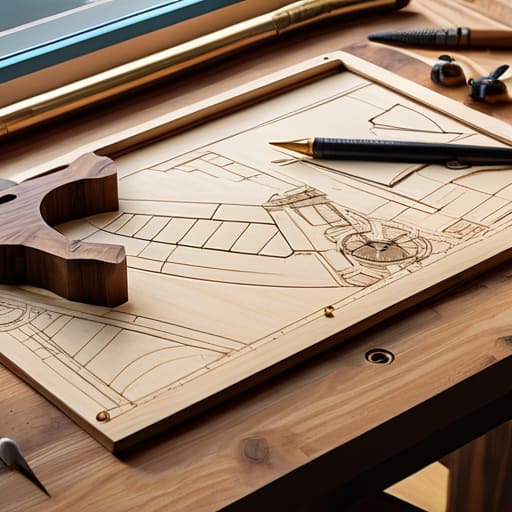
I’ve learned that a change isn’t just a creative impulse; it’s a logistical tremor. When a client asks to swap a solid walnut top for something more experimental, or when a structural constraint forces my hand, I don’t just wing it. I lean on a rigorous change order management process. It sounds clinical, perhaps even antithetical to the “soul” of craft, but without that structure, a single pivot can quickly spiral into a chaotic mess of mitigating scope creep. I treat every modification like a new set of blueprints—documented, measured, and weighed against the original intent.
This isn’t about being rigid; it’s about being honest. Every time I adjust a spec, I have to account for the impact of design modifications on the timeline and the bottom line. I sit down with the numbers and the wood, looking at how a shift in material affects the final cost. It’s a way of respecting the work by ensuring the vision doesn’t outpace the reality of the resources. To me, true professionalism is knowing exactly how much a “small idea” actually costs.
The Art of Saying No Mitigating Scope Creep
There is a particular kind of exhaustion that comes from a client—or even a client of your own conscience—suggesting a “small” tweak that fundamentally alters the geometry of a piece. In my studio, these are the moments where the integrity of the design meets the reality of the clock. I’ve learned that mitigating scope creep isn’t about being difficult; it’s about protecting the original intent of the object. When a request threatens to turn a streamlined chair into a cluttered monstrosity, saying no is an act of preservation, not obstruction.
I tend to look at my shelf of rejected prototypes to remind myself why I set these boundaries. Every time I allow a project to drift through unmanaged project budget adjustments or endless aesthetic shifts, the soul of the work thins out. It becomes a compromise rather than a creation. I’ve found that the most honest way to navigate these waters is to present the trade-offs immediately. If we add this detail, we lose that lightness. It’s a binary choice, and sometimes, the most professional thing a designer can do is refuse to let a good idea be diluted by a thousand tiny, well-meaning concessions.
Calculated Risks Navigating Vital Project Budget Adjustments
Money is rarely a neutral element in design; it is a physical constraint that shapes the very soul of a piece. When a mid-build shift occurs, the conversation inevitably turns toward the ledger. I’ve learned that the most dangerous moment isn’t the technical hurdle, but the silence that follows a discussion about project budget adjustments. It is tempting to swallow the cost to keep the momentum going, but that is how a project loses its structural integrity. I prefer to treat the budget as a design material in itself—something that must be carved and shaped with as much intention as the walnut or the steel.
To navigate this, I rely on radical transparency. Instead of obscuring the impact of design modifications behind vague estimates, I lay the numbers out like a blueprint. I show exactly how a change in joinery or a shift in material affects the bottom line. This isn’t just about the math; it’s about a shared understanding of what we are willing to sacrifice to achieve the final vision. It’s a delicate balance, but it ensures that when we finally commit to a direction, we are doing so with eyes wide open.
Honest Dialogue Effective Stakeholder Communication Strategies
When things shift mid-build, my first instinct isn’t to reach for a spreadsheet, but to reach for the phone. There is a specific kind of tension that settles in a room when a design modification suddenly threatens a deadline or a budget. You can feel it in the silence. I’ve learned that the most effective stakeholder communication strategies aren’t about polished presentations or defensive justifications; they are about radical transparency. If a joint isn’t holding the way the CAD model promised, or if a material shortage forces a pivot, I tell the client immediately. I don’t wait for the weekly update to deliver bad news.
The goal isn’t to be right, but to be aligned. I treat these conversations like a shared workshop session rather than a confrontation. By walking them through the impact of design modifications in real-time, I invite them into the problem-solving process. It turns a potential conflict into a collaborative refinement. When people feel they are part of the decision—even the difficult ones—the friction of change transforms into a shared sense of ownership over the final piece.
The Butterfly Effect Evaluating the Impact of Design Modifications
When I’m halfway through a build, a single modification rarely stays contained within its own borders. In my studio, I’ve learned that a change isn’t just a localized tweak; it’s a pebble thrown into a still pond. You might think you’re just swapping a walnut veneer for an oak one, but suddenly you’re recalculating weight distributions, re-ordering hardware, and questioning the structural integrity of a joint you thought was settled. This is the true impact of design modifications—the way a small ripple in one corner of the blueprint eventually reaches the far edge of the production line.
I tend to look at these shifts through the lens of my rejected prototypes. I have a shelf full of them, each one a testament to a decision that felt right in the moment but collapsed under the weight of its own consequences. Evaluating a change requires more than just checking a box; it requires a deep dive into construction contingency planning to see if the dominoes will fall. You have to ask yourself if the new direction strengthens the soul of the piece or if it’s merely a distraction that will haunt the final assembly.
Building the Safety Net Construction Contingency Planning
I have a shelf in my studio dedicated to what I call “the ghosts”—those half-finished joints or warped slabs that didn’t make the cut. They remind me that even the most rigorous construction contingency planning isn’t about predicting the future, but about respecting the inherent volatility of materials. When you’re working with wood or steel, you aren’t just managing a blueprint; you are negotiating with physical reality. I’ve learned that a contingency isn’t just a line item in a spreadsheet; it is a psychological buffer that allows you to stay calm when the grain splits or a shipment arrives late.
If you don’t build that buffer into the initial phase, you end up reacting emotionally rather than professionally. Without a pre-established safety net, every minor impact of design modifications feels like a personal failure rather than a standard part of the craft. I try to approach every project with the assumption that something will go sideways. By treating uncertainty as a structural component of the plan rather than an interruption, you move from a state of constant firefighting to one of deliberate, measured response.
The Ghost in the Grain
I keep a shelf in the back of the studio for the versions that failed—the joints that were too tight, the proportions that felt dishonest. When a change hits mid-build, I don’t see it as a disruption to the plan, but as the moment the object starts to tell me what it actually wants to be.
Jonathan Marin
The Ghost in the Grain
At the end of the day, managing a mid-build pivot isn’t about the spreadsheets or the formal change orders, though those are the tools that keep the lights on. It is about the constant, rhythmic negotiation between the original intent and the unforeseen reality of the material or the site. Whether I am navigating a sudden budget contraction, pushing back against a client’s creeping expectations, or recalibrating a design because the timber simply refused to behave, the goal remains the same: to maintain integrity through the chaos. We use contingency plans and honest dialogue not to stifle creativity, but to provide the structural discipline necessary to let the design survive its own evolution.
I often look at the stack of rejected prototypes in the corner of my studio—the ones with the handwritten notes explaining why they failed—and I realize that the most successful projects are rarely the ones that followed the blueprint to the letter. The most successful ones are the ones that survived a moment of crisis and emerged with a new, unexpected logic. Design is rarely a straight line; it is a series of corrections. So, when the plan shifts beneath your feet, don’t just fix it. Look closely at the deviation, because that is usually where the true character of the work begins to show itself.
