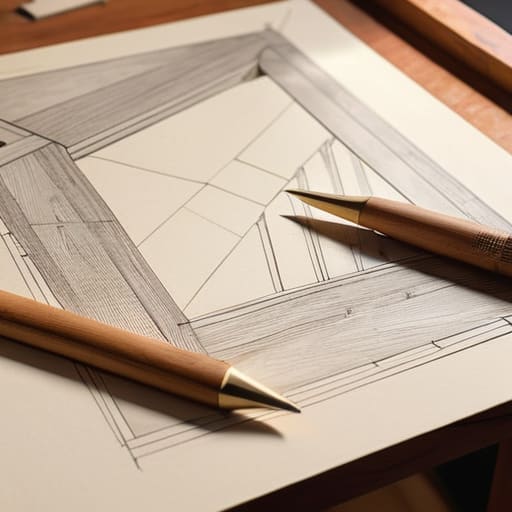
Hand Drawings That a Maker Can Use
I have a drawer in my studio filled with graphite-smudged scraps that most people would call failures, but to me, they are the most honest parts of my career. There is this pervasive, exhausting myth in design schools that you need a suite of expensive drafting tools or a steady, surgical hand to master how to draw furniture by hand. They treat it like a mathematical formula, something to be solved with precision and expensive compasses, when in reality, a drawing is just a way of thinking out loud on paper.
I’m not here to teach you how to make a perfect, sterile rendering that looks like it was spit out by a machine. Instead, I want to show you how to use a pencil to navigate the tension between what you intend to build and what the material actually demands. We are going to look at the messy, iterative process of sketching—the kind of drawing where the real decisions happen—so you can stop trying to be precise and start learning how to be purposeful.
The Ghost Lines Why Most Beginners Fail at How to Draw Furniture by Hand
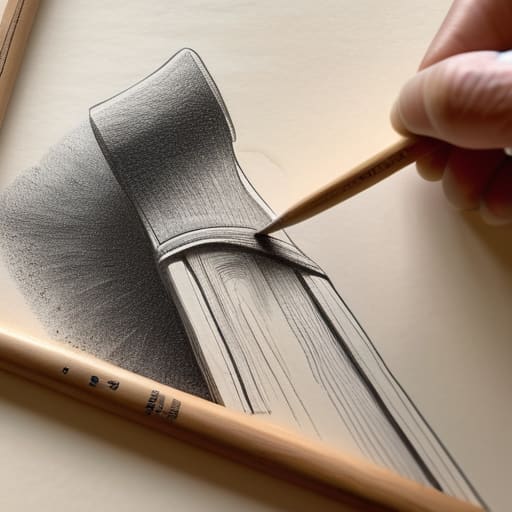
Most beginners approach the page with a sort of polite hesitation, as if they are afraid of offending the paper. They produce these thin, tentative strokes—what I call “ghost lines”—that lack any sense of structural conviction. When you are learning the fundamentals of furniture sketching techniques, the instinct is to be careful, to make sure every line is “correct.” But in doing so, you strip the object of its weight. A chair isn’t just a collection of lines; it is a series of forces meeting in space. If your lines don’t commit to the direction of the grain or the tension of a joint, the drawing will always feel like a ghost of an idea rather than a physical reality.
The real failure usually happens when people prioritize the final outline over the underlying geometry. They jump straight to the silhouette, skipping the messy, essential work of perspective drawing for furniture. Without those initial, sweeping construction lines to establish the vanishing points, your proportions will inevitably drift. I see it in my own studio all the time: a sketch that looks lovely at first glance, but the moment you try to translate it into a technical drawing, the legs seem to melt or the seat tilts at an impossible angle. You have to embrace the structural scaffolding before you can ever hope to find the elegance of the form.
Finding the Tension in Furniture Sketching Techniques
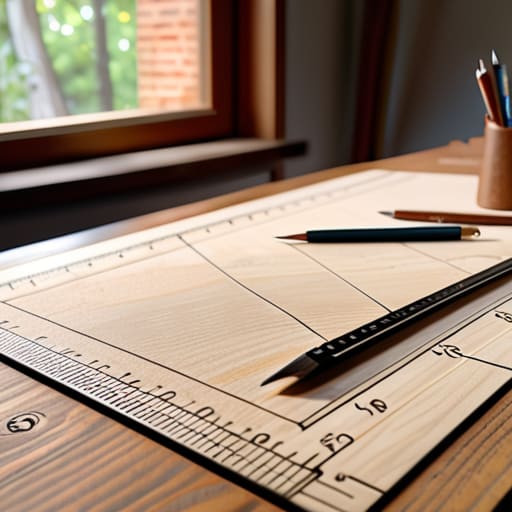
There is a specific kind of anxiety that sets in when you transition from a loose, gestural scribble to the rigid demands of technical drawing for furniture design. I remember sitting at my old drafting table, staring at a sketch for a lounge chair, paralyzed by the fear that a single misplaced line would ruin the entire silhouette. We are taught to seek precision, but if you lean too hard into the math, you end up with a blueprint that has no pulse. The tension lies in that narrow corridor between a chaotic doodle and a lifeless CAD model; you have to find a way to let the hand remain human while the eye demands accuracy.
When I’m working through different furniture sketching techniques, I try to treat the pencil like a mediator. You need enough control to nail the sketching furniture proportions so the piece doesn’t look like it will collapse under its own weight, but enough looseness to allow for the “happy accidents.” I often find that the most honest drawings happen when I stop trying to draw a finished product and instead start drawing the logic of the joinery. It’s about capturing the struggle of the form, not just its final, polished state.
The Near Miss Mastering Perspective Drawing for Furniture
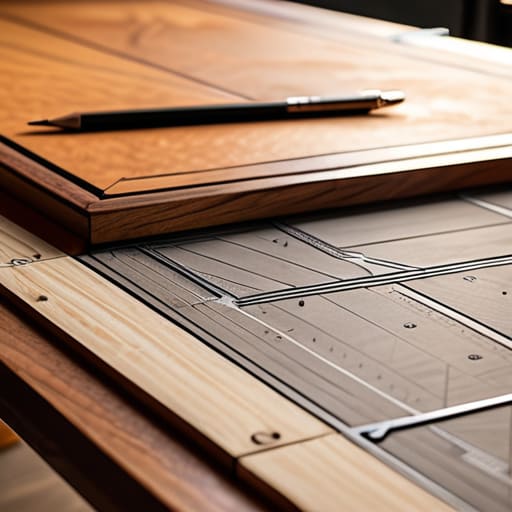
I remember a sideboard I was working on three years ago. I had the proportions perfect on paper, but the moment I tried to translate it into a three-dimensional view, the whole thing looked like it was collapsing inward. That’s the trap of perspective drawing for furniture; you can have a brilliant concept, but if your vanishing points are off by even a fraction of a millimeter, the object loses its structural integrity before it even hits the workshop floor. It stops being a piece of furniture and starts looking like a trick of the light.
When I’m refining my furniture sketching techniques, I don’t aim for mathematical perfection right away. Instead, I look for the visual weight. I often find myself fighting the urge to make every line perfectly parallel to the horizon, because a bit of forced perspective can actually give a heavy timber piece a sense of lightness. Mastering the geometry isn’t about following a rigid manual; it’s about understanding how the eye perceives depth so that your sketching furniture proportions feel intuitive rather than clinical.
Choosing Tools That Defy Perfect Technical Drawing for Furniture Design
I have a drawer full of graphite stubs and dried-out fineliners that would make a CAD technician weep. To some, a tool is just a means to an end, a way to achieve a clean line for technical drawing for furniture design. But I’ve learned that if your tools are too perfect, your ideas become too safe. When I’m working through the initial stages of sketching furniture proportions, I actually prefer a slightly “unruly” tool—a heavy 4B pencil or a fountain pen that might bleed if I linger too long. These imperfections force a certain decisiveness; they demand that you commit to a line before the ink settles.
There is a specific kind of magic in the friction between paper and lead. While most tutorials focus on the sterile precision of furniture design drafting tools, I find that intentional resistance is what actually helps you find the form. If the tool fights you just a little bit, you stop drawing what you think a chair should look like and start discovering what the wood wants to do. It’s about finding the balance between the rigid requirements of furniture construction drawings and the raw, intuitive energy of a first mark.
The Beautiful Error in Sketching Furniture Proportions
I have a shelf in the back of my studio—a graveyard of bent plywood and failed joinery—where I keep the pieces that didn’t quite make the cut. When I look at my old sketches, I realize that the most successful designs often started as a mistake in scale. In the rigid world of technical drawing for furniture design, we are taught to fear the outlier, the leg that is slightly too slender or the seat that sits a fraction too low. But there is a specific kind of magic in that deviation. When I’m sketching furniture proportions, I’ve learned that perfection is often synonymous with boredom.
If a line is too mathematically correct, the object loses its ability to hold a gaze. I once spent three days trying to correct a sketch where the armrest felt “off,” only to realize that the error was actually the structural tension the piece needed to feel human. We often approach furniture sketching techniques as a way to eliminate doubt, but the goal should be to manage it. A slight imbalance in a drawing can suggest a weight or a grace that a perfectly symmetrical CAD model simply cannot communicate.
When Structure Meets Soul in Furniture Construction Drawings
There is a specific, heavy kind of tension that occurs when you move from a loose sketch to actual furniture construction drawings. In my studio, I have a shelf of rejected prototypes—maquettes that failed because the math was right but the feeling was hollow. When you are translating a gestural sketch into something a machinist can actually build, it is easy to let the technicality kill the intent. You start obsessing over the millimeter-perfect joinery and suddenly, the chair you were dreaming of becomes nothing more than a collection of geometric constraints.
The trick, I’ve found after twenty years, is to treat your technical drawing for furniture design not as a cage, but as a skeleton. A skeleton shouldn’t dictate the personality of the body; it should simply allow it to stand. I often find myself fighting the urge to make every line perfectly sterile. I want the drawing to retain a hint of the original impulse—that slight, intentional deviation that tells the builder where the weight is meant to live. If the construction lines are too rigid, you lose the ability to see where the soul of the piece actually resides.
The Final Stroke Using Furniture Design Drafting Tools Wisely
There is a specific kind of temptation that comes when you finally pick up a scale ruler or a professional compass. After hours of wrestling with the raw, messy energy of initial sketches, these precision instruments feel like a sanctuary. You want to use them to “fix” the drawing, to scrub away the uncertainty of your earlier lines. But I’ve learned through decades of trial and error that the moment you lean too heavily on furniture design drafting tools, you risk suffocating the very life you just breathed into the piece. A ruler is a guide, not a crutch; it should serve the vision, not dictate it.
I keep a drawer of precision calipers in my studio, right next to my most battered, ink-stained charcoal sticks. The calipers are for when the math must be absolute—when I’m translating a concept into actual furniture construction drawings that a machinist can actually use. But for the act of creation itself? I find that over-reliance on technical perfection often leads to a sterile result. The goal isn’t to produce a perfect blueprint on the first pass, but to use those tools to validate the tension you’ve already discovered through more intuitive methods.
The Weight of the Pencil
A technical drawing tells you how a chair is built, but a hand sketch tells you why it was worth building in the first place; it’s in those shaky, imperfect lines that you capture the tension between the wood’s intent and your own.
Jonathan Marin
The Weight of the Pencil
Looking back through the layers of this process—from the ghost lines that haunt your initial sketches to the deliberate tension required to make a piece feel structural rather than just decorative—it becomes clear that drawing furniture by hand is never really about the finished image. It is about the struggle between the technical requirement of perspective and the intuitive pull of a curve that feels just slightly wrong but looks exactly right. We’ve talked about tools, proportions, and the necessity of the error, but the core truth remains: you aren’t just mapping out dimensions; you are documenting a series of negotiations between your hand and the material it intends to shape.
I have a shelf in my studio filled with rejected sketches and failed prototypes, each one a testament to a decision that almost went the other way. If you find yourself frustrated because your lines aren’t perfectly straight or your vanishing points feel a bit skewed, remember that perfection is often the enemy of character. A drawing shouldn’t just be a blueprint; it should be a record of your thinking in real-time. So, pick up the pencil, embrace the wobble in your line, and stop trying to draw a perfect object. Instead, try to draw the decisions that matter.
