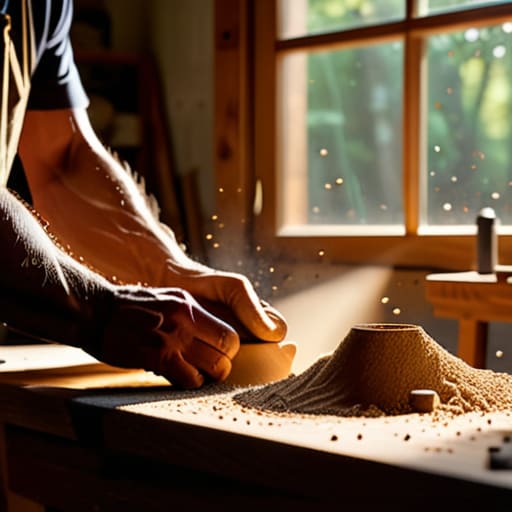
Finishing at Seven in the Morning
I remember standing in my studio three years ago, staring at a walnut sideboard that had cost me sixty hours of sanding, only to see a single, microscopic speck of grit settle into the wet lacquer. In that moment, the silence of the room felt heavy, almost mocking. Most people will tell you that you need a $5,000 downdraft table or a laboratory-grade clean room to achieve perfection, but that’s a lie sold by people who don’t actually work with their hands. I’ve learned that how I deal with dust during finishing isn’t about buying more expensive gear; it’s about the discipline of the environment you build around yourself.
I’m not here to give you a shopping list of high-end industrial extractors that promise miracles. Instead, I want to talk about the messy, tactile reality of managing a workspace. I’ll share the specific, slightly unglamorous rituals I’ve developed over two decades—from the way I manage airflow to the exact moment I decide to walk away from a piece. This is about practical, hard-won constraints that work in a real shop, not a showroom.
The Ghost in the Grain Why I Obsess Over Dust

I have a shelf in the back of the studio, tucked behind the scrap walnut, where I keep the “failures.” It’s a graveyard of sanded surfaces that looked perfect under the shop lights, only to reveal a constellation of tiny, grit-filled craters once the oil hit the wood. To a layman, a speck of dust is a nuisance; to me, it is a structural flaw in the intent. When you spend forty hours carving the geometry of a chair, the last thing you want is for a stray particle to disrupt the way light travels across the grain.
It isn’t just about vanity, though. I’ve learned that surface preparation and dust control are actually the same discipline. If you ignore the microscopic, the macroscopic will eventually fail you. I find myself obsessing over preventing airborne particles during coating not because I’m a perfectionist, but because I’ve realized that the finish is a window. If that window is clouded by debris, you aren’t looking at the wood anymore—you’re looking at my lack of discipline.
The Split Second Where Surface Preparation and Dust Control Collide
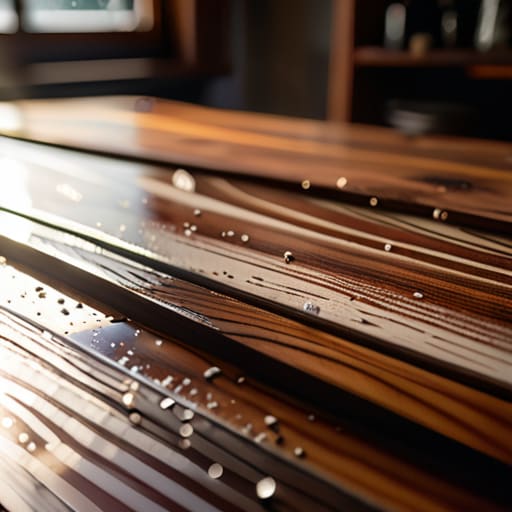
There is a specific, high-tension moment in the studio when the sanding stops and the first coat of lacquer is about to descend. It’s that razor-thin margin between a perfect surface and a disaster. I can spend hours on meticulous surface preparation and dust control, feeling confident in the smoothness of the grain, only to have a rogue particle drift from a nearby workbench and settle right into the wet film. In that split second, you realize that all the technical skill in the world can be undone by a single, floating speck of debris.
I used to think I could outrun the problem with better tools, but I eventually learned it’s more about managing the environment. I’ve experimented with various dust mitigation techniques for wood finishing, ranging from makeshift air curtains to dedicated filtration, but the real battle is mental. You have to treat workspace cleanliness for professional finishing not as a chore to be completed before you start, but as a continuous, active state of being. If you aren’t breathing with the rhythm of your ventilation, you’ve already lost the finish.
How I Deal With Dust During Finishing to Avoid Disaster
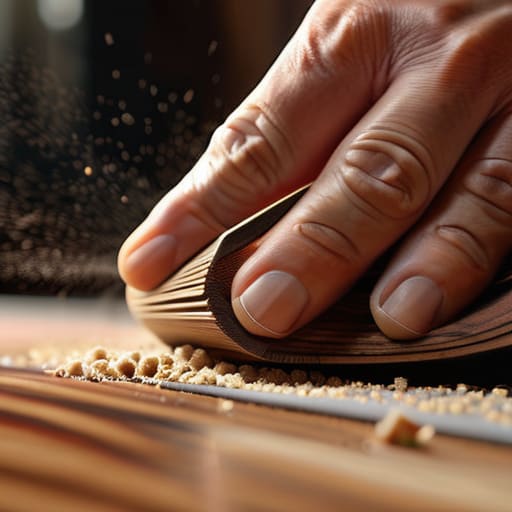
I’ve learned that my workflow is less about the application of the finish and more about the ritual of the cleanup. I don’t rely on a single magic trick; instead, I’ve built a layered system of dust mitigation techniques for wood finishing that feels almost obsessive. It starts with the heavy lifting—using a high-capacity vacuum at the source while I’m still sanding—but the real battle is won in the quiet moments. I’ve moved away from the old habit of just wiping things down with a rag. Now, I use tack cloths and even compressed air to ensure the surface is surgically clean before a single drop of oil or lacquer touches the grain.
The most difficult part is managing the invisible threat: the particles that stay suspended in the air long after the sanding stops. I’ve had to invest heavily in my dust management in spray booths, creating a controlled environment where air moves in a predictable direction. It’s not just about the piece on the bench; it’s about the air itself. If I don’t control the atmosphere, I’m essentially inviting failure into the finish.
Lessons Learned From Failing at Preventing Airborne Particles During Coatin
I still have a drawer in my studio dedicated to “failures”—pieces that looked perfect under the shop lights until the final coat revealed a constellation of tiny, white bumps. Early in my career, I thought a quick wipe with a tack cloth was enough. I was wrong. I learned the hard way that preventing airborne particles during coating isn’t about what you do to the wood, but what you do to the air around it. I remember a walnut sideboard that I spent three weeks perfecting, only to have a stray particle of sawdust from a nearby sander land right in the wet lacquer. It felt like a personal insult from the universe.
Those mistakes forced me to stop viewing cleanliness as a chore and start seeing it as a fundamental part of the design process. I had to overhaul my entire approach to dust management in spray booths, moving away from reactive cleaning toward a disciplined, preventative rhythm. Now, I don’t just clean the surface; I manage the environment. It’s a constant, quiet battle against the invisible, but the peace of mind that comes with a truly clear finish is worth every extra minute of prep.
Mastering Dust Management in Spray Booths Through Calculated Risks
There is a certain tension in the spray booth that most people don’t see. You spend hours on meticulous surface preparation and dust control, only to realize that the very act of spraying can stir up the microscopic debris you just fought to settle. I used to think that total sterility was the goal, but that’s a designer’s fantasy. In reality, effective dust management in spray booths is less about achieving a vacuum and more about managing the inevitable.
I’ve learned to stop fighting the air and start directing it. There was a period in my early studio days where I’d over-clean, stripping the booth so bare that the sudden change in air pressure actually pulled more particulates from the floor vents. Now, I take a more calculated approach to preventing airborne particles during coating. I’ve found that maintaining a specific, controlled flow—rather than trying to kill every single speck—allows the finish to lay down without the booth becoming a chaotic vortex of debris. It’s a delicate, slightly dangerous balance between a clean workspace and a functional one.
Refining My Dust Mitigation Techniques for Wood Finishing Perfection
I used to think that a quick wipe with a tack cloth was the end of the story, but twenty years of watching tiny imperfections catch the light taught me otherwise. Now, my approach to dust mitigation techniques for wood finishing is less about a single action and more about a continuous, rhythmic cycle. I’ve learned to treat the air itself as a component of the piece, much like the wood or the lacquer. It isn’t enough to just clean the surface; you have to manage the environment that surrounds it.
This means I’ve become obsessive about the sequence of my movements. I’ve moved away from the frantic, last-minute dusting that usually just kicks up more debris, opting instead for a slow, methodical progression. It’s a quiet discipline—ensuring workspace cleanliness for professional finishing by staging my tools and cleaning my surfaces long before the first drop of finish ever touches the grain. There is a specific, almost meditative calm in knowing that when I finally pull the trigger on the spray gun, the only thing landing on that walnut is the coating I intended.
Balancing Workspace Cleanliness for Professional Finishing and Creative Flo
There is a specific kind of friction that occurs when the clinical requirements of a clean room collide with the messy, intuitive nature of making. If I spend my entire morning obsessing over workspace cleanliness for professional finishing, I often find that I’ve polished the soul right out of the creative process. I’ve sat in my studio, staring at a pristine workbench, feeling more like a laboratory technician than a designer. The goal is to find that narrow corridor where the environment is controlled enough to prevent disaster, but not so sterile that it stifles the actual act of creation.
I used to think that perfect dust mitigation techniques for wood finishing meant a static, unchanging environment. I was wrong. Real flow happens in the movement—the transition from the heavy, violent sanding that kicks up everything in its path to the quiet, surgical application of the final coat. It’s about managing the chaos rather than trying to pretend it doesn’t exist. I’ve learned to embrace a certain level of organized grit, ensuring that while the air is clear enough for preventing airborne particles during coating, my mind remains free to wander toward the next iteration of a joinery detail or a subtle curve in a chair leg.
The Cost of a Single Speck
I used to think dust was just a nuisance to be cleaned up, but after twenty years of watching a single airborne particle ruin a week’s worth of sanding, I’ve realized it’s actually a test of discipline. You don’t fight dust with a vacuum; you fight it by respecting the quiet, tedious moments of preparation that everyone else wants to skip.
Jonathan Marin
The Residue of Practice
Looking back at the mess of my workshop, I realize that dust management isn’t just a checklist of air filters and tack cloths; it’s a continuous negotiation with the environment. I’ve learned that you can’t truly “defeat” the particles in the air, you can only manage your relationship with them through rigorous preparation and a bit of calculated timing. Whether it’s the way I sequence my sanding or the specific way I seal a spray booth, every technique I’ve honed is a direct response to a previous failure. I keep those ruined, grit-filled finishes in the corner of my studio as a reminder that control is an illusion, but discipline is what keeps the work professional.
Ultimately, the struggle against the microscopic is what keeps me grounded in the reality of the craft. It is easy to get lost in the lofty, abstract ideas of “design,” but the truth of the work lives in the friction between the material and the atmosphere. We often chase the perfect, seamless surface, yet I find myself more interested in the intentionality behind the effort. The beauty of a finished piece isn’t just in its smoothness, but in the quiet, invisible battles won to keep it that way. In the end, we don’t just build furniture; we curate the space where the making happens.
