
Showing a Joint on Purpose
I was staring at a half-finished walnut sideboard three years ago, the scent of sawdust and linseed oil heavy in the studio, when I realized I was paralyzed. I had spent forty minutes debating a single corner, caught in that exhausting loop of wondering how to decide whether a joint should show or if it should be tucked away into a seamless, silent void. Most design textbooks will tell you it’s about “visual hierarchy” or “clean lines,” as if these things are objective laws written in the stars. But they aren’t. They’re just expensive excuses for people who are afraid to make a definitive choice.
I’m not here to give you a lecture on aesthetic theory or a checklist of formal rules. Instead, I want to talk about the actual weight of that decision—the way a visible dovetail can either anchor a piece with dignity or make it look like it’s trying too hard to prove its own worth. I’ll share what I’ve learned from two decades of making things, focusing on the tension between intention and restraint. We’re going to look at the honest, messy logic of choosing when to hide your work and when to let the connection stand as a testament to the build.
The Near Miss the Art of How to Decide Whether a Joint Should Show
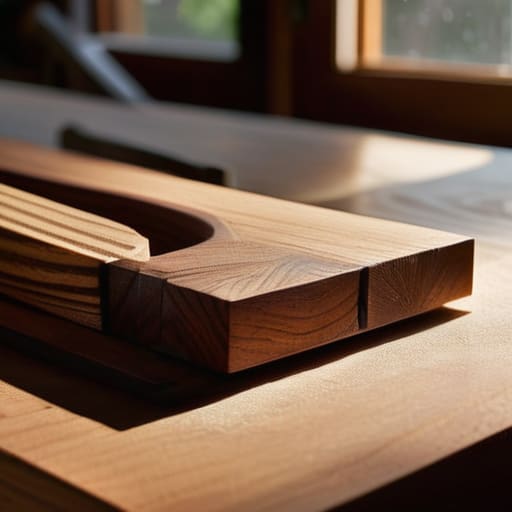
I have a shelf in the back of my studio, tucked behind a stack of old letterpress plates, that serves as a graveyard for bad intentions. It’s filled with scraps of walnut and oak, each one tagged with a Sharpie note explaining why a specific connection failed to live up to the design. Last week, I was staring at a prototype for a new lounge chair, caught in that familiar, agonizing loop of material honesty in woodworking. I had spent three hours debating whether to sink the mortise into the leg or let the tenon protrude, creating a visible notch.
The decision usually hinges on the friction between structural integrity vs aesthetics. If I hide the joint, I am offering the user a seamless, quiet silhouette—a triumph of minimalist furniture construction. But there is a certain cowardice in that smoothness. By concealing the mechanics, you lose the narrative of the build. I find myself leaning toward the exposed route, not because it’s “prettier,” but because the tension of the visible connection tells the truth about how the piece holds itself together. It turns a mere assembly into a deliberate act of construction.
The Pull of Material Honesty in Woodworking
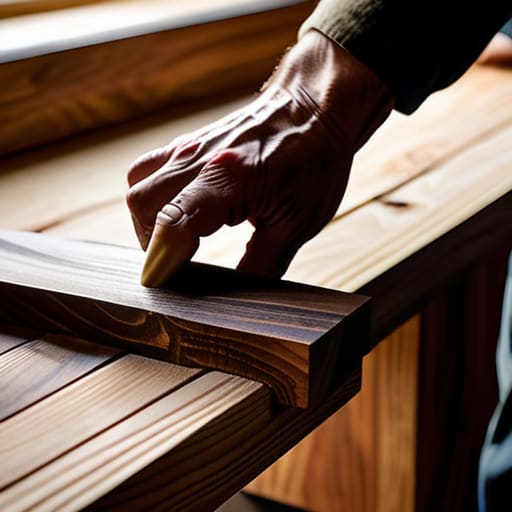
There is a particular kind of temptation when working with a particularly fine piece of walnut or white oak—a desire to mask the mechanics of the build to preserve a seamless, uninterrupted surface. We often mistake this for elegance, but I’ve come to see it as a form of silence that borders on dishonesty. When I sit at my bench, I am constantly negotiating the line between structural integrity vs aesthetics. It isn’t just about whether the piece will hold weight; it is about whether the object feels truthful to the hands that will touch it.
In my earlier years, I leaned toward a certain clinical perfection, trying to hide every peg and every tenon. But looking at my shelf of rejected prototypes, I see a pattern: the pieces that felt “hollow” were the ones where I had over-sanitized the construction. True material honesty in woodworking requires a willingness to let the assembly tell its own story. A well-placed dovetail isn’t just a way to hold two boards together; it is a visual heartbeat, a way of acknowledging that the object was built, not merely conjured.
Structural Integrity vs Aesthetics the Decision That Changes Everything
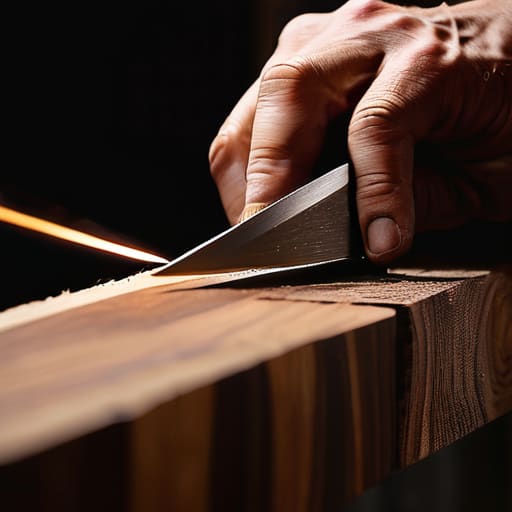
There is a specific, quiet anxiety that sets in when you are staring at a carcass of walnut, knowing that the next cut is irreversible. This is the crux of the struggle between structural integrity vs aesthetics. In my early years, I used to think that a joint was either a way to hold things together or a way to make them look pretty. I was wrong. A well-executed tenon isn’t just a mechanical necessity; it is a narrative choice. If I hide a massive, robust mortise behind a seamless veneer, I am choosing a certain kind of visual silence. But that silence comes at a cost—the loss of the story of how the piece actually survives the weight of a body.
Sometimes, the most elegant solution feels like a betrayal of the form. I’ve spent weeks on prototypes where I tried to force a minimalist furniture construction to hide its internal logic, only to find the result felt hollow and dishonest. You realize that the tension between a decorative vs functional joint isn’t something to be “solved,” but something to be managed. The goal isn’t to find a middle ground, but to find the point where the strength of the connection becomes the very thing that defines the beauty.
Exposed Joinery Design Principles and the Risk of Reveal
When I look at my shelf of “failures”—those prototypes that never made it to the showroom—I see a pattern in the ones that missed the mark. Most of them failed because I tried to make a mistake look intentional. In the realm of exposed joinery design principles, there is a razor-thin line between a deliberate architectural statement and a lack of discipline. If you decide to let a dovetail or a mortise-and-tenon sit on the surface, it cannot merely be present; it has to be the reason the piece exists.
The danger lies in the vanity of the reveal. It is easy to fall into the trap of using a joint as a mere ornament, a bit of decorative vs functional flair to distract from a mediocre silhouette. But a joint that shows without purpose feels like a loud, unearned boast. True minimalist furniture construction demands that every visible connection carries the weight of the entire object. If the joint is going to speak, it better have something profound to say about how the wood is actually behaving under tension.
When Minimalist Furniture Construction Demands Absolute Silence
When you strip a piece down to its barest essentials, the margin for error vanishes. In minimalist furniture construction, there is no ornamental flourish to hide a clumsy connection or a misaligned grain. Every line is a statement, and every shadow becomes a potential flaw. I often find myself staring at a prototype for hours, wondering if a visible tenon provides a necessary rhythmic beat or if it simply acts as visual noise that disrupts the purity of the silhouette.
In this realm, the struggle between structural integrity vs aesthetics isn’t just a technical hurdle; it is a philosophical crisis. If the goal is absolute silence, a single exposed screw or a bulky dowel feels like a shout in a library. You start to crave the seamlessness of a blind joint, yet there is a profound temptation to let the mechanics breathe. You have to ask yourself: does the absence of the joint make the object feel more ethereal, or does it merely feel dishonest? Sometimes, the most powerful way to maintain that quietude is to ensure the woodworking craftsmanship details are felt through the geometry rather than seen through the hardware.
Navigating the Divide of Decorative vs Functional Joints
I have a shelf in my studio, tucked behind a stack of discarded walnut offcuts, filled with half-finished mortise and tenon joints that I eventually decided were too loud. They represent the friction between the functional and the performative. When I’m staring at a carcass or a chair frame, the question isn’t just about whether the joint works, but whether it is performing a role it wasn’t invited to play. A joint that exists purely to hold weight is a quiet necessity; a joint that exists to be seen is a statement. The danger lies in blurring that line until the piece feels indecisive.
In my experience, the most successful pieces are those where the decorative vs functional joints exist in a clear hierarchy. If you decide to expose a dovetail, it shouldn’t just be because you have the tools to do it; it should be because the geometry of that connection is essential to the object’s visual rhythm. When we lean too hard into woodworking craftsmanship details for the sake of mere ornamentation, we risk losing the very material honesty we claim to prize. The goal is to ensure the decoration never feels like an afterthought, but rather an inevitable consequence of the build.
Refining Woodworking Craftsmanship Details Through Intentional Omission
There is a specific kind of discipline required to know when to stop. In my studio, I often find myself staring at a piece that is technically perfect, yet feels cluttered by its own competence. We are taught to celebrate every detail, but true refinement often comes through the subtraction of the obvious. When I approach minimalist furniture construction, the goal isn’t just to simplify; it is to decide which elements deserve the spotlight and which should retreat into the shadows.
Sometimes, the most profound statement a piece can make is through what isn’t there. By choosing to conceal a connection, you aren’t just hiding a seam; you are directing the eye toward the silhouette rather than the mechanics. This isn’t about cowardice or a lack of skill. It is a calculated negotiation of woodworking craftsmanship details where the omission becomes a deliberate act of composition. It is the difference between a chair that shouts its construction and one that simply exists with a quiet, unshakeable presence.
The Ghost of the Alternative
I often find myself staring at a pile of rejected prototypes in the corner of my studio, looking at the ones where I chose to hide the joinery. We call it ‘cleanliness,’ but sometimes, in our pursuit of a seamless surface, we accidentally bury the very story of how the object came to exist. A joint shouldn’t show just because it’s pretty; it should show because the decision to reveal it is the only way to honor the tension between the wood and the tool.
Jonathan Marin
The Ghost of the Alternative
Ultimately, deciding whether to expose a joint or shroud it in seamless continuity isn’t about following a rulebook of “honesty” or “minimalism.” It is about managing the tension between what the eye expects and what the hand feels. We have weighed the structural necessity against the aesthetic silence, the decorative impulse against the pure function of the connection. Whether you choose to let the joinery act as a loud, rhythmic statement or hide it behind a veneer of perfection, the decision must be deliberate. A joint that is hidden by accident is a failure of design; a joint that is revealed by choice is a testament to intent.
As I look at the pile of rejected prototypes in the corner of my studio—the ones where I pushed the reveal too far or buried it too deep—I realize that the “correct” choice is rarely found in a textbook. It is found in the quiet moment of hesitation before the first cut is made. Don’t be afraid of the mistake that nearly happened. In fact, lean into that friction. The most resonant pieces of furniture aren’t those that achieve a sterile, impossible perfection, but those that carry the weight of a calculated decision. The beauty isn’t just in the wood itself, but in the visible courage of having chosen one path over another.
