Working Alone All Week
I was sitting in my studio last Tuesday, surrounded by three years’ worth of rejected chair prototypes—each one a physical record of a mistake I was glad I made—and realized I hadn’t spoken a word out loud since breakfast. There is this pervasive, polished lie in the productivity world that you can solve the loneliness of a solo career by simply buying a better desk or joining a “digital nomad” community. It’s nonsense. Realizing how to handle isolation working alone isn’t about optimizing your workspace or curating a perfect aesthetic; it’s about managing the heavy, quiet friction that happens when your only sounding board is your own internal monologue.
I’m not here to give you a list of mindfulness apps or suggest you move to a co-working space with overpriced espresso. Instead, I want to talk about the tactical shifts I’ve learned through two decades of designing furniture in near-total solitude. I’ll share the messy, unglamorous ways I keep my brain from turning inward on itself, focusing on the small, practical decisions that keep the work moving when the silence gets too loud. This is about sustaining the craft when there is no one else in the room to witness it.
The Threshold of Silence How to Handle Isolation Working Alone

There is a specific kind of heavy stillness that settles in a studio around 3:00 PM. It isn’t the productive silence of deep focus; it’s the hollow kind that makes you start questioning if your career actually exists outside of your own head. I used to try and fight it by sheer force of will, thinking that if I just pushed harder through the silence, I’d emerge more disciplined. Instead, I just emerged more brittle. I’ve learned that combating loneliness in solo work isn’t about finding a way to be happy in a vacuum, but about acknowledging when the vacuum is starting to suck the air out of the room.
I’ve found that the most effective strategies for social connection at home aren’t the grand gestures, but the small, intentional pivots. Sometimes that means joining a virtual coworking space just to hear the rhythmic clatter of other people’s keyboards, a digital proxy for a shared workshop. Other times, it’s simply deciding to work from a cafe for two hours, not for the caffeine, but to be a ghost in a room full of living, breathing people. It’s about creating a friction that prevents you from drifting too far into yourself.
The Great Refusal Combating Loneliness in Solo Work
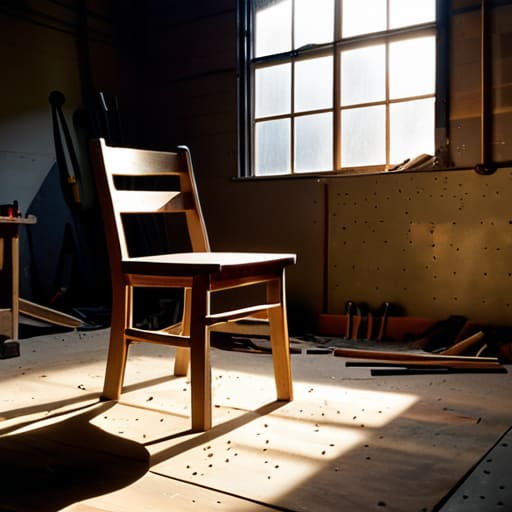
There is a specific kind of heavy, stagnant air that settles in a studio when you haven’t spoken to another human being for more than ten minutes. In my early years, I thought this was just the price of autonomy—the tax you paid for being the master of your own production line. I used to sit among my rejected prototypes, staring at a failed chair leg, and feel like I was drifting off the map entirely. I almost leaned into it, deciding that total hermeticism was the only way to protect the creative process, but that’s a lie we tell ourselves to justify our own withdrawal.
The truth is that combating loneliness in solo work requires a deliberate, almost mechanical intervention. I’ve had to learn that social connection isn’t a distraction from the craft; it is the scaffolding that holds it up. Now, I make a point to join virtual coworking spaces for a few hours a week, not because I need help with my CAD files, but because the mere presence of another person’s digital “hum” prevents the silence from becoming deafening. It’s about refusing to let the studio become a vacuum.
A Calculated Detour Remote Work Mental Health Tips

I have a shelf in the back of my studio filled with failed joinery—joints that looked beautiful on paper but failed the moment the chisel met the wood. I think of my daily routine in much the same way. When the walls of the studio start to feel less like a sanctuary and more like a perimeter, I have to treat my mental state as a design problem that requires a structural pivot. It isn’t about grand gestures; it’s about small, intentional adjustments to the architecture of my day.
I’ve found that searching for generic remote work mental health tips usually leads to hollow advice about “taking walks,” which feels patronizing when you’re deep in a production cycle. Instead, I look for ways to simulate the friction of a real office. Lately, that has meant experimenting with virtual coworking spaces—not to actually collaborate, but simply to exist in a shared digital atmosphere. It’s a calculated detour, a way to inject a bit of human presence into the void without sacrificing the autonomy I’ve spent twenty years building.
The Architecture of Presence Building Professional Social Networks
I have a shelf in the corner of my studio dedicated entirely to the “almosts”—the chair legs that were too thin, the joints that failed the stress test, the wood grains that refused to cooperate. In design, we call these failures, but I’ve come to see them as the most honest part of the process. I find the same truth in how we structure our professional lives. When you work for yourself, the silence isn’t just an absence of noise; it’s an absence of friction. Without the small, daily collisions with other people, your ideas start to feel too smooth, too unchallenged.
That is why I’ve become obsessed with building professional social networks that aren’t just about transactional networking or LinkedIn updates. I’m talking about finding the digital equivalent of a shared workshop. I started experimenting with virtual coworking spaces—not to actually “collaborate” on every task, but simply to exist in a shared space where others are also wrestling with their own constraints. It’s a way of combating loneliness in solo work without the performative exhaustion of a formal meeting. It’s about finding a way to be alone, together.
The Shared Room Finding Purpose in Virtual Coworking Spaces
I remember a time when “coworking” meant a shared drafting table and the rhythmic, comforting sound of someone else’s sander in the next bay. Now, that physical proximity is often replaced by a flickering grid of faces on a screen. I used to resist the idea of virtual coworking spaces, viewing them as a pale, digital imitation of a real studio. I thought if I couldn’t smell the sawdust or hear the actual friction of a tool, it didn’t count as being “with” people.
But I’ve learned that the value isn’t in the high-fidelity connection; it’s in the ambient presence. There is a specific kind of psychological relief found in knowing someone else is also wrestling with a difficult deadline or a stubborn material. It’s a subtle way of combating loneliness in solo work without the performative exhaustion of a formal meeting. You aren’t there to talk; you are there to exist alongside others. It turns the void of a silent home office into a shared, albeit digital, workshop, providing just enough social friction to keep the gears of my own focus turning.
The Deliberate Boundary Work Life Balance for Remote Employees
I have a shelf in the corner of my studio filled with failed joinery—tenons that were too shallow, mortises that drifted off-center. I keep them because they remind me that a mistake is often just a decision that lacked a boundary. I’ve realized that working from home requires the same kind of structural discipline. Without the physical commute to act as a buffer, the workday doesn’t end; it simply bleeds into the evening like spilled ink on a letterpress bed. I used to find myself answering emails at 9:00 PM, not because I was productive, but because I had lost the ability to separate the maker from the person.
Achieving true work-life balance for remote employees isn’t about a perfect schedule; it’s about the ritual of closing the door. I’ve started treating my desk like a production line—when the lights go off, the factory is closed. It sounds dramatic, but without these hard edges, you aren’t just working from home; you are living inside your office. Establishing these small, artificial borders is one of the most effective remote work mental health tips I’ve learned to implement for myself.
The Final Choice Strategies for Social Connection at Home
I have a shelf in the corner of my studio filled with failed joinery—mahogany tenons that were too thin, or oak rails that split under too much pressure. I keep them because they represent the moment a design almost failed. Dealing with the isolation of a home studio feels much the same; it’s a series of small, structural adjustments. When the silence of the house starts to feel less like peace and more like a weight, I’ve learned that I can’t just wait for inspiration to bring people to my door. I have to engineer the interaction.
Sometimes, that means implementing specific strategies for social connection at home that feel almost ritualistic. It isn’t about grand gestures; it’s about the small, intentional pivots. I might schedule a brief, non-work call with a former colleague, or simply move my laptop to a corner of the kitchen just to feel the ambient noise of the neighborhood. It is a way of combating loneliness in solo work without letting it bleed into my actual productivity. You have to decide, every single morning, whether you are going to let the walls close in or if you are going to push them back.
The Weight of the Unseen
“I used to think the hardest part of designing a chair was the structural integrity, but after twenty years of working in this quiet studio, I’ve realized the real tension lies in the silence between decisions; you have to learn to treat your own presence not as a given, but as a tool you have to actively maintain.”
Jonathan Marin
The Final Joinery
Looking back at everything we’ve covered, it’s clear that managing isolation isn’t about finding a single, perfect solution, but about the constant, small adjustments we make to our daily structure. Whether it’s through the deliberate boundary of a finished workday, the strategic use of virtual coworking, or simply choosing to break the silence with a podcast, we are essentially designing our own environment. It’s a process of constant iteration. We have to treat our mental health like a prototype—something that requires testing, failing, and refining until the edges feel smooth enough to live with.
In my studio, I keep a shelf of rejected chair legs and failed joinery, not because they are failures, but because they represent the critical decisions that led to the final piece. Your struggle with solitude is much the same. These moments of loneliness are not flaws in your professional life; they are the friction points that force you to become more intentional about how you connect with the world. Don’t aim for a life of seamless, effortless productivity. Instead, aim for a life where you are the architect of your own presence, making the hard choices that eventually turn a lonely room into a meaningful workspace.
