
Simple Is the Most Difficult
I was staring at a pile of scrap walnut in the corner of my studio yesterday—one of those “failed” iterations I can’t bring myself to throw away—and it hit me how much we romanticize the concept of minimalism. People talk about “less is more” as if it’s a natural state of being, a serene destination you just arrive at by stripping things away. It’s a lie. In reality, the reason why simple things are hard isn’t because the final result is easy; it’s because simplicity is a violent act of subtraction. It requires you to kill off every clever, decorative, or ego-driven impulse you have until only the bone remains.
I’m not here to give you a lecture on aesthetic theory or some lofty, inspirational manifesto about finding your “inner calm” through design. Instead, I want to talk about the grit of the process. I’m going to share what I’ve learned from twenty years of making things that actually have to stand up and work, focusing on the messy, often frustrating decisions that happen behind the scenes. We’re going to look at the unseen labor of refinement, because the most elegant solutions are usually just the ones that survived the most brutal interrogation.
The Invisible Weight of Why Simple Things Are Hard
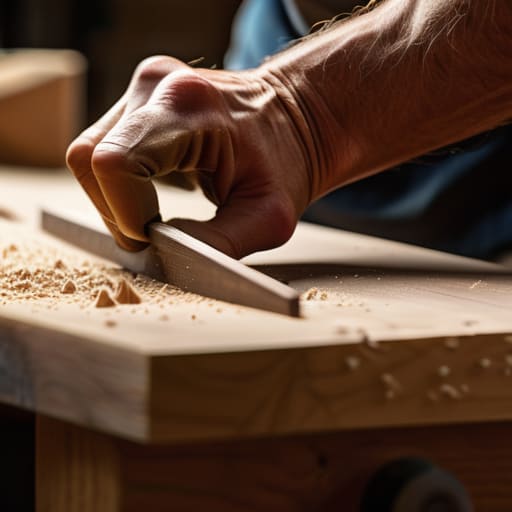
I spent the better part of last Tuesday staring at a joinery detail for a side table that should have taken twenty minutes to finalize. Instead, I spent four hours wrestling with a single bevel. It’s a familiar trap: the more you strive for a clean line, the more you realize how much cognitive load and decision making is packed into a single millimeter of wood. When you look at a finished piece, you see the stillness. You don’t see the frantic mental gymnastics required to strip away the excess.
This is the core of the paradox of simplicity. We often mistake “simple” for “easy,” but in my studio, simplicity is actually a high-stakes game of subtraction. To make something look effortless, you have to exert an incredible amount of control over the underlying chaos. It’s not about having fewer ideas; it’s about the rigorous, often exhausting process of mastering fundamental skills so well that the complexity becomes invisible. Every time I choose a straight edge over a decorative curve, I am actively fighting the urge to hide behind ornamentation.
The Paradox of Simplicity and the Cost of Less
In my studio, the paradox of simplicity is something I feel in my hands every time I pick up a chisel or a drafting pencil. We tend to mistake “simple” for “easy,” but in design, simplicity is actually an expensive luxury. To reach that point of effortless elegance, you have to navigate a brutal process of subtraction. It isn’t just about removing parts; it’s about managing the cognitive load and decision making that happens behind the scenes. Every line you remove carries the ghost of the complexity it used to hold.
I have a shelf in the back of my workshop dedicated to these ghosts. It’s filled with joints that were too ornate, legs that were too heavy, and finishes that felt desperate. When people look at a finished chair, they see a singular, quiet moment. They don’t see the war fought against the urge to add “just one more detail.” True minimalism isn’t an absence of effort; it is the result of mastering fundamental skills to the point where you can finally afford to let go.
Where Perfectionism vs Simplicity Becomes a Dangerous War
In my studio, I have a shelf dedicated to what I call “the beautiful failures.” These are the prototypes where I let my ego drive the design—adding an extra bevel here, a decorative inlay there—thinking that more detail equaled more value. This is where the war between perfectionism vs simplicity actually rages. Perfectionism is a loud, demanding voice that insists every millimeter needs a justification, while simplicity is a quiet, disciplined restraint. The danger lies in confusing the two; I’ve spent weeks chasing a level of detail that didn’t actually serve the object, but merely served my own anxiety about being “finished.”
It becomes a psychological trap. When you’re wrestling with the cognitive load and decision making required to strip a piece down to its essence, it feels like you’re losing something. You feel like you’re settling for “good enough” rather than striving for excellence. But true mastery isn’t about adding until it’s perfect; it’s about the exhausting process of subtraction. It’s the realization that the most difficult part of the job isn’t the creation, but the courage to stop.
Cognitive Load and Decision Making the Silent Friction
I often think about my workbench—a chaotic graveyard of failed joints and miscalculated angles. When I’m designing a new chair, the mental exhaustion doesn’t come from the act of drawing; it comes from the relentless pruning. This is where cognitive load and decision making collide. Every time I choose a single, continuous line over a decorative flourish, I am essentially performing a mental autopsy on the alternative. You have to hold the weight of the discarded idea in your head just to ensure the chosen one actually holds its own.
It’s a heavy, invisible friction. We tend to think of minimalism as a subtraction, but in practice, it’s an intense psychological endurance test. To achieve that effortless look, you have to navigate the psychology of minimalism by making hundreds of micro-decisions that prevent the object from collapsing under its own ego. It’s not about having fewer options; it’s about the sheer mental energy required to vet each option until only the essential remains. If you don’t respect that friction, you end up with something that looks simple but feels fundamentally wrong.
The Psychology of Minimalism and Its Hidden Resistance
We tend to treat minimalism as an aesthetic choice—a clean white wall or a single, slender chair leg—but in practice, it’s a psychological battlefield. There is a deep-seated, almost primal resistance to stripping things down. Our brains are wired to seek more: more features, more security, more “just in case” details. This is where the psychology of minimalism becomes a struggle against our own instincts. When I’m designing a joint for a table, my gut wants to add a bracket or a screw to ensure stability, even if it ruins the silhouette. To choose the cleaner line is to intentionally embrace a certain level of vulnerability, and that is a hard thing to do.
The resistance isn’t just about the object; it’s about the fear of being wrong. We use complexity as a shield. If a design is cluttered, we can hide behind the noise. But true simplicity requires a terrifying level of accountability. You aren’t just mastering fundamental skills; you are stripping away your excuses. Every time I look at the pile of rejected prototypes in my studio, I see the ghosts of those “safer,” more complex decisions that I ultimately had to kill.
Overcoming Complexity in Daily Tasks Through Ruthless Intent
I used to think that overcoming complexity in daily tasks was about finding a better system or a more expensive piece of software. But after two decades of staring at joinery and drafting blueprints, I’ve realized that true efficiency isn’t additive; it’s subtractive. It’s about the discipline to look at a process—whether it’s a production run or just my morning routine—and ask which part is actually serving the purpose and which part is just ego masquerading as necessity.
To get there, you have to move past the aesthetic trap of the psychology of minimalism. It isn’t enough to just have a clean desk or a sparse interface. You have to engage in a kind of mental pruning. I find myself applying the same logic to my letterpress work as I do to my workflow: you don’t add more ink to fix a bad impression; you refine the pressure. Mastering fundamental skills means learning when to stop tinkering and when to commit to a single, decisive path. It’s a quiet, often boring kind of courage to choose the one right way over the ten “almost” ways.
Mastering Fundamental Skills the Choice to Strip Everything Away
In my studio, there is a corner filled with what I call “the ghosts”—the failed joinery, the heavy slabs, the over-engineered legs that looked good on paper but felt wrong in the hand. Most people see a finished chair and think the designer simply arrived at a clean solution. They don’t see the years spent mastering fundamental skills just to earn the right to use less material. You cannot strip a design down to its essence if you don’t first understand the mechanics of its excess. You have to know exactly how much weight a joint can carry before you decide to stop using a screw and start relying on a friction fit.
This isn’t about a stylistic preference for empty spaces; it’s a technical discipline. When I’m working at my letterpress, the process is the same. You learn the pressure, the ink viscosity, and the paper tooth so thoroughly that the mechanics eventually vanish. That is the true goal: reaching a point where the complexity is so deeply understood that it can be discarded without the structure collapsing. It is a constant, quiet battle of perfectionism vs simplicity, where the win isn’t found in adding a flourish, but in the courage to leave the wood bare.
The Ghost in the Joint
We mistake simplicity for an absence of effort, but in my studio, a clean line is usually just the survivor of a dozen violent subtractions. True simplicity isn’t what you leave on the drawing board; it’s the heavy, quiet tension of knowing exactly which complications you had to kill to make the object feel like it was never meant to be anything else.
Jonathan Marin
The Ghost of the Alternative
Looking back at the trail of discarded sketches and failed joints in my studio, I realize that simplicity isn’t a destination you arrive at; it’s a state of constant, active subtraction. We’ve talked about the cognitive friction, the psychological resistance to letting go, and the sheer exhaustion of making the right choice when the wrong one is so much easier to execute. Achieving something “simple” requires us to confront every messy impulse and every decorative distraction that tries to mask a lack of structural integrity. It is a process of ruthless refinement, where the goal is to reach a point where nothing more can be taken away without the whole thing collapsing. True simplicity is the residue of a thousand difficult decisions.
Ultimately, I’ve learned that the elegance we admire in a well-made chair or a clean piece of prose isn’t found in the absence of struggle, but in the visible mastery of it. Don’t be discouraged when your process feels heavy or when the “easy” path keeps calling your name. That tension is exactly where the work happens. The most meaningful things we create—and the most intentional ways we live—are born from the courage to kill the beautiful distraction in favor of the essential truth. Embrace the friction, because the most profound beauty is often just the decision that nearly went the other way.
